Connect with us

Business

How Trump became a death knell for the 85-year relationship between farmers and the federal government


Published

on


President Donald Trump appears to have upended an 85-year relationship between American farmers and the United States’ global exercise of power. But that link has been fraying since the end of the Cold War, and Trump’s moves are just another big step.

During World War II, the U.S. government tied agriculture to foreign policy by using taxpayer dollars to buy food from American farmers and send it to hungry allies abroad. This agricultural diplomacy continued into the Cold War through programs such as the Marshall Plan to rebuild European agriculture, Food for Peace to send surplus U.S. food to hungry allies, and the U.S. Agency for International Development, which aimed to make food aid and agricultural development permanent components of U.S. foreign policy.

During that period, the United States also participated in multinational partnerships to set global production goals and trade guidelines to promote the international movement of food – including the U.N.’s Food and Agriculture Organization, the International Wheat Agreement and the General Agreement on Tariffs and Trade.

When U.S. farmers faced labor shortfalls, the federal government created guest-worker programs that provided critical hands in the fields, most often from Mexico and the Caribbean.

At the end of World War II, the U.S. government recognized that farmers could not just rely on domestic agricultural subsidies, including production limits, price supports and crop insurance, for prosperity. American farmers’ well-being instead depended on the rest of the world.

Since returning to office in January 2025, Trump has dismantled the U.S. Agency for International Development. His administration has also aggressively detained and deported suspected noncitizens living and working in the U.S., including farmworkers. And he has imposed tariffs that caused U.S. trading partners to retaliate, slashing international demand for U.S. agricultural products.

Trump’s actions follow diplomatic and agricultural transformations that I research, and which began with the fall of the Soviet Union in 1991.

Feed the world, save the farm

Even before the nation’s founding, farmers in what would become the United States staked their livelihood on international networks of labor, plants and animals, and trade.

Cotton was the most prominent early example of these relationships, and by the 19th century wheat farmers depended on expanding transportation networks to move their goods within the country and overseas.

Workers load cattle on a train for shipment to market in the late 19th century. Bettmann via Getty Images

But fears that international trade could create economic uncertainty limited American farmers’ interest in overseas markets. The Great Depression in the 1930s reinforced skepticism of international markets, which many farmers and policymakers saw as the principal cause of the economic downturn.

World War II forced them to change their view. The Lend-Lease Act, passed in March 1941, aimed to keep the United States out of the war by providing supplies, weapons and equipment to Britain and its allies. Importantly for farmers, the act created a surge in demand for food.

And after Congress declared war in December 1941, the need to feed U.S. and allied troops abroad pushed demand for farm products ever higher. Food took on a significance beyond satisfying a wartime need: The Soviet Union, for example, made special requests for butter. U.S. soldiers wrote about the special bond created by seeing milk and eggs from a hometown dairy, and Europeans who received food under the Lend-Lease Act embraced large cans of condensed milk with sky-blue labels as if they were talismans.

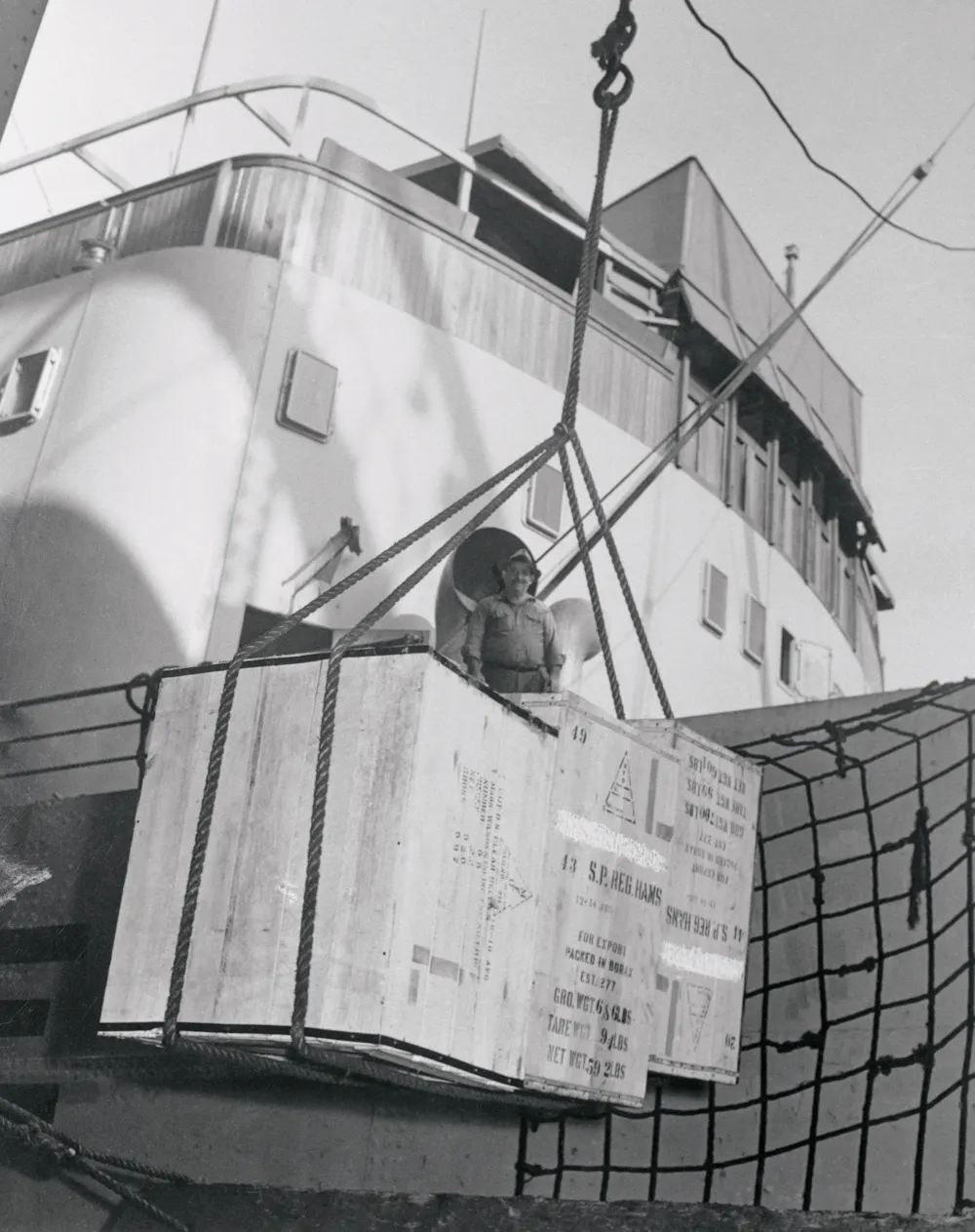
Ropes hoist large boxes aboard a ship.

Crates of American hams, supplied through the Lend-Lease Act, are loaded on a ship bound for Britain in 1941. Bettmann via Getty Images

Another war ends

But despite their critical contribution to the war, American farmers worried that the familiar pattern of postwar recession would repeat once Germany and Japan had surrendered.

Congress fulfilled farmers’ fears of an economic collapse by sharply reducing its food purchases as soon as the war ended in the summer of 1945. In 1946, Congress responded weakly to mounting overseas food needs.

Large bags are stacked in a pile, each with a tag on it saying it came from the U.S. to help Europe.

Bags of Marshall Plan flour wait in New York for shipment to Austria in 1948. Ann Ronan Picture Library/Photo12/Universal Images Group via Getty Images

More action waited until 1948, when Congress recognized communism’s growing appeal in Europe amid an underfunded postwar reconstruction effort. The Marshall Plan’s more robust promise of food and other resources was intended to counter Soviet influence.

Sending American food overseas through postwar rehabilitation and development programs caused farm revenue to surge. It proved that foreign markets could create prosperity for American farmers, while food and agriculture’s importance to postwar reconstruction in Europe and Asia cemented their importance in U.S. foreign policy.

Farmers in the modern world

Farmers’ contribution to the Cold War shored up their cultural and political importance in a rapidly industrializing and urbanizing United States. The Midwestern farm became an aspirational symbol used by the State Department to encourage European refugees to emigrate to the U.S. after World War II.

American farmers volunteered to be amateur diplomats, sharing methods and technologies with their agricultural counterparts around the world.

By the 1950s, delegations of Soviet officials were traveling to the Midwest, including Soviet premier Nikita Khrushchev’s excursion to Iowa in 1959. U.S. farmers reciprocated with tours of the Soviet Union. Young Americans who had grown up on farms moved abroad to live with host families, working their properties and informally sharing U.S. agricultural methods. Certain that their land and techniques were superior to those of their overseas peers, U.S. farmers felt obligated to share their wisdom with the rest of the world.

The collapse of the Soviet Union undermined the central purpose for the United States’ agricultural diplomacy. But a growing global appetite for meat in the 1990s helped make up some of the difference.

U.S. farmers shifted crops from wheat to corn and soybeans to feed growing numbers of livestock around the world. They used newly available genetically engineered seeds that promised unprecedented yields.

Expecting these transformations to financially benefit American farmers and seeing little need to preserve Cold War-era international cooperation, the U.S. government changed its trade policy from collaborating on global trade to making it more of a competition.

In a large auditorium, people sit at a long table on a stage and sign papers.

World leaders sign the Marrakesh Agreement, creating the World Trade Organization, in 1994. Jacques Langevin/Sygma/Sygma via Getty Images

The George H.W. Bush and Clinton administrations crafted the North American Free Trade Agreement and the World Trade Organization to replace the general agreement on trade and tariffs. They assumed American farmers’ past preeminence would continue to increase farm revenues even as global economic forces shifted.

But U.S. farmers have faced higher costs for seeds and fertilizer, as well as new international competitors such as Brazil. With a diminished competitive advantage and the loss of the Cold War’s cooperative infrastructure, U.S. farmers now face a more volatile global market that will likely require greater government support through subsidies rather than offering prosperity through commerce.

That includes the Trump administration’s December 2025 announcement of a US$12 billion farmer bailout. As Trump’s trade wars continue, they show that the U.S. government is no longer fostering a global agricultural market in which U.S. farmers enjoy a trade advantage or government protection – even if they retain some cultural and political significance in the 21st century.

Peter Simons, Lecturer in History, Hamilton College

This article is republished from The Conversation under a Creative Commons license. Read the original article.
The Conversation


Source link

Continue Reading

Business

The Nobel Prize committee doesn’t want Trump getting one, even as a gift—but they treated Obama very differently

Published

on


The Nobel Prize medal has always carried a symbolic weight far beyond its gold content, but in recent years it has also become a mirror for political anxieties, presidential legacies, and staggering wealth.

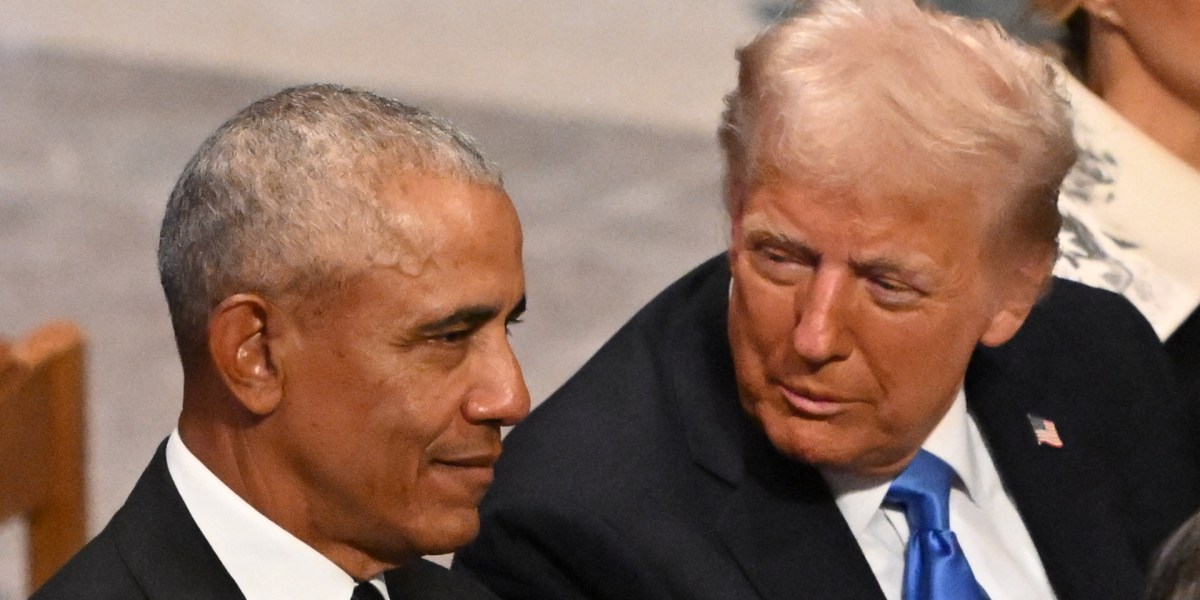
Some critics argue that the Nobel Committee embarrassed Barack Obama by honoring him too early in his presidency, but the Norway-based awarding panel seems determined to keep Donald Trump away from the honor.

And while the Peace Prize remains tightly controlled, the physical medals themselves have fetched up to $103.5 million at auction, underscoring how the committee may say whatever it wants, but these prizes can go to the highest bidder.​

When Obama accepted the Nobel Peace Prize in 2009, less than a year into his first term, he said he was humbled and undeserving of it. The committee cited his “extraordinary efforts to strengthen international diplomacy.” But his subsequent decisions to send more troops to Afghanistan and wage a bombing campaign via drone would darken the glow of Oslo’s optimism. Even Geir Lundestad, the former Nobel secretary, wrote in his memoir, Secretary of Peace, that he regretted the decision: “Even many of Obama’s supporters believed that the prize was a mistake. In that sense the committee didn’t achieve what it had hoped for.”

Obama’s successor has been reportedly desirous of the same honor, with reports attributing his lust for Nobel glory as the reason that he slapped India with a shocking 50% tariff, as Prime Minister Narendra Modi disagreed with Trump’s claim that he deserved the Nobel for stopping a war between India and Pakistan.

Similarly, Trump’s apparent desire for a Nobel plays a role in the fate of Venezuela. Opposition leader Maria Corina Machado, (who was recently in hiding and fearing for her life from the Maduro regime, won the prize in 2025 but gave it to Trump while meeting him at the White House on Thursday.

Despite receiving the award, he gave no indication about plans for holding elections in the country, and the White House reiterated Trump’s assessment that Machado lacks the support to lead Venezuela. Instead, Trump favors Delcy Rodriguez, who was sworn in as interim president.

The Nobel Committee waded in to clarify that Machado cannot give Trump her prize, but Machado told reporters that she did so anyway.

The episodes illustrate a core quirk of Nobel protocol: the title is immovable, but the tangible benefits are entirely in the laureate’s hands.​

Nobel for sale

Obama tried to defuse some of the controversy around his award by redirecting the spotlight. He donated his entire $1.4 million cash award to a slate of charities, including groups focused on veterans and students, effectively “regifting” the prize money rather than keeping it. Tax experts parsed the move, noting that the gesture was treated as charitable giving for U.S. tax purposes.

The Nobel rules leave no room for that kind of pass-the-parcel prestige: the committee alone decides recipients, and prizes cannot be transferred, re-awarded, or post‑facto reassigned for political convenience. After decades of criticism over premature or politically fraught awards, the institution has grown more cautious, keen to avoid any appearance that a Peace Prize could be used to launder reputations already hardened in the public mind.​

Yet while the committee guards its symbolic authority, the open market has been less restrained. Over the last decade, Nobel medals have quietly evolved into some of the most spectacular lots on the global auction circuit. The watershed moment came in 2022, when Russian journalist Dmitry Muratov’s Nobel Peace Prize medal was sold to benefit Ukrainian child refugees, blasting past all expectations to raise an unprecedented $103.5 million.

Other medals have followed a different script, revealing more mundane – and more American – realities. Physicist Leon Lederman’s medal was sold to help cover his medical expenses, prompting outcries about the dysfunction of the U.S. health system. “Only in America,” wrote Sarah Kliff of the Physicians for a National Health Program.

The Nobel Committee cannot stop any of this. It cannot undo Obama’s early‑term Peace Prize, and it cannot engineer or block a future prize simply to manage how history will judge an American president. It also cannot prevent laureates from turning their medals into liquid capital, even when the hammer price reaches nine figures.


Source link

Continue Reading

Business

US debt: Deficits inflate profits and stocks, so reducing red ink could trigger a financial crisis

Published

on


Massive budget deficits have sent U.S. debt soaring past $38 trillion, but they have also become the primary driver of corporate profits and stock valuations, according to Research Affiliates.

In a recent note, Chris Brightman, who is a partner, senior advisor, and board member at the firm, and Alex Pickard, senior vice president for research, traced the historical trend between the deficit and how earnings are recycled to inflate asset prices.

“In the financialized U.S. economy, each dollar of deficit spending may flow into a dollar of corporate profit,” they wrote.

Annual budget deficits have reached $2 trillion, with debt-servicing costs alone hitting $1 trillion. As federal spending exceeds revenue by wider margins, the Treasury Department must issue greater volumes of bonds.

Much of the money the government raises by selling debt goes into consumers’ pockets, primarily via entitlement payments, which eventually boost profits, according to Research Affiliates.

But for decades, companies largely didn’t invest those profits to expand their capacity. Due to intense global competition, especially from China, returns from U.S domestic production were kept low. And even the money that is invested wound up replacing depreciated capacity rather than expanding it.

As a result, companies returned much of their capital to shareholders in the form of buybacks and dividends, which were plowed back into financial markets, often in price-insensitive passive funds that inflate valuations, the report argued.

“Mandated to remain fully invested, these funds then recycle the inflows to purchase stocks in proportion to their market capitalization indifferent to valuation, thus bidding up prices without any change in fundamentals,” Brightman and Pickard wrote.

They pointed to a real-world experiment that reinforces their thesis. During the late 1990s, the federal government briefly erased its budget deficit and actually boasted a surplus.

That came as the booming economy helped lift revenue while cuts to federal welfare programs limited spending. During this period, corporate profits fell too, they added.

This dependence on federal deficits has left financial markets increasingly fragile, the report warned, as corporate earnings have shifted away from relying on returns from private investment.

“Reversion to a healthier macroeconomic environment of declining deficit spending and greater net investment may cause sharp declines in both corporate profits and valuation multiples and likely trigger a financial crisis with politically toxic consequences,” Brightman and Pickard concluded.

“Ironically, the more palatable option may be to remain on the current path until a financial crisis imposes on us the discipline that we are unwilling to impose on ourselves.”

Changing U.S. debt market

Despite surging revenue from President Donald Trump’s tariffs, debt continues to pile up, drawing alarm bells from Wall Street heavyweights like JPMorgan CEO Jamie Dimon and Bridgewater Associates founder Ray Dalio.

Meanwhile, Trump plans to grow defense spending by 50%, pushing it to $1.5 trillion a year and blowing up the debt even more.

At the same time, the holders of U.S. debt have shifted drastically over the past decade, tilting more toward profit-driven private investors and away from foreign governments that are less sensitive to prices.

That threatens to turn the U.S. financial system more fragile in times of market stress, according to Geng Ngarmboonanant, a managing director at JPMorgan and former deputy chief of staff to Treasury Secretary Janet Yellen.

Foreign governments accounted for more than 40% of Treasury holdings in the early 2010s, up from just over 10% in the mid-1990s, he wrote in a New York Times op-ed last month. This reliable bloc of investors allowed the U.S. to borrow vast sums at artificially low rates. Now, they make up less than 15% of the overall Treasury market.

To be sure, the federal budget deficit isn’t the only driver of growth. The AI boom has set off a massive investment wave, spurring demand for chips, data centers, and construction materials.

But so-called AI hyperscalers are also turning to the bond market to raise capital for annual expenditures of hundreds of billions of dollars. And their debt issuance represents more competition to the Treasury Department, which is looking to ensure investors continue absorbing the fresh supply of debt it must sell.

In a note last week, Apollo Chief Economist Torsten Slok pointed out that Wall Street estimates for the volume of investment grade debt that’s on the way this year reach as high as $2.25 trillion.

“The significant increase in hyperscaler issuance raises questions about who will be the marginal buyer of IG paper,” he said. “Will it come from Treasury purchases and hence put upward pressure on the level of rates? Or might it come from mortgage purchases, putting upward pressure on mortgage spreads?”


Source link

Continue Reading

Business

How calculated career risks led a BNY executive to the C-suite of America’s oldest bank

Published

on


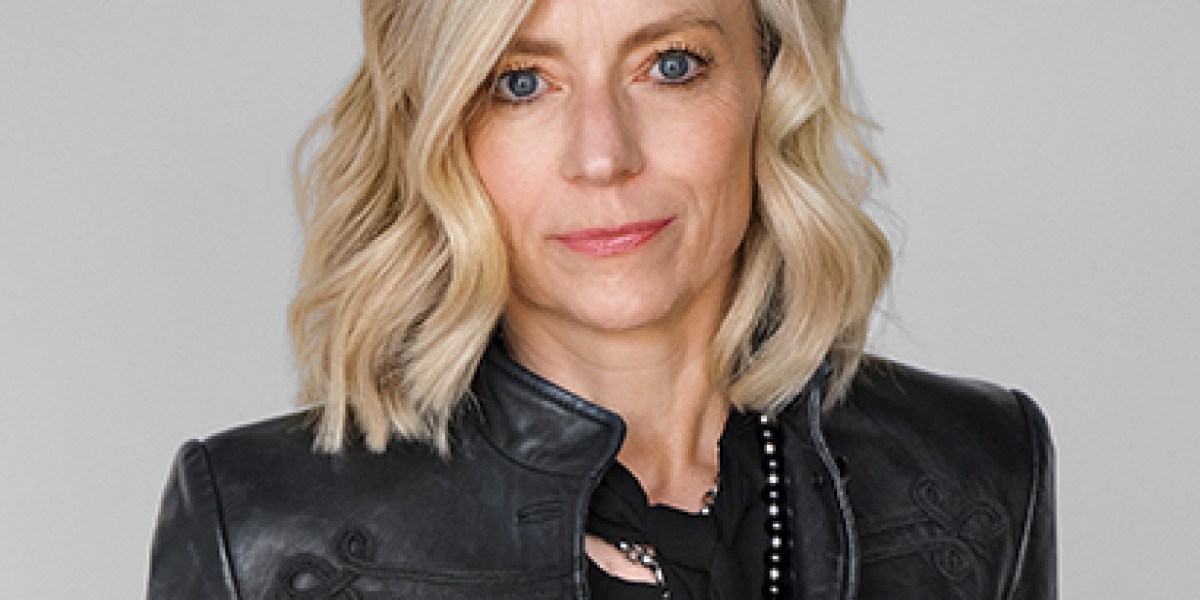
In the high-stakes theater of global financial services, leaving a 26-year run at a blue-chip firm for the uncertainty of a pandemic-era IPO would strike most executives as reckless. For Cathinka Wahlstrom, it was instinct.

Now chief commercial officer at Bank of New York (BNY), Wahlstrom’s leap from Accenture partner to the C-suite of the oldest bank in the United States offers a study in modern leadership that blends vision, systems thinking, and comfort with uncertainty.

Her career is defined by inflection points. She left Accenture at the height of her influence. She moved across continents more than once. She declined a role in Japan when her children were young, then later agreed to take a private-equity-backed company public in the middle of a global crisis. Each decision reflected a consistent trade-off between certainty and growth.

Wahlstrom joined Accenture when it was still a partnership grounded in analysis, expertise, and client service. As the firm evolved into a global public company, her role expanded alongside it. What began as deep technical work in financial services grew into stewardship of major client relationships and leadership roles that required her to think across markets, cultures, and organizational layers. She learned to operate inside complex systems where decisions ripple through clients, teams, and institutions.

Over time, her work shifted from solving siloed problems to understanding interdependence and how choices in one area increasingly shape outcomes in another. She could see her future with unusual clarity, including the shape of the work and the progression ahead.

“I could see my next ten years at Accenture,” Wahlstrom says. “And I just knew I was ready for the next thing—even though I couldn’t quite see what that next thing was yet.” 
​​That clarity signaled mastery, she says. Staying would have meant optimizing what Wahlstrom already knew, whereas leaving would have meant embracing the vulnerability of a new learning curve.

The opportunity arrived during the pandemic in the form of a chief commercial officer role at a Blackstone-backed company preparing to go public. The opportunity arrived during the pandemic, when uncertainty already defined the environment. Wahlstrom became chief commercial officer of a Blackstone-backed company preparing to go public, moving closer to day-to-day operations than at any prior point in her career. The role tested her in a different register: less advisory and more ownership of outcomes.

That experience set the stage for what came next. When BNY approached her, the challenge was fundamentally different. Founded in 1784, the bank’s defining strength is longevity. Wahlstrom was recruited with a mandate to modernize without destabilizing. Her task was to upgrade technology, evolve culture, and expand the bank’s relevance to a younger client base while preserving the foundations that have enabled the institution to endure for nearly 240 years.

Today, Wahlstrom says she works at the seams of the organization where data meets judgment, strategy meets execution, and global plans meet local realities. One example is using AI to better understand the client experience, surface friction points, and identify emerging opportunities. 

Viewed in sequence, Wahlstrom says her career has moved from stability to uncertainty and then to renewal. That arc, she says, reflects what leadership increasingly demands: the ability to live inside paradoxes. Leaders must hold vision and detail at the same time, pair analytical rigor with emotional intelligence, and think globally while acting locally.

“I’m really driven by that journey of setting a vision, coming up with a plan, and then executing,” Wahlstrom says. “I just love the process.”


Source link

Continue Reading

Trending

Copyright © Miami Select.