Connect with us

Business

‘We are Jerome Powell’: Gen Z finds an unlikely meme hero in the Fed chair via AI songs and fan edits

Published

on


Memes tend to gravitate toward pop stars, politicians and villains. But this week, the internet found a central banker.

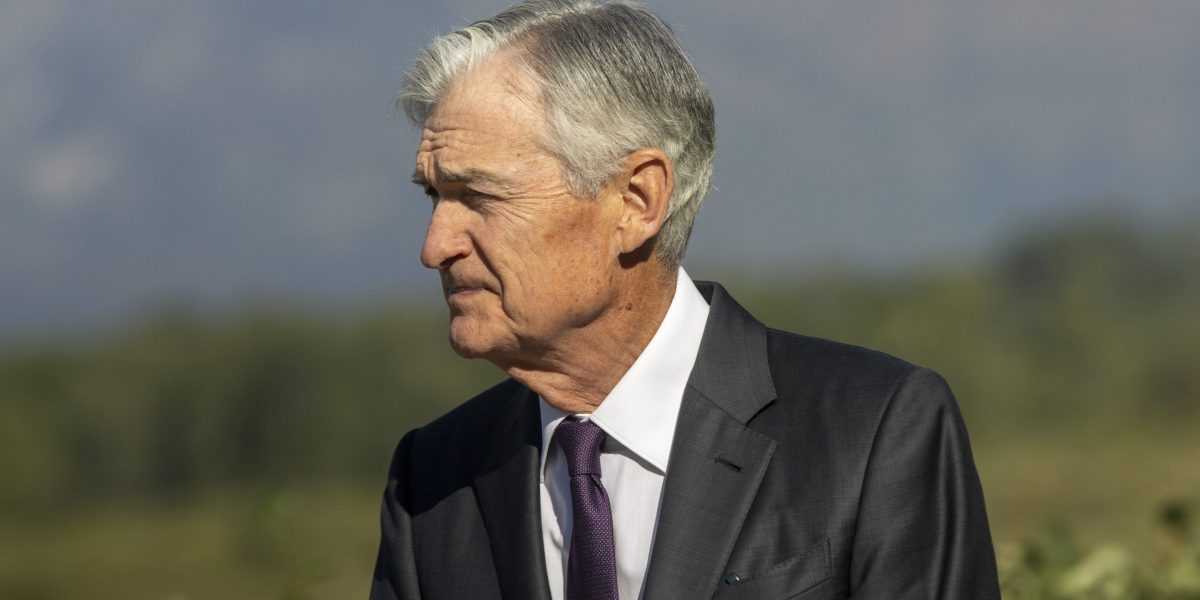
Jerome Powell, the 72-year-old chair of the Federal Reserve, is not the kind of guy you’d expect to see flashing across Instagram and Tiktok to the tune of a high-saturated techno remix. Yet, his image has broken containment over the last few days, as Gen Z has turned the famously taciturn technocrat into a symbol of defiance of the second Trump era, clad with reverent edits usually reserved for K-Pop stars. 

It’s been quite a development for the central banker that Trump initially chose as the replacement for Janet Yellen, who would go on to become Joe Biden’s Treasury Secretary. Trump was reported back in 2017 to appreciate that Powell had a “central casting” air to him, but the longtime Washingtonian surprised onlookers over the next several years by maintaining and even extending Yellen’s focus on the “full employment” side of the Fed’s dual mandate. 

In August 2020, Powell revealed that the Fed had revised its monetary policy framework to emphasize the “broad-based and inclusive goal” of maximum employment, running the economy as hot as it took to get all Americans back to work. Critics soon pounced, warning of the risk of higher inflation, and Powell’s series of aggressive rate hikes in 2022 and 2023 made this policy a close-but-distant memory. Still, during the period known as “the Great Resignation,” when labor had the most leverage to command salary hikes in a generation, Jerome Powell was a millennial-era hero

It looks like Gen Z is discovering what their older siblings did, half a decade ago.

One manifestation of the trend began with a video made by Democratic strategist and popular YouTuber Keith Edwards. Riffing on the “We are Charlie Kirk” song that conservatives championed after the death of the right-wing activist, Edwards decided to flip the script and make it “We are Jerome Powell.”

We are Jerome Powell, we carry the line,” the voice of a man wistfully moans. “Not to a man – but to law and time.”

Edwards said he used AI to generate both the lyrics and the video itself. 

“I personally believe if you look at the memes from 2016, they were very liberal-coded,” Edwards told Fortune. “I think that’s flipped. Conservative ideas travel faster on the internet now.”

For Edwards, the Powell meme is a tactical necessity in what he describes as a literal “information war.”

“We are at war,” Edwards said. “When you’re in war, you grab the biggest weapon you can and you fire it. I’m going to pull every single grenade I can and throw it.”

In this context, Powell is the “grenade.”

After Powell released a rare video statement confirming that the Justice Department had subpoenaed him over Federal Reserve office renovations, and explicitly framed the inquiry as political pressure tied to his refusal to cut interest rates faster, he emerged online as an unlikely symbol of resistance. 

Edwards explained that, to him, Powell represents a vanishing archetype: the technocratic figure who still believes in institutional norms and does things “by the book.” It’s a similar and yet different Powell boomlet to the pandemic “maximum employment” era, when the Georgetown figurehead was arguably woke in his commitment to getting every American back to work.

The internet—or more specifically, Gen Z—decided that Edwards’ video “went hard,” as it were. They’ve now taken to making fancams with videos of Powell looking tough; him posing in a sleek suit, him giving Trump a dirty look as they both stand around in hardware hats. This recalls another #resistance hero who took on an almost Marlboro man-style American toughness in meme world: the former FBI chief and special counsel, Robert Mueller.

According to Aiden Walker, a researcher who specializes in internet culture, the appeal is more that Powell doesn’t look cool. He suggested the “alchemy” lies in the contrast: Powell is both “venerable” and “unassuming,” and placing that persona into a fan cam typically reserved for K-Pop idols or action stars has a “gently subversive irony” to it.

Powell is also very “authentic to himself,” Walker said, and Gen Z loves authenticity (or, like Trump, they love the central casting aspect of the gray-haired politico).

“He’s an old banker, he’s been around the block,” Walker said. As an example, he pointed out the moment of Powell and Trump in their construction hats as they argue over the renovation numbers to the building. 

“It’s his posture there,” Walker said. “He’s clearly not a guy who wears construction hats, but that’s what they’re doing, and he’s very true to himself, and I think people online love that in a figure.” 

But there is also a deeper shift in how the public relates to the Fed. We are no longer in an era where the Federal Reserve is a black box to everyone but Wall Street. Commission-free apps like Robinhood and the exploding popularity of pandemic-era “meme stocks” and spaces like r/WallStreetBets on Reddit have made something of a culture around retail investing in the 2020s.

The numbers back that up. Prior to the pandemic, retail order flow rarely exceeded 10% of daily U.S. equity trading.  By contrast, J.P. Morgan reports that retail activity reached an all-time-high of 36% of total order flow on April 29, 2025. 

“There are so many more retail investors today,” Walker noted. “Twenty-somethings own a couple of stocks on Robinhood. They feel much closer to the market.”

The result is a new kind of familiarity with figures like Powell, even among left-leaning Gen-Zers who might otherwise distrust the Federal Reserve.

“There’s a fandom logic now,” Walker said. “And he’s kind of a fun, ironic figure, because he clearly doesn’t want to be famous necessarily. It’s just kind of been forced.”

AI and accelerationism 

In 2016–a time on many people’s minds as the internet celebrates the origin of a slower internet culture—a political meme might have taken days or weeks to saturate the culture. In 2026, AI-generated content has compressed that cycle into hours.

“AI generation makes it a lot easier and faster to make your Jerome Powell edit,” Walker said. “You can watch a clip of Powell, and within two hours, have your edit responding to it.” This speed doesn’t just accelerate the meme, but it changes its nature and the nature of its subject, where news events become absurd spectacles of participation.

In postmodern theory, this is what is known as “accelerationism.” By feeding a stodgy institutional figure like Powell into the AI-meme deluge, the internet hijacks the Federal Reserve’s image and accelerates it past the point of professional control. The process of taking a serious person out of their serious context—what French psychoanalysts Gilles Deleuze and Felix Guattari called deterritorialization—plugs them into a high-speed digital world where they are fashioned into a particular vibe. In this framework, the meme is what psychoanalysts call a “hyperstition,” a digital fiction that, through the sheer power of speed and repetition, begins to dictate how we perceive the actual stability of our institutions. Philosophers sometimes use the example of cyberspace to explain superstition, pointing to how science-fiction author William Gibson’s imagined cyberpunk world shaped the ethos of what actually became the internet. 

Despite the ultimate one-dimensionality or “frivolousness” of the Powell meme, Walker said he is glad that Gen Z is paying attention.

“I’d say there’s a lot of people who probably saw a reel like that, and maybe Googled who he was or what he said,” Walker said. “We are Jerome Powell, it out-ironies the ironic post because it makes it sincere again, because we enjoy him.” 

This story was originally featured on Fortune.com


Source link

Continue Reading

Business

Community college enrollment rates are rising as traditional schools struggle

Published

on


New enrollments at American colleges and universities hit their highest level in a decade last fall, but a closer look at the type of institution high schoolers are opting for says a lot about what students’ priorities are nowadays.

Over 16 million students enrolled in an undergraduate degree, a 1.2% increase from the year before, according to a survey released Thursday by the National Student Clearinghouse, an education data provider.

But that growth came down almost entirely to rising interest in community colleges and undergraduate certificates, where enrollment massively outnumbered that at traditional four-year universities. While the number of new students seeking two-year associate’s degrees rose 2.2%, interest in bachelor’s degrees grew less than 1%. 

Overall, community colleges added 173,000 undergraduate students last fall, nearly double the number of new students at public four-year colleges. Private nonprofit universities actually suffered a decline in enrollment, losing nearly 60,000 students.

The report, which covers 97% of post-secondary enrollment across the country, illustrates traditional universities’ ongoing identity crisis while students rethink the validity of a four-year degree. As young Americans grow disillusioned by tales of crushing student debt loads, a tight labor market for entry-level jobs, and the threatening possibility that artificial intelligence might usurp some of those roles in the near future anyway, many are looking into other educational pathways.

One factor behind the divergence is cost. Average in-district tuition at public two-year institutions costs a little over $4,000 this year, while public four-year colleges tend to run in-state students around $12,000, according to the College Board. Universities and colleges tout rising tuition costs as investments into students’ futures, but while most data still suggests bachelor’s degree holders will earn more and face less unemployment over the course of their career, fresh grads are now facing a tough job market to navigate. In September, the unemployment rate for new college grads hit 9.5%, its highest since 2021.

The difficult labor market for entry-level roles has pushed more young people to low-cost alternatives, including community colleges and trade schools, which also surged in popularity last year. High-paying jobs that do not require degrees, such as escalator installation and electrical power-line repair, have gone viral among Gen Z audiences, and associate’s degrees and certificates are often functional pipelines for students interested in exploring skilled trades.

While the National Student Clearinghouse report did not say which areas of study community college-goers tend to opt for, other surveys have found that most students who are not planning on transferring directly to a four-year school favor degrees that will grant them quick entry to the workforce. These include nursing, engineering and information technology.

To be sure, earning a bachelor’s degree is still seen as a prerequisite for most knowledge work sectors. In addition to imparting social and creative problem-solving skills, recruiters still rank GPA and degrees highly in their search for new talent, although recent evidence suggests many companies are doubling down on hiring from top colleges. And alternative hiring pathways to white-collar work might have a harder time gaining traction than advocates claim. A Harvard study last year tracked hiring across hundreds of companies, finding that even when employers tout non-degree requirements in their job postings, only one in 700 new hires without a degree actually benefit from these programs.

For traditional colleges, slowing or declining enrollment adds to a list of financial pressures. Falling birth rates in the U.S. have contributed to a so-called enrollment cliff, a shrinking pool of eligible students that could lead to budget cuts and mergers or closures for less secure institutions. Another headache has been the sudden decline in international enrollment as the Trump administration has enforced strict visa requirements for students coming from abroad. 

International students are a significant revenue stream for schools, but the National Student Clearinghouse data suggests the U.S. has already become a less attractive destination. Graduate international student enrollment last fall declined nearly 6%, while the number of undergraduates from abroad grew 3.2%, less than half last year’s rate.


Source link

Continue Reading

Business

How Trump became a death knell for the 85-year relationship between farmers and the federal government

Published

on


President Donald Trump appears to have upended an 85-year relationship between American farmers and the United States’ global exercise of power. But that link has been fraying since the end of the Cold War, and Trump’s moves are just another big step.

During World War II, the U.S. government tied agriculture to foreign policy by using taxpayer dollars to buy food from American farmers and send it to hungry allies abroad. This agricultural diplomacy continued into the Cold War through programs such as the Marshall Plan to rebuild European agriculture, Food for Peace to send surplus U.S. food to hungry allies, and the U.S. Agency for International Development, which aimed to make food aid and agricultural development permanent components of U.S. foreign policy.

During that period, the United States also participated in multinational partnerships to set global production goals and trade guidelines to promote the international movement of food – including the U.N.’s Food and Agriculture Organization, the International Wheat Agreement and the General Agreement on Tariffs and Trade.

When U.S. farmers faced labor shortfalls, the federal government created guest-worker programs that provided critical hands in the fields, most often from Mexico and the Caribbean.

At the end of World War II, the U.S. government recognized that farmers could not just rely on domestic agricultural subsidies, including production limits, price supports and crop insurance, for prosperity. American farmers’ well-being instead depended on the rest of the world.

Since returning to office in January 2025, Trump has dismantled the U.S. Agency for International Development. His administration has also aggressively detained and deported suspected noncitizens living and working in the U.S., including farmworkers. And he has imposed tariffs that caused U.S. trading partners to retaliate, slashing international demand for U.S. agricultural products.

Trump’s actions follow diplomatic and agricultural transformations that I research, and which began with the fall of the Soviet Union in 1991.

Feed the world, save the farm

Even before the nation’s founding, farmers in what would become the United States staked their livelihood on international networks of labor, plants and animals, and trade.

Cotton was the most prominent early example of these relationships, and by the 19th century wheat farmers depended on expanding transportation networks to move their goods within the country and overseas.

Workers load cattle on a train for shipment to market in the late 19th century. Bettmann via Getty Images

But fears that international trade could create economic uncertainty limited American farmers’ interest in overseas markets. The Great Depression in the 1930s reinforced skepticism of international markets, which many farmers and policymakers saw as the principal cause of the economic downturn.

World War II forced them to change their view. The Lend-Lease Act, passed in March 1941, aimed to keep the United States out of the war by providing supplies, weapons and equipment to Britain and its allies. Importantly for farmers, the act created a surge in demand for food.

And after Congress declared war in December 1941, the need to feed U.S. and allied troops abroad pushed demand for farm products ever higher. Food took on a significance beyond satisfying a wartime need: The Soviet Union, for example, made special requests for butter. U.S. soldiers wrote about the special bond created by seeing milk and eggs from a hometown dairy, and Europeans who received food under the Lend-Lease Act embraced large cans of condensed milk with sky-blue labels as if they were talismans.

Ropes hoist large boxes aboard a ship.

Crates of American hams, supplied through the Lend-Lease Act, are loaded on a ship bound for Britain in 1941. Bettmann via Getty Images

Another war ends

But despite their critical contribution to the war, American farmers worried that the familiar pattern of postwar recession would repeat once Germany and Japan had surrendered.

Congress fulfilled farmers’ fears of an economic collapse by sharply reducing its food purchases as soon as the war ended in the summer of 1945. In 1946, Congress responded weakly to mounting overseas food needs.

Large bags are stacked in a pile, each with a tag on it saying it came from the U.S. to help Europe.

Bags of Marshall Plan flour wait in New York for shipment to Austria in 1948. Ann Ronan Picture Library/Photo12/Universal Images Group via Getty Images

More action waited until 1948, when Congress recognized communism’s growing appeal in Europe amid an underfunded postwar reconstruction effort. The Marshall Plan’s more robust promise of food and other resources was intended to counter Soviet influence.

Sending American food overseas through postwar rehabilitation and development programs caused farm revenue to surge. It proved that foreign markets could create prosperity for American farmers, while food and agriculture’s importance to postwar reconstruction in Europe and Asia cemented their importance in U.S. foreign policy.

Farmers in the modern world

Farmers’ contribution to the Cold War shored up their cultural and political importance in a rapidly industrializing and urbanizing United States. The Midwestern farm became an aspirational symbol used by the State Department to encourage European refugees to emigrate to the U.S. after World War II.

American farmers volunteered to be amateur diplomats, sharing methods and technologies with their agricultural counterparts around the world.

By the 1950s, delegations of Soviet officials were traveling to the Midwest, including Soviet premier Nikita Khrushchev’s excursion to Iowa in 1959. U.S. farmers reciprocated with tours of the Soviet Union. Young Americans who had grown up on farms moved abroad to live with host families, working their properties and informally sharing U.S. agricultural methods. Certain that their land and techniques were superior to those of their overseas peers, U.S. farmers felt obligated to share their wisdom with the rest of the world.

The collapse of the Soviet Union undermined the central purpose for the United States’ agricultural diplomacy. But a growing global appetite for meat in the 1990s helped make up some of the difference.

U.S. farmers shifted crops from wheat to corn and soybeans to feed growing numbers of livestock around the world. They used newly available genetically engineered seeds that promised unprecedented yields.

Expecting these transformations to financially benefit American farmers and seeing little need to preserve Cold War-era international cooperation, the U.S. government changed its trade policy from collaborating on global trade to making it more of a competition.

In a large auditorium, people sit at a long table on a stage and sign papers.

World leaders sign the Marrakesh Agreement, creating the World Trade Organization, in 1994. Jacques Langevin/Sygma/Sygma via Getty Images

The George H.W. Bush and Clinton administrations crafted the North American Free Trade Agreement and the World Trade Organization to replace the general agreement on trade and tariffs. They assumed American farmers’ past preeminence would continue to increase farm revenues even as global economic forces shifted.

But U.S. farmers have faced higher costs for seeds and fertilizer, as well as new international competitors such as Brazil. With a diminished competitive advantage and the loss of the Cold War’s cooperative infrastructure, U.S. farmers now face a more volatile global market that will likely require greater government support through subsidies rather than offering prosperity through commerce.

That includes the Trump administration’s December 2025 announcement of a US$12 billion farmer bailout. As Trump’s trade wars continue, they show that the U.S. government is no longer fostering a global agricultural market in which U.S. farmers enjoy a trade advantage or government protection – even if they retain some cultural and political significance in the 21st century.

Peter Simons, Lecturer in History, Hamilton College

This article is republished from The Conversation under a Creative Commons license. Read the original article.

The Conversation


Source link

Continue Reading

Business

‘No way, no how’: Dimon says he’d never run the Fed but ‘would take the call’ to lead Treasury

Published

on


As questions swirl over who will replace Fed Chair Jerome Powell when his term ends in May, Jamie Dimon is taking his name off the list of potential candidates. 

“Chairman of the Fed, I’d put in the absolutely, positively no chance, no way, no how, for any reason,” the JPMorgan CEO said when asked at a Chamber of Commerce meeting on Thursday if he’d ever consider the role. “I would so much more prefer this job than that job. That’s a hard job, but I don’t want to do that job,” he later added. 

“Hard job” may be an understatement given unprecedented pressures on the Fed since President Donald Trump returned to the White House. Last Friday, the Justice Department launched a criminal investigation into the Federal Reserve and Powell’s testimony on the renovation of Fed office buildings. The probe follows a year of increased pressure on the central bank from the Trump administration to lower interest rates. 

In August, the president attempted to unseat Fed governor Lisa Cook over alleged mortgage fraud, the first time a president has fired a sitting governor in the central bank’s 112-year history. A federal court ruled that Cook could keep her seat while she fights the firing, but Cook’s future remains uncertain as the Supreme Court hears the Trump administration’s appeal later this month. 

In addition, the Fed faces the tricky task of trying to prop up the labor market by lowering interest rates without reigniting inflation.

Dimon said he would consider being Treasury secretary if asked, but he’s hesitant to take a job working under someone else. 

“I would take the call, consider it, and think about why and what they want. But what they want and how they want to operate would be important to me,” Dimon said. “But I’ve been my own boss for pretty much 25 years, and I like it that way.” 

This is not the first time Dimon’s name has been mentioned as a potential cabinet secretary. In 2024, then President-elect Trump announced that Dimon would not be in his administration after speculation that he would be nominated for Treasury secretary. Dimon agreed that he wouldn’t be the best fit, saying “I’m not about ready to start” having a boss again. 

Earlier this week, it seemed that Dimon and Trump were at odds after Dimon warned chipping away at the central bank’s independence “is not a good idea.”    

Trump later called Dimon out, saying “Jamie Dimon probably wants higher rates. Maybe he makes more money that way.” 

On Thursday, Dimon reiterated his opposition to interfering with the Fed’s independence because “it will drive rates higher not lower,” but said he and Trump were on the same page. 

“Everyone I know, including the president of the United States, says we need an independent Fed board,” Dimon said. “Most people I know, including the president of the United States, speak up about their opinion, which they’re free to do.”

Dimon and other CEOs such as Bank of America’s Brian Moynihan and Citigroup’s Jane Fraser did just that this week after Trump called for a one-year 10% cap on credit card interest rates. Dimon said that would limit access to credit and adversely affect people who lower credit credits. 

“If it happened the way it was described, it would be dramatic,” Dimon said, speaking to analysts during the earnings call on Tuesday. “It would be dramatic on subprime.”


Source link

Continue Reading

Trending

Copyright © Miami Select.