Connect with us

Business

Customers lament Tesla’s move toward monthly fees for self-driving cars

Published

on


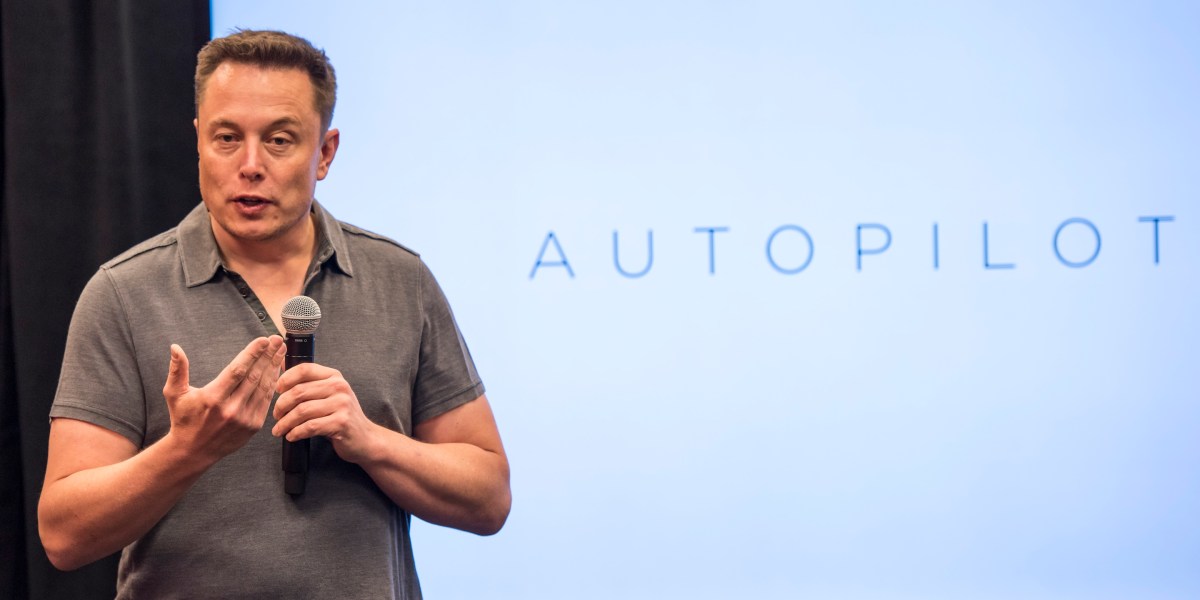
Elon Musk’s announcement that Tesla will soon stop selling its Full Self-Driving (FSD) software, leaving consumers with monthly fees as their only option, has inspired mixed reactions online and more questions about tech giants’ shift towards subscription-based services.

Musk, Tesla’s CEO, shared the news on Wednesday on X. FSD will no longer be available for outright purchase starting February 14, after which the software will “only be available as a monthly subscription.”

For Musk, the move signals an end to his longtime portrayal of FSD as an “appreciating asset,” worth buying outright now because the price will only rise as the software improves. And for Tesla, the change represents the latest decision by a tech giant to move towards a software-as-a-service (SaaS) model, in which a provider continues to host its software—handling updates, security, and maintenance—while renting it to users. But for the Tesla-curious and those who already own one of Musk’s cars, the move was a reminder of how difficult it has become to truly own things in today’s economy.

“Imagine buying a self-driving car and still having to pay a monthly subscription just for it to actually drive itself,” one user wrote in a reply to Musk’s announcement.

“You will own nothing and be happy.”

At current rates, Tesla owners can purchase FSD—which remains primarily a driver-assistance program that requires an attentive driver at all times—for $8,000, or opt for a monthly subscription for $99. Tesla owners who have already purchased FSD will retain the software, though it is unclear whether they will be able to transfer the rights to a new vehicle, as Tesla previously made possible through limited-time promotions. Tesla did not immediately reply to Fortune’s request for comment on whether rates would remain unchanged or transfers between vehicles would be possible after February 14. At the current monthly price point, it would take drivers around seven years to match the outright purchase cost.

Tesla has gradually raised FSD’s purchase price from $5,000 at launch to $ 15,000 in 2022, its most expensive point. Musk described the price hikes as evidence of FSD being a sound investment for consumers to get an early stake in, although the software’s upfront price dipped to $8,000 in 2024, around the same time Tesla reduced the monthly rental fee in the U.S. from $199 to $99.

The price slashes occurred in the wake of reports alleging a low conversion rate among Tesla drivers who opted to upgrade to FSD. While Tesla does not actively disclose the percentage of its customer base that uses FSD, CFO Vaibhav Taneja said the share was “still small, around 12% of our current fleet” during an October earnings call.

‘You will never actually own your EV’

Many of the replies to Musk’s announcement lamented the prevalence of subscription-based features that car companies now withhold. 

“People want to own their stuff outright, not be eternally beholden,” one user wrote.

“You will never actually own your EV, because it will be useless without the software that you can never remove, replace, or modify,” said another, before adding a recommendation: “Stick to internal combustion engines with as few computers as possible.”  

Criticism has ramped up recently about the software dependency of new vehicles, to the point that the industry has referred to electric cars as “smartphones on wheels.” Tesla is far from the only offender, as in August, Volkswagen released a new feature to increase the horsepower on some of its electric cars priced at $22.50 a month. GM also offers a subscription-based hands-free driving capability, Super Cruise, on designated highways. Launched in 2017, the service offers a three-year trial period, followed by a $25 monthly fee. Super Cruise has grown into a significant money-maker for GM, which late last year projected an active user base of 600,000 and more than $200 million in revenue for 2025.

Software updates and subscription fees in their cars might be starting to frustrate users. Last year, 68% of consumers said they would pay for car-connected services, according to an S&P Global survey, down from 86% in 2024.

While electric vehicles tend to be the most software-heavy, all cars nowadays rely on connected services in some way, regardless of their powertrain. Most modern cars are supported by up to a million lines of code, and frequent updates can quickly make some features incompatible. In 2022, as carriers upgraded their telecommunications infrastructure from 3G, many cars made by Toyota, Chrysler, and Jeep—including both battery- and gasoline-powered models—permanently lost access to a feature that automatically notified first responders in the event of a crash.


Source link

Continue Reading

Business

America’s $952 billion annual burden: The math behind the exploding interest on the national debt

Published

on


America has had gigantic budget deficits and debt that have been dangerous and ballooning for years, yet it’s only recently that they’re stirring alarm among voters in a big way. In the spring of 2025, a poll conducted by the nonpartisan Peterson Foundation found that 76% of all voters, including 73% of Democrats and 89% of Republicans, agree that addressing the rampant borrowing that’s endangering our economic standing and threatens their own financial futures should be a top priority for the president and Congress.

Since that survey’s release, the picture’s deteriorated at a far faster pace than the Congressional Budget Office and private forecasters anticipated, due in part to the coming tax rate reductions and spending increases embodied in President Trump’s One Big Beautiful Bill. The single major line item that’s now growing fastest, and that has added the most to the budget shortfall since start of the pandemic, is a dark horse: interest expense. This burgeoning cost that contributes nothing toward supporting national defense, funding the nation’s promises on delivering health care for seniors, and funding border control, is the one budget feature most likely to increasingly outrage the folks. Recall that in the 1992 presidential race, independent candidate and political unknown Ross Perot made the exploding interest on the national debt a centerpiece of his maverick campaign and captured nearly 20% of the popular vote, thanks in large part to hammering home the looming danger ahead.

Since 2019, interest on the debt has exploded

In the 2019 fiscal year, net interest expense was still no big deal. It totaled just $375 billion, accounting for a modest 1.7% of GDP. By FY 2025 (ended in September), the figure had jumped to $952 billion, a rise of 153%, or 17% a year. In that same six-year period, its trajectory far outstripped the still alarming surges in Medicare (25%) and Medicaid (32%), not to mention national defense (7%). In FY 2025, interest ranked as the third-largest spending area after Social Security, and nearly caught Medicare, which at $997 billion was less than 5% ahead of debt service. Interest gobbled 3.2% of national income, almost twice its share pre-COVID.

From FY ’19 to FY ’25, interest soared from under one dollar in 10 to more than one dollar in six-and-a-half of all U.S. spending.

The ramp only accelerated from October through December, the first quarter of FY 2026. Interest expense hit $179 billion, versus $160 billion in the first three months of FY 2025. For that period at the close of last year, it towered as the nation’s second-largest expenditure, narrowly beating both Medicare and national defense. In its most recent long-term budget projections, the CBO estimates that interest will keep gobbling more and more of national income, going from today’s 3.2% by 4.0% by 2034. At that level, interest costs would reach $1.6 trillion—almost 70% more than today—and replace Medicare by a hair as the budget’s second-highest cost. At that point, interest would be absorbing the equivalent of one in four dollars collected in all individual income taxes.

It’s the basic, “primary” deficit that’s causing the jump in interest costs

The interest takeoff arises from a fundamental problem. The underlying source is the “primary” deficit, the structural gap between revenues and outlays that that creates big shortfalls before counting interest expense. As the primary deficit grows, the U.S. must borrow the expanding difference, and that’s been the story. Adding to the pain: As the principal amount owed has kept expanding, so too has the cost of financing each new billion dollars added to the tab. Since 2019, the average rate on U.S. debt has risen substantially, from a super-bargain 2.49% seven years ago, to 3.35% in FY 2025. And it’s only at its current range in the mid-3’s because the U.S. is relying heavily on short-term borrowings to hold down the overall expense, meaning that if the Treasury wants to reduce risk by refinancing that debt with 10-year or even longer-duration bonds, the rates it pays to rise well beyond the current numbers, hiking total interest expense even more.

As the gulf between what the U.S. spent and collected kept waxing, interest became a bigger and bigger contributor to the deficits that now raise such dread. The shortfall between revenues and expenses vaulted from $998 billion in 2019 to $1.8 trillion in FY 2025. That’s a leap of $800 billion, or 80%. In that span, interest added $577 billion to the federal budget, accounting for roughly 70% of the notorious deficit. The CBO projects that under current law, the gap will zoom to $1 trillion in FY 2025, a staggering 6% of GDP, to 117% in 2034. The agency forecasts that interest will join Medicare as the top drivers of that 17-point advance.

It’s important to note that the additional tariffs imposed by the Trump administration, though a significant fundraiser, haven’t come close to slowing that growing “V” between receipts and spending. Interest is a big part of the story. In FY 2025, the U.S. raised around $200 billion from import duties and associated revenues, some $125 billion more than the previous fiscal year. In the same interval, interest expense grew from $881 billion to $952 billion. That extra $71 billion offsets almost 60% of the gains from tariffs.

All told, debt service is claiming an ever-greater share of the dollars America has promised to spend on benefits for future generations. Those payments hogging more and more of our tax dollars are the price we’re paying for years of overspending and under-taxing. If anything decisively gets American voters to focus on the damage from debt and deficits, it’s the ravages of Big Interest.


Source link

Continue Reading

Business

The new rules of office space now that the ‘genie is out of the bottle on hybrid’

Published

on


Hybrid work has emerged as the preferred mode of work among the majority of Americans. That trend has sent a ripple effect across the commercial real estate industry.

With 52% of U.S. workers now saying they are hybrid workers, according to a recent Gallup poll and real- estate dealmaking having slowed, experts say that the industry is facing a demand shift that landlords can’t afford to ignore. Chase Garbarino is CEO of HqO, a software company that works across more than one billion square feet of office space globally and tracks the effectiveness of office amenities. He told Fortune that the number one rule of real estate remains location, location, location, but there are new rules for offices.

The fact that the genie is out of the bottle on hybrid means there’s going to be a lot of structural changes in how landlords need to operate their business models,” Garbarino told Fortune. “The whole industry is kind of predicated upon the 10-year-plus lease as the one product skew that they want. They’re going to have to think and act a lot more like hotels.”

The 10-year lease provides guaranteed long-term financial stability for landlords, handing them a predictable cash flow and minimized turnover costs. Yet that model, Garbarino says, has been upended by the rise of hybrid work because employers aren’t committing to 10-year leases as much as they used to. He says landlords must win tenants back, guaranteeing luxuries and services that can keep them long-term.

A K-Shaped Office Economy

A 2025 analysis by brokerage JLL and Commercial Observer found that lease length has diverged among sectors. The average lease term among financial services companies was 7.6 years, shrinking to 5.3 years for tech firms, and to just 3.5 years for AI startups. Even for Class A space, or the most prestigious real estate, leases were growing shorter.

“They have to earn the people back time and time again,” Garbarino said.

Amid return to work mandates, Manhattan’s luxury real estate market is on the rise among financial services, legal, and technology companies. The number of leases signed for Manhattan office space worth $100 per square foot reached an all-time high in 2025, according to reporting from the Financial Times. There were 313 leases signed at a price of at least $100 per square foot last year, up from 212 in 2024, nearly a 50% increase year over year, according to data from brokerages JLL and CBRE.

Companies like JPMorgan Chase have cashed in on luxury. In October, JPMorgan announced a move to 270 Park Ave. a $3 billion, 60-story office space—of which the company owns—equipped with all the furnishings of a luxury resort spa, from hot and cold plunges and meditation rooms, to 19 restaurants and an assortment of coffee shops. 

But that transformation is not limited to New York. Companies across the U.S. are going all in on luxurious amenities for its employees. Larry Ellison’s Oracle—which is slated to take over U.S. operations of TikTok—is constructing a 70-acre tech campus in Nashville that will function as a town of its own, and will include a high-end Nobu restaurant and a hotel.

While Garbarino notes that nap pods are currently the most booked amenity at a building adjacent to JPMorgan’s headquarters, he maintains that amenities alone aren’t enough to drive workers back to the office. “All we’re really seeing in commercial real estate is that frankly space is a commodity,” he said. “Location is still important. It’s not enough of a differentiator.”

Instead, he argues that their effectiveness often depends on the office policy, and that amenities help to create a healthy environment for those required to be in the office full-time, rather than acting as the primary draw themselves. “These things are going to be the balancing factor,” Garbarino said. “If you’re going to work all day and night and be here all the time, we want to balance it with a healthy work environment.”


Source link

Continue Reading

Business

Gavin Newsom’s anti-Zohran moment: the California billionaires tax

Published

on


Gavin Newsom’s stance against California’s proposed “Billionaire Tax Act” has exposed a rift in the Democratic Party, with the erstwhile progressive governor taking a stance on the side of wealth and implicitly against the wing of his party that has claimed billionaires shouldn’t even exist. Where New York City Mayor Zohran Mamdani has built a national profile off an unabashed “tax the rich” message, Newsom is staking out an explicitly anti-wealth-tax position, an important moment with Newsom a presumed frontrunner of the 2028 presidential nomination.​

The fight centers on the 2026 Billionaire Tax Act, a ballot initiative that would impose a one-time 5% levy on the assets of anyone in California worth more than $1 billion, affecting roughly 200 ultrawealthy residents. Unlike an income tax, the measure would require billionaires to tally up their total wealth and cut a big check to Sacramento if voters approve it in November.​

Labor unions and health advocates backing the measure promise tens of billions of dollars for schools, food assistance, and health programs in a state with some of the country’s starkest inequality. Supporters frame it as a one-time recalibration of the social contract, not an annual raid on the rich, and argue that the political energy behind it could serve as a template for other blue states wrestling with similar divides between wealthy coastal enclaves and working-class communities.​

Newsom’s break with the left

Newsom has responded with unusual bluntness, calling the wealth tax “bad economics” and warning that it is already driving a billionaire exodus from California even before voters weigh in. He has publicly vowed the initiative “will be defeated,” signaling he is prepared to campaign against it if it qualifies for the ballot.​

That stance places him in direct conflict with powerful players in his own party, including unions that were central to his 2021 recall survival and national progressives like Sen. Bernie Sanders, who have endorsed the tax as a model for tackling concentrated wealth. Strategists say the clash could define Newsom’s final year as governor and shape his likely 2028 presidential run, forcing him to balance his ties to tech donors with a base that increasingly sees taxing billionaires as a litmus test for serious inequality politics.​

Silicon Valley’s anxiety and escape hatch

In Silicon Valley, the proposal has triggered a full-blown panic among founders and investors who fear it will accelerate an already visible migration of capital and talent out of California. High-profile figures, including Google co-founders Larry Page and Sergey Brin, have moved to reduce their ties or residency in the state ahead of a January 1, 2026 cutoff that could make them retroactively subject to the tax if it passes.​

Business groups, boosted by millions in contributions from tech billionaires such as Peter Thiel, are pouring money into committees fighting the measure and amplifying warnings that the tax would hollow out the state’s innovation hub and shrink long-term income tax revenues. Their argument has given Newsom political cover to cast his opposition as fiscal prudence rather than donor protection, even as critics say he risks cementing California as a sanctuary for the ultrawealthy at the expense of public investment.​

The ‘anti‑Zohran’ contrast

The political contrast with Zohran Mamdani, New York City’s ascendant left-wing mayor, could not be starker. Mamdani has openly declared that “I don’t think we should have billionaires” and made higher taxes on the rich a centerpiece of his platform, pressing for new levies on millionaires and the most profitable corporations as a core “affordability agenda.”​​

Although Mamdani hasn’t backed a billionaires tax like the one proposed in California, or publicly commented on this particular ballot initiative, he campaigned on a 2% city income tax surcharge on incomes over $1 million, targeting roughly 34,000 high‑income New Yorkers. New York Gov. Kathy Hochul, an increasingly close Mamdani ally, has ruled out broad tax hikes.

To be sure, Mamdani has shown signs that his politics will be less radical in practice than they seemed on the campaign. Famously, his November White House visit with President Donald Trump shocked left and right alike, as the two seemingly opposed figures largely got along and have reportedly been texting each other since.

A party split down the middle

The California fight encapsulates a broader argument roiling Democrats over whether confronting inequality requires directly taxing accumulated wealth or prioritizing growth and investment incentives. On one side stand unions, Sanders-style progressives, and officials in the Mamdani mold who view billionaire wealth as both a moral scandal and an untapped revenue source; on the other are pro‑business Democrats like Newsom who worry that aggressive wealth taxes will backfire economically and politically.​

As signatures are gathered and money pours in from both sides, the Billionaire Tax Act is becoming more than a state-level skirmish; it is evolving into a proxy fight over the future of Democratic economic policy in the post‑Biden era. For Newsom, the gamble is clear: staking his national ambitions on the bet that a Democratic Party skeptical of billionaires will still accept a nominee who killed a billionaire tax in his own state.

The importance of affluent donors

Over the past few decades, wealth and political power have concentrated sharply at the top, with the political giving of the 100 richest Americans surging more than 100-fold since 2000 and far outpacing the rising cost of campaigns. Court decisions such as the 2010 Citizens United ruling and the growth of super PACs have enabled billionaires to spend hundreds of millions of dollars per cycle, often shaping primaries, underwriting issue campaigns, and increasingly backing Donald Trump’s GOP in 2024 and beyond.

Newsom has long been a favorite of affluent donors, drawing support from a set of elite San Francisco families — including branches of the Getty, Pritzker, and Fisher fortunes — who have collectively steered tens of millions of dollars to his campaigns over more than two decades. During the 2021 recall fight, Newsom also attracted high-profile billionaire support from Netflix co-founder Reed Hastings, and agribusiness magnates Stewart and Lynda Resnick.

If Newsom were to mount a presidential bid, many of these billionaires — especially Hastings and members of the Getty and Pritzker families — would be natural early financiers, given their long record of underwriting his rise and their alignment with his pro-business, socially liberal brand of Democratic politics. More broadly, Newsom’s ties to California’s tech and donor class, including figures like former Google CEO Erik Schmidt, who has backed him in state races, position him to tap into the same West Coast mega-donor network that has increasingly defined the Democratic Party’s financial backbone in national contests.

For this story, Fortune journalists used generative AI as a research tool. An editor verified the accuracy of the information before publishing.


Source link

Continue Reading

Trending

Copyright © Miami Select.