Connect with us

Business

Trump’s visa crackdown hits SEA’s Cambodia and Thailand, a decision experts find ‘puzzling’

Published

on


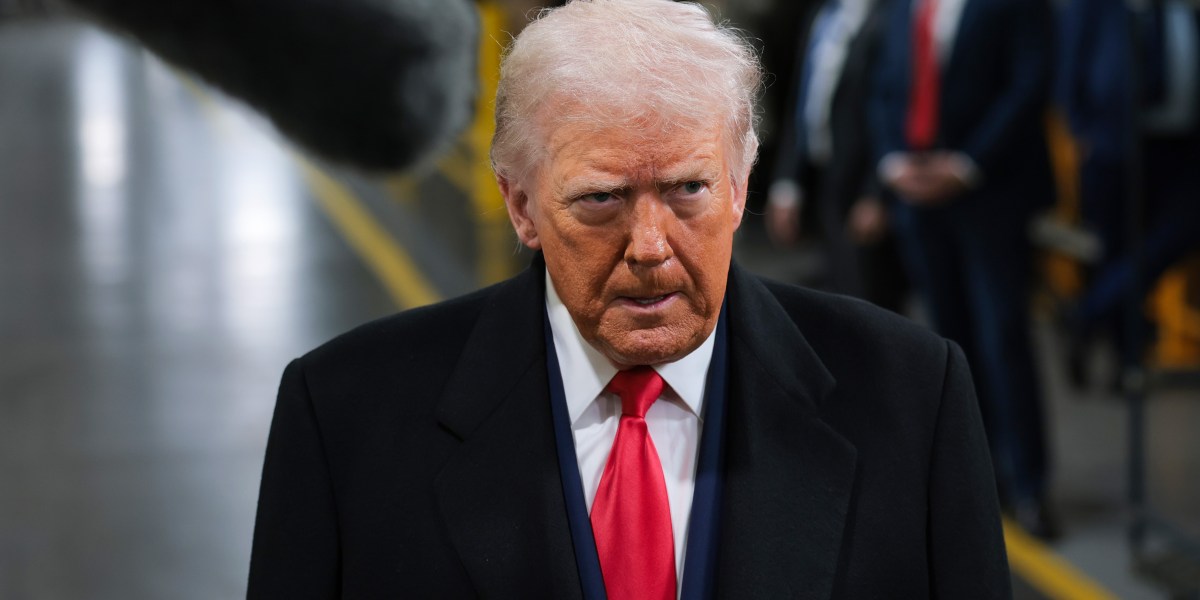
Several Asian countries are hit by the Trump Administration’s decision to pause immigrant processing for 75 countries, including the Southeast Asian nations of Cambodia, Thailand, Myanmar and Laos. 

The suspension, which will take effect on Jan. 21, is the first time the U.S. is restricting applicants from Cambodia and Thailand, just months after U.S. President Donald Trump inked trade deals with both nations on the sidelines of the 2025 ASEAN Summit. He had assured Southeast Asian leaders at the event that they could view the U.S. as a “strong partner and friend” in the years to come. 

The suspension covers several other countries elsewhere in Asia, including the South Asian nations of Bangladesh and Pakistan, as well as countries in Central Asia and the Middle East. The suspension only covers immigrant visas; non-immigrant visas, like tourist and business visas, are not affected. (The U.S. is set to host the FIFA World Cup this year).

“President Trump has made clear that immigrants must be financially self-sufficient and not be a financial burden to Americans,” the U.S. State Department wrote in a post on Jan. 14. It continued that it was starting a “full review of all policies, regulations, and guidance to ensure that immigrants from these high-risk countries do not utilize welfare in the United States or become a public charge.” The post made clear that while nationals in the affected countries could submit applications, no visas would be issued during the suspension. 

“Given the transactional nature of the U.S. dealings with other countries, these pauses can be seen as another way for the U.S. to coerce countries to strike deals that they otherwise would not be keen to do,” suggests Nona Pepito, an associate professor of economics at Singapore Management University. 

Trump’s engagement with Southeast Asia has remained mostly focused on trade, though the U.S. President also tried to negotiate a ceasefire to the violent border conflict between Cambodia and Thailand last year. 

The ceasefire ultimately fell apart, and the two countries began fighting again in late December; both now operate under another, China-facilitated, ceasefire. Last week, the U.S. offered $45 million in aid to both countries to help maintain the truce. 

Laos is already subject to a full travel ban. Cambodia has also previously been in the Trump Administration’s cross-hairs, appearing in a leaked State Department memo last July that noted “concerns” with the Southeast Asian country’s migration policies, though it wasn’t included in later travel restrictions.

Before this suspension, Thailand had yet to be targeted by U.S. immigration policies. A ban could risk “pushing the Thai government and its people closer to China,” Pepito warns. “If the U.S. is seen as an unreliable partner, Thailand, a key treaty ally, may look elsewhere for security and economic cooperation.”

Thailand’s addition is “puzzling,” says Tan Sook Rei, a senior lecturer at Singapore’s James Cook University (JCU), who points out that both the Philippines and Vietnam—which rank among the top sources of U.S. immigrant visas—are “notably absent” from the visa suspension list. “The policy appears less focused on managing migration volumes than on political signaling.”

Jacob Wood, an associate professor of economics at JCU, points to allegations by U.S. officials that Thai businesses have been issuing fake certificates of origin to support China’s “tariff-washing” practices as a source of tension between Washington and Bangkok.

Trump has launched a sweeping crackdown on immigration since taking office a year ago. Last month, the U.S. Department of Homeland Security, in what it called “historic progress in securing the homeland,” claimed that over 2.5 million “illegal aliens” had left the U.S. 

The U.S. is also tightening pathways for legal migration to the country. Trump suspended the U.S. Refugee Admissions Program (USRAP), which provided a safe haven for individuals overseas of “special humanitarian concern.” 

Moreover, the president has increased vetting for international students trying to attend the U.S. The number of new international students starting at a U.S. college or university in fall 2025 fell by 17%, according to the Institute of International Education.

The U.S. has also hiked fees for H-1B employment visas, often used by high-skilled labor in sectors like tech, to $100,000.


Source link

Continue Reading

Business

Gavin Newsom’s anti-Zohran moment: the California billionaires tax

Published

on


Gavin Newsom’s stance against California’s proposed “Billionaire Tax Act” has exposed a rift in the Democratic Party, with the erstwhile progressive governor taking a stance on the side of wealth and implicitly against the wing of his party that has claimed billionaires shouldn’t even exist. Where New York City Mayor Zohran Mamdani has built a national profile off an unabashed “tax the rich” message, Newsom is staking out an explicitly anti-wealth-tax position, an important moment with Newsom a presumed frontrunner of the 2028 presidential nomination.​

The fight centers on the 2026 Billionaire Tax Act, a ballot initiative that would impose a one-time 5% levy on the assets of anyone in California worth more than $1 billion, affecting roughly 200 ultrawealthy residents. Unlike an income tax, the measure would require billionaires to tally up their total wealth and cut a big check to Sacramento if voters approve it in November.​

Labor unions and health advocates backing the measure promise tens of billions of dollars for schools, food assistance, and health programs in a state with some of the country’s starkest inequality. Supporters frame it as a one-time recalibration of the social contract, not an annual raid on the rich, and argue that the political energy behind it could serve as a template for other blue states wrestling with similar divides between wealthy coastal enclaves and working-class communities.​

Newsom’s break with the left

Newsom has responded with unusual bluntness, calling the wealth tax “bad economics” and warning that it is already driving a billionaire exodus from California even before voters weigh in. He has publicly vowed the initiative “will be defeated,” signaling he is prepared to campaign against it if it qualifies for the ballot.​

That stance places him in direct conflict with powerful players in his own party, including unions that were central to his 2021 recall survival and national progressives like Sen. Bernie Sanders, who have endorsed the tax as a model for tackling concentrated wealth. Strategists say the clash could define Newsom’s final year as governor and shape his likely 2028 presidential run, forcing him to balance his ties to tech donors with a base that increasingly sees taxing billionaires as a litmus test for serious inequality politics.​

Silicon Valley’s anxiety and escape hatch

In Silicon Valley, the proposal has triggered a full-blown panic among founders and investors who fear it will accelerate an already visible migration of capital and talent out of California. High-profile figures, including Google co-founders Larry Page and Sergey Brin, have moved to reduce their ties or residency in the state ahead of a January 1, 2026 cutoff that could make them retroactively subject to the tax if it passes.​

Business groups, boosted by millions in contributions from tech billionaires such as Peter Thiel, are pouring money into committees fighting the measure and amplifying warnings that the tax would hollow out the state’s innovation hub and shrink long-term income tax revenues. Their argument has given Newsom political cover to cast his opposition as fiscal prudence rather than donor protection, even as critics say he risks cementing California as a sanctuary for the ultrawealthy at the expense of public investment.​

The ‘anti‑Zohran’ contrast

The political contrast with Zohran Mamdani, New York City’s ascendant left-wing mayor, could not be starker. Mamdani has openly declared that “I don’t think we should have billionaires” and made higher taxes on the rich a centerpiece of his platform, pressing for new levies on millionaires and the most profitable corporations as a core “affordability agenda.”​​

Although Mamdani hasn’t backed a billionaires tax like the one proposed in California, or publicly commented on this particular ballot initiative, he campaigned on a 2% city income tax surcharge on incomes over $1 million, targeting roughly 34,000 high‑income New Yorkers. New York Gov. Kathy Hochul, an increasingly close Mamdani ally, has ruled out broad tax hikes.

To be sure, Mamdani has shown signs that his politics will be less radical in practice than they seemed on the campaign. Famously, his November White House visit with President Donald Trump shocked left and right alike, as the two seemingly opposed figures largely got along and have reportedly been texting each other since.

A party split down the middle

The California fight encapsulates a broader argument roiling Democrats over whether confronting inequality requires directly taxing accumulated wealth or prioritizing growth and investment incentives. On one side stand unions, Sanders-style progressives, and officials in the Mamdani mold who view billionaire wealth as both a moral scandal and an untapped revenue source; on the other are pro‑business Democrats like Newsom who worry that aggressive wealth taxes will backfire economically and politically.​

As signatures are gathered and money pours in from both sides, the Billionaire Tax Act is becoming more than a state-level skirmish; it is evolving into a proxy fight over the future of Democratic economic policy in the post‑Biden era. For Newsom, the gamble is clear: staking his national ambitions on the bet that a Democratic Party skeptical of billionaires will still accept a nominee who killed a billionaire tax in his own state.

The importance of affluent donors

Over the past few decades, wealth and political power have concentrated sharply at the top, with the political giving of the 100 richest Americans surging more than 100-fold since 2000 and far outpacing the rising cost of campaigns. Court decisions such as the 2010 Citizens United ruling and the growth of super PACs have enabled billionaires to spend hundreds of millions of dollars per cycle, often shaping primaries, underwriting issue campaigns, and increasingly backing Donald Trump’s GOP in 2024 and beyond.

Newsom has long been a favorite of affluent donors, drawing support from a set of elite San Francisco families — including branches of the Getty, Pritzker, and Fisher fortunes — who have collectively steered tens of millions of dollars to his campaigns over more than two decades. During the 2021 recall fight, Newsom also attracted high-profile billionaire support from Netflix co-founder Reed Hastings, and agribusiness magnates Stewart and Lynda Resnick.

If Newsom were to mount a presidential bid, many of these billionaires — especially Hastings and members of the Getty and Pritzker families — would be natural early financiers, given their long record of underwriting his rise and their alignment with his pro-business, socially liberal brand of Democratic politics. More broadly, Newsom’s ties to California’s tech and donor class, including figures like former Google CEO Erik Schmidt, who has backed him in state races, position him to tap into the same West Coast mega-donor network that has increasingly defined the Democratic Party’s financial backbone in national contests.

For this story, Fortune journalists used generative AI as a research tool. An editor verified the accuracy of the information before publishing.


Source link

Continue Reading

Business

Gavin Newsom started his career with billionaire funding, but he was raised by mother with 3 jobs

Published

on


Gavin Newsom’s political story has always been a study in contrasts: a young entrepreneur whose first big break came from a billionaire family friend, and a boy raised by a single mother juggling three jobs to keep the lights on. That tension now echoes in California’s bitter fight over a proposed wealth tax on billionaires’ assets, a debate that hits close to home for a governor who sits squarely between privilege and precarity.​ For now, in this instance, he thinks the billionaires tax is “bad economics” and has vowed to defeat it. A closer look at his career shows billionaires have always been central to his story.

In the early 1990s, Newsom’s career began not at a campaign office, but in a wine shop on San Francisco’s Fillmore Street called PlumpJack, a venture he launched with backing from the Getty fortune. Oil heir and composer Gordon Getty, a close family friend who once said he treated Newsom like a son—just as he had been treated similarly by Newsom’s father. In fact, to call Newsom’s father, William Alfred Newsom III, a lawyer for the Getty family would be an understatement. The future judge once hand-delivered $3 million to the Italian kidnappers of Getty’s grandson, in 1973, CalMatters reported, while noting deep ties also between the Newsom family and other San Francisco political royalty, the Browns and Pelosis.

That relationship went far beyond a single store. Getty invested in most of Newsom’s early businesses—wineries, restaurants, and hotels that steadily expanded the PlumpJack brand and turned the young entrepreneur into a multimillionaire long before he was sworn in as governor. Members of the Getty clan would later emerge as some of Newsom’s most reliable political donors, contributing hundreds of thousands of dollars to his campaigns.​ And yet Newsom’s story is not straightforwardly one of extreme wealth.

Raised by a mother with 3 jobs

After Newsom’s parents divorced when he was a toddler, he and his sister were largely raised by their mother, Tessa, a young single parent in San Francisco who, at times, worked three jobs—as a secretary, waitress, and paralegal—to support her children.​

Family members recall their mother sleeping in the dining room of a small flat and renting out a bedroom to another family to make rent, even as their father—a politically connected judge who once managed the Getty family trust—exposed the children to a very different world. Newsom has said his mother taught him everything he knows about grit and hard work, even as he navigated his own struggles with dyslexia and a school system that often left him behind.​

A wealth tax fight that cuts both ways

Those dual identities—billionaire-backed businessman and son of a hustling single mom—are colliding in California’s escalating fight over a proposed “billionaire tax.” The 2026 Billionaire Tax Act, championed by a powerful health care workers’ union, would impose a one‑time 5% levy on the assets of residents worth more than $1 billion, payable over several years and calculated on wealth held at the end of 2026.​

Supporters say the measure is aimed squarely at the kind of extreme fortunes that helped launch careers like Newsom’s, promising tens of billions for public services they argue have been starved by federal tax cuts and rising inequality. Union leaders frame it as a moral corrective: In a state where billionaires buy oceanfront compounds, working‑class Californians crowd into spare rooms like the one Newsom’s family once rented out.​

Newsom’s uneasy stance

Newsom has not embraced the proposal; he has become one of its most prominent critics. Calling the one‑time levy “really damaging,” “bad economics,” and a threat to California’s long‑term fiscal health, the governor argues a state‑level wealth tax could accelerate an exodus of billionaires and their businesses, eroding future income‑tax revenue that funds schools, health care, and social programs.​

He has said he is open to a national conversation about taxing wealth, but insists California alone cannot afford to experiment when it already relies heavily on volatile income taxes from the rich. Behind the scenes, he has lobbied union allies to abandon the initiative, warning the backlash from nervous investors—some already moving money and operations out of state—could outlast any short‑term cash infusion.​

For Newsom, the wealth‑tax battle is more than a clash of spreadsheets and slogans: It is a confrontation with his own origin story. The same billionaire class that seeded his first business and boosted his campaigns now stands in the crosshairs of a tax he says could hurt the state he governs, even as memories of a mother stringing together three paychecks shape his instincts about inequality and opportunity.​

For this story, Fortune journalists used generative AI as a research tool. An editor verified the accuracy of the information before publishing.


Source link

Continue Reading

Business

Oracle struggles to attract workers to Nashville ‘world HQ’—even with a 2-million-square-foot office

Published

on


Oracle is trying to convince reluctant tech workers to join its Nashville, Tenn. “world headquarters” with promises of a brand-new spacious office space and an in-house Nobu restaurant.

A few years after moving Oracle’s headquarters from Redwood City, Calif. to Austin, Texas, cofounder  Larry Ellison publicly declared Nashville its “world headquarters.”

“It’s the center of our future,” Ellison, the company’s chief technology officer and former CEO, said in 2024 of Nashville’s increased importance for Oracle.

The company committed $1.2 billion in capital investment over a decade and promised to add 8,500 jobs to the area. The same year, Tennessee state leaders gave the company a $65 million economic grant to “offset costs companies incur when expanding or locating a business” in the state. 

As part of Oracle’s development in the city, it tied itself to $175 million in infrastructure improvements such as park space along the east bank of the Cumberland River which runs through downtown Nashville, as well a pedestrian bridge that would link both sides of the river. The company can recoup its investment with reimbursements of 50% of its future property tax payments, the Tennessee Lookout reported.

The new office, which Oracle senior vice president of global real estate and facilities Don Watson previously said in a statement would “position Nashville as a hub of AI innovation,” will include 2 million square feet of office space as well as amenities like the upscale Nobu restaurant chain, which Ellison has included in his properties from Palo Alto, Calif. to Florida and the Hawaiian island of Lanai.

​Oracle has reportedly offered some existing cloud employees based in other cities tens of thousands of dollars in incentives to move to Nashville, Bloomberg reported. 

Oracle did not immediately respond to Fortune’s request for comment.

Yet, dangling rich incentives and a future amenity-laden office has only gotten the company so far. Only about 800 workers are assigned to offices in Nashville, Bloomberg reported, citing documents, compared to more than 5,000 in Kansas City, Mo., the base for health records company Cerner which it acquired in 2021. Another 5,000 employees are based in Redwood City and Austin, collectively. The company logged a net gain of just seven employees in Nashville for 2025, the Nashville Business Journal reported.

Employees have reportedly been reluctant to move to Nashville because of a potential ceiling on their future salaries due to the city being categorized in a lower geographic pay band than California, according to Bloomberg. Oracle aims to create 8,500 jobs in Nashville by 2031, with an average annual salary of  about $110,000, according to a press release by the Nashville mayor’s office from 2021. 

“Oracle will bring a record number of high-paying jobs to Nashville and they will pay upfront all the city’s infrastructure costs. This is a huge win for our city,” then-Nashville mayor John Cooper said in the statement. 

When reached for comment, the Nashville mayor’s office referred Fortune to the Nashville East Bank Development Authority, which was created in 2024 to “encourage and promote the prompt and orderly development of the East Bank,” where Oracle’s new office will be built.

“We remain eager to do whatever we can to facilitate the construction of the new campus that has been publicly announced, and we believe that Nashville will only continue to grow as a center for advanced technology and related industries in the years ahead,” said a spokesperson for the Nashville East Bank Development Authority.

Still, workers are wary of committing to a headquarters that exists largely on paper. The company’s Austin location is still listed as the address on its filings with the SEC, and a list of “United States Field Offices” on Oracle’s website still lists Austin as its “world headquarters.”


Source link

Continue Reading

Trending

Copyright © Miami Select.