Connect with us

Business

Want to be an NFL coach? It’s America’s hottest job opening right now and pays up to $20 million with no college degree required

Published

on


Move over AI engineers and management consultants—America’s hottest job opening right now isn’t sitting in a cubicle in Silicon Valley or on Wall Street. It’s on the sidelines of the nation’s favorite sport.

Nine NFL franchises are actively looking for new head coaches, triggering one of the most competitive—and unforgiving—hiring cycles in the U.S. labor market. The job offers eye-popping pay, unmatched visibility, and authority over billion-dollar enterprises. It also comes with a catch: failure is public, fast, and often final.

There’s no formal degree required, though playing college football is often a rite of passage. You’ll need to relocate, but you have your pick of major cities around the country. The travel schedule is intense, though you’ll never have to fly economy. And while contracts vary, it’s safe to say the role all but guarantees millionaire status—assuming you negotiate well and last long enough to collect.

This year’s openings include the Baltimore Ravens, Atlanta Falcons, New York Giants, Pittsburgh Steelers, Miami Dolphins, Las Vegas Raiders, Cleveland Browns, Tennessee Titans, and Arizona Cardinals—each betting that the right hire can quickly change the trajectory of their franchise.

“Success is situational in this league,” wrote Wall Street Journal columnist Jason Gay. “Sure, you need some ingenuity and some luck, and that five-year plan you’ve sketched out is adorable, but what you really need is an organization that runs more capably than an eighth grade carwash. There aren’t many.”

That reality may explain why America’s hottest job is also among the most unstable—and why so many teams are back on the market again.

Coach salaries have risen from $300K to $6 million a year—but you’ll need to prove your passion for the job decades before

Unsurprisingly, the road to becoming an NFL head coach usually begins decades before the first contract negotiation. 

Most coaches develop an early passion for the sport, often playing football in high school or college before finding a foothold on a professional staff. From there, the climb resembles a corporate ladder: entry-level roles, years of apprenticeship, and frequent job changes—often requiring a move to an entirely new city every few seasons.

Take Mike McDaniel, the recently fired Miami Dolphins head coach. After being a player at Yale, he began his post-college career as a coaching intern in 2005. He spent nearly two decades rotating through assistant roles across multiple franchises before landing his first head coaching job in 2022. On the flip side, Todd Haley, the former head coach of the Kansas City Chiefs, never played football in high school or college—yet still reached the league’s top coaching tier.

However varied the path, the payoff at the top is substantial. 

Over the last few decades, coaches have become more like assets to franchises—and thus their average salaries have risen from $300,000 to $6 million a year, according to data compiled by Sportico and Pro Football Reference reported by The New York Times.

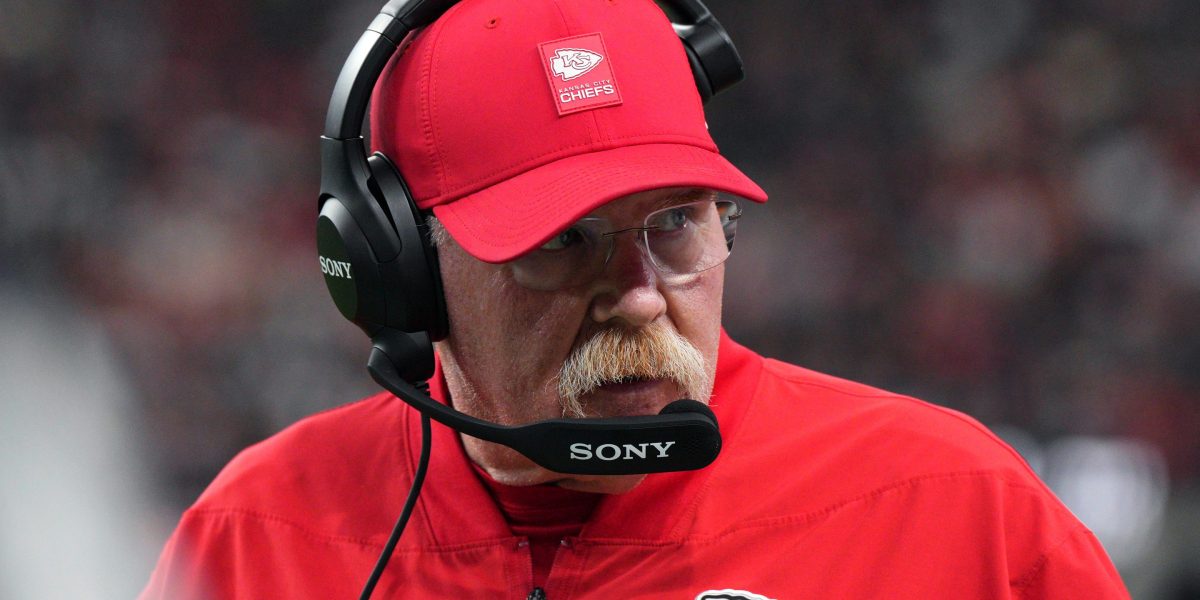
At the very top of the market, pay climbs much higher. Current Chiefs head coach Andy Reid, the league’s highest-paid coach, earns an estimated $20 million per year. Contracts also might include performance incentives tied to benchmarks such as playoff appearances or Super Bowl runs.

But that compensation comes with significant risk. The extreme job insecurity and high probability of public failure makes high salaries operate as a form of “hazard pay,” according to Minjung Kim, an assistant professor of sport management at Texas A&M University.

“While head coaches gain significant brand value and visibility, they operate in environments where performance is evaluated publicly, timelines are highly compressed, and job security is often shaped by factors beyond their direct control, such as injuries, roster construction, or organizational instability,” she told Fortune.

“High compensation reflects the intensity of the role but does not eliminate its volatility, underscoring how inherently unstable and demanding these positions are.”

How the expectations of an NFL head coach compare to being a top CEO

At its core, the head coach job is simple: win football games. But in practice, coaches are expected to act as the ultimate motivator, recruiter, and tactician—while serving as the first and loudest recipient of blame when things go wrong.

The effectiveness of a head coach has shifted in recent years from being judged primarily by their charisma, intuition, and coaching staff to what Kim calls the “coaching intelligence triad”: having cultural, digital, and emotional intelligence.

“In contemporary sport organizations, head coaches must lead diverse groups, integrate data and technology into fast decision-making processes, and regulate emotions under intense pressure,” she told Fortune.

Oftentimes, the skills needed to be a successful coach are equated to those of a CEO.

“Like CEOs, [coaches] should be concerned with long-term strategic planning and decision-making, managing the cultural and emotional well-being of the team and acting as the face of the organization,” wrote sports commentator and former NFL player Domonique Foxworth. “Those things don’t sound like coaching, but they have as much of an impact on a team’s success as game planning.”

Failure to take stock of the bigger picture responsibilities can ultimately lead to indecisiveness at important moments, disgruntled players, and harmful leaks to the media, Foxworth said.

“Too many head coaches underestimate the importance of their new CEO duties and focus on the side of the ball that brought them success,” Foxworth added. “The impact of that on a team is not unlike what happens in other organizations: There is no strategic cohesion, long-term awareness and a culture of apathy develops.”

Kim echoed that modern head coaches and corporate executives both need a clear vision and adaptability. Yet the relentless scrutiny week after week makes sports leadership “one of the most visible and psychologically demanding forms of organizational leadership today.”

This story was originally featured on Fortune.com


Source link

Continue Reading

Business

Customers lament Tesla’s move toward monthly fees for self-driving cars

Published

on


Elon Musk’s announcement that Tesla will soon stop selling its Full Self-Driving (FSD) software, leaving consumers with monthly fees as their only option, has inspired mixed reactions online and more questions about tech giants’ shift towards subscription-based services.

Musk, Tesla’s CEO, shared the news on Wednesday on X. FSD will no longer be available for outright purchase starting February 14, after which the software will “only be available as a monthly subscription.”

For Musk, the move signals an end to his longtime portrayal of FSD as an “appreciating asset,” worth buying outright now because the price will only rise as the software improves. And for Tesla, the change represents the latest decision by a tech giant to move towards a software-as-a-service (SaaS) model, in which a provider continues to host its software—handling updates, security, and maintenance—while renting it to users. But for the Tesla-curious and those who already own one of Musk’s cars, the move was a reminder of how difficult it has become to truly own things in today’s economy.

“Imagine buying a self-driving car and still having to pay a monthly subscription just for it to actually drive itself,” one user wrote in a reply to Musk’s announcement.

“You will own nothing and be happy.”

At current rates, Tesla owners can purchase FSD—which remains primarily a driver-assistance program that requires an attentive driver at all times—for $8,000, or opt for a monthly subscription for $99. Tesla owners who have already purchased FSD will retain the software, though it is unclear whether they will be able to transfer the rights to a new vehicle, as Tesla previously made possible through limited-time promotions. Tesla did not immediately reply to Fortune’s request for comment on whether rates would remain unchanged or transfers between vehicles would be possible after February 14. At the current monthly price point, it would take drivers around seven years to match the outright purchase cost.

Tesla has gradually raised FSD’s purchase price from $5,000 at launch to $ 15,000 in 2022, its most expensive point. Musk described the price hikes as evidence of FSD being a sound investment for consumers to get an early stake in, although the software’s upfront price dipped to $8,000 in 2024, around the same time Tesla reduced the monthly rental fee in the U.S. from $199 to $99.

The price slashes occurred in the wake of reports alleging a low conversion rate among Tesla drivers who opted to upgrade to FSD. While Tesla does not actively disclose the percentage of its customer base that uses FSD, CFO Vaibhav Taneja said the share was “still small, around 12% of our current fleet” during an October earnings call.

‘You will never actually own your EV’

Many of the replies to Musk’s announcement lamented the prevalence of subscription-based features that car companies now withhold. 

“People want to own their stuff outright, not be eternally beholden,” one user wrote.

“You will never actually own your EV, because it will be useless without the software that you can never remove, replace, or modify,” said another, before adding a recommendation: “Stick to internal combustion engines with as few computers as possible.”  

Criticism has ramped up recently about the software dependency of new vehicles, to the point that the industry has referred to electric cars as “smartphones on wheels.” Tesla is far from the only offender, as in August, Volkswagen released a new feature to increase the horsepower on some of its electric cars priced at $22.50 a month. GM also offers a subscription-based hands-free driving capability, Super Cruise, on designated highways. Launched in 2017, the service offers a three-year trial period, followed by a $25 monthly fee. Super Cruise has grown into a significant money-maker for GM, which late last year projected an active user base of 600,000 and more than $200 million in revenue for 2025.

Software updates and subscription fees in their cars might be starting to frustrate users. Last year, 68% of consumers said they would pay for car-connected services, according to an S&P Global survey, down from 86% in 2024.

While electric vehicles tend to be the most software-heavy, all cars nowadays rely on connected services in some way, regardless of their powertrain. Most modern cars are supported by up to a million lines of code, and frequent updates can quickly make some features incompatible. In 2022, as carriers upgraded their telecommunications infrastructure from 3G, many cars made by Toyota, Chrysler, and Jeep—including both battery- and gasoline-powered models—permanently lost access to a feature that automatically notified first responders in the event of a crash.


Source link

Continue Reading

Business

Trump’s visa crackdown hits SEA’s Cambodia and Thailand, a decision experts find ‘puzzling’

Published

on


Several Asian countries are hit by the Trump Administration’s decision to pause immigrant processing for 75 countries, including the Southeast Asian nations of Cambodia, Thailand, Myanmar and Laos. 

The suspension, which will take effect on Jan. 21, is the first time the U.S. is restricting applicants from Cambodia and Thailand, just months after U.S. President Donald Trump inked trade deals with both nations on the sidelines of the 2025 ASEAN Summit. He had assured Southeast Asian leaders at the event that they could view the U.S. as a “strong partner and friend” in the years to come. 

The suspension covers several other countries elsewhere in Asia, including the South Asian nations of Bangladesh and Pakistan, as well as countries in Central Asia and the Middle East. The suspension only covers immigrant visas; non-immigrant visas, like tourist and business visas, are not affected. (The U.S. is set to host the FIFA World Cup this year).

“President Trump has made clear that immigrants must be financially self-sufficient and not be a financial burden to Americans,” the U.S. State Department wrote in a post on Jan. 14. It continued that it was starting a “full review of all policies, regulations, and guidance to ensure that immigrants from these high-risk countries do not utilize welfare in the United States or become a public charge.” The post made clear that while nationals in the affected countries could submit applications, no visas would be issued during the suspension. 

“Given the transactional nature of the U.S. dealings with other countries, these pauses can be seen as another way for the U.S. to coerce countries to strike deals that they otherwise would not be keen to do,” suggests Nona Pepito, an associate professor of economics at Singapore Management University. 

Trump’s engagement with Southeast Asia has remained mostly focused on trade, though the U.S. President also tried to negotiate a ceasefire to the violent border conflict between Cambodia and Thailand last year. 

The ceasefire ultimately fell apart, and the two countries began fighting again in late December; both now operate under another, China-facilitated, ceasefire. Last week, the U.S. offered $45 million in aid to both countries to help maintain the truce. 

Laos is already subject to a full travel ban. Cambodia has also previously been in the Trump Administration’s cross-hairs, appearing in a leaked State Department memo last July that noted “concerns” with the Southeast Asian country’s migration policies, though it wasn’t included in later travel restrictions.

Before this suspension, Thailand had yet to be targeted by U.S. immigration policies. A ban could risk “pushing the Thai government and its people closer to China,” Pepito warns. “If the U.S. is seen as an unreliable partner, Thailand, a key treaty ally, may look elsewhere for security and economic cooperation.”

Thailand’s addition is “puzzling,” says Tan Sook Rei, a senior lecturer at Singapore’s James Cook University (JCU), who points out that both the Philippines and Vietnam—which rank among the top sources of U.S. immigrant visas—are “notably absent” from the visa suspension list. “The policy appears less focused on managing migration volumes than on political signaling.”

Jacob Wood, an associate professor of economics at JCU, points to allegations by U.S. officials that Thai businesses have been issuing fake certificates of origin to support China’s “tariff-washing” practices as a source of tension between Washington and Bangkok.

Trump has launched a sweeping crackdown on immigration since taking office a year ago. Last month, the U.S. Department of Homeland Security, in what it called “historic progress in securing the homeland,” claimed that over 2.5 million “illegal aliens” had left the U.S. 

The U.S. is also tightening pathways for legal migration to the country. Trump suspended the U.S. Refugee Admissions Program (USRAP), which provided a safe haven for individuals overseas of “special humanitarian concern.” 

Moreover, the president has increased vetting for international students trying to attend the U.S. The number of new international students starting at a U.S. college or university in fall 2025 fell by 17%, according to the Institute of International Education.

The U.S. has also hiked fees for H-1B employment visas, often used by high-skilled labor in sectors like tech, to $100,000.


Source link

Continue Reading

Business

Oregon QB Dante Moore turns down $50 million in NFL to stay in school amid growing NIL appeal

Published

on


Dante Moore, the quarterback for the University of Oregon Ducks, plans to play another year of college football—turning down an eight-figure salary as a result. 

The 20-year-old college athlete announced on Wednesday he would remain on the Oregon Ducks for the 2026 season, delaying the draft, where he was expected to be a top-two pick. Last year’s No. 2 draft pick Travis Hunter signed a four-year, $46.65 million deal, and this year’s projected earnings are expected to increase.

“This year, I’ve had many great throws, many great plays, but at the end of the day I feel I can still learn so much more,” Moore said in an interview with ESPN on Wednesday. “As a kid, since I was 4 years old, I’ve dreamed about being in the NFL—but this team, we’ve been through a lot, a lot of people are returning, so we’ve got some exciting things to come this year. I’m excited to keep pushing my team.”

Moore, who threw for threw for 3,565 yards and had 30 touchdowns in the 2025 season, is part of only a small fraction of college football players who have taken more time before going pro: Stanford quarterback Andrew Luck announced in 2011 he would delay NFL entry to finish his architectural design degree, allowing the Carolina Panthers to select Cam Newton as its No. 1 draft pick instead. USC quarterback Matt Leinart made a similar decision in 2005.

But Moore’s choice may mark the beginning of a new pattern among college athletes: Beyond an extra opportunity to notch a national championship, college athletes also have a shot at making real money while enrolled at school thanks to expanding name, image, and likeness (NIL) rules, taking away pressure to go pro before getting a degree or maturing as a player.

A June 2021 Supreme Court ruling made it possible for the NCAA to adopt a policy for college athletes to benefit from their own name, image, and likeness. A House settlement last summer allows for colleges to now directly pay their athletes for the first time, creating a revenue-sharing model where athletic departments could distribute about $20.5 million in NIL revenue to their athletes during the 2025-2026 season.

Cashing in on the NIL boom

Moore has already been a beneficiary of the NIL boom for college athletes, cashing in on his own deals with Nike, Beats by Dr. Dre, and Raising Cane’s. He has a net worth of $2.3 million, according to On3, making him the 12th wealthiest college football player, and the highest-earning Oregon Duck. 

Moore, via a University of Oregon spokesperson, did not immediately respond to Fortune’s request for comment.

The University of Oregon has also become a dominant force in NIL, thanks to Nike founder Phil Knight—known as “Uncle Phil” to the college’s football stars—who has donated more than $1 billion to his alma mater as of 2023. Knight founded Division Street, a sports venture whose Ducks of a Feather program effectively serves as a premium marketing agency for University of Oregon’s athletes, ultimately a bid for Knight, 87, to assist in his hope of the Ducks winning another championship.

“Phil Knight is bankrolling that whole thing and wants to see them win a national title,” one unnamed NIL agent told CBS Sports. “They are really, really aggressive with money.”

NIL deals are already beginning to change the landscape of professional league drafts. The 2025 NBA draft  saw the lowest number of early-entrant candidates in about ten years, with more than a dozen other high-potential candidates withdrawing at the draft deadline. Basketball analysts attributed the dip in part to the growing appeal of NIL.

Basketball insider Jeff Borzello told ESPN in May 2025 NIL has transformed how student athletes think about going pro, particularly in the NBA, where the minimum salary for rookies is $1.2 million, a number many college athletes can surpass with brand deals and revenue-sharing models. Meanwhile, students can theoretically improve their game and still maintain relationships with the NBA teams scouting them.

“With salaries for the final handful of picks in this year’s first round clocking in at below $3 million per season for the next two seasons, per the rookie scale, players projected in that range can now make just as much money by opting to stay in college while theoretically improving their draft stock,” Borzello said.


Source link

Continue Reading

Trending

Copyright © Miami Select.