Connect with us

Business

A trade deal 25 years in the making between Europe and South America is nearly over the finish line

Published

on


Talks on a landmark free trade deal between the European Union and four South American countries started so long ago that the euro wasn’t even in circulation, China hadn’t yet joined the World Trade Organization and Venezuela was still America’s top oil provider.

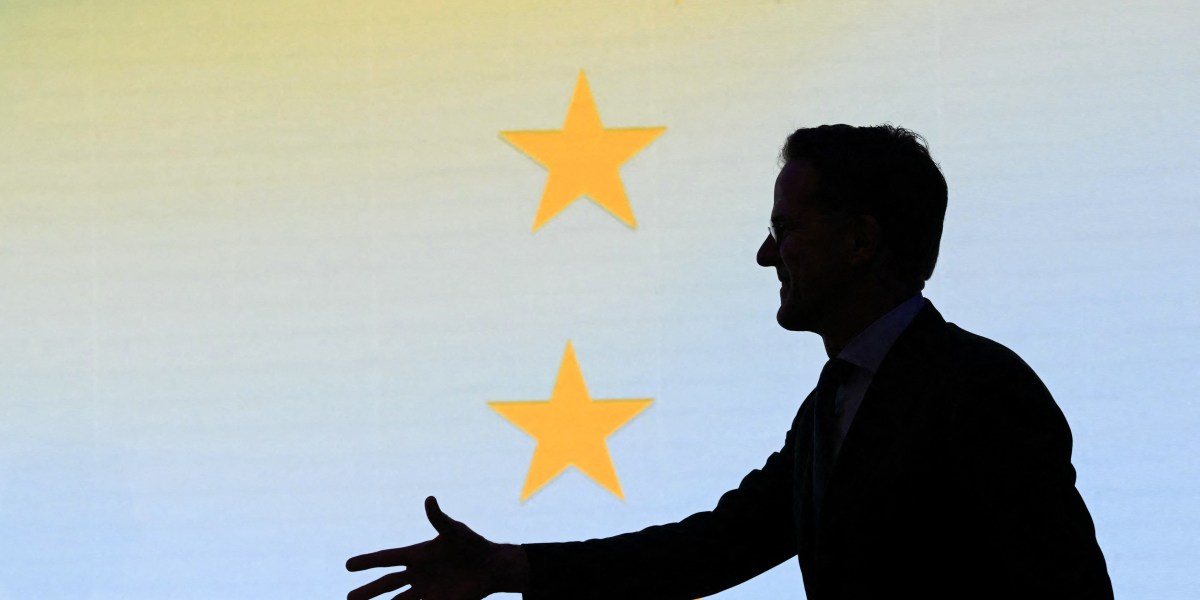
But against a starkly different geopolitical background and tough odds — including backlash from powerful protectionist lobbies — the EU and the South American alliance known as Mercosur are expected to formally sign their quarter-century-in-the-making trade pact this Saturday at a ceremony in Paraguay.

This is the first major trade agreement for Mercosur, which includes the region’s two biggest economies, Brazil and Argentina, along with Paraguay and Uruguay. Bolivia, the newest member, was not involved in negotiations but can join the agreement in the coming years.

The trans-Atlantic trade deal — lifting tariffs on products ranging from Argentine steaks and Brazilian copper to German cars and Italian wine — still has to be ratified by the European Parliament.

The significance of creating one of the world’s largest free-trade zones — home to more than 700 million people and accounting for a quarter of global gross domestic product — while President Donald Trump yanks the United States out of the international economy is not lost on the signatories.

For once, it’s not about Trump vs. China

European Commission President Ursula von der Leyen hailed the deal last week as a powerful endorsement of multilateralism “in the face of an increasingly hostile and transactional world.” Brazilian President Luiz Inácio Lula da Silva, 80, called it a rare “victory for dialogue, negotiation and the bet on cooperation.”

That victory comes at the expense of the U.S. and China, experts say, as Trump aggressively asserts American authority in the resource-rich region and Beijing uses its massive trade and loans to build influence.

“It’s a signal that South American economies are seeking to hedge away from this great power competition between the U.S. and China,” said Lee Schlenker, a research associate with the Global South program at the Quincy Institute for Responsible Statecraft, a Washington think tank.

“It shows that South America can continue to flex its muscles in the international sphere, to diversify its trade partners and exert a certain level of autonomy it’s often denied.”

South American ranchers rejoice

The accord grants South American nations, renowned for their fertile land and skilled farmers, increased access at a preferential tax rate to Europe’s vast market for agricultural goods.

Here in Argentina, exporters reckon they’ll save tens of millions of dollars a year thanks to the deal’s immediate elimination of a 20% tariff on the EU’s long-standing quota scheme for high-quality meat imports.

It’s a breakthrough for Argentina, a nation dominated for decades by left-leaning populist governments that kept the economy closed to the outside world and prioritized the domestic market to the extent of imposing taxes on farm exports to keep food prices down.

“We’re in the midst of a paradigm shift here,” said Carlos Colombo, the president of Cañuelas Cattle Market in Buenos Aires province where over 12,000 cattle are sold daily, many destined for Europe and China. “Argentina has reopened itself to the world.”

Argentine President Javier Milei may be Trump’s strongest ideological ally in Latin America — sharing his disdain for the United Nations and the Paris climate accord — but no one can call the radical libertarian a protectionist.

At first he derided the notoriously slow-moving Mercosur as irrelevant and threatened to ditch it. But he changed his tune since realizing the bloc’s potential to sweep away tariffs and slash customs red tape.

“He sees this agreement as a way to revitalize and re-signify Mercosur,” said Marcelo Elizondo, an Argentine economic analyst specializing in international trade.

The free-trade fever has also infected Brazil’s long-closed economy. Apex, a Brazilian government investment agency, estimates that EU-bound agricultural exports like instant coffee, poultry and orange juice will rake in $7 billion in coming years.

Europe’s farmer lobby wins concessions

Squeezed by environmental regulations and fearing a flood of cheap food products from across the Atlantic, farmers have blocked highways and descended on the streets of European capitals in an explosion of outrage against the agreement.

The EU has scrambled to soothe their concerns over decades of negotiations, adding environmental and animal welfare safeguards to the accord and imposing strict quotas for South American exports of meat and sugar to ensure homegrown produce stays competitive.

Even so, the angry farmers ultimately persuaded France, Poland and a few other states to oppose the deal in last week’s internal EU vote, depriving the accord’s supporters of what they hoped would be a show of unity. Italy and other agricultural powerhouses only came around after the EU offered farmers generous subsidies to the tune of $52 billion.

“It’s a sizable bribe,” said Jacob Funk Kirkegaard, nonresident senior fellow at the Peterson Institute for International Economics. “EU leaders decided that the deal is so important at this moment, it’s worth it.”

‘Cows for cars’

Some have dubbed the deal “cows for cars,” reflecting the perception that Europe’s auto industry will also win big.

Clobbered by growing competition with China and sky-high U.S. tariffs, vaunted German auto giants like Volkswagen and BMW are glad for the boost, as are producers in Europe’s pharmaceutical, construction and machinery sectors gaining access to hundreds of millions more consumers.

Experts say that the elimination of 35% tariffs on auto parts and cars gives European industrial exporters a rare chance to claw back their South American market share from cheaper Chinese rivals.

“Failing to sign the EU-Mercosur free trade agreement risked pushing Latin American economies closer to Beijing’s orbit,” said Agathe Demarais, a senior policy fellow with the European Council on Foreign Relations.

But many are still are holding their breath, having watched negotiations lumber along for years only to trip up at the last minute.

“There are still several steps that have to be taken … and Europe continues to be very careful,” Colombo said, straining to be heard over the hollers of cowboys prodding hundreds of bellowing cattle into trucks.

“Let’s not forget, this is historic. We’ve never reached an agreement like this before.”

____

Associated Press writer Mauricio Savarese in Sao Paulo contributed to this report.


Source link

Continue Reading

Business

Down Arrow Button Icon

Published

on


Miles Brundage, a well-known former policy researcher at OpenAI, is launching an institute dedicated to a simple idea: AI companies shouldn’t be allowed to grade their own homework.

Today Brundage formally announced the AI Verification and Evaluation Research Institute (AVERI), a new nonprofit aimed at pushing the idea that frontier AI models should be subject to external auditing. AVERI is also working to establish AI auditing standards.

The launch coincides with the publication of a research paper, coauthored by Brundage and more than 30 AI safety researchers and governance experts, that lays out a detailed framework for how independent audits of the companies building the world’s most powerful AI systems could work.

Brundage spent seven years at OpenAI, as a policy researcher and an advisor on how the company should prepare for the advent of human-like artificial general intelligence. He left the company in October 2024. 

“One of the things I learned while working at OpenAI is that companies are figuring out the norms of this kind of thing on their own,” Brundage told Fortune. “There’s no one forcing them to work with third-party experts to make sure that things are safe and secure. They kind of write their own rules.”

That creates risks. Although the leading AI labs conduct safety and security testing and publish technical reports on the results of many of these evaluations, some of which they conduct with the help of external “red team” organizations, right now consumers, business and governments simply have to trust what the AI labs say about these tests. No one is forcing them to conduct these evaluations or report them according to any particular set of standards.

Brundage said that in other industries, auditing is used to provide the public—including consumers, business partners, and to some degree regulators—assurance that products are safe and have been tested in a rigorous way. 

“If you go out and buy a vacuum cleaner, you know, there will be components in it, like batteries, that have been tested by independent laboratories according to rigorous safety standards to make sure it isn’t going to catch on fire,” he said.

New institute will push for policies and standards

Brundage said that AVERI was interested in policies that would encourage the AI labs to move to a system of rigorous external auditing, as well as researching what the standards should be for those audits, but was not interested in conducting audits itself.

“We’re a think tank. We’re trying to understand and shape this transition,” he said. “We’re not trying to get all the Fortune 500 companies as customers.”

He said existing public accounting, auditing, assurance, and testing firms could move into the business of auditing AI safety, or that startups would be established to take on this role.

AVERI said it has raised $7.5 million toward a goal of $13 million to cover 14 staff and two years of operations. Its funders so far include Halcyon Futures, Fathom, Coefficient Giving, former Y Combinator president Geoff Ralston, Craig Falls, Good Forever Foundation, Sympatico Ventures, and the AI Underwriting Company. 

The organization says it has also received donations from current and former non-executive employees of frontier AI companies. “These are people who know where the bodies are buried” and “would love to see more accountability,” Brundage said.

Insurance companies or investors could force AI safety audits

Brundage said that there could be several mechanisms that would encourage AI firms to begin to hire independent auditors. One is that big businesses that are buying AI models may demand audits in order to have some assurance that the AI models they are buying will function as promised and don’t pose hidden risks.

Insurance companies may also push for the establishment of AI auditing. For instance, insurers offering business continuity insurance to large companies that use AI models for key business processes could require auditing as a condition of underwriting. The insurance industry may also require audits in order to write policies for the leading AI companies, such as OpenAI, Anthropic, and Google.

“Insurance is certainly moving quickly,” Brundage said. “We have a lot of conversations with insurers.” He noted that one specialized AI insurance company, the AI Underwriting Company, has provided a donation to AVERI because “they see the value of auditing in kind of checking compliance with the standards that they’re writing.”

Investors may also demand AI safety audits to be sure they aren’t taking on unknown risks, Brundage said. Given the multi-million and multi-billion dollar checks that investment firms are now writing to fund AI companies, it would make sense for these investors to demand independent auditing of the safety and security of the products these fast-growing startups are building. If any of the leading labs go public—as OpenAI and Anthropic have reportedly been preparing to do in the coming year or two—a failure to employ auditors to assess the risks of AI models could open these companies up to shareholder lawsuits or SEC prosecutions if something were to later go wrong that contributed to a significant fall in their share prices.  

Brundage also said that regulation or international agreements could force AI labs to employ independent auditors. The U.S. currently has no federal regulation of AI and it is unclear whether any will be created. President Donald Trump has signed an executive order meant to crack down on U.S. states that pass their own AI regulations. The administration has said this is because it believes a single, federal standard would be easier for businesses to navigate than multiple state laws. But, while moving to punish states for enacting AI regulation, the administration has not yet proposed a national standard of its own.

In other geographies, however, the groundwork for auditing may already be taking shape. The EU AI Act, which recently came into force, does not explicitly call for audits of AI companies’ evaluation procedures. But its “Code of Practice for General Purpose AI,” which is a kind of blueprint for how frontier AI labs can comply with the Act, does say that labs building models that could pose “systemic risks” need to provide external evaluators with complimentary access to test the models. The text of the Act itself also says that when organizations deploy AI in “high-risk” use cases, such as underwriting loans, determining eligibility for social benefits, or determining medical care, the AI system must undergo an external “conformity assessment” before being placed on the market. Some have interpreted these sections of the Act and the Code as implying a need for what are essentially independent auditors.

Establishing ‘assurance levels,’ finding enough qualified auditors

The research paper published alongside AVERI’s launch outlines a comprehensive vision for what frontier AI auditing should look like. It proposes a framework of “AI Assurance Levels” ranging from Level 1—which involves some third-party testing but limited access and is similar to the kinds of external evaluations that the AI labs currently employ companies to conduct—all the way to Level 4, which would provide “treaty grade” assurance sufficient for international agreements on AI safety.

Building a cadre of qualified AI auditors presents its own difficulties. AI auditing requires a mix of technical expertise and governance knowledge that few possess—and those who do are often lured by lucrative offers from the very companies that would be audited.

Brundage acknowledged the challenge but said it’s surmountable. He talked of mixing people with different backgrounds to build “dream teams” that in combination have the right skill sets. “You might have some people from an existing audit firm, plus some people from a penetration testing firm from cybersecurity, plus some people from one of the AI safety nonprofits, plus maybe an academic,” he said.

In other industries, from nuclear power to food safety, it has often been catastrophes, or at least close calls, that provided the impetus for standards and independent evaluations. Brundage said his hope is that with AI, auditing infrastructure and norms could be established before a crisis occurs.

“The goal, from my perspective, is to get to a level of scrutiny that is proportional to the actual impacts and risks of the technology, as smoothly as possible, as quickly as possible, without overstepping,” he said.


Source link

Continue Reading

Business

Want to be an NFL coach? It’s America’s hottest job opening right now and pays up to $20 million with no college degree required

Published

on


Move over AI engineers and management consultants—America’s hottest job opening right now isn’t sitting in a cubicle in Silicon Valley or on Wall Street. It’s on the sidelines of the nation’s favorite sport.

Nine NFL franchises are actively looking for new head coaches, triggering one of the most competitive—and unforgiving—hiring cycles in the U.S. labor market. The job offers eye-popping pay, unmatched visibility, and authority over billion-dollar enterprises. It also comes with a catch: failure is public, fast, and often final.

There’s no formal degree required, though playing college football is often a rite of passage. You’ll need to relocate, but you have your pick of major cities around the country. The travel schedule is intense, though you’ll never have to fly economy. And while contracts vary, it’s safe to say the role all but guarantees millionaire status—assuming you negotiate well and last long enough to collect.

This year’s openings include the Baltimore Ravens, Atlanta Falcons, New York Giants, Pittsburgh Steelers, Miami Dolphins, Las Vegas Raiders, Cleveland Browns, Tennessee Titans, and Arizona Cardinals—each betting that the right hire can quickly change the trajectory of their franchise.

“Success is situational in this league,” wrote Wall Street Journal columnist Jason Gay. “Sure, you need some ingenuity and some luck, and that five-year plan you’ve sketched out is adorable, but what you really need is an organization that runs more capably than an eighth grade carwash. There aren’t many.”

That reality may explain why America’s hottest job is also among the most unstable—and why so many teams are back on the market again.

Coach salaries have risen from $300K to $6 million a year—but you’ll need to prove your passion for the job decades before

Unsurprisingly, the road to becoming an NFL head coach usually begins decades before the first contract negotiation. 

Most coaches develop an early passion for the sport, often playing football in high school or college before finding a foothold on a professional staff. From there, the climb resembles a corporate ladder: entry-level roles, years of apprenticeship, and frequent job changes—often requiring a move to an entirely new city every few seasons.

Take Mike McDaniel, the recently fired Miami Dolphins head coach. After being a player at Yale, he began his post-college career as a coaching intern in 2005. He spent nearly two decades rotating through assistant roles across multiple franchises before landing his first head coaching job in 2022. On the flip side, Todd Haley, the former head coach of the Kansas City Chiefs, never played football in high school or college—yet still reached the league’s top coaching tier.

However varied the path, the payoff at the top is substantial. 

Over the last few decades, coaches have become more like assets to franchises—and thus their average salaries have risen from $300,000 to $6 million a year, according to data compiled by Sportico and Pro Football Reference reported by The New York Times.

At the very top of the market, pay climbs much higher. Current Chiefs head coach Andy Reid, the league’s highest-paid coach, earns an estimated $20 million per year. Contracts also might include performance incentives tied to benchmarks such as playoff appearances or Super Bowl runs.

But that compensation comes with significant risk. The extreme job insecurity and high probability of public failure makes high salaries operate as a form of “hazard pay,” according to Minjung Kim, an assistant professor of sport management at Texas A&M University.

“While head coaches gain significant brand value and visibility, they operate in environments where performance is evaluated publicly, timelines are highly compressed, and job security is often shaped by factors beyond their direct control, such as injuries, roster construction, or organizational instability,” she told Fortune.

“High compensation reflects the intensity of the role but does not eliminate its volatility, underscoring how inherently unstable and demanding these positions are.”

How the expectations of an NFL head coach compare to being a top CEO

At its core, the head coach job is simple: win football games. But in practice, coaches are expected to act as the ultimate motivator, recruiter, and tactician—while serving as the first and loudest recipient of blame when things go wrong.

The effectiveness of a head coach has shifted in recent years from being judged primarily by their charisma, intuition, and coaching staff to what Kim calls the “coaching intelligence triad”: having cultural, digital, and emotional intelligence.

“In contemporary sport organizations, head coaches must lead diverse groups, integrate data and technology into fast decision-making processes, and regulate emotions under intense pressure,” she told Fortune.

Oftentimes, the skills needed to be a successful coach are equated to those of a CEO.

“Like CEOs, [coaches] should be concerned with long-term strategic planning and decision-making, managing the cultural and emotional well-being of the team and acting as the face of the organization,” wrote sports commentator and former NFL player Domonique Foxworth. “Those things don’t sound like coaching, but they have as much of an impact on a team’s success as game planning.”

Failure to take stock of the bigger picture responsibilities can ultimately lead to indecisiveness at important moments, disgruntled players, and harmful leaks to the media, Foxworth said.

“Too many head coaches underestimate the importance of their new CEO duties and focus on the side of the ball that brought them success,” Foxworth added. “The impact of that on a team is not unlike what happens in other organizations: There is no strategic cohesion, long-term awareness and a culture of apathy develops.”

Kim echoed that modern head coaches and corporate executives both need a clear vision and adaptability. Yet the relentless scrutiny week after week makes sports leadership “one of the most visible and psychologically demanding forms of organizational leadership today.”

This story was originally featured on Fortune.com


Source link

Continue Reading

Business

Trump’s ‘Department of War’ rebrand could cost $125 million, says the CBO

Published

on


President Trump’s bid to knock four letters off the “Department of Defense” in a rebrand to the “Department of War” could cost upwards of $100 million, the Congressional Budget Office (CBO) has estimated.

On September 5, the president signed an executive order to restore the George Washington-era names of the Department of War and the Office of the Secretary of War as secondary titles for the Department of Defense and the Office of the Secretary of Defense.

Within that order was a stipulation that the Secretary of War would later submit a presidential application to permanently change the name of the department.

However, rebranding the nation’s biggest employer is no small task. The Pentagon oversees 1.32 million people in active duty and 750,000 civilian personnel.

According to the CBO, which responded to a request for information from senators Jeff Merkley and Chuck Schumer, the shift would cost about $10 million for a “modest implementation” of the change, primarily within the department itself. This sum could be absorbed as an opportunity cost, the CBO added, paid out of existing budgets.

But there are two ends to the scale: Minimal implementation might cost a measly few million, the CBO said, but on the extreme end it could cost taxpayers $125 million.

“Broadly, the costs would include staff time spent updating document templates, revising websites, or modifying letterhead, time that could be devoted to the activities that the department had planned to conduct before the executive order was issued,” the CBO wrote. “Similarly, funds used for signage or ceremonial items could reduce resources available for planned items or activities.”

The scale of the costs depends on how “aggressively” the rebrand is rolled out, and how it would be prioritized against remaining activities and “ongoing missions.” A more aggressive rollout, for example, might include “immediately replacing stationery, signage, and nameplates” as opposed to replacing them when existing stock runs out.

“The faster the changes were implemented, the more parts of DoD that the changes applied to, and the more complete the renaming, the costlier it would be,” the CBO added.

“Under President Trump’s leadership, the now aptly-named Department of War is refocused on readiness and lethality—and its title now reflects its status as the most powerful fighting force in the world,” the White House told Fortune. “The White House is working hand-in-glove with the Department of War on implementation of the executive order.”

One of the most expensive endeavours in the proposed change would be renaming the air bases. Even back in March 2023, the Army projected that it would cost at least $39 million to rename nine posts: Forts AP Hill, Benning, Bragg, Gordon, Hood, Lee, Pickett, Polk, and Rucker. That was nearly double an estimate by the Naming Commission a year prior, which put the price at $21 million.

There are also costs incurred for other non-federal entities if the Department of War decides to push its name change through as a blanket approach. For example, the CBO points out that North Carolina spent $400,000 in 2023 to change the name of Fort Bragg to Fort Liberty, just to change it back to Fort Bragg again last summer.


Source link

Continue Reading

Trending

Copyright © Miami Select.