
Politics
Poll shows Byron Donalds remains frontrunner in GOP Primary for Governor


With a bipartisan unanimous vote, the Senate has passed a bill to add more oversight for the taxpayer-funded private school voucher program because thousands of students — and the money that follows them — are missing in the system.
SB 318 does not currently have a House companion bill even though the lengthy package of reforms has cleared the upper chamber.
Florida’s $4 billion universal school choice industry has experienced explosive growth but left an education system ripe for abuse.
“On any given day of the week, the (Florida) Department of Education (FDOE) can’t find 30,000 students we’re paying for,” Sen. Don Gaetz, the SB 318 co-sponsor, said on the Senate floor. “That’s $270 million we’re paying for students we can’t locate. The Auditor General criticizes our funding model as ‘pay and chase,’ and they don’t mean it as a compliment.”
SB 318, approved late Wednesday, would make sweeping changes, including creating a separate category for the Family Empowerment Scholarship (FES) so it would no longer be mixed into the state’s K-12 funding formula calculation.
SB 318 also would expand the education stabilization fund to $250 million so that if more students leave traditional public schools than expected, they can still get fully funded vouchers.
Democrats told Gaetz they wished his bill could have helped public school districts facing declining enrollment and big funding losses as the voucher program has grown to more than 500,000 students. Gaetz told lawmakers he was trying to get a stabilization fund provision in a conforming bill to help buffer public schools and give them a declining enrollment subsidy.
The bill also would reduce scholarship administrative fees from 3% to 2% to fund more scholarships through the Florida Tax Credit Scholarship program.
Other changes would streamline the process, including requiring one single application for all scholarship programs and ordering the necessary documentation, like a child’s birth certificate, be submitted when the application is turned in.
To improve transparency, the child’s guardian would need to attest that the student is not enrolled in a public school and say where the child is educated. A private school can speak out in some cases on behalf of the parent.

Going forward, the FDOE would be required to assign a Florida student ID for all voucher recipients to process their scholarship information to make sure the families receive the taxpayer funds.
“It’s kind of hard to keep track of hundreds of thousands of students if we don’t know who they are and where they are, but by giving every student a number, that is a first step,” Gaetz said.
FDOE would also be required to create a standard withdrawal form when voucher students leave the traditional public school system.
“Fraudsters, unfortunately, have discovered our school choice program, and they spammed millions of dollars by creating fictitious students — not Minnesota, but not a good look,” Gaetz said. “So this bill provides that each provider will receive funding for students only if, and after, they are confirmed as being actually enrolled.”
The bill also would stop the practice of organizations, like Step Up For Students, keeping large sums of taxpayer money in their own accounts, Gaetz added.
“Last year, the Department of Education advanced $600 million to the school funding organizations even before the parents made their school choices. And then the Department chased the money to find if the dollars wound up in the right place for the right students, and the result is that public schools were shortchanged by $100 million for students they served, but the money was sent someplace else,” said Gaetz, a former Superintendent of Schools for Okaloosa County.
The FDOE would also reexamine how it works with those organizations and create a business plan to become more competitive and create contracts with performance requirements.
“If this bill passes, the Department of Education will no longer work with a scholarship funding organization in the way that we have done in the past,” Gaetz said. “Right now, there is performance, but there are not always performance requirements. And as a consequence, there has been some ragged performance, candidly.”
The bill also addresses problems parents are experiencing, Gaetz said.
For instance, some parents homeschooling their children wait months to get reimbursed for materials and services.
His bill “reduces red tape and reduces long waits for payments,” Gaetz said. “Our bill asks families to help us help them by confirming monthly with a simple checkoff where their student is attending school so that the right amount can be disbursed to the right place and private schools can do that on parents’ behalf in this bill.”
After a scathing report, the Auditor General would audit the FDOE and the nonprofits issuing the vouchers, like Step Up, every year going forward under the bill’s direction.
“To all of us who believe in parental choice and education as I do, the Auditor General’s report was tough medicine,” Gaetz said. “To disregard the Auditor General’s findings and warnings and recommendations and just let things roll on as they are, would be legislative malpractice.
Democrat Sen. Shevrin Jones praised Gaetz’s bill but warned more legislation is needed in future bills to add more oversight to private schools. Some of these private schools, now getting public dollars, are not good learning environments or properly teaching students, he said.
Gaetz joked it was the first-ever “tripartisan” bill to be heard on the Senate floor since the legislation was also co-sponsored by Republicans Sens. Corey Simon and Danny Burgess, Democratic Sens. Rosalind Osgood and Darryl Rouson, and Sen. Jason Pizzo, who is independent.
Orange County Public Schools, the fourth-largest school district in the state, welcomed the bill’s passage in the Senate. The district is planning to close seven schools as it faces a financial crisis from a student enrollment dip.
“SB 318 puts students first and protects taxpayer dollars,” Orange County School Board member Angie Gallo said in a statement. “It supports public school classrooms, respects local decision-making, and brings much-needed accountability to Florida’s state K-12 education taxpayer-funded voucher system.”
Politics
With sextortion and suicides on the rise, Jimmy Patronis seeks to strip Big Tech of Section 230 immunity
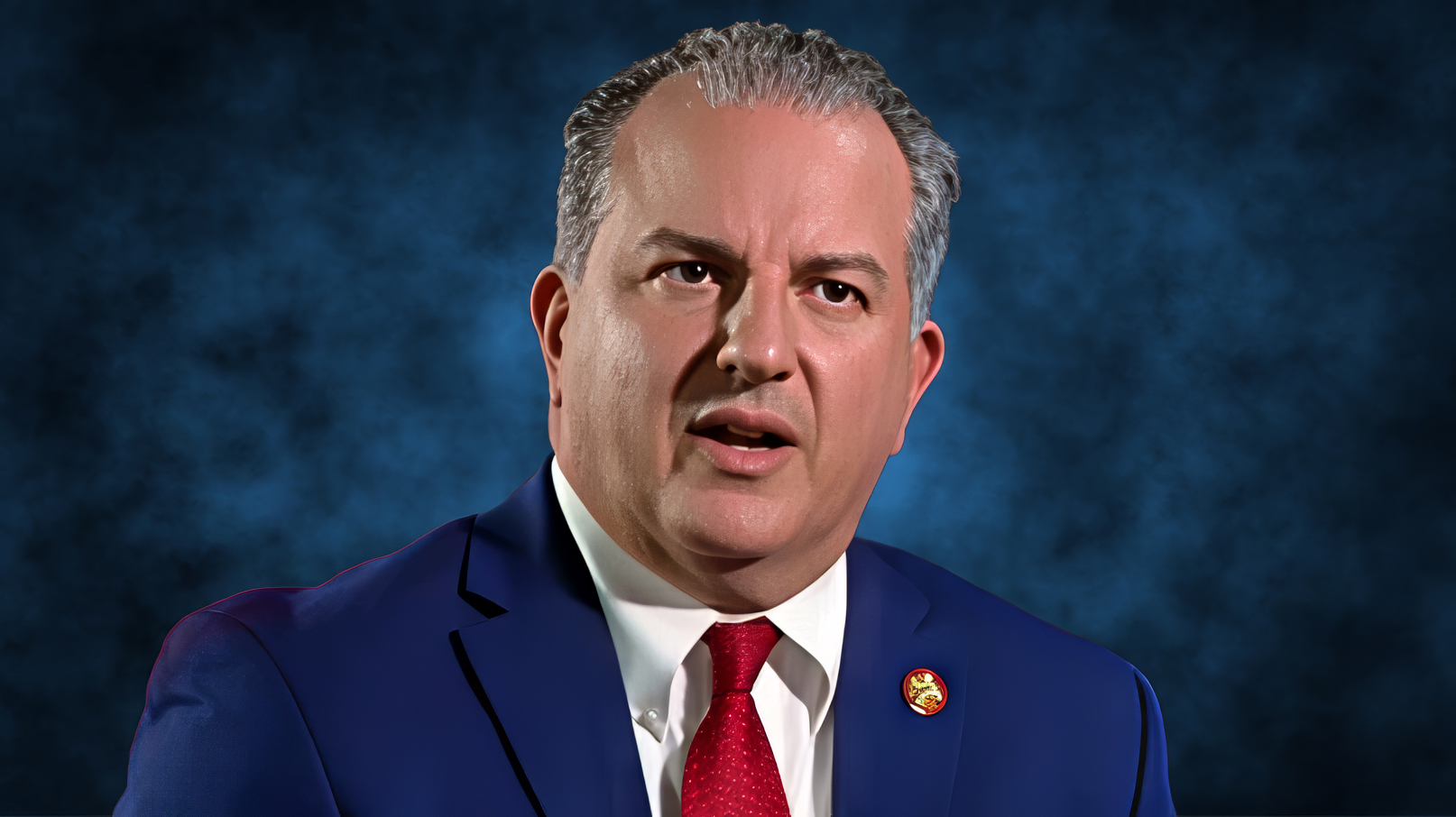
U.S. Rep. Jimmy Patronis says it’s time to take major legal protections away from Big Tech firms, citing the dangers of online child exploitation.
The Fort Walton Beach Republican wants to repeal Section 230, a controversial portion of the Communications Decency Act that shields companies from lawsuits related to criminal activity using their social media platforms to communicate.
The Promoting Responsible Online Technology and Ensuring Consumer Trust (PROTECT) Act would delete those protections in federal law.
“As a father of two young boys, I refuse to stand by while Big Tech poisons our kids without consequence,” Patronis said.
“This is the only industry in America that can knowingly harm children, some with deadly consequences, and walk away without responsibility. Big Tech is digital fentanyl that is slowly killing our kids, pushing parents to the sidelines, acting as therapists, and replacing relationships with our family and friends. This must stop.”
Section 230 treats social media companies differently than, say, a news publication. For instance, whereas news outlets can be held liable for defamatory comments made on their platform, social media companies are not held liable for remarks made by users, save a few exceptions. Only the user (or possibly others who share false claims) would be liable for defamation in this example, not the tech platform where the remark is posted.
Proponents of Section 230 argue that without it, social media companies would be dissuaded from launching or operating in the first place. Opponents, however, say the protections too easily allow illegal conduct to spread online.
The U.S. Supreme Court in two 2024 rulings upheld Section 230 when prosecutors sought to prosecute companies under anti-terrorism laws.
In December, a Pennsylvania family sued Meta after the death by suicide of a teenager being blackmailed using an Instagram account, as reported by NBC News. That’s a case of an increasingly common crime known as “sextortion.”
“It is time for parents to stand up and fight back against these tech giants. The dark forces of social media and tech evolve faster than any parent can screen or detect, even with the best skills,” Patronis said.

“It is time we demand accountability for declining mental health in minors and the increase in suicide and self-harm. These are minor children who are getting hurt. If a billboard or TV channel couldn’t publish bullying or violent materials without liability, why can big tech? Let’s end the double standard.”
The legislation will likely face resistance from tech companies increasingly involved in federal lobbying. The Electronic Frontier Foundation, a technology advocate, has defended Section 230 protections, arguing social media platforms were a platform for communication and should not be held responsible for what criminals say.
“Section 230 embodies that principle that we should all be responsible for our own actions and statements online, but generally not those of others,” an EFF website page on the topic states. “The law prevents most civil suits against users or services that are based on what others say.”
Patronis pointed at programming pushing content on children in their social media feeds, and sometimes generating it with artificial intelligence tools. Families are suing over chatbots that allegedly told teenagers to commit suicide, as reported by NPR. Patronis also said algorithms have pushed content contributing to depression, eating disorders and drug addiction.
“These companies design their platforms to hook children, exploit their vulnerability and keep them scrolling no matter the cost,” Patronis said.
“When children are told by an algorithm, or a chatbot, that the world would be better without them, and no one is being held responsible, something is deeply broken. I bet they would actually self-police their sticky apps and technologies if they knew they would have to pay big without the Big Tech Liability Protection of Section 230.”
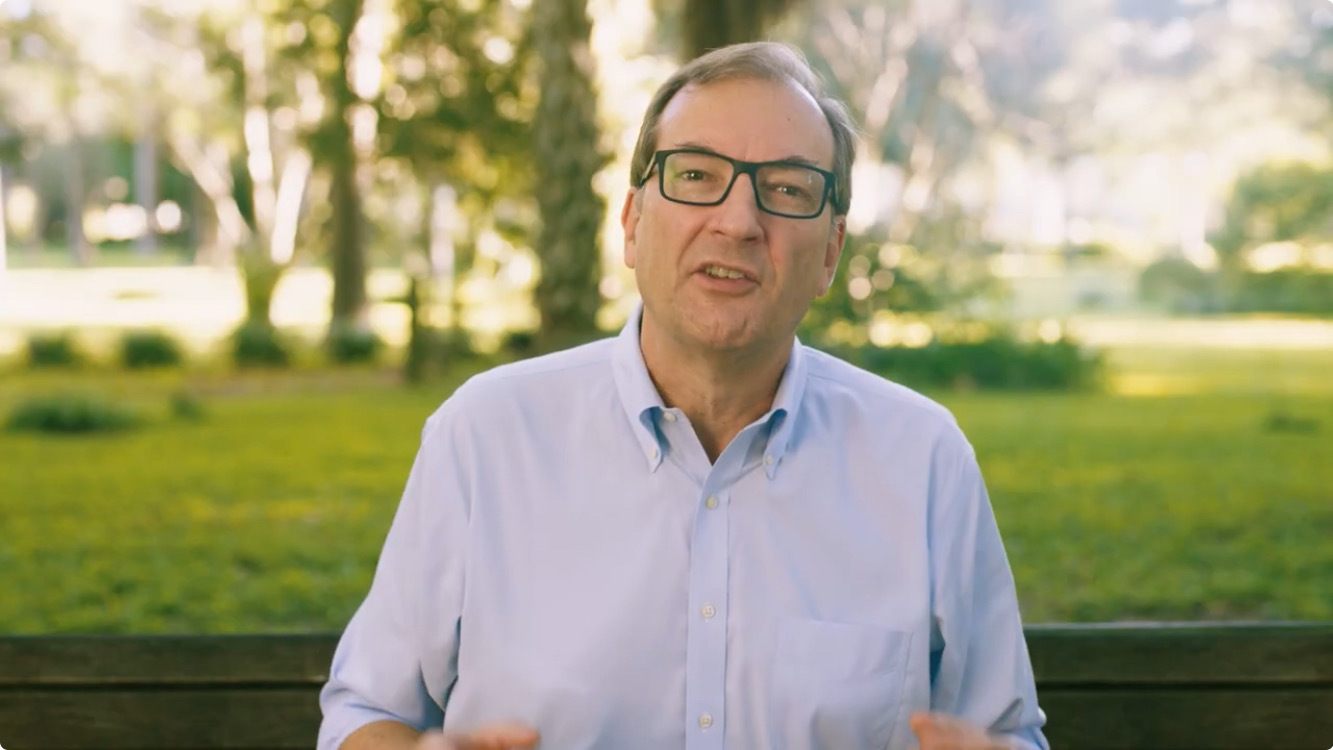
Jacksonville Democrat Michael Kirwan continues to make his case that he’s the front-runner in a crowded Primary to face U.S. Rep. Aaron Bean in November.
And endorsements are pouring in for the Jacksonville native, a longtime securities lawyer who has served as Chair of the Jacksonville Ethics Commission and President of Scenic Jacksonville.
State Sen. Tracie Davis, former Senate Democratic Leader and current Florida House candidate Audrey Gibson, former state Sen. Tony Hill, Democratic City Councilman Jimmy Peluso, current Duval School Board members Warren Jones and Darryl Willie, and former City Councilmen Howard Dale and Jim Love are all on board.
“Michael has my full endorsement because he’s a leader with a track record of solving problems, not just talking about them,” Davis said. “His financial expertise and deep community roots prove he’s ready to tackle rising costs and bring real accountability to Washington. He’s the only candidate who has the skills, the integrity, and the commitment to give every family a fair shot.”
Some endorsers, like Love and former Duval School Board member Lori Hershey, crossed party lines to back Kirwan.
“I’m a Republican, but I’m supporting Michael Kirwan because I know him. I’ve worked with him, I understand his values, and I trust his ethics,” Love said. “This isn’t about party labels for me. It’s about character and competence. Michael is someone who does what he says he’s going to do; and that’s the kind of person we need representing our district in Congress.”
Jones, a former City Council President before he got elected to School Board, said the “community needs someone in Washington who we can trust to really fight for us and deliver.”
“Michael Kirwan can win this race; and I believe in his commitment to this district and to the people who live here. He listens, he shows up, and he understands what our families are dealing with. I trust him to be a strong voice for our community and to get real results,” he added.
Two former Mayors and City Commissioners for Fernandina Beach, Robin Lentz and Kim Page, are also on board. Former Republican Mayor of Green Cove Springs Sandra Dunnavant and former Democratic Tampa Mayor Bob Buckhorn also support Kirwan.
The GOP backing is meaningful, given the registration advantage Republicans have. The district, which includes Nassau County, Clay County and some of Duval County, is 41% Republican and 34% Democrat.



Hailee Steinfeld’s Old Broncos Post Resurfaces Before Josh Allen’s Playoff Game

Ferragamo building on fire near Florence, no injuries

Senate passes bill to add more oversight and transparency on school choice vouchers
-

 Politics8 years ago
Congress rolls out ‘Better Deal,’ new economic agenda
-
Entertainment8 years ago
New Season 8 Walking Dead trailer flashes forward in time
-
Politics9 years ago
Poll: Virginia governor’s race in dead heat
-
Politics8 years ago
Illinois’ financial crisis could bring the state to a halt
-
Entertainment8 years ago
The final 6 ‘Game of Thrones’ episodes might feel like a full season
-
Entertainment8 years ago
Meet Superman’s grandfather in new trailer for Krypton
-
Business8 years ago
6 Stunning new co-working spaces around the globe
-
Tech8 years ago
Hulu hires Google marketing veteran Kelly Campbell as CMO