Connect with us

Business

Can Saks’ new CEO repair the damage done by years of being treated as a ‘financial plaything’?

Published

on


For the second time in his career, luxury executive Geoffroy van Raemdonck has been tasked with fixing an iconic department store company brought low by financial engineering. In 2018, he was hired to fix Neiman Marcus Group, which was struggling to to keep up with shifting consumer trends and unprofitable under the weight of heavy debt from years of private equity ownership.

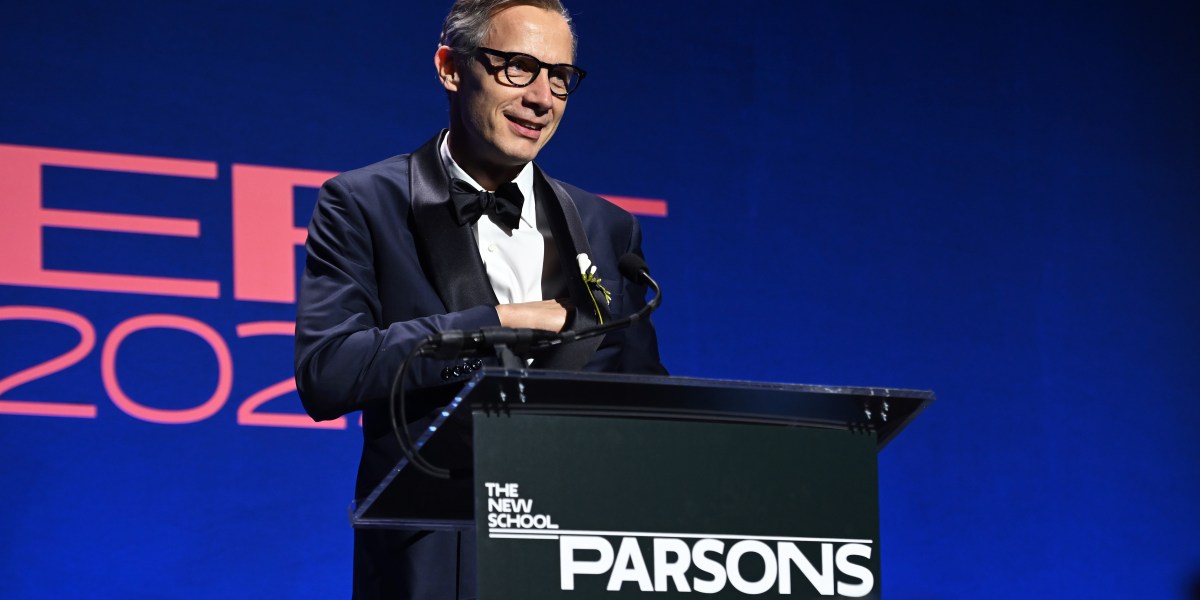
This time, the job is twice as big. On Tuesday, Van Raemdonck was appointed CEO of Saks Global, the same day as the luxury department store giant, which includes Neiman Marcus Group (and its Bergdorf Goodman division) and Saks Fifth Avenue, filed for Chapter 11 bankruptcy protection.

Saks Global is the result of a $2.7 billion deal in 2024 masterminded by real estate scion Richard Baker—one that failed spectacularly because of the confluence of slumping sales and sky-high debt, leaving in its wake angry vendors, empty shelves, and AWOL consumers.

Former Saks Global executive chairman Baker has the opposite of the “Midas Touch” when it comes to dealmaking, as I wrote last week—with most of the retailers he’s bought ultimately failing. And Baker left his successor (after a two-week stint where he stepped into the CEO role) with quite a mess to clean up. But van Raemdonck does seem to understand the assignment when it comes to reviving a high-end department store brand.

During his six years as Neiman CEO, during which he led the company through a pandemic and later returned it to profitability, van Raemdonck spoke often of “leading with love,” and the importance of remembering that luxury retail has to be about much more than completing transactions. In late 2024 at the WWD CEO conference, shortly before the Saks acquisition closed, van Raemdonck recalled how at the start of his tenure, he had challenged his Neiman Marcus C-suite with the question, “How do we reignite customers’ emotions?” That’s arguably the same question Van Raemdonck faces today. (He did not respond to a request for comment from Fortune.)

Instilling positive emotions in customers—and convincing them to act upon them—will be essential in Saks Global’s bankruptcy era. And it will have to begin with winning over the company’s beleaguered vendors. Between sluggish business and heavy debt, Saks has in the last two years delayed payments to many vendors. Bloomberg News reported on Wednesday that Chanel, and conglomerates Kering and LVMH were owed a combined $225 million—so Van Raemdonck has a lot of fences to mend.

Many of those vendors have stopped shipping to its stores, which has led to empty shelves and stale inventory, the antithesis of what a luxury department store should offer and certainly not a way to inspire a shopper’s love. It was one of the reasons for a 13% drop in quarterly revenue for the quarter ended August 2, 2025. Those moves reflected Baker’s priorities, including deploying funds to make acquisitions or to conserve cash for debt payments resulting from his dealmaking.

One key lesson in the past few years for these department stores is that they are no longer indispensable to brands. And stiffing the creators of the stuff they sell is not a way to attract the hot brands, especially newer ones, that make a retailer feel buzzy and relevant.

The changing relationship between department stores and brands can’t all be blamed on mismanagement; it’s also the result of a cultural shift. “Historically, the way you discovered an amazing new luxury brand was that a curator at a Saks or a Neiman would pick a product and merchandise it beautifully,” said Jason Goldberg, chief commerce strategy officer at Publicis Groupe, a global advertising and communications firm. “Now, consumers are much more likely to discover new fashion trends from influencers on social media.”

That’s not to say there won’t be need for Saks and Neiman in the luxury market. The U.S. market for personal luxury products is about $100 billion, and the chains rang up a combined estimated $8 billion in revenue last year, meaning they remain important. The recent success of Nordstrom and Bloomingdale’s—strong sales growth for several quarters, in good part at Saks’ expense—are further proof that upscale department stores are still valuable. But that depends on good relations with brands.

Early Wednesday, in its statement announcing the bankruptcy filing, Saks said it had lined up $1.75 billion in financing that among other things would make go-forward payments to vendors, a key step in repairing relations.

Indeed, one of the reasons van Raemdonck got the job, on top of his experience heading Neiman, was his many years of management experience as a vendor, including years at Ralph Lauren and Louis Vuitton, so he understands their priorities and concerns.

He also understands the value of key employees, from store workers to those who bolster a retailer’s “fashion authority,” a number of whom have recently left Saks Global: Catherine Bloom, a superstar personal shopper for Neiman Marcus, and Yumi Shin, Bergdorf Goodman’s merchandising director, recently left for Nordstrom. Van Raemdonck will certainly work to soothe the nerves of other such stars, and seek to avoid more defections.

Another reason van Raemdonck was named CEO was his hands-on experience with guiding a company through a bankruptcy reorganization, having done so with Neiman Marcus Group in 2020, when the pandemic hit sales so badly that it became impossible to meet the company’s service of its massive debt.

This is likely to be a painful process. Though the company did not directly mention store closings in the announcement of its bankruptcy, Saks Global did say it “is evaluating its operational footprint to invest resources where it has the greatest long-term potential.” Saks has about 33 stores and Neiman 36, with some overlap in the same malls or same neighborhoods, meaning they are cannibalizing each other’s sales. Some culling of weak locations is almost certain.

Under van Raemdonck, Neiman Marcus did well protecting its market share from the headwinds buffeting luxury department stores. And while turning Saks Global into a fast growing retailer is a long shot, many in retail feel he is the man for the moment.

“He understands retail, luxury, and the brands the group owns. Even so, he will have his work cut out for him to get things back on track,” said Neil Saunders, a managing partner at GlobalData. “Ultimately, the lesson from Saks is that retailers should be run as retailers, and not used as financial playthings.”


Source link

Continue Reading

Business

Jamie Dimon says his success is down to ‘details, no bullsh**ting, or meetings after meetings’

Published

on


Jamie Dimon’s ethos on running a company is pretty simple: Be relentless, and don’t overlook the details. When organizations get too comfortable and begin ignoring the fine print, he said, is when complacency sets in, and a business begins to decay.

With more than 300,000 employees worldwide, the CEO of America’s largest bank can’t be across every issue in the company—which is why he believes this diligence needs to be instilled at every level.

Speaking at the U.S. Chamber of Commerce yesterday, Dimon was asked how he had made JP better than “every other bank in the world,” a take which its CEO immediately disagreed with: “a lot of people do things better,” he began.

That reflection is “one of the reasons we sometimes do better a little bit,” Dimon added, explaining: “I’m relentless: Details, facts, analysis, no bulllshitting, no meetings after meetings, share all the information—put it on the table, put the dead cats on the table—go through system by system by system, get out on the road, visit other companies, they all do things better than you.”

The overall message is to “learn, learn, learn”, a mantra the Wall Street veteran has advised for everyone from Gen Z’s entering the job market to those in leadership.

“Big companies slow down, they become complacent, they become bureaucratic … arrogant,” Dimon added, all of which eventually leads to “stasis and death.” “Huge, wonderful companies” have failed because of this pitfall, Dimon said, and as such “nothing is too small to care about.”

Watchers of the 69-year-old’s career will not be surprised by his energetic leadership advice. Last April, Dimon wrote in his letter to shareholders that he runs the bank with a military tactic in mind named the ‘OODA loop,’ which stands for observe, orient, decide, act.

JP without Jamie

Under Dimon’s stewardship, JP has scored many wins: Its share price is up 21% over the past year, it is continually leading in AI adoption according to Evident AI’s barometer, and its CEO has the ear of everyone from lawmakers to President Trump.

However, Dimon shocked investors last year when he changed his oft-repeated response to the question of when he may be leaving the top job at JPMorgan Chase. For many years, Dimon would joke that his retirement was five years away. In May last year, that changed. “It’s not five years anymore,” he said.

Speculation has since been rife about which of JPM’s executive team would step in to fill the significant shoes of Dimon. But this week the executive’s tone changed again.

When a “five more years” anecdote was repeated back to Dimon this week, the CEO responded “at least,” suggesting his departure is anything but imminent. “I love what I do, it’s up to the board how long I do it,” he added.

Dimon’s success at JPM, which has included handling politicians and policymakers, led many to question whether one day he might make a move to Capitol Hill. The bank executive completely shut down the notion of a presidential run, as well as the role of Fed chairman (which will be vacated by Jerome Powell this spring).

“Fed chairman, I’d put in the absolutely, positively, no way, no chance, no way, no how for any reason,” Dimon doubled down this week. Since Trump’s return to the White House, the role of Fed chairman has become significantly less attractive, acting as a target for the Oval Office to level criticism and lobbying for the base rate to move one way or another.

But Treasury Secretary Dimon would “consider,” he added: “If a president calls you up asks you to do something, you should consider it. So I would take the call, consider it, and think about why and what they want, but what they want and how they want to operate would be important to me.

“I like my job, I’ve been my own boss for pretty much 25 years, and I like it that way.”


Source link

Continue Reading

Business

AI is baked into health care. Now CEOs are focusing on patient and staff outcomes

Published

on


Good morning. What is the state of U.S. business? It depends on where you are and what you do. I was in San Francisco earlier this week, debating the AI dividend with a dozen CEOs of major hospital systems at a dinner sponsored by Philips. If you’re Suresh Gunasekaran of UCSF Health, which consistently ranks among the world’s best in health outcomes and medical research, AI is becoming baked into a more seamless patient experience. “Being a medical student, a pharmacy student, a nurse is no longer the same in the age of AI,” Gunasekaran said.

For Providence CEO Erik Wexler, who faces staff shortages, rising costs and reduced Medicaid payments in 51 hospitals and 1,000 clinics spread across seven states with different regulatory environments, AI is perhaps less ubiquitous but equally powerful. The reaction to ambient technology that acts on insights gleaned from doctor-patient conversations? “This is life-changing technology,” Wexler told me. “When a physician says that, you feel like you’ve discovered plutonium.”

While many Americans may fear the impact of AI on their jobs, many welcome the prospect of it lowering their average $17,000 tab for health care, which is expected to account for almost 19% of U.S. GDP this year.

Americans’ struggle with affordability and access to health care are two persistent problems U.S. Chamber of Commerce President and CEO Suzanne P. Clark cited in her 2026 State of American Business remarks yesterday in an otherwise upbeat speech. She drew comparisons between this 250th anniversary year and the last time America had a big birthday in 1976. Along with fond memories of waving a little flag in the Englewood, Ohio bicentennial parade, she recalled a dour mood shaped by 5.7% inflation, 7.7% unemployment, soaring energy costs, rising crime, stagnating productivity and a “ballooning regulatory state”—not to mention fear of nuclear annihilation amid the Cold War.

Fast forward to today, she said, and there’s been a threefold increase in GDP, a homegrown energy revolution, a 40% rise in median household income and of course several waves of transformative technologies. The lesson for Clark? “Despite all of our challenges, we live in an era of abundance and advancement,” she said. “America is very good at getting better.”

In the AI age, the question for business leaders is how to accelerate adoption and transformation while keeping costs in check. 2026 may be the year where the focus shifts to outcomes. As Jeff DiLullo, chief region leader of Philips North America, advised health systems leaders at our dinner: “AI either has to increase access to care, increase the quality and the outcomes, or reduce staff burden. And if it can’t do those things, don’t do it.”

Contact CEO Daily via Diane Brady at diane.brady@fortune.com

Top news

Questions for the next Fed chair

The DOJ’s criminal probe into Federal Reserve Chair Jay Powell has delayed the search for his successor by raising questions about the independence of the next chair and whether they’ll win Senate confirmation. Two Republican Senators have vowed to withhold any vote until the investigation is resolved. One person who will “absolutely, positively” not take the job is JPMorgan CEO Jamie Dimon, an often-rumored candidate. What about running the Treasury? “I would take the call,” he said in a new interview

Ashley St. Clair sues xAI

The conservative influencer Ashley St. Clair, who had a child with Elon Musk, has sued his xAI firm in New York, seeking a restraining order to keep the chatbot Grok from undressing images of her. xAI has not commented on the filing, but has sued St. Clair in Texas for allegedly violating its terms with her lawsuit. 

Trump targets power plants

The Trump administration is reportedly considering a plan to have tech companies bid on building new power plants in an effort to lower electricity prices for average Americans, who are starting to push back against data centers. The president has praised Microsoft for announcing that it will pay higher utility bills for its U.S. data centers. 

Gov. Newsom comes out against billionaire’s tax

California Governor Gavin Newsom has joined a list of business leaders in opposing a billionaire tax for the state that will be voted on in November. He describes it as “bad business,” creating a split in the Democratic Party between him and New York City Mayor Zohran Momdani’s “tax the rich” sentiment.

Oracle struggles to bring employees to new HQ

Oracle is struggling to bring employees to its “world headquarters” in Nashville despite investing over a billion dollars in the office and offering various amenities. Most employees are reportedly hesitant to move simply because of salary ceilings in the state.

Tesla’s self-driving subscription model draws criticism

Tesla customers are speaking out on social media after CEO Elon Musk announced that the company’s self-driving technology will only be available through a monthly subscription after Feb. 14. The technology is currently available for a flat $8,000 fee, or $99 a month. “You will own nothing and be happy,” one X user posted.

The markets

S&P 500 futures were up 0.28% this morning. The last session closed up 0.26%. STOXX Europe 600 was up 0.08% in early trading. The U.K.’s FTSE 100 was up o.02% in early trading. Japan’s Nikkei 225 was down 0.32%. China’s CSI 300 was up o.41%. The South Korea KOSPI was up 0.90%. India’s NIFTY 50 was up 0.11%. Bitcoin was at $95K.

Around the watercooler

Exclusive: Former OpenAI policy chief creates nonprofit institute, calls for independent safety audits of frontier AI models by Jeremy Kahn

‘They’re going to have to think and act a lot more like hotels’: The new rules of office space now that the ‘genie is out of the bottle on hybrid’ by Jake Angelo

Worried about AI taking your job? New Anthropic research shows it’s not that simple by Sharon Goldman

Singapore tries to give its flagging stock market a kickstart with a link to the NASDAQ, allowing firms to easily list in both places by Angelica Ang

CEO Daily is compiled and edited by Joey Abrams, Claire Zillman and Lee Clifford.


Source link

Continue Reading

Business

Singapore tries to give its flagging stock market a kickstart with a link to the NASDAQ, allowing firms to easily list in both places

Published

on


Firms will soon get the opportunity to list in both the U.S. and Singapore in a first-of-its kind partnership. The SGX-NASDAQ dual listing bridge, which will commence later this year, is part of Singapore’s drive to revitalize its stock exchange, which has persistently lagged other regional bourses like the Hong Kong Stock Exchange in attracting IPOs and other deals. 

The bridge will likely appeal to Southeast Asian companies who want to draw on the U.S.’s deep capital market, yet still tap “strong brand recognition” in Southeast Asia, says Chan Yew Kiang, the ASEAN IPO leader at accounting firm EY.

Tay Hwee Ling, capital service markets leader of Deloitte Southeast Asia, adds that U.S. firms might also take the opportunity to extend their trading hours beyond the close of U.S. markets, as well as strengthen their presence in Southeast Asia. 

The partnership also broadens investment options for Asian investors looking to diversify amid geopolitical uncertainty, says Clifford Lee, global head of banking at DBS.

“With the Global Listing Board, companies can access the best of both worlds—U.S. market depth and Asian growth in a streamlined pathway,” an SGX spokesperson said. 

A boost to Singapore?

Singapore’s stock exchange has long suffered from low liquidity. Average daily turnover on the SGX is just $1.4 billion, compared to $29 billion on the HKEX. 

“China and Hong Kong have massive populations of active retail speculators who drive high daily turnover, while Singapore’s retail base is smaller, more conservative and prefers dividends and bonds,” says Glenn Thum, a research manager at Singapore-based stockbroker Philips Securities. “The higher liquidity and volumes in HKEX attract high-frequency traders, creating a cycle that boosts valuations and attracts more IPOs.”

Hong Kong also benefits from a steady pipeline of Chinese companies hoping to tap global investors by listing in the financial center. Exchanges in mainland China “benefit from the depth and breadth of the local investor base and market size,” says Chan of EY.

Then there’s the U.S., which offers deeper pools of capital than other Asian exchanges. That’s led several Southeast Asian companies, like ride-hailing firm Grab and e-commerce company Sea, to list in the U.S. instead of their home base of Southeast Asia. More recently, Filipino food conglomerate Jollibee Foods Corporation (JFC) announced that it would list its international business in the U.S. by 2027.

Singapore’s market is improving. In 2025, the SGX’s IPO proceeds also surged to its highest level since 2019, topping Southeast Asia’s IPO market. The turnover value of securities traded on the SGX in December climbed by 29% year-on-year. 

Still, Singapore’s IPOs are still much smaller than Hong Kong’s. Singapore’s largest IPO, NTT DC REIT, raised $773 million; by comparison, CATL’s secondary listing in Hong Kong raised over $5 billion.

Not a ‘silver bullet

But Thum of Philips Securities warns that the bridge isn’t a “silver bullet,” as companies will still face a local liquidity crunch unless U.S. investors really start trading during Singapore hours.

Also, only companies with a market capitalization greater than 2 billion Singapore dollars ($1.6 billion) qualify for the dual listing bridge, meaning only a small number of Southeast Asian businesses will qualify. For example, QAF Limited, a Singaporean food conglomerate housing bakery brands like Gardenia and Bonjour, has a market capitalization of approximately $546 million, which means it would not be able to file for a dual listing on the Nasdaq.

By comparison, the HKEX’s threshold for a secondary listing is just $385 million in market capitalization. 

This story was originally featured on Fortune.com


Source link

Continue Reading

Trending

Copyright © Miami Select.