Connect with us

Business

Highway 1 along Big Sur reopens after 3 years of closures amid tourism-destroyin landslide

Published

on


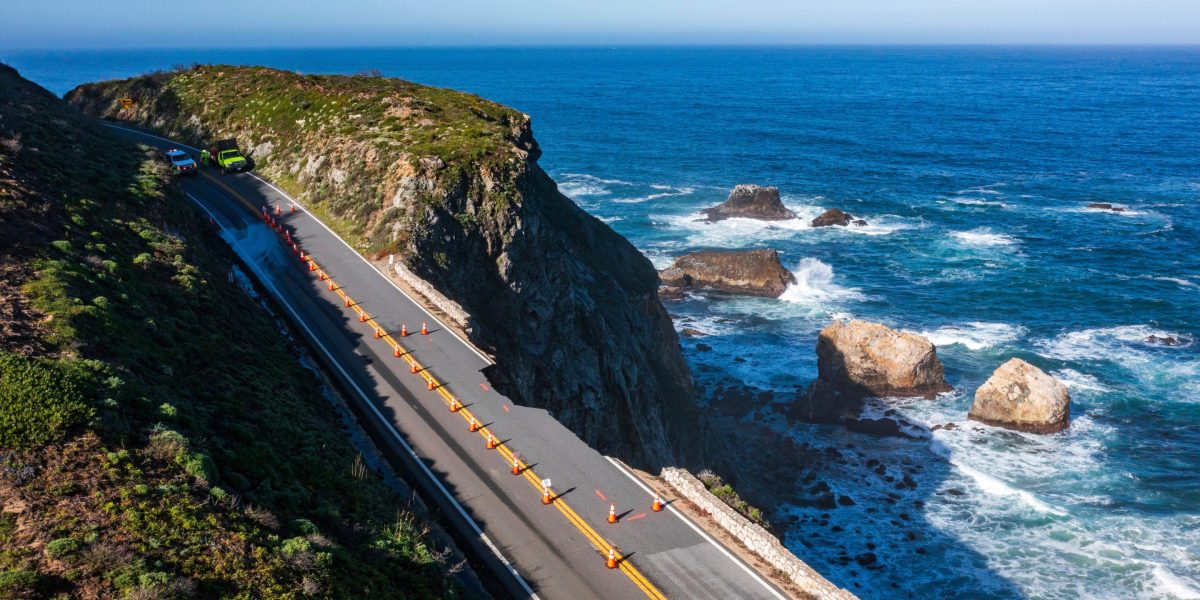
A 90-mile (145-kilometer) section of California’s Highway 1 along the famous Big Sur coast finally reopened Wednesday after three years of closures and repairs following a series of landslides and a roadway collapse that hampered tourism on the scenic route.

The reopening around midday came three months ahead of schedule, and business owners say that should give travelers plenty of time to plan their spring and summer road trips.

“Today is a monumental milestone for us,” said a relieved Colin Twohig, general manager of the Big Sur River Inn. “We’re hitting the light at the end of the tunnel after three long years.”

The first shutdown came in January 2023 when a series of powerful atmospheric rivers triggered a major landslide. The highway was buried again the following year during another wet winter, when a lane also collapsed down a cliff near the Rocky Creek Bridge.

The traffic stoppage between Carmel and Cambria cut off access to Big Sur, an isolated stretch of the state’s central coast where misty, forested mountains rise up from the ocean. What used to be a short drive between the southern and northern sections — with tiny Big Sur Village roughly in the middle — became an eight-hour trek inland and then back toward the seashore.

The isolated area, home to fewer than 2,000 residents, is known for its panoramic hiking trails along high cliffs and craggy beaches where seals and sea lions sometimes sprawl out. The late “Tropic of Cancer” author Henry Miller lived there for nearly two decades starting in the 1940s, and there’s now a library devoted to his work.

Highway 1 is famously a must for California visitors traveling between Los Angeles and San Francisco, and Twohig said he looks forward to seeing tourists in cars and motorhomes back on the road.

Twohig estimated that his inn, with 22 guest rooms, a large restaurant and a general store, saw a 20% drop in business. He said the road closure directly following COVID-19 restrictions was a one-two punch. The inn spent the down time making improvements and marketing heavily to entice California residents to visit during the off-seasons.

“When you have a hospitality business, you really rely on the busy season, and when there is no busy season, it can be a hard pill to swallow,” he said. “Having that lifeline back is huge.”

There were multiple closures at various locations throughout the past three years, and the last stretch that remained shut was a 7-mile (11-kilometer) span near Lucia, according to the California Department of Transportation, or Caltrans.

Gov. Gavin Newsom announced the opening on social media, thanking Caltrans for the speedy work in “reviving a vital economic lifeline for local business owners and residents affected by the closure.”

Caltrans, which has called Highway 1 the jewel of the state highway system, placed steel and concrete to shore up the collapsed cliffside.


Source link

Continue Reading

Business

One year after Bill Gates surprised with the choice to close his foundation by 2045, he’s cutting staff jobs

Published

on


The Gates Foundation announced Wednesday that it will spend a record $9 billion in 2026, maximizing its spending in key areas such as global health. At the same time it will begin reducing the number of staff positions it has by as much as 500 over five years. This announcement comes in the wake of last year’s surprise decision to shutter the foundation in 2045.

The planned layoffs mark another major shift for one of the largest and most influential foundations in the world at a time when many of its long-term priorities, such as addressing poverty and improving global health, have been undermined by cuts in U.S. government spending by the Trump administration.

Bill Gates said last year that the foundation would spend $200 billion over the next 20 years and then close as part of his plan to give away the bulk of his wealth. This week, he and other members of the foundation’s board approved the largest budget in the foundation’s history, topping last year’s budget of $8.74 billion. With that new dollar amount, the foundation will increase budgets for several programs, including women’s health, vaccine development, polio eradication, AI, and U.S. education.

The board also approved a proposal to cap operating costs — including staff, salaries, infrastructure required to run the organization, facilities, and travel expenses — at no more than $1.25 billion, or approximately 14% of the foundation’s budget. To meet that goal, the grantmaker will cut up to 500 of its 2,375 staff positions by 2030, including some open roles that may remain unfilled. The effort to reduce the staff count along with other expenses will be done incrementally and reviewed annually rather than coming in “a big wave,” foundation CEO Mark Suzman told the Chronicle of Philanthropy in an interview.

“We will do this thoughtfully, carefully, and systematically,” he said. “We’ll be recalibrating it every year. That 500-person target is a maximum target. I very much hope that we won’t have to do it as large as that number.”

Spending money prudently

Suzman said he and other board members felt the operating costs cap was necessary. If left unchecked, the foundation’s operating expenditures, currently around 13% of the budget, were projected to approach 18% by the end of the decade, Suzman said. The board wants to ensure that the foundation is spending money prudently and with a focus on maximizing the dollars spent and resources provided to the people the foundation serves, he said.

The Gates Foundation is also the world’s largest foundation to decide to close, and many in philanthropy have wondered how its leaders will go about planning an exit strategy, said Elizabeth Dale, acting executive director and Frey Foundation Chair for Family Philanthropy at Grand Valley State University’s philanthropy center. She works with a group of about 20 foundations that are spending down their endowments. Sunsetting a foundation with the massive wealth of the Gates Foundation is unprecedented and will likely require strong strategic planning, Dale said before the release of the new budget and staffing details.

“My sense is that they spent the last year really trying to home in on their priorities and their strategy,” she said.

What’s next

Many of the foundation’s core areas of work and achievement over the past decades have suffered due to humanitarian aid cuts from the United States and other countries last year, making philanthropic support more critical. In a recent blog post, Bill Gates noted that the “world went backwards” last year when it comes to child deaths, with the number going up for the first time this century, from 4.6 million in 2024 to 4.8 million in 2025.

“The next five years will be difficult as we try to get back on track and work to scale up new lifesaving tools,” Gates wrote. “Yet I remain optimistic about the long-term future.” In an effort to address that backsliding, the foundation is expected to accelerate spending in three priority areas over the next two decades: maternal and child health, infectious disease prevention, and poverty reduction, Suzman said. It also is expected to increase some grant sizes over time, though not across the board.

In the same post, Gates also discussed the challenges that artificial intelligence poses, warning that the technology could disrupt the job market and be misused by “bad actors” if more attention isn’t paid to how it’s developed, governed, and deployed.

At the same time, Gates has championed AI adoption. The foundation was among a coalition of funders that last July pledged to offer $1 billion in grants and investments to help develop AI tools for public defenders, social workers, and other frontline workers in the United States over the next 15 years. And, Suzman noted, AI is one of the foundation’s portfolio areas that will continue to expand.

The foundation also is expanding its footprint in India and Africa. Earlier this week, it announced the creation of a new Africa and India Offices Division. Staff on the HIV and tuberculosis teams at Gates Foundation headquarters in Seattle also will be downsized as that work largely shifts to offices in Africa, he said.

20 more years to go

Though the foundation has announced plans to close, Suzman continues to remind people internally and externally that 20 years is still a significant amount of time for the Gates Foundation to operate and make an impact.

“We are moving into what I believe is going to be the most impactful period of the Gates Foundation in its history,” he said. “We’ve learned a huge amount over the last quarter century. We’ve built expertise, credibility, and partnerships. We now have a set of goals that are allowing us to focus with greater intentionality.”

____

Stephanie Beasley is fellowship director and a senior writer at the Chronicle of Philanthropy, where you can read the full article. This article was provided to The Associated Press by the Chronicle of Philanthropy as part of a partnership to cover philanthropy and nonprofits supported by the Lilly Endowment. The Chronicle is solely responsible for the content. For all of AP’s philanthropy coverage, visit https://apnews.com/hub/philanthropy.


Source link

Continue Reading

Business

Americans have been quietly plundering Greenland for over 100 years, since a Navy officer chipped fragments off the Cape York iron meteorite
Published

on


The Army also imagined hundreds of miles of rail lines buried inside Greenland’s ice sheet. On Project Iceworm’s tracks, atomic-powered trains would move nuclear-tipped missiles in snow tunnels between hidden launch stations – a shell game covering an area about the size of Alabama.

In the end, Project Iceworm never got beyond a 1,300-foot (400-meter) tunnel the Army excavated at Camp Century. The soft snow and ice, constantly moving, buckled that track as the tunnel walls closed in. In the early 1960s, first the White House, and then NATO, rejected Project Iceworm.

A U.S. Army truck with railroad wheels sits on a 1,300-foot-long track beneath the snow at Camp Century, Greenland. This is the closest the military got to realizing Project Iceworm. Robert W. Gerdel Papers, Ohio State University

In 1966, the Army abandoned Camp Century, leaving hundreds of tons of waste inside the ice sheet. Today, the crushed and abandoned camp lies more than 100 feet (30 meters) below the ice sheet surface. But as the climate warms and the ice melts, that waste will resurface: millions of gallons of frozen sewage, asbestos-wrapped pipes, toxic lead paint and carcinogenic PCBs.

Who will clean up the mess and at what cost is an open question.

Greenland remains a tough place to turn a profit

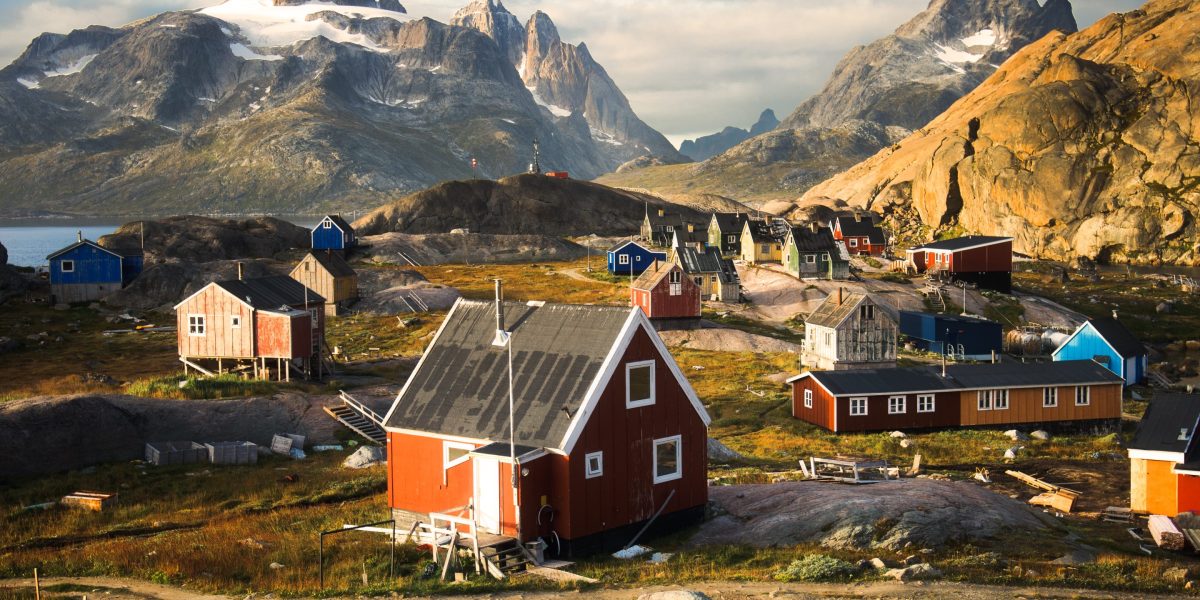
In the past, the American focus in Greenland was on short-term gains with little regard for the future. Abandoned bases, scattered around the island today and in need of cleanup, are one example. Peary’s disregard of the lives of local Greenlanders is another.

History shows that many of the fanciful ideas for Greenland failed because they showed little consideration of the island’s isolation, harsh climate and dynamic ice sheet.

Large rusted construction trucks and some fuel drums.

World War II-vintage trucks abandoned at a U.S. airfield in east Greenland were still there decades later. Posnov/Moment via Getty Images

Trump’s demands for American control of the island as a source of wealth and U.S. security are similarly shortsighted. In today’s rapidly warming climate, disregarding the dramatic effects of climate change in Greenland can doom projects to failure as Arctic temperatures climb.

Recent floods, fed by Greenland’s melting ice sheet, have swept away bridges that had stood for half a century. The permafrost that underlies the island is rapidly thawing and destabilizing infrastructure, including the critical radar installation and runway at Thule, renamed Pituffik Space Base in 2022. The island’s mountain sides are crashing into the sea as the ice holding them together melts.

The U.S. and Denmark have conducted geological surveys in Greenland and pinpointed deposits of critical minerals along the rocky, exposed coasts. However, most of the mining so far has been limited to cryolite and some small-scale extraction of lead, iron, copper and zinc. Today, only one small mine extracting the mineral anorthosite, which is useful for its aluminum and silica, is running.

It’s the ice that matters

The greatest value of Greenland for humanity is not its strategic location or potential mineral resources, but its ice. https://www.youtube.com/embed/9lnP0Rjb2E0?wmode=transparent&start=0 A NASA animation of satellite data shows Greenland’s ice sheet mass losses between 2002 and 2023, measured in meters of water equivalent in the ice.

If human activities continue to heat the planet, melting Greenland’s ice sheet, sea level will rise until the ice is gone. Losing even part of the ice sheet, which holds enough water to raise global sea level 24 feet in all, would have disastrous effects for coastal cities and island nations around the world.

That’s big-time global insecurity. The most forward-looking strategy is to protect Greenland’s ice sheet rather than plundering a remote Arctic island while ramping up fossil fuel production and accelerating climate change around the world.

Paul Bierman, Professor of Natural Resources and Environmental Science, University of Vermont

This article is republished from The Conversation under a Creative Commons license. Read the original article.

The Conversation


Source link

Continue Reading

Business

Bitcoin closes in on $100,000 in surprise surge

Published

on


New Year, new hope for Bitcoin. After several months of sputtering, Bitcoin is back on the rise. On Wednesday, the original cryptocurrency surpassed $97,000 for the first time in two months and is up more than 6% in the last week. 

The jump in Bitcoin came after Federal Reserve Chair Jerome Powell issued a remarkable statement that accused President Donald Trump’s administration of directing a baseless criminal investigation at him in order to intimidate the agency. Meanwhile, the price of gold and other precious metals shot up as investors fled towards safe haven assets. 

In addition to the uncertainty over the Fed’s independence, the latest inflation numbers appear to be driving the recent Bitcoin surge. 

“The global macro backdrop is supportive as CPI came in cool on Tuesday, amidst generalized concerns about Fed independence following Powell’s speech, which put pressure on the dollar, which is generally negatively correlated to Bitcoin,” said Russell Thompson, chief investment officer at Hilbert Group.

Smaller cryptocurrencies like Ethereum and Solana have also experienced a boost of late. The former is up more than 4% in the last week to about $3,338, and the latter increased more than 3% during that time to its current price of roughly $144. 

By all accounts, 2025 was a disappointing year for Bitcoin. Despite more favorable policies from the Trump administration, most notably the Genius Act signed in July, the original cryptocurrency’s price dropped more than 6% on the year. That’s in stark contrast to the S&P 500, which grew at a rate of about 17% during that time. 

In early October, Bitcoin reached its all-time high price of more than $126,000, but the final three months of 2025 erased those gains and then some. The original cryptocurrency plummeted to $84,000 in late November, a roughly 33% drop from its high. Much of this decline was sustained after what has been termed the “October flash crash”, the day traders lost $19 billion in assets. 

While the last quarter of 2025 was one to forget for Bitcoin, its price is off to an auspicious beginning in 2026. 

Join us at the Fortune Workplace Innovation Summit May 19–20, 2026, in Atlanta. The next era of workplace innovation is here—and the old playbook is being rewritten. At this exclusive, high-energy event, the world’s most innovative leaders will convene to explore how AI, humanity, and strategy converge to redefine, again, the future of work. Register now.


Source link

Continue Reading

Trending

Copyright © Miami Select.