
Politics
Jacksonville official warns Instagram followers about ICE arrests, advises on how to avoid ‘targeting’



Energy affordability and rising electricity costs dominated discussions this week as Republican leaders, consultants and policy advocates gathered in Orlando for the Republican Party of Florida’s Annual Meeting, with participants signaling the issue will be a defining theme of the 2026 Legislative Session.
Speakers at a panel hosted by Conservatives for Clean Energy Florida argued that high power bills are increasingly a kitchen-table concern for voters and warned lawmakers that affordability, reliability and grid security are converging into a single political test. The discussion came as lawmakers returned to Tallahassee and utilities continue to face scrutiny over fuel costs and long-term infrastructure planning.
“Floridians recognize that a multitude of energy generation resources will allow Florida to continue to lead the United States in economic development, innovation, and financial growth,” said Rep. Toby Overdorf, who emceed the panel. He said voters want practical solutions that keep electricity affordable without sacrificing reliability.
Polling data presented during the discussion underscored that message. According to Cygnal Polling, 63% of Republican voters surveyed support alternative energy sources, while 77% link energy independence directly to national security. Panelists said those numbers challenge the notion that clean or alternative energy is a partisan liability within GOP Primaries.
“Voters want an all-of-the-above approach to energy as a solution to rising costs and as a way for Florida to secure grid security and independence,” said Cygnal pollster John Rogers. “Republican voters will reward campaigns that lay out a clear vision for unleashing all of Florida’s incredible energy potential to spur job growth and make energy more affordable.”
The panel featured Conservatives for Clean Energy Florida Executive Director Zach Colletti, Rogers, R Street Institute energy analyst Josiah Neeley and ace political consultant Chris Hudson. Speakers repeatedly returned to the idea that diversification — including solar, nuclear and traditional generation — is the best hedge against fuel price spikes that ultimately hit consumers.
Neeley said regulatory delays and uncertainty can add unnecessary costs that are passed on to ratepayers, while Hudson emphasized that energy messaging is evolving as affordability overtakes ideology as the dominant concern among voters.
Polling also showed strong support for strengthening energy infrastructure and reducing regulatory burdens, which are viewed as driving up costs. Panelists framed those priorities as consistent with conservative principles, arguing that predictability and competition help protect families from sudden rate increases.
Energy policy debates are expected to intensify as the Session unfolds, with lawmakers weighing grid hardening, generation expansion and long-term planning against pressure to keep rates in check. Speakers said the political takeaway from the Orlando meeting was clear: Republican voters are focused less on labels and more on whether policies deliver reliable, affordable power.
As Overdorf put it, “Affordability matters. Reliability matters. And voters expect us to get both right.”

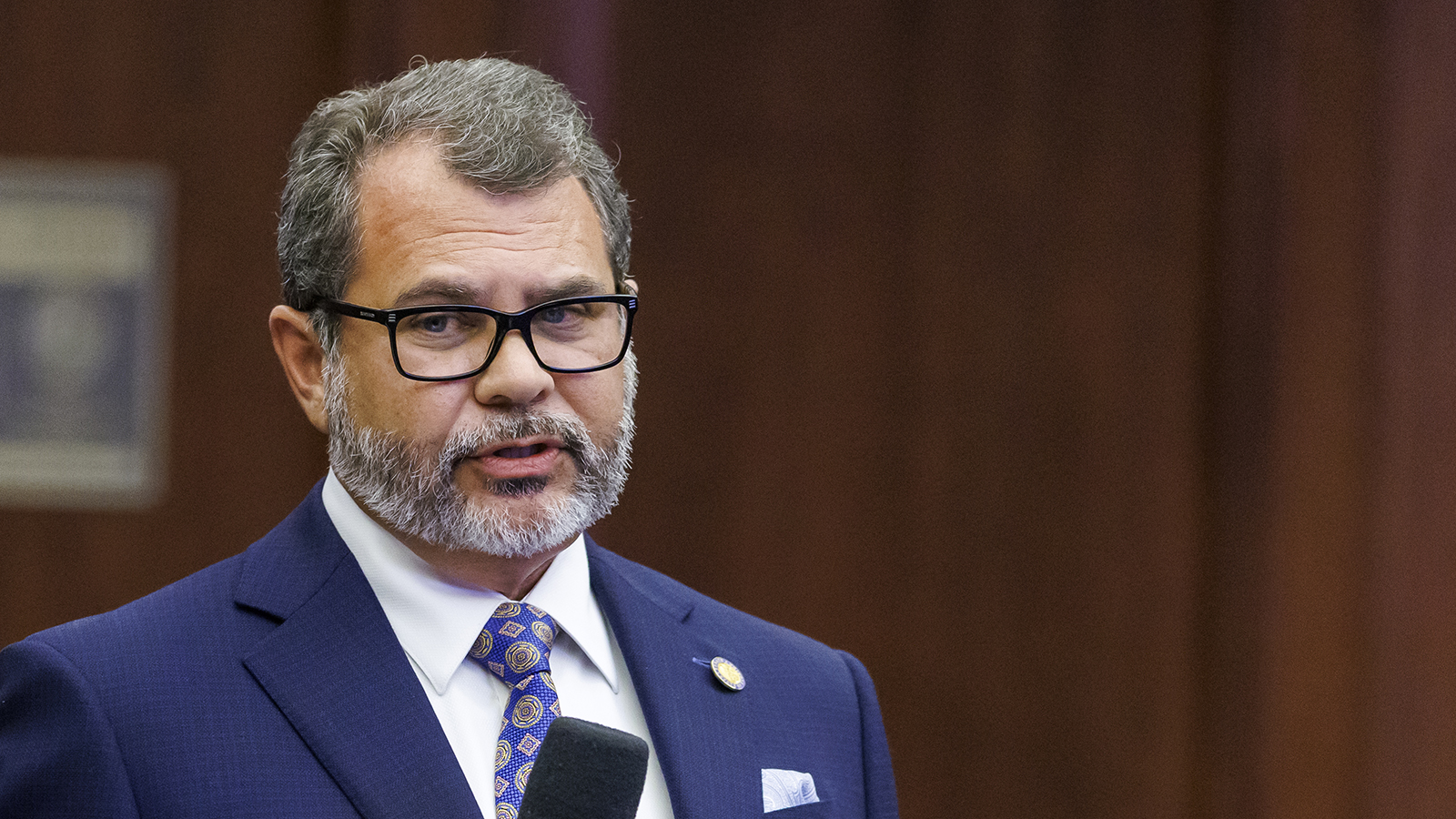
Legislation that would require life sentences without parole for people convicted of manslaughter in the death of a police officer is once again a vote away from reaching the Senate floor.
Members of the Senate Appropriations Committee on Criminal and Civil Justice voted 6-1 for the measure (SB 156), which is meant to eliminate any question about whether someone can violently resist arrest.
“Florida law provides that a person may not lawfully use force or violence to resist a law enforcement officer in arrest or detention,” said the bill’s sponsor, St. Augustine Republican Sen. Tom Leek.
“However, because applicable statutes and jury instructions reference an officer’s ‘execution of a legal duty,’ some defendants have claimed an unlawful detention or arrest in an attempt to justify using force against that officer.”
SB 156 and its House analog (HB 17) by Jacksonville Republican Rep. Jessica Baker are titled the “Officer Jason Raynor Act” after a Daytona Beach Police officer who was fatally shot in 2021 by a man who resisted arrest.
In June, an appeals court affirmed the 30-year sentence of Raynor’s killer, Othal Wallace. Outcry followed Wallace’s sentencing, as did bills by Leek and Baker, who are making their third run at passing the legislation.
They came within a vote of doing so last year, but disagreement over four words and procedural rules that limit the number of times a bill can bounce between chambers killed it.
Baker told Florida Politics in September, shortly after she refiled the measure, that she and Leek had “a great conversation” over the Summer and have ironed out their differences.
“It’s important to us to work together and do what’s right for Floridians by ensuring this important bill becomes law,” she said.
Aside from increasing sentencing levels to ensure tougher penalties for violent acts against officers, SB 156 expands the definition of who qualifies as a protected officer to include correctional, probation and auxiliary officers, and raises the offense severity for crimes such as assault, battery, aggravated assault and aggravated battery when the victim is an officer.

The legislation also includes and defines a “good faith” standard for police conduct during arrests and detainment situations — a criterion Leek added back to the bill after hearing concerns from the Senate Black Caucus about unchecked police power in communities of color.
Leek said he spent time with Raynor’s family during the off-season.
“This is important,” he said. “This is important to them. This is the third year moving through the process, and it’s time we brought some closure to the Raynor family.”
Representatives from the Florida Sheriff’s Association, Florida Police Benevolent Association, Sun Coast Police Benevolent Association, Florida League of Cities and Florida Police Chiefs Association all expressed support for the measure.
So did Port Orange Republican Sen. Tom Wright, who said he was on the phone with Volusia County Sheriff Michael Chitwood the night Raynor was killed.
“He abruptly said, ‘Something’s happened. I’ve got to go.’ And then he called me back an hour and a half later and said, ‘It’s bad,’” Wright said. “Following that, I was privy to see the body camera of Officer Raynor, and it’s overwhelming. We need to protect our law enforcement officers.”
Tamarac Democratic Sen. Rosalind Osgood, who voted for the bill, raised concerns about unintended consequences, specifically what would happen in cases of DUI manslaughter where an officer is a victim.
Leek said that while he hadn’t considered that potentiality, he didn’t think SB 156 would apply, since it specifically deals with resisting arrest with violence.
Orlando Democratic Sen. Carlos G. Smith cast the sole “no” vote, but did not speak on the bill Wednesday. He also voted against it in its first committee stop Dec. 9.
SB 156, which Leek amended to better align with the House bill’s language, will next go to the Senate Rules Committee, its final committee stop in the chamber.
HB 17 awaits a hearing in the second of three committees to which it was referred.
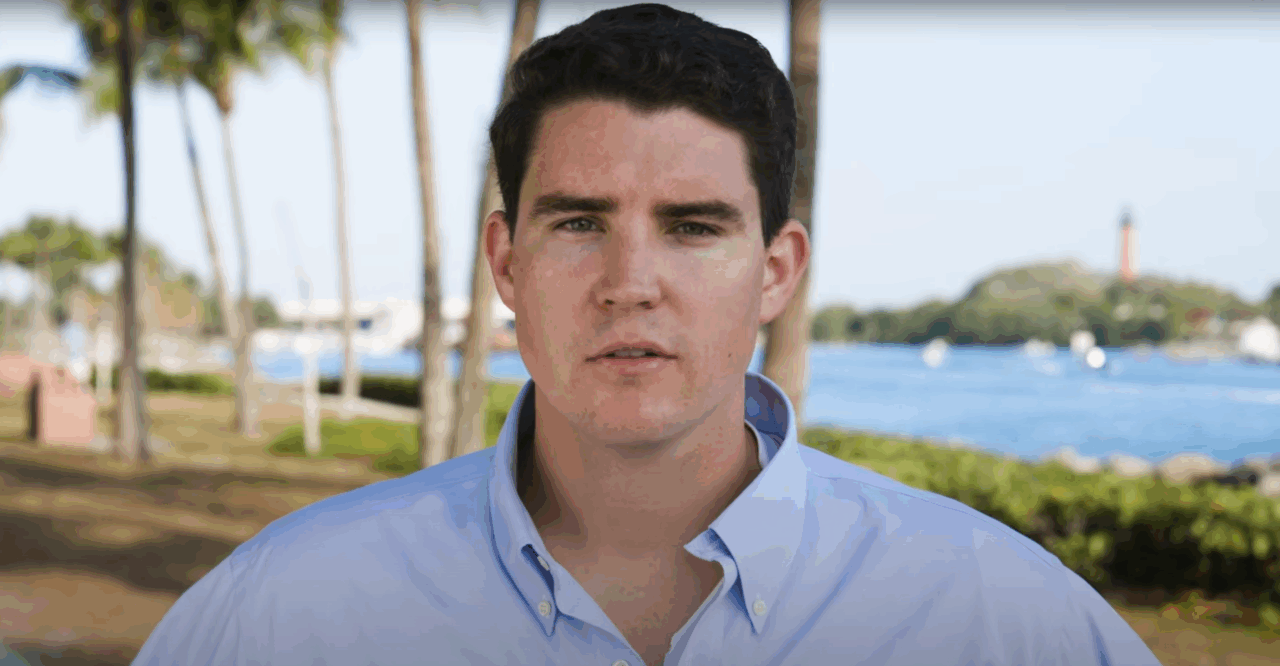
Democratic veteran James Martin’s bid to unseat Republican U.S. Rep. Brian Mast just notched an endorsement from a progressive, veteran-run super PAC that promotes principled, civility-focused candidates.
Veterans for Responsible Leadership said in a statement that it is backing Martin because he’s a “proven leader who gets things done.”
“James’s exemplary service in the U.S. Coast Guard brings the tested leadership and expertise our country desperately needs,” said the organization’s Executive Director, Scott Peoples.
“He represents a new generation ready to deliver real results for the American people and our national security. James is a proven leader who gets things done.”
A fourth-generation Floridian, Martin entered the race for Florida’s 21st Congressional District in early October. He said he’s running because Mast and others in Washington have failed to deliver on pocketbook issues while turning a blind eye to attacks on democracy at home.
Within his first 24 hours of running, his campaign reported raising more than $150,000. Official fourth-quarter campaign finance reports from federal races are due Tuesday.
The Veterans for Responsible Leadership nod joins others from former Palm Beach Gardens Mayors Eric Jablin and David Levy.
Martin said in a statement that he’s “honored” to have the PAC’s support.
“Veterans know what it means to serve something bigger than ourselves and to get the mission done,” he said. “That’s exactly what Florida’s 21st District needs — a representative who will deliver real results instead of empty rhetoric. I’m ready to bring that commitment to the halls of Congress.”
Martin is set to face at least three others in a Democratic Primary: Pia Dandiya, Elizabeth Pandich and Bernard Taylor. Dandiya, who leads public sector partnerships for Apple, entered the race in early June and raised more than $783,000 through Sept. 30.

Pandich, who owns and operates an equestrian center, raised $71,000.
CD 21 includes all of Martin and St. Lucie counties and part of northern Palm Beach County. The district leans Republican — R+7, per the Cook Political Report — but has pockets of Democratic strength, particularly in suburban communities where education and health care are top concerns.
So far, no Republican has filed to challenge Mast. No-party candidate Robert Ott is also running.
The 2026 Primary is Aug. 18, followed by the General Election on Nov. 3.


Americans have been quietly plundering Greenland for over 100 years, since a Navy officer chipped fragments off the Cape York iron meteorite

Hailey Bieber Sends Cease & Desist to TikToker

Pitti Uomo double bill: Hed Mayner and Shinya Kozuko
-

 Politics8 years ago
Congress rolls out ‘Better Deal,’ new economic agenda
-
Entertainment8 years ago
New Season 8 Walking Dead trailer flashes forward in time
-
Politics9 years ago
Poll: Virginia governor’s race in dead heat
-
Politics8 years ago
Illinois’ financial crisis could bring the state to a halt
-
Entertainment8 years ago
The final 6 ‘Game of Thrones’ episodes might feel like a full season
-
Entertainment8 years ago
Meet Superman’s grandfather in new trailer for Krypton
-
Business8 years ago
6 Stunning new co-working spaces around the globe
-
Tech8 years ago
Hulu hires Google marketing veteran Kelly Campbell as CMO