Connect with us

Business

Whole Foods cofounder John Mackey’s hardest ever decision was firing his dad from his company board

Published

on


Whole Foods cofounder John Mackey knew the exact moment he came of age in the business world.

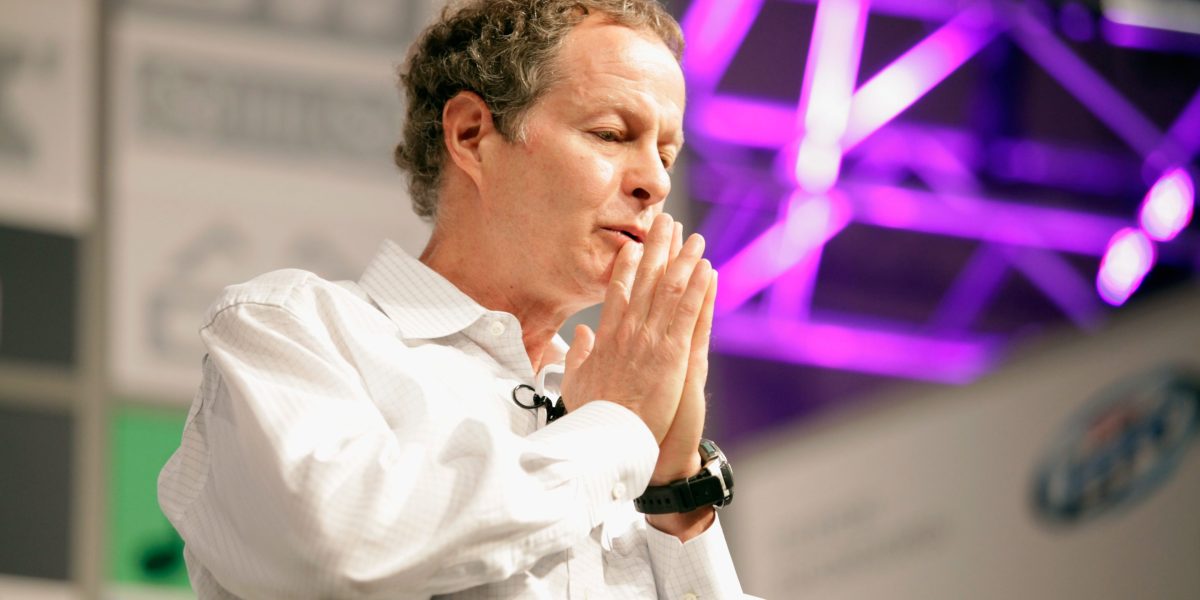
In a recent podcast interview with David Senra, Mackey recalled one of his most challenging moments: firing his father from the Whole Foods board in 1994 after nearly 15 years of advising Mackey on the direction of the company.

“That was the most difficult thing I ever did was firing my dad from that board,” Mackey said. “It took all the courage I had. I love my dad so much, and it hurt him so badly. It was so hard to do, but it was also a pivotal event in my own evolution.”

Mackey, who served as co-CEO of Whole Foods from its 1980 founding until his 2022 retirement, described his younger self as a “shirtless hitchhiking hippie” who dropped out of college. A man of contradictions, Mackey has called for marriage equality and claimed that taking psychedelics helps him find business inspiration, and in the same breath, has touted capitalism as humankind’s greatest invention while ripped labor unions, once comparing them to herpes (“It won’t kill you,” Mackey told the New Yorker in 2010, “but it’s very unpleasant, and will make a lot of people not want to be your lover.”)

In 2022, the business leader claimed “socialists are taking over,” and that young people weren’t willing to work anymore because they want to find meaningful work, something that eludes most people in the early stages of their careers.

His relationship with his father, as it relates to business, is no less complicated. As a younger man, the free-market vegan was looking to take risks to grow his wealth, even if it meant breaking from the guidance of his father, an original investor in Whole Foods. Mackey described his father as always being a man who preferred to conserve his cash, even if it meant sacrificing the growth of his wealth. As he aged, Mackey’s father became more rigid in his beliefs, which Mackey attributed in part to an Alzheimer’s diagnosis, made a couple years after his father’s departure from the board.

These diverging philosophies were most salient during the grocery chain’s 1992 IPO, when Mackey’s father encouraged the cofounder to sell company stock. Mackey, trusting his father, obliged, but later regretted it. He said the growing differences in doctrines around money fractured their relationship, leading Mackey to seek out independence from his father.

“That was when my mentorship was over,” he said. “He still advised me but from that point onward, really I was on my own. I was not going to follow him any longer. Before then, I pretty much did whatever my dad suggested.”

Mackey was largely responsible for transforming a single boutique health food store into a grocery giant. Founded in Austin in 1980, Whole Foods soon expanded across Texas and grew nationally, with 12 locations coast-to-coast at the time of its IPO, when the company was valued at $100 million. In 2017, Mackey sold the grocery giant to Amazon for a cool $13.7 billion. Whole Foods now has more than 500 locations across the U.S. and UK.

Mackey’s evolving business philosophy

At the core of Mackey’s businessperson identity is his doctrine of “conscious capitalism,” the flavor of free enterprise he said should operate with strong ethical foundations with the goal to create more than just profit in service of all business stakeholders, from customers to employees. Mackey first identified this value in 1981, when only a year after opening the first Whole Foods, the store flooded, severely damaging nearly everything inside. He recounted getting help from friends, customers, and suppliers, and was able to operate the business again 28 days after the flood.

Mackey said he internalized some value in making conservative financial decisions from his father, whom he said was a child of the Great Depression. Mackey’s father reached adulthood in the midst of World War II and operated under fear of another financial disaster for most of his life.

“He was always thinking there was going to be another Great Depression,” Mackey said. “So he was always trying to protect himself from that because it was such a traumatic experience for him.”

Mackey himself has admitted that making money isn’t everything. In 2007, the CEO said he felt financially secure and slashed his own salary to $1. (According to Forbes, he has a net worth of more than $75 million.)

However, the cofounder’s “expansive” philosophy of business increasingly diverged from his father, particularly in the way he kept shares of the business. When Mackey asked his father to step away from the board, he encouraged him to sell half his company shares and watch what happens to the other half. Whole Foods doubled in stock price over the next year.

While Mackey and his father were able to reconcile their differences, he recalled 1994 as the moment in which he prioritized his own business tactics over his mentor’s.

“I’m not going to do what you tell me to do any longer, particularly when it comes to growth,”  Mackey recalled telling his father. “We’re going to grow this business.”


Source link

Continue Reading

Business

Denmark and Greenland agree to form working group over the future of the territory

Published

on


A top Danish official said Wednesday that a “fundamental disagreement” over Greenland remains with President Donald Trump after holding highly anticipated White House talks with Vice President JD Vance and Secretary of State Marco Rubio.

The two sides, however, agreed to create a working group to discuss ways to work through differences as Trump continues to call for a U.S. takeover of the semiautonomous territory of NATO ally Denmark.

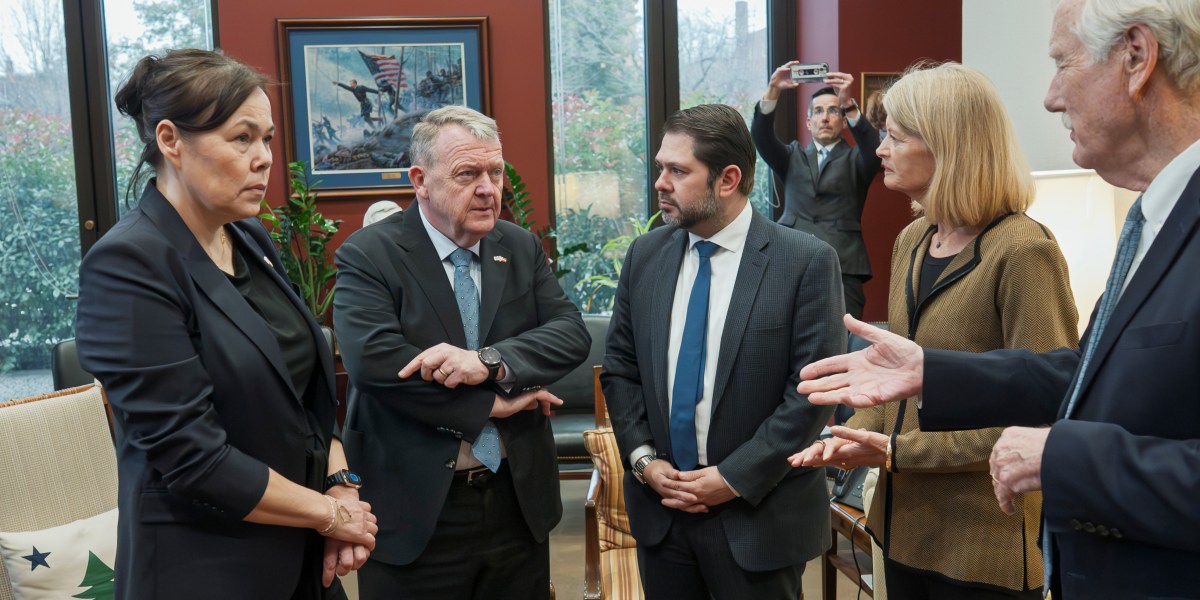
“The group, in our view, should focus on how to address the American security concerns, while at the same time respecting the red lines of the Kingdom of Denmark,” Danish Foreign Minister Lars Løkke Rasmussen told reporters after joining Greenland’s foreign minister, Vivian Motzfeldt, for the talks. He added that it remains “clear that the president has this wish of conquering over Greenland.”

Trump is trying to make the case that NATO should help the U.S. acquire the world’s largest island and says anything less than it being under American control is unacceptable.

Denmark, meanwhile, announced plans to boost the country’s military presence in the Arctic and North Atlantic as Trump tries to justify his calls for a U.S. takeover of the vast territory by repeatedly claiming that China and Russia have their designs on Greenland, which holds vast untapped reserves of critical minerals.

The president did not take part in Wednesday’s meeting. In an Oval Office exchange with reporters following the talks, he reiterated his commitment to acquiring the territory.

“We need Greenland for national security,” Trump said. He added: “We’ll see how it all works out. I think something will work out.”

Before the meeting, Trump took to social media to make the case that “NATO should be leading the way” for the U.S. to acquire the territory.

“NATO becomes far more formidable and effective with Greenland in the hands of the UNITED STATES,” Trump wrote. “Anything less than that is unacceptable.”

NATO Secretary General Mark Rutte has sought to keep an arms-length away from the dispute between the most important power and the other members of the 32-country alliance unnerved by the aggressive tact Trump has taken toward Denmark.

Both Løkke Rasmussen and Motzfeldt offered measured hope that the talks were beginning a conversation that would lead to Trump dropping his demand of acquiring the territory and create a path for tighter cooperation with the U.S.

“We have shown where our limits are and from there, I think that it will be very good to look forward,” Motzfeldt said.

Denmark bolstering presence in Arctic

In Copenhagen, Danish Defense Minister Troels Lund Poulsen announced an increase in Denmark’s “military presence and exercise activity” in the Arctic and the North Atlantic, “in close cooperation with our allies”.

Poulsen said the stepped-up military presence was necessary in a security environment in which “no one can predict what will happen tomorrow.”

“This means that from today and in the coming time there will be an increased military presence in and around Greenland of aircraft, ships and soldiers, including from other NATO allies,” Poulsen said.

Other NATO allies were arriving in Greenland along with Danish personnel, he said. Poulsen declined to name the other countries contributing to an increased Arctic presence, saying that it is up to the allies to announce their own participation.

The new security commitments, at least those publicized by Greenland’s allies, appeared modest.

Germany said it would send 13 personnel this week to Greenland “to explore the framework for potential military contributions” on the island. Sweden announced Wednesday it was sending an unspecified number of personnel to Greenland for military exercises. And two Norwegian military personnel also were being sent to Greenland to map out further cooperation with allies, the country’s defense minister, Tore O. Sandvik, told newspaper VG.

NATO is also looking at how members can collectively bolster the alliance’s presence in the Arctic, said a NATO official who was not authorized to comment publicly and spoke on condition of anonymity. The official added there’s consensus “that security in the High North is a priority.”

Greenlanders want the US to back off

Greenland is strategically important because, as climate change causes the ice to melt, it opens up the possibility of shorter trade routes to Asia. That also could make it easier to extract and transport untapped deposits of critical minerals which are needed for computers and phones.

Trump says Greenland is also “vital” to the United States’ Golden Dome missile defense program. He also has said he wants the island to expand America’s security and has repeatedly cited what he says is the threat from Russian and Chinese ships as a reason to control it.

“If we don’t go in, Russia is going to go in and China is going to go in,” Trump argued anew Wednesday. “And there’s not a thing that Denmark can do about it, but we can do everything about it.”

But experts and Greenlanders question that claim, and it has become a hot topic on the snow-covered main street in Greenland’s capital, where international journalists and camera crews have descended as Trump continues his takeover talk.

“The only Chinese I see is when I go to the fast food market,” heating engineer Lars Vintner said. He said he frequently goes sailing and hunting and has never seen Russian or Chinese ships.

In interviews, Greenlanders said the outcome of the Washington talks didn’t exactly evince confidence that Trump can be persuaded.

“Trump is unpredictable,” said Geng Lastein, who immigrated to Greenland 18 years ago from the Philippines.

Maya Martinsen, 21, said she doesn’t buy Trump’s arguments that Greenland needs to be controlled by the U.S. for the sake maintaining a security edge in Arctic over China and Russia. Instead, Martinsen said, Trump is after the plentiful “oils and minerals that we have that are untouched.”

Greenland “has beautiful nature and lovely people,” Martinsen added. “It’s just home to me. I think the Americans just see some kind of business trade.”

Denmark has said the U.S., which already has a military presence, can boost its bases on Greenland. The U.S. is party to a 1951 treaty that gives it broad rights to set up military bases there with the consent of Denmark and Greenland.

Løkke Rasmussen and Motzfeldt, along with Denmark’s ambassador to the U.S., planned to meet later Wednesday with senators from the Arctic Caucus. A bipartisan delegation of U.S. lawmakers is also heading to Copenhagen this week to see Danish and Greenlandic officials.

Both Løkke Rasmussen and Motzfeldt said while they remain at loggerheads with Trump, it remains critical to keep talking.

“It is in everybody’s interest — even though we disagree — that we agree to try to explore whether it is doable to accommodate some of the concerns while at the same time respecting the integrity of the Danish kingdom’s territory and the self-determination of the Greenlandic people,” Løkke Rasmussen said.

___

Burrows reported from Nuuk, Greenland and Ciobanu from Warsaw, Poland. Associated Press writers Stefanie Dazio and Geir Moulson in Berlin, Lisa Mascaro, Aamer Madhani and Will Weissert in Washington and Catherine Gaschka in Paris contributed to this report.


Source link

Continue Reading

Business

Rural America is getting a bailout, but not from Trump—billionaires are riding to the rescue

Published

on


Rural America is getting a bailout.

Billionaires are increasingly stepping in to plug gaps in services, education, and opportunity that many small towns say have been ignored for years. While Washington remains gridlocked over how to revive areas left behind by industrial and demographic change, a growing class of wealthy donors is quietly reshaping the economic future of the countryside with nine-figure checks and thousands of acres of land.

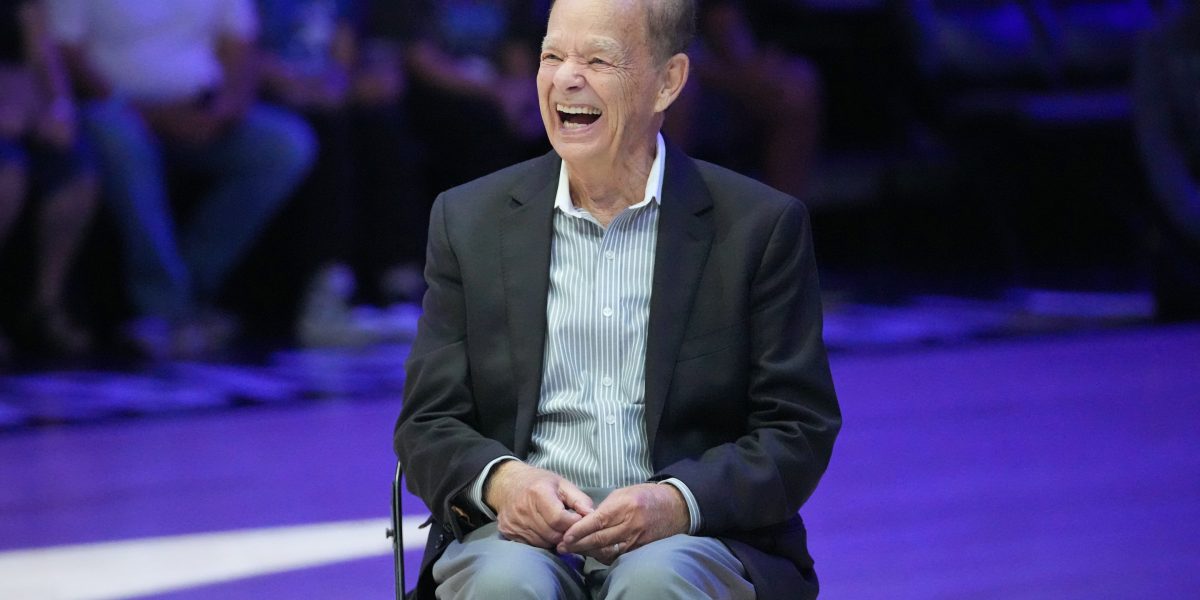
Minnesota billionaire Glen Taylor, who built Taylor Corp. into a printing empire and became his state’s wealthiest resident, is now redirecting a significant slice of his fortune back to the rural communities that raised him. The 84-year-old former dairy farm kid from outside Comfrey, Minnesota (pop. 376 as of 2024), is transferring farmland and securities worth roughly $100 million into the Taylor Family Farms Foundation, with a specific mandate to support rural areas in Minnesota and Iowa.

Rather than offering a one-time cash infusion, Taylor’s gift is structured to generate income for years, building on a 2023 transfer of about $173 million in farmland that already funds grants through regional nonprofit partners. Taylor said the move is rooted in his own upbringing in southern Minnesota, where he worked on farms and raised chickens, and in a desire to “make a positive impact on the lives of others in a region that I love so much,” Taylor said in a statement to the Observer.​

Billionaire rural wave

Taylor is part of a broader pattern in which ultrawealthy donors are focusing explicitly on small-town and rural America rather than the big-city universities and museums that long dominated philanthropy. Investment banker Byron Trott, who grew up in Union, Missouri, has pledged $150 million to a network of universities to boost enrollment from rural students, a push that has already helped drive a 20% increase in applications.

Philanthropist MacKenzie Scott has similarly turned her attention to rural education, donating $36 million to North Carolina institutions such as Robeson Community College and Bladen Community College to bolster opportunities in some of the country’s poorest counties. Together, these gifts signal a recognition among billionaires that the country’s economic and political fault lines increasingly run between thriving metros and struggling rural regions—and that private money can move faster than federal policy.

Politics, power and dependence

The surge of billionaire attention comes as rural voters remain a core political base for Trump, whose “forgotten men and women” rhetoric helped power his return to the White House but has not translated into a sweeping federal revival plan for small-town America. In that vacuum, philanthropists like Taylor, Trott, and Scott are effectively writing their own rural policy agendas through foundations and grantmaking, deciding which towns get ambulances, which fire departments get radios, and which students get a shot at college.

Trump’s administration has announced a $12 billion bailout for farmers in the wake of a wipeout amid his tariff regime, particularly for soybeans. At one point in 2025, as Trump and Treasury Secretary Scott Bessent announced support for like-minded ally Javier Milei in Argentina, China cut its U.S. soybean purchases to zero and began buying them from Argentina instead. After a Trump-Xi summit, China resumed soybean purchases, and more recently Argentina has repaid its full $20 billion credit line. Kentucky soybean farmer Caleb Ragland told the Associated Press in early January that Trump’s aid for farmers was “a Band-Aid on a deep wound. We need competition and opportunities in the market to make our future brighter.”

For this story, Fortune journalists used generative AI as a research tool. An editor verified the accuracy of the information before publishing.


Source link

Continue Reading

Business

Highway 1 along Big Sur reopens after 3 years of closures amid tourism-destroyin landslide

Published

on


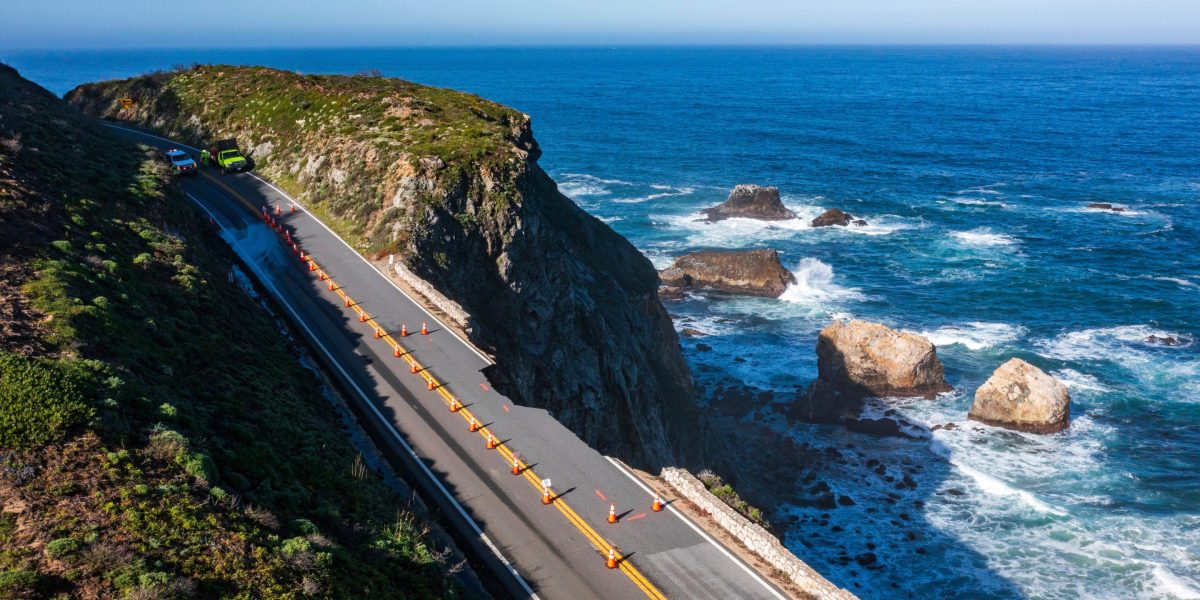
A 90-mile (145-kilometer) section of California’s Highway 1 along the famous Big Sur coast finally reopened Wednesday after three years of closures and repairs following a series of landslides and a roadway collapse that hampered tourism on the scenic route.

The reopening around midday came three months ahead of schedule, and business owners say that should give travelers plenty of time to plan their spring and summer road trips.

“Today is a monumental milestone for us,” said a relieved Colin Twohig, general manager of the Big Sur River Inn. “We’re hitting the light at the end of the tunnel after three long years.”

The first shutdown came in January 2023 when a series of powerful atmospheric rivers triggered a major landslide. The highway was buried again the following year during another wet winter, when a lane also collapsed down a cliff near the Rocky Creek Bridge.

The traffic stoppage between Carmel and Cambria cut off access to Big Sur, an isolated stretch of the state’s central coast where misty, forested mountains rise up from the ocean. What used to be a short drive between the southern and northern sections — with tiny Big Sur Village roughly in the middle — became an eight-hour trek inland and then back toward the seashore.

The isolated area, home to fewer than 2,000 residents, is known for its panoramic hiking trails along high cliffs and craggy beaches where seals and sea lions sometimes sprawl out. The late “Tropic of Cancer” author Henry Miller lived there for nearly two decades starting in the 1940s, and there’s now a library devoted to his work.

Highway 1 is famously a must for California visitors traveling between Los Angeles and San Francisco, and Twohig said he looks forward to seeing tourists in cars and motorhomes back on the road.

Twohig estimated that his inn, with 22 guest rooms, a large restaurant and a general store, saw a 20% drop in business. He said the road closure directly following COVID-19 restrictions was a one-two punch. The inn spent the down time making improvements and marketing heavily to entice California residents to visit during the off-seasons.

“When you have a hospitality business, you really rely on the busy season, and when there is no busy season, it can be a hard pill to swallow,” he said. “Having that lifeline back is huge.”

There were multiple closures at various locations throughout the past three years, and the last stretch that remained shut was a 7-mile (11-kilometer) span near Lucia, according to the California Department of Transportation, or Caltrans.

Gov. Gavin Newsom announced the opening on social media, thanking Caltrans for the speedy work in “reviving a vital economic lifeline for local business owners and residents affected by the closure.”

Caltrans, which has called Highway 1 the jewel of the state highway system, placed steel and concrete to shore up the collapsed cliffside.


Source link

Continue Reading

Trending

Copyright © Miami Select.