
Politics
James Fishback files another finance report, but the fundraising isn’t much better

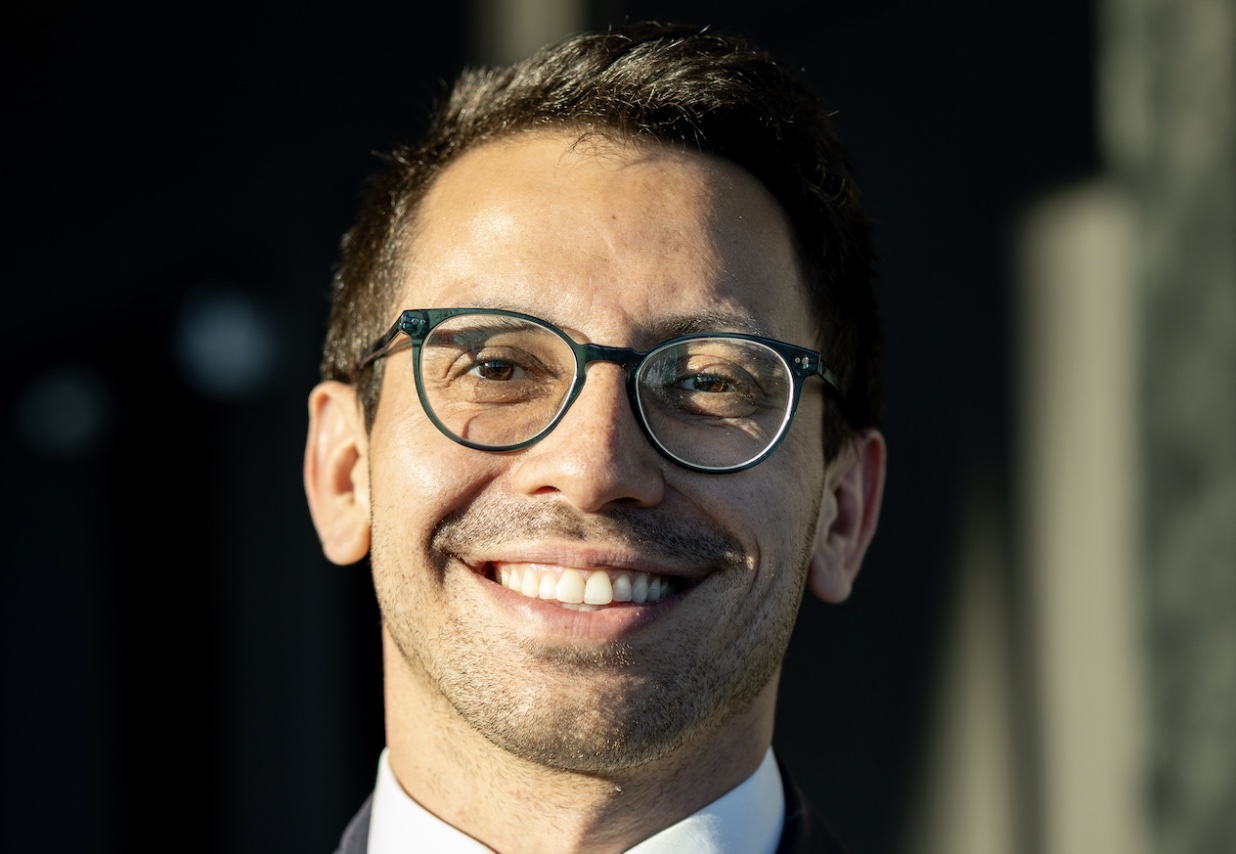
Gubernatorial candidate James Fishback has lashed out at coverage of his campaign finance report, saying he raised more than the $950 his campaign originally reported during the final quarter of 2025 and blaming the media for getting it wrong.
“To be clear, we didn’t raise only $950. It was yet another lie by the fake news media to hurt our surging campaign,” he said.
The Republican candidate has finally provided proof that he raised more than $950, filing an amended report. Unfortunately for his campaign, his new total still significantly trails numbers from other GOP candidates, and much of what he did raise came from out-of-state donors, raising questions about how much support he actually has in Florida.
Since opening his campaign account in late November, Fishback has raised just under $19,000. But the burn rate has been significant, with the candidate spending just over $12,000, giving him a bit more than $6,000 on hand.
The spend includes more than $6,800 in “reimbursement” to Treasurer Alex Munguia, but it’s unclear what the reimbursement is for, raising further questions about the report.
Of the 360 contributions including in-kind, just 200 come from inside the state. Other donors claimed residency in Texas, California, New York, New Mexico and various other places with no vested interest in what happens in Tallahassee.
Campaign Manager Emma Wright said the almost $19,000 brought in is just a taste of the financial juggernaut to come, saying the campaign “hosted our first fundraiser of the year last Friday at the Ritz Carlton, Singer Island and are on track to hit $250,000 in donations.”
Even that aspirational goal, minus whatever is spent having fundraisers at the Ritz Carlton and paying staff and funding travel, falls short of the roughly $45 million raised thus far by the front-runner, U.S. Rep. Byron Donalds, a Black conservative Fishback relishes calling a “slave.” It also is well under the nearly $5.5 million brought in by former House Speaker Paul Renner.
Fishback’s Florida First PAC still has yet to record activity, though given the precedent set by the campaign account, they could always amend their filing.
On the bright side, a filing Jan. 12 shows the aforementioned Munguia was successful in recovering his credentials for the electronic filing system, meaning submitting future reports should be seamless.


Last Call – A prime-time read of what’s going down in Florida politics.
First Shot
Florida Senate President Ben Albritton used his remarks at the Florida Chamber’s annual Legislative Fly-In to press what one of the few unifying priorities before lawmakers this Session: tackling food insecurity, particularly among children.
Speaking to a room filled with business leaders, Albritton said the issue cuts across ideology and geography, calling it one of the rare policy areas that consistently draws broad support inside and outside the Capitol.
“I struggle with the idea that we live in the richest, most prosperous and most free country the world has ever known. And yet, there are children who go to bed in Florida hungry night after night after night,” Albritton said
Albritton emphasized that efforts to address hunger are not about expanding bureaucracy or engaging in partisan debates, but about connecting resources already present in Florida’s communities to the people who need them.
He highlighted the Farmers Feeding Florida initiative, an effort Albritton led with Agriculture Commissioner Wilton Simpson that connects agricultural producers with food banks to deliver locally grown food to struggling households. Albritton said the program provides a “hand up, not a handout” to families facing circumstances beyond their control.
“I hope you agree, and that, by function, is a hand up by government. It doesn’t make us socialist. It makes us thoughtful. It makes us compassionate. It puts us in a circumstance where it can draw the very best out of everyone for the betterment of those around us,” he said.
Albritton said the Senate will be “laser focused” on tackling food insecurity this Session and urged business leaders and local communities to get engaged in the effort to make food insecurity a thing of the past in Florida.
“It is not a wealth transfer, it is not a tax-and-spend. It is a bona fide opportunity to be able to help make sure that none of those kids go to bed hungry every night. That matters. That matters a lot,” he said.
Evening Reads
—”Donald Trump warned of a Tren de Aragua ‘Invasion.’ U.S. intel told a different story” via Dell Cameron and Ryan Shapiro of WIRED
—”The 40 most ridiculous lines from Trump’s Michigan ‘economy’ speech” via Chris Cillizza of So What
—“JD Vance-hosted Greenland meeting ends with ‘fundamental disagreement’” via Adam Taylor and Michael Birnbaum of The Washington Post
—”Denmark’s Army Chief says he’s ready to defend Greenland” via Isaac Stanley-Becker of The Atlantic
—”Why Greenland matters for a warming world” via Somini Sengupta of The New York Times
—“Actually, sometimes polls underestimate Democrats” via Eli McKown-Dawson of the Silver Bulletin
—“Ron DeSantis hypes Hope Florida, wife’s pet project, despite investigation” via Alexandra Glorioso and Lawrence Mower of the Miami Herald/Tampa Bay Times
—”Daniel Perez draws line on property taxes, presses Gov. DeSantis for details” via Drew Wilson of Florida Politics
—”John Guard selected to fill 2nd District Court of Appeal opening” via A.G. Gancarski of Florida Politics
—”Babies out, older children in, under revamp of Florida swim voucher program” via Christine Sexton of the Florida Phoenix

Quote of the Day
“Disagreement is healthy. It’s why our country is so great. My family comes from an island 90 miles south of Florida, where there is no difference of opinion — and if there is, you get put behind bars.”
— House Speaker Danny Perez, on disagreements in the legislative process.
Put it on the Tab
Look to your left, then look to your right. If you see one of these people at your happy hour haunt, flag down the bartender and put one of these on your tab. Recipes included, just in case the Cocktail Codex fell into the well.
If you want a Dodge Special but the bartender is taking too long, just ask the Governor whether he’s planning to endorse Lt. Gov. Jay Collins.
Send a Warhawk to Seminole High School’s Class of ‘89 valedictorian and Florida’s newest Supreme Court Justice, Adam Tanenbaum.
Raise a Flying High — Florida’s first aerial highway is expected to arrive at the terminal in late 2027 or 2028.


Breakthrough Insights

Tune In
No. 25 UCF hosts K-State before major tests
With games against the top two-ranked teams in the country on the horizon, UCF tips off against Kansas State tonight, looking for another win in conference play (8 p.m. ET, Peacock).
The Knights (13-2, 2-1 Big 12) opened conference play on Jan. 3 with an upset of then-No. 17 Kansas before losing at Oklahoma State. UCF bounced back to top Cincinnati on Saturday, 73-72.
Johnny Dawkins’ team debuted in the Associated Press Top 25 at No. 25, the first appearance by the program in the poll since 2019 and just the sixth week UCF has been ranked since the program began in 1969.
Senior guard Riley Kugel, an Orlando native and Mississippi State transfer who started his career at Florida, leads the Knights in scoring, averaging 14.5 points per game. The team features a balanced attack with four players averaging over 12 points per contest.
Kansas State (9-7, 0-3 Big 12) has opened conference play with losses to 10th-ranked BYU, at No. 1 Arizona and at Arizona State. Tonight’s game is the fourth time this season the Wildcats will face a ranked team. They have lost the previous three, including dropping a contest in November at No. 25 Indiana.
Both teams rank among the top 40 nationally in scoring, but the difference could come down to defense. K-State is allowing 80 points per game, among the worst in the country, while UCF is surrendering 75.5 points per contest.
After tonight’s game, the Knights host No. 1 Arizona and travel to second-ranked Iowa State.
___
Last Call is published by Peter Schorsch, assembled and edited by Phil Ammann and Drew Wilson, with contributions from the staff of Florida Politics.
Politics
María Elvira Salazar believes Donald Trump could still warm up to Dignity Act, path to legal residency

U.S. Rep. María Elvira Salazar believes President Donald Trump may yet come around to allowing legal residency for longtime immigrants.
At a press conference in Washington promoting her new book, “Dignity Not Citizenship,” Salazar acknowledged the uphill path for her bipartisan Dignity Act (HR 4393) in the current political climate. But she suggested that one person could change that.
“I have no doubt that Trump will be for immigration what (Abraham) Lincoln was for slavery and (Ronald) Reagan was for communism,” Salazar said. “He’s going to fix it.”
Many are skeptical. Trump has made mass deportations a central tenet of his agenda since the start of his second term.
But Trump in a New York Times interview made clear, while saying he has problems with groups like Somali immigrants, that he doesn’t want to stop all immigration.
“I just want people that love our country. It’s very simple. I want people that love our country,” Trump said. “I want people that respect our country, respect the laws of our country, and I want people that can embrace our country.”
Salazar saw hope in those remarks. She has also welcomed the support of lawmakers on both sides of the aisle who sponsored the Dignity Act, which currently has 16 Democratic co-sponsors and 15 Republican backers besides herself. Two of those — Republican U.S. Reps. Dan Newhouse of Washington and Democratic U.S. Rep. Dave Evans of Colorado — spoke in favor of the bill at her press conference.
Evans said his grandparents were Mexican immigrants, and he knows most are coming to the country for opportunity. “I know how important it is for hardworking folks to be able to have the same path that may abuelo had, to be able to earn that American dream,” Evans said.
Newhouse said immigrants contribute to the U.S. economy, and need a path to do so legally. “We all know that we depend on immigration in this country, but we also know that we want legal immigration,” he said.
But there are no more Democratic sponsors than Republican ones, in part because the bill has no pathway to citizenship. Salazar defended that approach.

“Do not talk to me about this path to citizenship anymore, because that has been on the Democratic side for 30 years, promising something that they never do,” she said. “So let’s be real. Let’s give something that can be given, which is dignity, dignified life, with no shame or fear.”
Her proposed Dignity Program would allow undocumented immigrants who have lived in the U.S. for at least five years to obtain legal status by agreeing to pay $7,000 over seven years, repay back taxes and pay 1% of their salary to the U.S. Treasury. The program would only be open to those with a clean criminal record.
But her proposal comes as many call for limits even on existing legal visas. Gov. Ron DeSantis has called for state universities to stop giving H-1B visas to international employees and crack down on the program overall. Every major Republican candidate to succeed DeSantis has pushed to crack down on issuing any new H-1B visas.
Salazar said that’s unsurprising because the current immigration system is broken. She said her bill could help address that.
“We need to fix the H-1Bs, and we need to fix the catch and release, and we need to fix the asylum system,” she said.
“We need to fix everything. So when we sit at the table, we’re going to be able to then have that conversation and fix everything at the same time. We just need to get it going. It’s been 40 years since this issue has not been touched.”

Florida’s high school graduation rates continue to show real progress.
According to the Florida Department of Education’s most recent cohort data released on January 13, 2026, the statewide four-year graduation rate, including both charter schools and traditional district public schools, stands at approximately 92%. That is a meaningful achievement and one worth acknowledging, particularly as schools confront staffing shortages, rising student needs, and sustained budget pressures.
But headline averages can obscure important differences policymakers should examine closely as the Florida Legislature debates education funding, accountability, and continued charter expansion.
When the data is disaggregated, the contrast is clear.
In the 2024–25 cohort, traditional district public high schools graduated 93.8% of students within four years, while charter high schools graduated 78.4%, a gap of more than 15 percentage points.
Both figures are derived from the same state accountability system and employ the same graduation definition. The difference is not technical. It is systemic.
Florida’s strong statewide graduation rate is driven primarily by traditional district public schools, which educate the vast majority of students. When charter and traditional schools are combined, the average remains high, but it is lower than the graduation rate achieved by traditional district schools alone.
Supporters of charter expansion often cite statewide graduation rates as evidence that Florida’s parallel education systems perform equally well or that charter schools drive overall success. Florida’s own data does not support that conclusion.
While nearly 94% of students in traditional district public schools graduate on time, more than one in five charter students do not. Graduation rate alone understates the disparity.
In 2024–25, 13% of charter students remained enrolled beyond four years, compared with 2.6% of students in traditional district public schools. Charter dropout rates were nearly three times higher, 4.4% versus 1.5%. These outcomes reflect thousands of students whose path to graduation is delayed or disrupted.

Florida’s graduation gains are real, but they are being driven overwhelmingly by traditional district public schools.
This distinction matters because Florida policy continues to emphasize expansion — approving new charter schools, providing facility access, and creating parallel funding streams often without applying the same level of scrutiny to outcomes. Expansion is frequently treated as a proxy for success, even when performance data tells a more nuanced story.
None of this diminishes the commitment of charter educators or students. But sound policymaking requires more than good intentions. It requires an honest evaluation of results.
Florida’s traditional district public schools deliver the strongest and most consistent graduation outcomes on time, with fewer dropouts and far fewer students pushed beyond the four-year window while serving diverse populations and absorbing enrollment volatility.
That is not an argument against innovation or parental choice. It is an argument for aligning public investment with evidence.
As lawmakers consider education priorities this Session, the central question is not whether Florida’s graduation rates are improving. They are.
The question is whether state policy will follow the data and invest accordingly in the schools that are producing the strongest outcomes for Florida’s students.
Progress should be celebrated. But progress should also be understood. Florida doesn’t need competing narratives; it needs education policy grounded in facts.
___
Crystal Etienne serves as president of the EDUVOTER Action Network.


Denmark and Greenland agree to form working group over the future of the territory

Coi Leray Scorches in Tiny Bikini While Teasing New Album

Last Call for 1.14.26 – A prime-time read of what’s going down in Florida
-

 Politics8 years ago
Congress rolls out ‘Better Deal,’ new economic agenda
-
Entertainment8 years ago
New Season 8 Walking Dead trailer flashes forward in time
-
Politics9 years ago
Poll: Virginia governor’s race in dead heat
-
Politics8 years ago
Illinois’ financial crisis could bring the state to a halt
-
Entertainment8 years ago
The final 6 ‘Game of Thrones’ episodes might feel like a full season
-
Entertainment8 years ago
Meet Superman’s grandfather in new trailer for Krypton
-
Business8 years ago
6 Stunning new co-working spaces around the globe
-
Tech8 years ago
Hulu hires Google marketing veteran Kelly Campbell as CMO