Connect with us

Business

How Expedia’s CTO is using AI to transform work for 17,000 employees—and travel for millions

Published

on


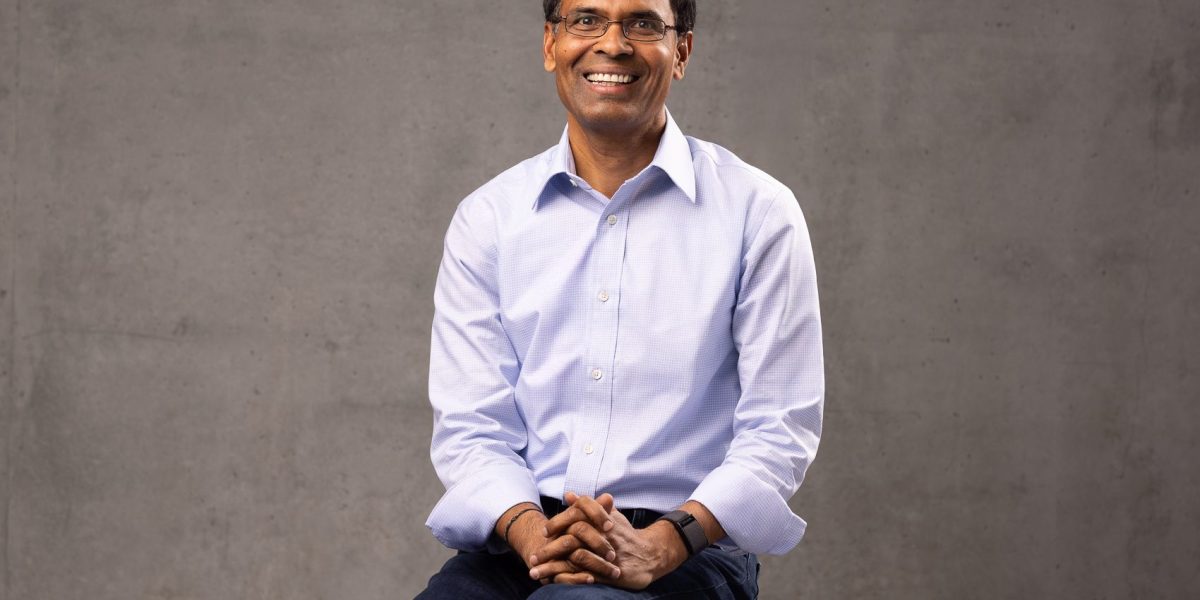
Ramana Thumu, the chief technology officer at Expedia Group, says there’s no “AI Center of Excellence” at the online travel agency that sits in an ivory tower and mandates how everyone should be using artificial intelligence.

“We are democratizing AI across the entire company,” says Thumu. “Every employee, every team, and every workflow.”

Some examples of how this plays out include the creation of Expedia’s “AI playground,” which gives employees access to more than 60 different large language models—including from OpenAI, Google’s Gemini, Meta’s Llama, and Anthropic’s Claude—to build their own AI agents. Since January 2025, employees have built more than 1,500 different AI agents and around 6,000 monthly sessions occur within the secure AI agent builder environment on a monthly basis. 

Around two-thirds of Thumu’s software developer workforce have embraced AI coding assistant tools including Copilot, Claude Code, and Cursor, often resulting in an estimated 20% productivity lift. Thumu says he wants to bring more “joy” to coding by giving them a broad set of AI tools to infuse in their workflows. He vows that more efficiency won’t necessarily mean fewer jobs. “That’s not how I see it,” Thumu adds. “It’s an improvement which means you can get more work done, much faster, and higher quality work.” 

And last year, Expedia began to embed AI “squads,” teams of around four to six AI engineers that work with various business divisions ranging from legal, procurement, human resources, and marketing, collaboratively working alongside AI “champions” for each of those segments to figure out where AI can possibly be implemented to handle some manual tasks. 

Every one of these AI investments are being measured, ranging from velocity and cycle time for the AI coding assistant tools, and within customer service, tracking how AI is speeding up the time it takes to resolve a customer query. For the broader employee population, Expedia is measuring usage and the impact on workflows. If the company doesn’t see the right adoption or outcomes for these tools, Thumu says Expedia is quick to reassess and adjust its approach.

“We are absolutely testing a lot of experiences and placing a lot of bets to make sure which ones stick and where we scale, and when the test is not wildly successful, fail fast and take those learnings to do something different,” says Thumu.

He joined Expedia, which ranks No. 312 on the Fortune 500, in late 2024 after a decade in technology leadership roles at sports-merchandising company Fanatics. As Expedia’s CTO, Thumu says his core AI priorities include testing and deploying internal productivity use cases, customer-facing external applications that will lean more heavily on multi-step agentic AI, and a focus on data as well as partner support from large language model providers.

“The same transformation that is happening inside the company is going to show up to hundreds of millions of travelers,” says Thumu.

External applications of AI include Expedia Trip Matching, which debuted in June and allows travelers to share any publicly available travel reel that caught their attention on Instagram and then share that reel directly with Expedia. The travel company will then use AI to produce a customized itinerary and travel tips that are based on the content that was originally created by an influencer.

In October, Expedia also served as a pilot partner—along with Booking.com, Zillow, and Spotify—for what’s known as “Apps in ChatGPT,” a feature that aims to further integrate the chatbot with external brands. As an example, a ChatGPT user can type in: “Expedia, find me a hotel in Paris for under $600 per night in March” and it will pull up a list with prices and links that go to Expedia’s site.

The company also developed an AI customer service agent that’s built on Amazon Web Services, which can help travelers with simple tasks including cancelling a hotel booking, getting a refund status, or changing their books so they don’t need to call a human agent. Expedia says this AI agent handles 143 million conversations a year and resolves over 50% of traveler queries.

As Expedia moves forward with embracing more agentic AI capabilities, Thumu stresses that the company will prioritize stitching together the technology in a manner so one AI companion can help customers effortlessly through all touchpoints. He doesn’t want to build one AI companion that helps book hotels, another to handle discovery for excursions, and yet another to address customer service questions. 

“We are trying to bring those together,” says Thumu. “To make sure that from a customer standpoint, it’s one agentic experience. There is a lot of work to be done, but we are in the initial stages.”

John Kell

Send thoughts or suggestions to CIO Intelligence here.

NEWS PACKETS

AI’s health care embrace continues to accelerate. Anthropic debuted a new offering within its Claude chatbot that can access medical information, an offering that’s intended for both large organizations and consumers. As Fortune reports, health-related questions are a leading consumer for AI chatbots and while Anthropic has historically been more focused on serving enterprises, this latest offering is an indication that Anthropic would like to make real inroads with consumers. Separately, OpenAI launched ChatGPT Health, which allows users to connect their medical records and wellness apps to the chatbot. But AI companies pushing into heath care need to be careful to closely guard consumer data and avoid inaccurate outputs. An investigation by the Guardian uncovered that some of Google’s AI Overviews provided false or inaccurate information when asked about blood tests.

Apple taps Google’s Gemini for AI-enabled Siri. The iPhone maker has inked a multiyear pact with Google to lean on the latter company’s Gemini to power its AI features, including a big upgrade for Siri that’s expected later in 2026. While the companies didn’t share details about the financials behind the deal, Bloomberg has previously reported that Apple was planning to pay about $1 billion a year to utilize Google AI. The deal is the latest sign that Google is continuing to make serious gains in the AI race against top rival OpenAI.

Nvidia to invest $1 billion in a new AI lab with Eli Lilly. The AI chip maker and pharmaceutical giant behind blockbuster drugs including Type 2 diabetes treatment Mounjaro and antidepressant Prozac are joining forces to build a facility in Silicon Valley that will aim to speed up the use of AI in drug discovery, a costly and time-intensive process. On top of that, the companies say that they see opportunities to apply AI across clinical development, manufacturing, and commercial operations, leveraging multimodal models, agentic AI, robotics, and digital twins.

Moody’s says data centers will need $3 trillion through 2030. The credit ratings company forecasts that at least $3 trillion of data-center investments will be needed to support building facilities, computer equipment, and new capacity to support the rising demand in AI and cloud computing. A big chunk of that spending will come directly from some of the world’s most valuable companies, as Moody’s says six players—Microsoft, Amazon, Alphabet, Oracle, Meta Platforms, and CoreWeave—are forecasted to spend $500 billion on data center investments in 2026, Bloomberg reports.

Walmart expands drone delivery program. Walmart and drone operator Wing, a unit of Google parent Alphabet, have announced that they plan to make package deliveries by sky available to tens of millions of shoppers by expanding the service to more than 270 Walmart locations by the end of 2027. The Wall Street Journal reports that Wing estimates that more than 40 million Walmart shoppers would have access to the service, up sharply from roughly 2 million mostly limited to the Dallas-Fort Worth and Atlanta regions today. Drone deliveries have been an enticing technology application intended to make it even easier to deliver online orders, but most actual applications have been restricted to just a few markets.

ADOPTION CURVE

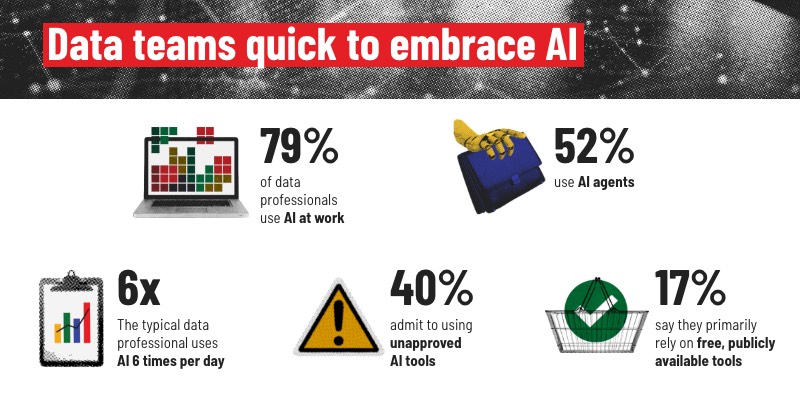
Data professionals are using unauthorized AI tools way more than they should be. Four out of every ten data professionals admitted that they use unauthorized AI at work, and 17% say they are primarily relying on free, publicly available AI tools, according to a recent survey conducted by tech training provider General Assembly. Devanshu Mehrotra, lead instructor of data science and data analytics at General Assembly, tells Fortune that these figures represent an expectation gap between employers and their workforce.

“Employees are expected to be more productive,” says Mehrotra. But, “they are not being given enough instructions and training to understand how to do it properly, or they are not given the tools that are required, and so they end up going the shadow AI route.”

He added that enterprises should more clearly communicate when and where AI should be used and also delineate the difference between a high risk use case that could expose sensitive data externally and lower-risk activities, like asking a chatbot general queries. AI policies, Mehrotra adds, “needs to be more focused on how you can use AI, what education you need to use or have before you can use AI, and what are approved versus unapproved use cases of AI.”

Courtesy of General Assembly

JOBS RADAR

Hiring:

Fortrea is seeking a chief data officer, based in Durham, North Carolina. Posted salary range: $200K-$250K/year.

Redesign Health is seeking a VP of technology, AI ventures, based in New York City. Posted salary: $198K/year.

Armada is seeking a head of engineering for the federal program, based in Seattle. Posted salary range: $187.4K-$235K/year.

AppFolio is seeking a SVP of engineering, based in San Diego. Posted salary range: $324K-$405K/year.

Hired:

Airbnb has appointed Ahmad Al-Dahle to the role of CTO, joining the home-sharing technology company from Meta, where he led the Facebook parent company’s generative AI efforts and the team behind the Llama family of open source models. Prior to Meta, Al-Dahle spent over 16 years at Apple, where he was one of the technologists behind the iPhone’s display and multitouch systems and also worked on the first Apple Watch.

Nationwide has promoted Misty Kuamoo to serve as CTO and SVP of Nationwide Financial, following the appointment of Michael Carrel, who was appointed CTO for the overall enterprise in December 2025. Kuamoo will be responsible for all technology solutions that support the insurer’s financial services businesses. She has served as a technology leader within Nationwide for more than five years.

The Timken Company promoted John Szarka to the new position of CTO after he most recently served as a vice president for the manufacturer of engineered bearings and industrial motion products. Szarka has worked at Timken for more than two decades, beginning as a sales engineer and earning steady promotions throughout his career, becoming a division president beginning in 2017.

GitLab has appointed Siva Padisetty as CTO to lead software engineering, operations, and the customer support teams for the software development platform. Padisetty succeeds Sabrina Farmer, who stepped down from her role and will remain in an advisory capacity through January 31. Previously, Padisetty served as CTO at web tracking software company New Relic.

1Password appointed Nancy Wang as CTO, where she will lead the global engineering team and steer the AI strategy for the password-management service provider. Wang previously served as general manager and director of engineering and product for AWS’ data protection business. She was also previously a founding product manager at data security company Rubrik. 

Curated For You appointed Brad Klingenberg as CTO, where he will lead the engineering and data science teams for the e-commerce technology company. Klingenberg previously served as a c-founder for three years at the software startup Naro and worked as chief algorithms officer for smoothie company Daily Harvest and online personal styling service Stitch Fix.

Amerisure has expanded Amjed Al-Zoubi’s role to now serve as chief information and data officer, broadening his scope to lead the commercial property and casualty insurance company’s analytics and AI efforts. Al-Zoubi initially joined Amerisure in 2018 as a VP of applications systems and had served as CIO since 2020. He also previously served as an IT director for USAA and CUNA Mutual Group.

Validity promoted Matt Gore to serve as CTO from SVP of engineering for the software provider. Gore joined Validity through the company’s acquisition of email marketing software company Litmus last year, where he served as chief product and technology officer.

Benchmark Electronics announced the appointment of Josh Hollin as SVP and CTO, succeeding Jan Janick, who will retire on January 16. Most recently, Hollin served as VP of engineering and technical program management at camera company GoPro. Prior to GoPro, Hollin held senior leadership roles at recycling infrastructure startup AMP Robotics and electronics manufacturer Flex.

Darktrace has appointed Terry Doyle as CIO and is also joining the cybersecurity company’s executive committee. As CIO, Doyle will establish and steer a newly consolidated enterprise IT and data team. Most recently, he served as group CIO at internet solutions provider Team Internet Group. He also previously held senior CIO roles at RWS, a provider of translation services.



Source link

Continue Reading

Business

If your phone is on SOS (and you can see this), yes, Verizon is having a major outage across the U.S.

Published

on


Many Verizon customers encountered a widespread outage on Wednesday, disrupting calling and other cellular services across the U.S.

The carrier acknowledged that there was an “issue impacting wireless voice and data services.” Verizon didn’t specify what was causing the disruptions, but said in an update shared on social media that it had deployed its engineering teams.

“We understand the impact this has on your day and remain committed to resolving this as quickly as possible,” the New York-based company wrote.

Outage tracker Downdetector showed that Verizon customers began to report issues with their service around noon E.T. Reports appeared to peak at more than 175,000 by 12:30 p.m. ET — but still remained elevated later into the afternoon, sitting at nearly 57,000 as of 3:30 p.m. ET.

Impacted users said their phones were in “SOS” mode or had other no signal messages. In cities like New York, alerts were sent out warning that the outage may disrupt 911 calls — urging residents to try landlines and devices from other carriers, if available, or visit a local police or fire station in-person in case of an emergency.

Per Downdetector, other major hubs impacted by Verizon’s outage included Washington D.C., Chicago, Houston, Los Angeles and Portland, Oregon. But consumers across the country said they were experiencing disruptions.

A handful of outage reports for other carriers also bubbled up on Wednesday — but companies like T-Mobile and AT&T quickly confirmed online that their services were operating normally. Both suggested that their customers may be encountering issues contacting people with Verizon’s service, however.

When cellular outages happen, some phone companies also urge consumers to try to connect to Wi-Fi and use internet calling. If Wi-Fi is still unavailable, there can be a limited number of other options — including sending messages via satellite on newer iPhones.

This story was originally featured on Fortune.com


Source link

Continue Reading

Business

California’s wealth tax doesn’t fix the real problem: Billionaires who borrow money, tax-free

Published

on


California’s proposed wealth tax aims to go after billionaires’ balance sheets, but it largely sidesteps the way many ultrawealthy people actually generate spendable cash: they borrow against their assets, tax‑free, and never “realize” income in the first place. As long as that borrowing model stays intact, a one‑time levy on wealth may raise money once, but it does little to change the system that lets cash‑poor billionaires live richly while reporting very little taxable income.​

California is weighing a ballot measure, the Billionaire Tax Act, that would impose a one‑time 5% tax on the total assets of state residents worth $1 billion or more. The tax would apply to anyone who was a California resident on January 1, 2026, with payment due in 2027 and the option to stretch it over five years for an additional charge.​

Supporters, led by a major healthcare workers’ union, pitch the measure as a way to raise roughly $100 billion to backfill expected federal healthcare cuts and force the wealthy to pay what they call their fair share. Gov. Gavin Newsom has warned that the levy could backfire by accelerating a departure of high‑net‑worth residents, even as he continues to defend the state’s broader progressive tax system.​

To take this example from the abstract into the practical, consider the examples of Elon Musk, the world’s richest man, and Mr. Beast, the world’s most popular YouTuber. Musk does not live on a normal “salary” the way most people do, with most of his wealth tied up in shares of his companies such as Tesla and SpaceX, and he typically finances his spending by borrowing against those holdings and occasionally selling stock. In that sense, he is extremely asset‑rich but comparatively low on ordinary cash income, using large credit lines backed by his equity to pay for homes, jets, and other expenses instead of taking regular paychecks.

Mr. Beast, meanwhile, told The Wall Street Journal just days ago that he has “negative money right now … “I’m borrowing money right now — that’s how little money I have.” While he isn’t the CEO of a publicly traded company like many of the California billionaires being targeted by this proposed tax, Mr. Beast, or Jimmy Donaldson, is always reinvesting in his content, he explained, leaving very little in his bank account.

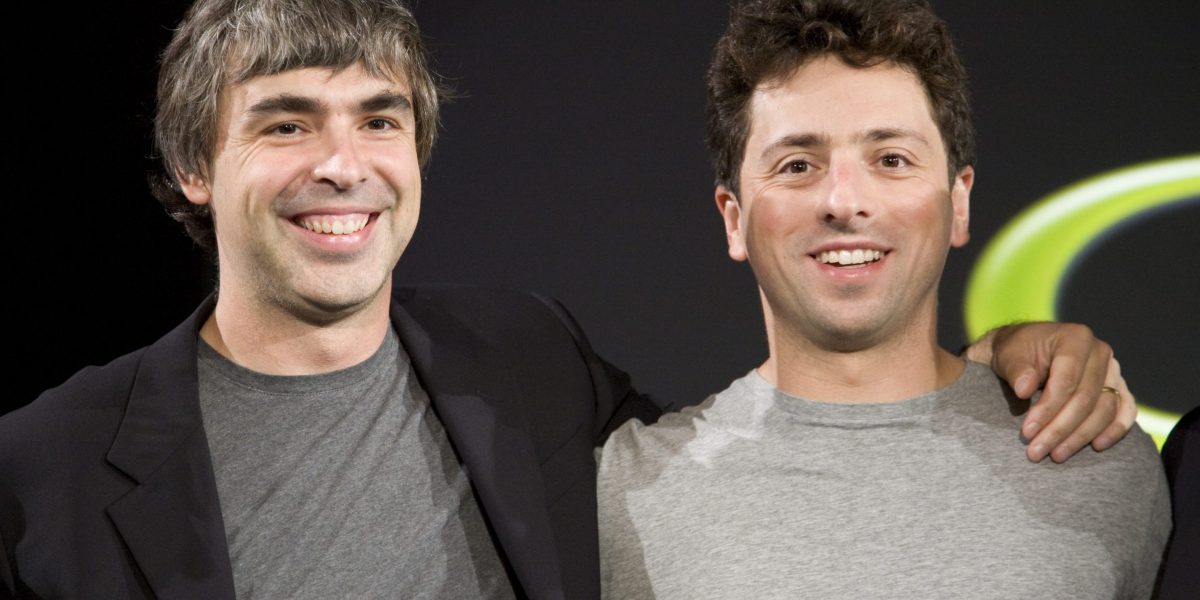
Anduril founder Palmer Luckey pointed out this tension in a heated social media exchange with Rep. Ro Khanna, who supports the billionaire tax. “You are fighting to force founders like me to sell huge chunks of our companies to pay for fraud, waste, and political favors for the organizations pushing this ballot initiative,” Luckey wrote, noting that the tax would create more problems than it would solve. Other executives voted with their feet, with the Google guys saying goodbye to California, The New York Times reported, as Larry Page and Sergey Brin both moved to sever ties, Page with a very Bezosian playbook centered on trophy properties in Miami. Here’s why Luckey has a point that this tax is going after the wrong things, and the strange reason these billionaires don’t actually have that much cash on hand.

The ‘Buy‑Borrow‑Die’ reality

The deeper problem lies in how modern billionaires convert paper wealth into cash without ever showing much taxable income. Rather than selling stock or private‑company shares and realizing capital gains, they pledge those assets as collateral, borrow against them, and use the loan proceeds to fund everything from yachts and mansions to new investments.​​

Because U.S. tax law does not treat borrowed money as income, these loans incur no income‑tax bill, even when they finance lavish lifestyles. Policy analysts often describe this as the “buy, borrow, die” strategy: buy appreciating assets, borrow against them to live, then let heirs inherit those assets with stepped‑up basis after death, erasing much of the embedded tax liability.​

Under U.S. tax law, loan proceeds are not treated as income because they must be repaid, so they are not taxed when received.​ If a billionaire borrows against appreciated stock or real estate instead of selling it, there is no sale, so no capital gain is realized and no capital gains tax is triggered.​

It works like this:

  • Step 1 – Buy: They acquire assets expected to appreciate over time (founder stock, real estate, private businesses) and hold them for decades, letting gains build up untaxed as “unrealized” gains.​
  • Step 2 – Borrow: They pledge those assets as collateral for large credit lines or loans (e.g., margin loans, securities‑backed lines of credit, loans against real estate) and live or invest using that borrowed cash instead of selling.​
  • Step 3 – Die: When they die, heirs get a “step‑up in basis,” meaning the tax cost basis resets to current market value, wiping out the built‑up unrealized gain for income‑tax purposes.

Why a One‑Time Wealth Tax Misses

California’s own fiscal watchdogs have noted that many top earners already avoid large state income taxes by borrowing against appreciated stock instead of selling it. A one‑time 5% charge on net worth would hit that accumulated wealth once, but wouldn’t touch the ongoing flow of tax‑free cash that comes from asset‑backed borrowing.​ As Luckey notes, it would force these billionaires to liquidate assets to come up with the cash that the law would require, making a move out of California an easier alternative for those with the means to do it—and billionaires have the means.

Critics warn the proposal could encourage more billionaires to leave without permanently changing their incentives to realize income or pay taxes where they actually live. Venture capitalist Chamath Palihapitiya estimates that about $1 trillion in billionaire wealth has already left California amid the tax fight, raising the risk that the state loses future income‑tax revenue while capturing only a single extraordinary haul.​

Solving the real problem

Tax experts argue that if policymakers want to reach the cash‑poor, asset‑rich class, they must tax the proceeds of wealth, not just the stock of it at a moment in time. Proposals include state‑level “wealth proceeds” taxes that more comprehensively tax capital gains and investment income, and reforms to reduce the bias that favors borrowing over selling appreciated assets.​ Edward Fox and Zachary Liscow, law professors at the University of Michigan and Yale, respectively, have suggested a way to close the “billionaire borrowing loophole” by changing the law so that borrowing is treated as income.

Without such structural changes, California’s wealth tax risks being a dramatic, politically appealing gesture that leaves the core architecture of billionaire tax avoidance—and the tax‑free loans that underpin it—largely intact.​ And it would seemingly leave California with a lot fewer billionaires.

For this story, Fortune journalists used generative AI as a research tool. An editor verified the accuracy of the information before publishing.


Source link

Continue Reading

Business

Trump hails ‘booming investment’ in Detroit while auto manufacturing jobs have fallen every month since Liberation Day

Published

on


The current story in U.S. manufacturing shows that an economy can look strong and remain so without adding workers. 

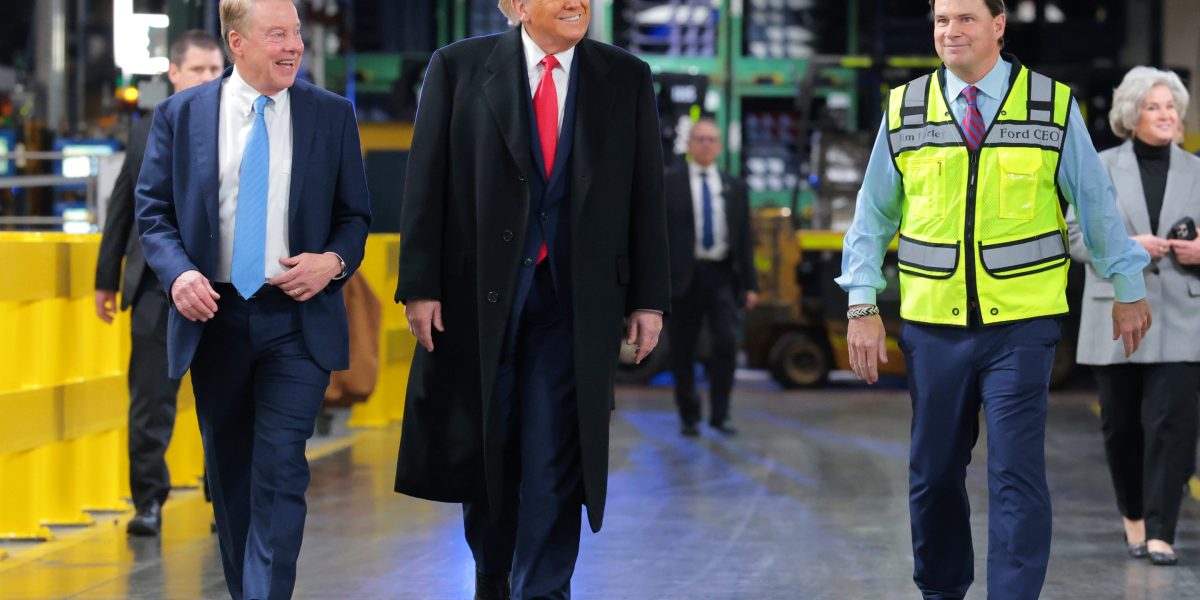
President Donald Trump arrived in Detroit on Tuesday to celebrate what he called a historic manufacturing revival, boasting that “investment is booming” and turbocharging growth. But the auto industry’s supposed recovery has yet to show up where it matters most for workers: payrolls. Manufacturing jobs, including in the automotive sector, have declined every month since Liberation Day, according to labor data.

Standing in the car-making capital of the world, the President spent nearly an hour detailing an $18 trillion global investment surge and a stock market that has set 48 records in eleven months.

“Growth is exploding, productivity is soaring, investment is booming,” the President claimed. “We have quickly gone from the worst numbers on record to the best and strongest.”

The President’s speech leaned heavily on commitments: $5 billion from Ford, $13 billion from Stellantis, and another, massive re-shoring effort from General Motors. “U.S. auto factories are now seeing more than $70 billion of new investment,” Trump noted. “Now they’re pouring back…nobody’s ever seen anything like it.”

While the capital is indeed pouring in, investment is not translating into payrolls. The manufacturing sector has shed approximately 72,000 jobs since the April tariff announcements, with auto manufacturing bearing the brunt of the losses. This disconnect defined much of the economic narrative around 2025 and is set to become the defining paradox of the 2026 economy: a “jobless boom” in which GDP growth—projected by the Atlanta Fed at a robust 5.4% for the fourth quarter—is decoupling from blue-collar employment.

“Manufacturing has been soft for a while,” said Skanda Amarnath, executive director of Employ America. “If you look across the business surveys, the anecdotes are basically the same everywhere: this is a really uncertain environment. That’s not one you want to be hiring into.”

Part of the pressure is structural: tariffs have raised input costs while injecting uncertainty into investment decisions that typically unfold over years, not quarters. The primary issue is a “stacking” effect: tariffs on motor vehicle parts, layered on top of aluminum and steel duties, have made it more expensive for some producers to build a car in Michigan than to import one from abroad. Many U.S. manufacturers still rely on specialized foreign components in their supply chains, so even when production moves back onshore, it tends to arrive far more automated than the factories it replaces.

Amarnath told Fortune the political rhetoric around reshoring often obscures the reality facing manufacturers operating in the present tense. “Whatever the talk is about re-industrialization and onshoring, there’s just a limit to what that actually means for manufacturers who exist in the here and now,” he said. 

‘Manufacturing will suffer’

Even when production returns onshore, it increasingly arrives in a highly automated form. The automotive industry has gone all in on robotics, accounting for a third of all consumer robot installations in 2024, according to a survey by the International Federation of Robotics. The U.S. has the fifth-highest ratio of robots to factory workers in the world, on par with Japan and Germany and ahead of China, according to the same survey. 

While automation is often framed as a cost-cutting measure, automakers increasingly describe it as a response to labor scarcity. Tighter immigration policies and deportations have narrowed the available workforce while younger generations continue to shun the blue-collar industry, even when wages measurably increase. Ford CEO Jim Farley has said the company has thousands of unfilled mechanic jobs despite offering six-figure pay, calling it a warning sign for the country at large: “we are in trouble in this country.” 

“This is about production, not jobs,” said Mark Zandi, chief economist at Moody’s Analytics. “Whatever manufacturing comes back will be highly mechanized. There just won’t be many jobs attached to it.”

The strain is visible in survey data. The ISM Manufacturing PMI fell to 47.9 in December—its lowest reading of 2025—indicating a sector in its tenth consecutive month of contraction. Businesses surveyed consistently cited tariff-induced uncertainty and high intermediate costs as the primary drivers of hiring freezes, along with the instability of weak consumer spending from middle- and lower-class consumers, while upper-class consumers drive most of the spending.

That weakness has emerged even as vehicle sales outperformed most analysts’ expectations in 2025, rising 2% from the previous year. Analysts suggest that consumers rushed the market in the first half of the year, as auto sales popped as consumers anticipated tariff challenges. Much of these sales were driven by wealthy consumers, buoyed by a record-breaking stock market; households earning more than $150,000 annually accounted for 43% of the new cars sold last year, according to analysts at legal firm Foley. Meanwhile, households earning less than $75,000 accounted for 10% less of the market share than last year. 

Looking ahead, analysts see a milder but steady 2026 for automobile manufacturing, buoyed by lower interest rates and potential tax refunds, but still hampered by lower consumer spending on the wrong side of the “K.” More broadly, Zandi told Fortune he sees the current manufacturing slump as a byproduct of a world pulling apart.

 “The economy is de-globalizing, and manufacturing will suffer as a result,” he said. “We saw this in Trump’s first term during the trade war. Manufacturing went into recession then, and the same dynamic is playing out again.”

This story was originally featured on Fortune.com


Source link

Continue Reading

Trending

Copyright © Miami Select.