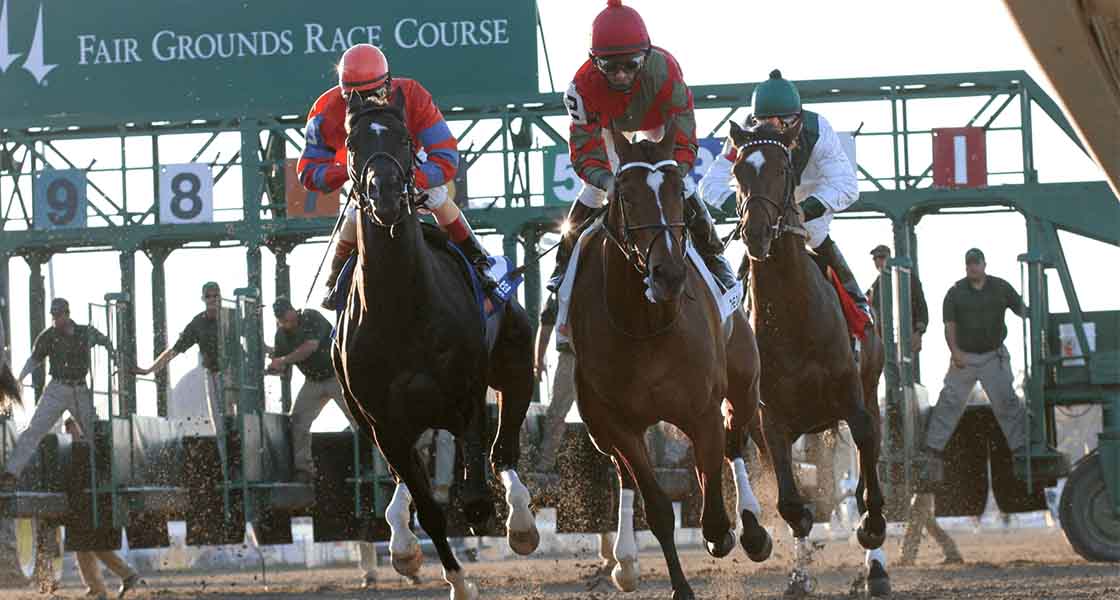
Let ‘em Run Breaks Down the Late P5 at Fair Grounds
Let ‘em Run turns its full attention to a loaded Late P5 at Fair Grounds on Saturday 1/17/2026, highlighted by the Lecomte Stakes, one of the first true pressure points on the Road to the Kentucky Derby. With 20 Derby points waiting for the winner and valuable points awarded through fifth, this sequence is not just about cashing tickets, it is about identifying future contenders as the prep season officially shifts into high gear.
The Kentucky Derby preps will really start heating up now, as starting this weekend we have 13 straight weeks of prep races, starting this Saturday with The Lecomte Gr3 at 1 1/16 on dirt. This will award 20 points to the winner. This race has a salty field of 11 runners and with the morning line favorite being 4-1, you can be sure it will be value packed with opportunity. So let’s dive right in and also keep your eye on the Bro’s BRISnet Play of the Day.
Race 9 – The Marie G. Krantz Memorial
5PM EST | 1 1/16 Turf | 100K
Looks like #3 Wild Bout Hilary 20-1, #6 Sweet Treasure 3-1 and #9 Stylish Sue 8-1 will be gunning for the lead when the gates open. I think that scenario sets up for the favorite #5 Medoro 2-1 to get a perfect trip. Jockey J. Ortiz on the #1 BRISnet Prime Power at +9, seals the deal for me. Trying the distance for the first time should not be a problem for this daughter of Honor Code. Also take a look at #8 Nanda Dea (Arg) 9-2 to make some noise with top turf jockey Flavien Prat getting aboard.
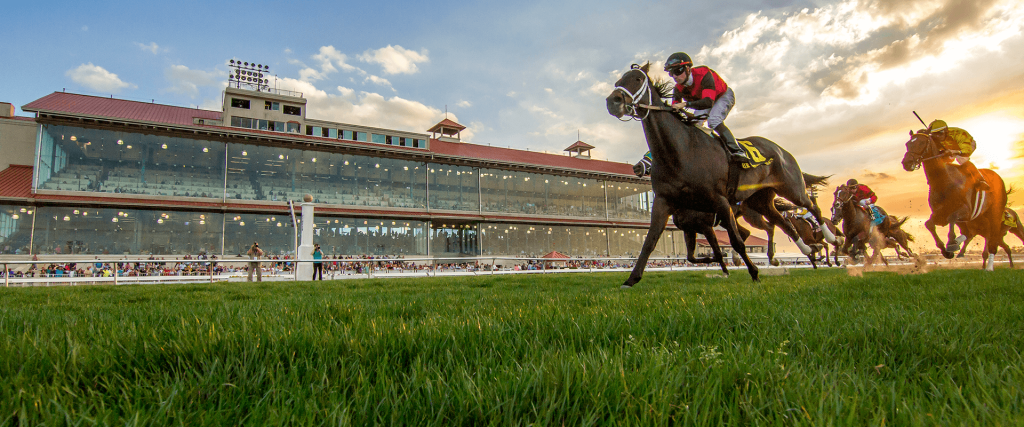
Race 10 – The Fasig-Tipton Silverbulletday
5:30 EST | 1 Mile 70yd Dirt | 150K
Nice compact field of 6 fillies line up here, and I think the race sets up well for #6 Pashmina 5-1 to cross over from this post and lead them all the way. She has become a much different runner since switching to dirt, and improvement is expected. Not sure who will take up the chase with her, but favorite #1 Atropa 2-1 will be in close attendance to the pace. The combo of trainer Kenneth McPeek and jockey B.J. Hernandez Jr. make the undefeated filly #4 Taken by the Wind 5-2 a likely win candidate.
Race 11 – The Colonel E.R. Bradley
6PM EST | 1 1/16 Turf | 100K
Okay, so here is where our Bro’s BRISnet Play of the Day will make or break our day. Can not get around #4 Lagynos 7-2, and for many reasons. Dropping in class and back to jockey J. Ortiz are all plus factors. The biggest plus factor is the +20 points above the field as the #1 Prime Power. When #1 Prime Power is +10, the win percentage jumps up to 55%, so at +20 points… well you get it. The #7 Theisman 10-1 has been a new horse since switching to turf, and could be a factor from the start.
Race 12 – The Louisiana Stakes (Gr3)
6:30 EST | 1 1/16 Dirt | 175K
This race serves as the appetizer for the main meal, in that it is the same 1 1/16 Mile on dirt so we get to see how the race and track will be playing here. No secret here, as #8 Just a Touch 8-5 looks to be the best horse in the race, with Irad Ortiz taking the wheel, and the runner is 2 for 2 on the Fair Grounds dirt oval, last time on it winning by 10 ½ lengths. Trainer Brad Cox remains smoking hot, hitting at 41%. If we are looking for a horse to take a shot with if top pick falters (doubtful), then I like #7 Willy D’s 4-1, who could be the speed of the speed. Has been keeping good company in previous outings, and jockey Ricardo Santana Jr. is a good fit for a speed horse.
Race 13 – The Lecomte (Gr3)
7PM EST | 1 1/16 Dirt | 250K
So here we are at the main meal, with a full menu to choose from…where are you going to land?? With a morning line favorite listed at 4-1, the menu is chock full of choices. I am landing on #8 White Tiger 8-1. One of two BRISnet “E” types (the other is #11 Chip Honcho 9-2), and “E” types have hit the winners circle at 41% at the distance at the meet so far (7 of 17). Just think White Tiger is being primed up for this race by trainer Brad Cox.
Won last time out after a bad start and was not asked for best yet, which I think jockey Irad Ortiz will do here, and get this runner to the wire with a big run this time out. Can’t blame anyone for dropping anchor on #3 Crown the Buckeye 4-1, who is #1 Prime Power and trained by Michael Maker. Just think this race is a wide open event, and you could make a case for any runner in the field, so make a case!!!
Late P5 – Fair Grounds (Pre-Scratches)
Late P5 Fair Grounds (Pre Scratches – tune in Saturday at 12:30 for updates after scratches).
Show Schedule and Where to Watch
So be sure to tune in to our Happy Hour Podcast on Friday at 12:30PM, where myself and John Kostin will take a look at The Lecomte, and also take some time to talk to our special guest.
Then on Saturday, we will take an in depth look at the Late P5 (also after scratches) at Fair Grounds, with some loaded stakes races on dirt and turf, including Race 13 (The Lecomte). So be sure to catch us on multiple streaming apps and social channels.
So remember to bet smart, cheer hard, fast horses equal serious fun, and Let ‘em Run!!
Vince Lombardi would have rather been in Wisconsin than coaching his team in what is now called Super Bowl I
Lombardi would have rather have been at home in Wisconsin
Vince Lombardi wanted absolutely nothing to do with the first American Football League-National Football League World’s Championship Game. It is very ironic since the league’s championship trophy is named after him. Lombardi thought the NFL title game was the be-all, end-all NFL event. He would have rather been in Wisconsin in the middle of January, 1967 but he had a football game to coach.
Back in 1967, it was just called the “World Championship Game, AFL vs. NFL.” The game was held in the 94,000 seat Los Angeles Coliseum. The ticket prices were $12, $10 and $6 (about $116, $97 and $58 today). There were 33,000 empty seats. It was the last time a Super Bowl or the World Championship Game was not a sellout.
The first game was played on January 15th, 1967 just 26 days after the final approval of the merger between the National Football League and the American Football League. CBS and NBC televised it using the same television feed but with different announcers. The networks charged $42,000 (about $408,000 today) for a 30 second commercial. The two leagues had to put together a game in a hurry.
The two networks paid $9.5 million ($92 million today) to televise the game.
The leagues couldn’t even agree on which ball to use, so they compromised. When Green Bay was on offense, they used the Wilson “Duke” football. When Kansas City had the ball, they used the AFL sanctioned Spalding J5-V.
In 1967, the American Football League and the Kansas City Chiefs were considered to be part of a “Mickey Mouse league” by Lombardi and the NFL. Lombardi was among those thinkers who felt that “Mickey Mouse” was a putdown.
Mickey Mouse launched the Disney empire and the trademark is worth billions globally. There is some irony in that the Walt Disney Company’s ABC- TV division had the rights to broadcast the Super Bowl along with NBC, FOX and CBS under one of the past NFL-network television agreements.
Adding injury to insult, Lombardi and his Packers team practiced in Southern California before the 1967 championship game not far from Disneyland because the NFL felt that was the best way to sell tickets to the contest The AFL was the Mickey Mouse league and not worthy of being on the same field as the NFL..
“He got a lot of pressure put on him by the other owners of the National Football League. That was a bitter relationship with the AFL and NFL,” Jerry Kramer, one of the 1967 Lombardi’s Packers offensive linemen recalled in the 1980s. “I’m not sure there still aren’t still some rivalries in that situation.
“Lombardi got calls from virtually everyone in the NFL saying we were representing the NFL and the pride of the NFL and we couldn’t be beaten.”
Lombardi even had to deal with CBS Television Network Chairman and founder and NFL partner. Lombardi was playing for the pride of CBS including Walter Cronkite, Ed Sullivan, Lucy and Red Skelton.
“I was talking to Frank Gifford years ago and he mentioned that he announced that first Super Bowl,” Kramer continued. “Gifford said he was fairly cool, fairly calm and relaxed and we went over to put his arm on Vince’s shoulder and Lombardi was shaking like a leaf.
“Gifford said that really made me nervous.”
Gifford, of course, was the CBS announcer who played under Lombardi when Lombardi was the New York Giants offensive coach (in 2026 parlance, an offensive coordinator) in the 1950s and represented the NFL. Gifford was Lombardi favorite player.
Neither CBS nor NBC bothered to keep a video of the game. Green Bay won the matchup and Lombardi was able to exhale. He did what was necessary.
Lombardi’s teams won the 1967 and 1968 contests but Lombardi didn’t get to touch the Vince Lombardi Trophy given to the Super Bowl winner. The Super Bowl became the Super Bowl in 1969 and the championship trophy was named for Lombardi following his death in 1970.
In the decades following his Lombardi’s passing, the Super Bowl became a uniquely American quasi-celebration/holiday. The Fourth of July is America’s Birthday Party but the Super Bowl is American’s excuse for a party. Supermarkets have Super sales for countless Super parties, but it wasn’t always like this.
Today there is still that one TV feed, but the game is internationally televised. Cities bid for Super Bowls years in advance. Networks put up big money for regular season games so they could get the Super Bowl once every three years.
It’s no longer NFL vs. AFL, NFL advertisers vs. AFL advertisers. CBS vs. NBC.
There were no parties, no weeklong football orgies. In fact, it wasn’t until January 1973 when Super Bowl parties took on a different life. The Commissioner’s Party was held on the Queen Mary in Long Beach, California. In 1967, no one could imagine how big the Super Bowl would become and that included Lombardi who would have rather have been relaxing in Wisconsin then coaching a game.
An excerpt from the ebook: America’s Passion: How a Coal Miner’s Game Became the NFL in the 20th Century
The Tampa Bay Rays joined nine other Major League Baseball teams in leaving Main Street Sports. The company struggled to meet financial commitments. The Rays regained full control of their local broadcast rights after years of uncertainty. Their former deal delivered between forty million and sixty million dollars each year. The team now enters a new era with a chance to design a modern media plan that fits the Florida market.
Rays aim to replace lost revenue with a new hybrid model
The Rays must now replace the money once supplied by Main Street Sports. The team can reach that range by building a hybrid system that blends over the air stations with cable and streaming. A statewide network can reach far beyond the Tampa Bay region. It can stretch south to Sarasota and Fort Myers. It can move east toward Orlando and Melbourne. It can extend north to Tallahassee and Jacksonville. Jacksonville is the home of new ownership leader Patrick Zalupski. This wide reach gives the Rays a rare chance to create a unified Florida network.
Over the air network offers reach and stability
A statewide over the air network built around Scripps Gray Tegna or a combination can deliver massive reach. Florida has between five and a half and six million television homes across its major markets. The Rays can secure clearance for one hundred to one hundred twenty games. They can control advertising inventory with their station partners. They avoid carriage disputes that often plague regional sports networks. This model can generate between eight and twelve million dollars each year. That estimate is based on the Padres and Diamondbacks over the air revenue splits. Florida’s larger population and multiple markets push the number upward. Stations often pay a modest rights fee and share advertising revenue.
Cable and satellite remain important revenue sources
The Rays can also negotiate cable and satellite sub fee deals with Spectrum, DirecTV, WOW and Cox. These deals can include low per subscriber fees between one dollar and one dollar fifty each month. They can include limited carriage windows inside Rays territory. They can include guaranteed minimum payments. Spectrum alone covers more than one and a half million households in Rays territory. This model can generate between twelve and eighteen million dollars each year. The number is lower than the regional sports network era but still meaningful. DirecTV remains aggressive in sports carriage. Spectrum wants local sports to reduce customer losses.
MLB TV adds a strong third pillar
MLB can produce Rays games and sell the streaming package through MLB TV. MLB keeps a portion and sends the team a guaranteed annual distribution. Teams also receive a share of national MLB TV revenue. This model can generate between twenty and twenty five million dollars each year. The Padres reportedly receive around sixty million dollars in total value. The Diamondbacks receive around fifty five million dollars. The Rays market is smaller but not dramatically smaller. MLB wants stability in Florida a key Sun Belt region. Under this plan the Rays can expect a reliable payout that lands near the middle of the league. The projected range places the Rays in a strong position to match past revenue while gaining long term security.
A complete model that matches past revenue
The Rays can combine over the air revenue cable and satellite sub fees and MLB TV distribution. The total can reach between forty and fifty five million dollars each year. That number fits within the Rays historical range of forty to sixty million dollars. The hybrid model offers more reach more flexibility and more control. It removes the risk of regional sports network bankruptcy. It improves fan access with no blackout style restrictions. MLB is quietly steering multiple clubs toward this structure.
Kansas City Chiefs quarterback Patrick Mahomes (15) leaves the field with his wife, Brittany Mahomes, after the NFL Super Bowl 57 football game against the Philadelphia Eagles, Sunday, Feb. 12, 2023, in Glendale, Ariz. The Kansas City Chiefs defeated the Philadelphia Eagles 38-35. (AP Photo/David J. Phillip)
Decisions, decisions.
The owner of the National Football League Kansas City Chiefs franchise, Clark Hunt, is locked into a lease to use the Jackson County, Missouri stadium his team calls home through the end of the 2030-31 season. Hunt is planning to build a stadium-village in Kansas about 23 miles from the Jackson County stadium starting with the 2031 NFL season. If all goes according to plan, Jackson County and Missouri will have an old football stadium and no tenant. Sure the building could hold concerts or other events but if the past is an example, the building will become a money draining relic as all the events will head over to the new stadium. The next question. What is to be done with the stadium?
In an interview with KCMO radio, Missouri House majority leader Jonathan Patterson claimed that it will cost $150 million to demolish the stadium, or $20 million a year to maintain it in its current form. There is also another problem, if county and state leaders want to demolish the facility, there is the adjacent stadium that hosts Major League Baseball’s Kansas City Royals franchise. The Royals business owner John Sherman wants to leave the complex but has not made a decision on what he plans to do. In Pontiac, Michigan, it took many years and many plans but the Silverdome was eventually demolished 17 years after the NFL’s Detroit Lions business moved back to Detroit in 2001. The property now houses an Amazon distribution facility and delivery center. Kansas City Mayor Quinton Lucas, who is working to keep Sherman’s baseball business in his city, said Hunt had a lucrative offer to stay. There was a $1.5 billion stadium renovation package on the table. Hunt is going to Kansas and will leave behind a massive real estate problem in Missouri.