Connect with us

Business

Forget the K-Shape: We have a barbell economy—and the middle class is buckling under the weight

Published

on


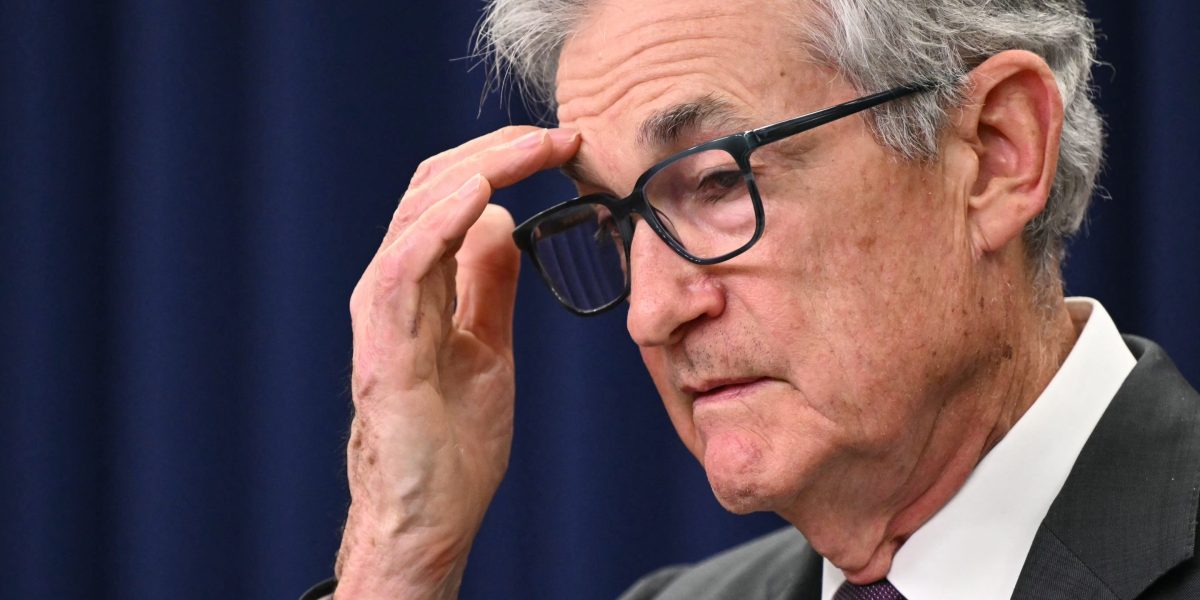
If you look at the aggregate numbers, the U.S. economy in early 2026 appears resilient. GDP is humming and the soft landing engineered by the Federal Reserve seems to have held. But aggregates are often optical illusions. As a gender economist who analyzes disaggregated data, I do not see a resilient system. I see a dangerously brittle one.

We have transitioned from a K-shaped recovery into a Barbell Economy, a system heavily weighted at the extremes of wealth and precarity, connected by a middle class that is rapidly snapping.

By concentrating wealth, assets, and leverage in a specific, homogenous demographic while hollowing out the economic stabilizers traditionally provided by women and people of color, we have engineered a single point of failure. We have built an economy with a massive engine and insufficient braking mechanisms.

Here is the anatomy of that fracture, and why the next recession won’t be caused by a labor collapse, but by a demographic margin call.

The Risk of the Fragile Top

The prevailing wisdom in corporate boardrooms for the last three years has been simple: Pivot to the premium consumer. As inflation eroded the purchasing power of the middle class, companies shifted strategies to chase the resilient top 20%.

This was a strategic error based on a misunderstanding of risk.

The prosperity of this top cohort is not driven by wage growth. While their wages have risen, they have stagnated relative to the explosive returns on capital. Instead, their consumption is driven by the “Wealth Effect.” New analysis shows that 70% of recent economic growth is now driven by just 20% of earners. These consumers aren’t spending wages; they are spending paper gains tethered to a market bubble.

This makes U.S. GDP effectively a leveraged bet on the sentiment of a single cohort. With the CAPE ratio (Cyclical Adjusted Price-to-Earnings) at its highest level since the Dot-Com bubble, the market they rely on is dangerously extended. Furthermore, the engine is tiny: the top 10 companies now comprise 40% of the S&P 500’s value, a historic concentration risk.

When the market corrects, this group doesn’t just taper spending; they freeze it.

We are already seeing the cracks. The aspirational consumer, the wage-earning professional in the 80th to 95th percentile, has retreated. They are the bridge between the middle class and the wealthy. Yet, in 2025, they reduced luxury spending by roughly 35%.

This retreat exposes the structural flaw. It leaves the economy dependent on the 95th to 99th percentile, the asset-rich households. While wealthy, this cohort is not immune; their consumption is psychologically tethered to their portfolio balance. When the S&P 500 drops, they feel significantly poorer and freeze discretionary spending. In a healthy economy, the middle and working classes provide a floor of stable demand that cushions this volatility.

In 2026, there is no one there to catch it.

The Missing Floor: A Failure of Redundancy

In portfolio theory, redundancy is safety. You hedge volatile assets with stable ones. In an economy, women and people of color have historically acted as that hedge, providing the inelastic demand for care, food, and community services that keeps an economy moving when financial markets seize up.

But we have stripped that floor away. While the top 20% spends paper gains, the bottom 80% is currently financing groceries with shadow debt, having fully depleted their pandemic-era savings buffers.

My analysis of 2020–2025 data shows that the handle of the barbell, the shock absorbers of the economy, has been decimated.

This is not a social justice issue; it is a liquidity crisis.

The subprime auto loan market is currently flashing red, with delinquency rates surpassing 2008 levels. But the risk isn’t contained to car lots; it is moving upstream into asset-backed securities (ABS) held by pension funds and insurers. We are learning the hard way that you cannot build a AAA-rated financial system on the back of a subprime workforce.

The Corporate “Premium Trap”

For the Fortune 500, this demographic concentration has created a premium trap.

By chasing the top of the barbell, companies like Starbucks and Target have exposed their earnings to the specific volatility of the affluent consumer. We are seeing a gentrification by basket, where Walmart reports that its primary growth is coming from households earning over $100,000.

This is not a sign of health; it is a sign of distress. Analysis shows that 80% of luxury sector growth since 2019 was driven by price hikes rather than sales volume. Companies are priced for perfection in an economy that is running on fumes.

Diversity is a Hedge

It is time to stop viewing equity as a moral preference or a CSR initiative. In 2026, equity is structural risk management.

An economy that relies on the asset-derived spending of a homogenous top 10% is inherently unstable. It is subject to groupthink, correlated panic, and rapid contraction. This dependency on the wealth effect accounts for 0.3% of annualized consumption growth, growth we cannot afford to lose in a low-margin world.

To stabilize the U.S. economy, we must diversify our shareholder base. We need to capitalize the real economy,  Black and Latina women who are currently the most under-utilized assets in the nation. By clearing the capital bottlenecks for Latina entrepreneurs and closing the wage arbitrage that drains Black and Native households, we unlock $3.1 trillion in economic growth. Closing the wealth gap is not charity; it is the only way to build a floor under the stock market.

We do not diversify our economy to be nice. We diversify so that when the top weight of the barbell slips, the whole system doesn’t collapse.

The opinions expressed in Fortune.com commentary pieces are solely the views of their authors and do not necessarily reflect the opinions and beliefs of Fortune.

This story was originally featured on Fortune.com


Source link

Continue Reading

Business

Trump hails ‘booming investment’ in Detroit while auto manufacturing jobs have fallen every month since Liberation Day

Published

on


The current story in U.S. manufacturing shows that an economy can look strong and remain so without adding workers. 

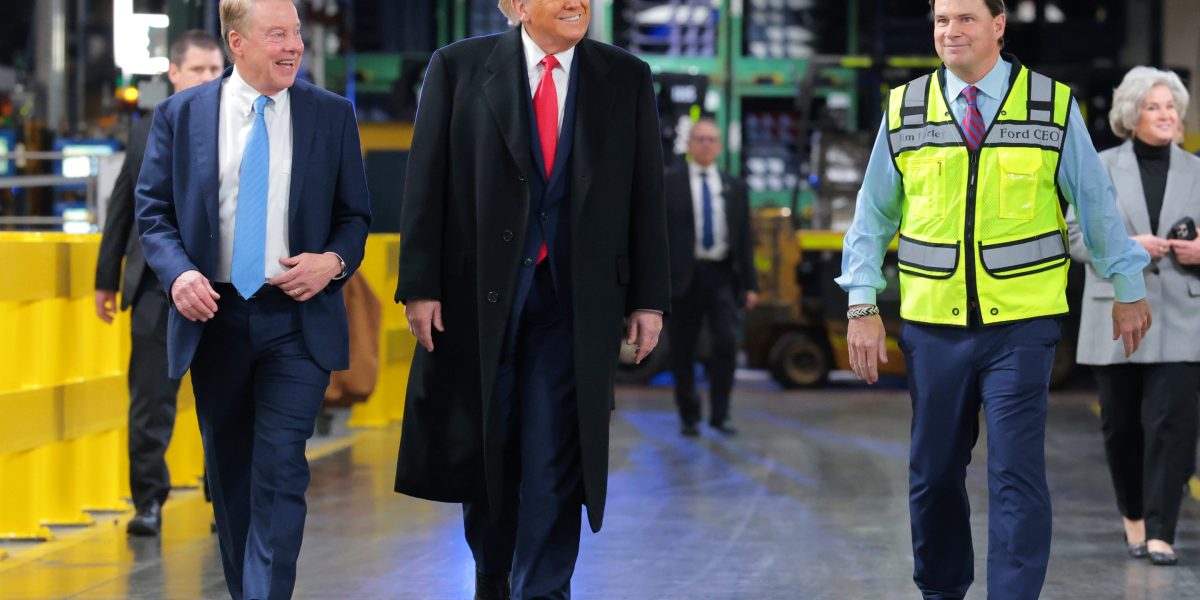
President Donald Trump arrived in Detroit on Tuesday to celebrate what he called a historic manufacturing revival, boasting that “investment is booming” and turbocharging growth. But the auto industry’s supposed recovery has yet to show up where it matters most for workers: payrolls. Manufacturing jobs, including in the automotive sector, have declined every month since Liberation Day, according to labor data.

Standing in the car-making capital of the world, the President spent nearly an hour detailing an $18 trillion global investment surge and a stock market that has set 48 records in eleven months.

“Growth is exploding, productivity is soaring, investment is booming,” the President claimed. “We have quickly gone from the worst numbers on record to the best and strongest.”

The President’s speech leaned heavily on commitments: $5 billion from Ford, $13 billion from Stellantis, and another, massive re-shoring effort from General Motors. “U.S. auto factories are now seeing more than $70 billion of new investment,” Trump noted. “Now they’re pouring back…nobody’s ever seen anything like it.”

While the capital is indeed pouring in, investment is not translating into payrolls. The manufacturing sector has shed approximately 72,000 jobs since the April tariff announcements, with auto manufacturing bearing the brunt of the losses. This disconnect defined much of the economic narrative around 2025 and is set to become the defining paradox of the 2026 economy: a “jobless boom” in which GDP growth—projected by the Atlanta Fed at a robust 5.4% for the fourth quarter—is decoupling from blue-collar employment.

“Manufacturing has been soft for a while,” said Skanda Amarnath, executive director of Employ America. “If you look across the business surveys, the anecdotes are basically the same everywhere: this is a really uncertain environment. That’s not one you want to be hiring into.”

Part of the pressure is structural: tariffs have raised input costs while injecting uncertainty into investment decisions that typically unfold over years, not quarters. The primary issue is a “stacking” effect: tariffs on motor vehicle parts, layered on top of aluminum and steel duties, have made it more expensive for some producers to build a car in Michigan than to import one from abroad. Many U.S. manufacturers still rely on specialized foreign components in their supply chains, so even when production moves back onshore, it tends to arrive far more automated than the factories it replaces.

Amarnath told Fortune the political rhetoric around reshoring often obscures the reality facing manufacturers operating in the present tense. “Whatever the talk is about re-industrialization and onshoring, there’s just a limit to what that actually means for manufacturers who exist in the here and now,” he said. 

‘Manufacturing will suffer’

Even when production returns onshore, it increasingly arrives in a highly automated form. The automotive industry has gone all in on robotics, accounting for a third of all consumer robot installations in 2024, according to a survey by the International Federation of Robotics. The U.S. has the fifth-highest ratio of robots to factory workers in the world, on par with Japan and Germany and ahead of China, according to the same survey. 

While automation is often framed as a cost-cutting measure, automakers increasingly describe it as a response to labor scarcity. Tighter immigration policies and deportations have narrowed the available workforce while younger generations continue to shun the blue-collar industry, even when wages measurably increase. Ford CEO Jim Farley has said the company has thousands of unfilled mechanic jobs despite offering six-figure pay, calling it a warning sign for the country at large: “we are in trouble in this country.” 

“This is about production, not jobs,” said Mark Zandi, chief economist at Moody’s Analytics. “Whatever manufacturing comes back will be highly mechanized. There just won’t be many jobs attached to it.”

The strain is visible in survey data. The ISM Manufacturing PMI fell to 47.9 in December—its lowest reading of 2025—indicating a sector in its tenth consecutive month of contraction. Businesses surveyed consistently cited tariff-induced uncertainty and high intermediate costs as the primary drivers of hiring freezes, along with the instability of weak consumer spending from middle- and lower-class consumers, while upper-class consumers drive most of the spending.

That weakness has emerged even as vehicle sales outperformed most analysts’ expectations in 2025, rising 2% from the previous year. Analysts suggest that consumers rushed the market in the first half of the year, as auto sales popped as consumers anticipated tariff challenges. Much of these sales were driven by wealthy consumers, buoyed by a record-breaking stock market; households earning more than $150,000 annually accounted for 43% of the new cars sold last year, according to analysts at legal firm Foley. Meanwhile, households earning less than $75,000 accounted for 10% less of the market share than last year. 

Looking ahead, analysts see a milder but steady 2026 for automobile manufacturing, buoyed by lower interest rates and potential tax refunds, but still hampered by lower consumer spending on the wrong side of the “K.” More broadly, Zandi told Fortune he sees the current manufacturing slump as a byproduct of a world pulling apart.

 “The economy is de-globalizing, and manufacturing will suffer as a result,” he said. “We saw this in Trump’s first term during the trade war. Manufacturing went into recession then, and the same dynamic is playing out again.”

This story was originally featured on Fortune.com


Source link

Continue Reading

Business

Down Arrow Button Icon

Published

on


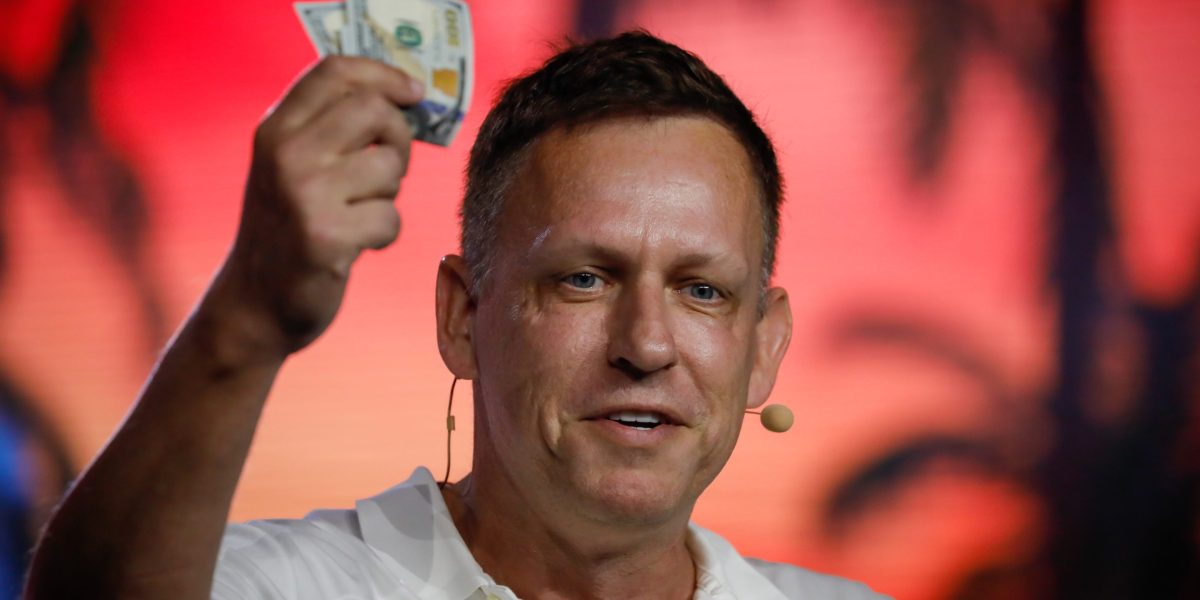
Venture capitalist Peter Thiel has written his biggest political check in years, donating $3 million to a California business group leading the fight against a proposed billionaire wealth tax. The move positions the Palantir co-founder as one of the earliest and most prominent financiers of an emerging campaign to stop the 2026 Billionaire Tax Act before it reaches voters.​

Thiel made the $3 million contribution on December 29 to the California Business Roundtable, a powerful Sacramento-based lobbying group that represents large employers and corporate interests. The donation is the first seven-figure check publicly tied to opposition to the billionaire tax proposal and Thiel’s largest disclosed political gift since the 2022 midterm elections, when he spent more than $35 million backing populist conservative candidates.​ The New York Times was first to report on the donation, citing a public disclosure.

While the money is not formally earmarked only for the wealth-tax fight, the Roundtable is expected to serve as a central vehicle for organizing and funding the business community’s push to defeat the measure. Rob Lapsley, the group’s president, has said he is actively courting deep-pocketed donors across the state as part of a broader effort to marshal corporate and elite support against the tax initiative and other proposals viewed as unfriendly to business.​

Inside California’s billionaire wealth tax

The proposed 2026 Billionaire Tax Act would levy a one-time 5% tax on the net worth of California residents whose wealth exceeds $1 billion, targeting assets such as privately held businesses, stocks, bonds, art, collectibles, and intellectual property rather than income. Real estate and certain pensions and retirement accounts would be excluded, but otherwise the measure is designed to capture a broad swath of financial and intangible holdings within ultra-wealthy portfolios.​

If approved by voters, the tax would apply to anyone who is a California resident or part-year resident as of January 1, 2026, with the bill calculated on asset values at the end of 2026 and payable beginning in 2027. Billionaires could choose to spread payments over five years, but would incur an extra 7.5% annual nondeductible charge on the unpaid balance, effectively raising the long-run cost for those who opt to defer.​

Billionaires weigh exit or resistance

News of the proposal has already prompted a wave of soul-searching—and anger—among California’s ultrawealthy, with some high-profile founders and investors exploring moves to other states or further reducing their ties to California. At least several billionaires have already left the state in recent years, and business leaders warn the tax could accelerate an exodus and sap the innovation ecosystem that underpins California’s tech economy.​

Thiel himself acquired a property in Miami years ago but remains deeply intertwined with Silicon Valley through his investments and board roles, and his donation signals a decision to fight the measure politically rather than simply watching from afar. He told Joe Rogan in 2023 that real estate prices in Miami were too expensive, in his opinion. Other tech figures, including investors like Chamath Palihapitiya and Bill Ackman, have publicly criticized the tax, arguing it would chill entrepreneurship and risk-taking in the state.​

A rare point of agreement with Newsom

In an unusual alignment, some billionaire donors and Democratic Gov. Gavin Newsom find themselves on the same side of this fight. Newsom has come out against the billionaire tax, branding it bad policy and warning that even floating the idea has already damaged California’s reputation among the global wealthy.​

The campaign over the tax is still in its early stages: backers must gather nearly 900,000 valid signatures to place the measure on the November ballot, setting up months of high-stakes organizing on both sides. Opponents predict that more than $75 million could ultimately be spent to defeat the initiative, with Thiel’s $3 million check serving as an opening salvo in what is likely to become one of 2026’s most closely watched economic battles.

For this story, Fortune journalists used generative AI as a research tool. An editor verified the accuracy of the information before publishing.


Source link

Continue Reading

Business

Whole Foods cofounder John Mackey’s hardest ever decision was firing his dad from his company board

Published

on


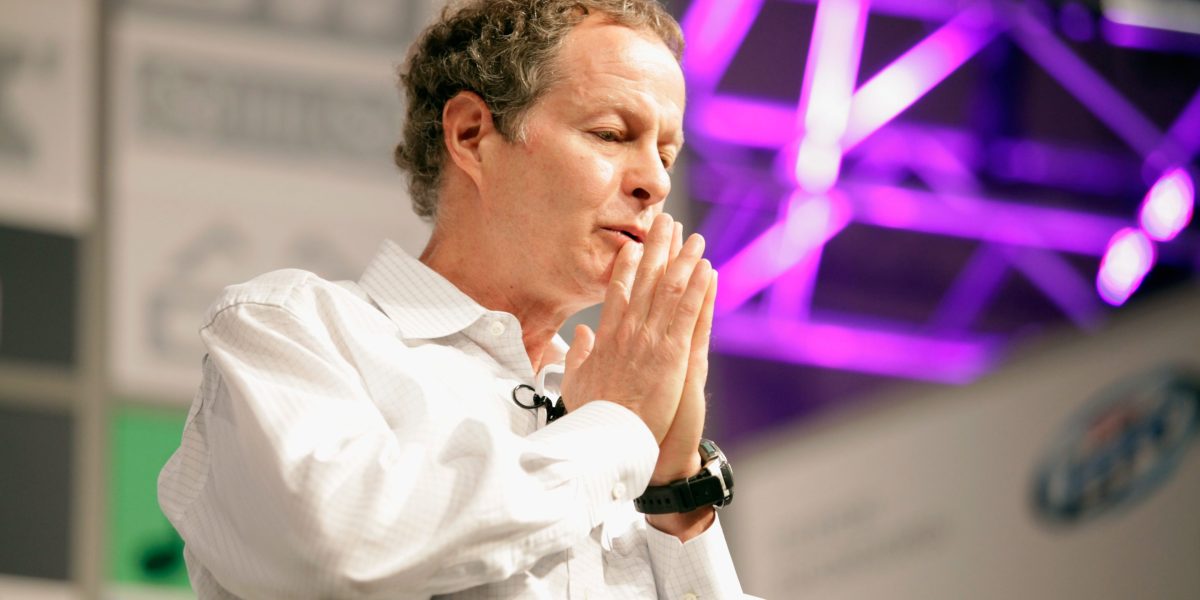
Whole Foods cofounder John Mackey knew the exact moment he came of age in the business world.

In a recent podcast interview with David Senra, Mackey recalled one of his most challenging moments: firing his father from the Whole Foods board in 1994 after nearly 15 years of advising Mackey on the direction of the company.

“That was the most difficult thing I ever did was firing my dad from that board,” Mackey said. “It took all the courage I had. I love my dad so much, and it hurt him so badly. It was so hard to do, but it was also a pivotal event in my own evolution.”

Mackey, who served as co-CEO of Whole Foods from its 1980 founding until his 2022 retirement, described his younger self as a “shirtless hitchhiking hippie” who dropped out of college. A man of contradictions, Mackey has called for marriage equality and claimed that taking psychedelics helps him find business inspiration, and in the same breath, has touted capitalism as humankind’s greatest invention while ripped labor unions, once comparing them to herpes (“It won’t kill you,” Mackey told the New Yorker in 2010, “but it’s very unpleasant, and will make a lot of people not want to be your lover.”)

In 2022, the business leader claimed “socialists are taking over,” and that young people weren’t willing to work anymore because they want to find meaningful work, something that eludes most people in the early stages of their careers.

His relationship with his father, as it relates to business, is no less complicated. As a younger man, the free-market vegan was looking to take risks to grow his wealth, even if it meant breaking from the guidance of his father, an original investor in Whole Foods. Mackey described his father as always being a man who preferred to conserve his cash, even if it meant sacrificing the growth of his wealth. As he aged, Mackey’s father became more rigid in his beliefs, which Mackey attributed in part to an Alzheimer’s diagnosis, made a couple years after his father’s departure from the board.

These diverging philosophies were most salient during the grocery chain’s 1992 IPO, when Mackey’s father encouraged the cofounder to sell company stock. Mackey, trusting his father, obliged, but later regretted it. He said the growing differences in doctrines around money fractured their relationship, leading Mackey to seek out independence from his father.

“That was when my mentorship was over,” he said. “He still advised me but from that point onward, really I was on my own. I was not going to follow him any longer. Before then, I pretty much did whatever my dad suggested.”

Mackey was largely responsible for transforming a single boutique health food store into a grocery giant. Founded in Austin in 1980, Whole Foods soon expanded across Texas and grew nationally, with 12 locations coast-to-coast at the time of its IPO, when the company was valued at $100 million. In 2017, Mackey sold the grocery giant to Amazon for a cool $13.7 billion. Whole Foods now has more than 500 locations across the U.S. and UK.

Mackey’s evolving business philosophy

At the core of Mackey’s businessperson identity is his doctrine of “conscious capitalism,” the flavor of free enterprise he said should operate with strong ethical foundations with the goal to create more than just profit in service of all business stakeholders, from customers to employees. Mackey first identified this value in 1981, when only a year after opening the first Whole Foods, the store flooded, severely damaging nearly everything inside. He recounted getting help from friends, customers, and suppliers, and was able to operate the business again 28 days after the flood.

Mackey said he internalized some value in making conservative financial decisions from his father, whom he said was a child of the Great Depression. Mackey’s father reached adulthood in the midst of World War II and operated under fear of another financial disaster for most of his life.

“He was always thinking there was going to be another Great Depression,” Mackey said. “So he was always trying to protect himself from that because it was such a traumatic experience for him.”

Mackey himself has admitted that making money isn’t everything. In 2007, the CEO said he felt financially secure and slashed his own salary to $1. (According to Forbes, he has a net worth of more than $75 million.)

However, the cofounder’s “expansive” philosophy of business increasingly diverged from his father, particularly in the way he kept shares of the business. When Mackey asked his father to step away from the board, he encouraged him to sell half his company shares and watch what happens to the other half. Whole Foods doubled in stock price over the next year.

While Mackey and his father were able to reconcile their differences, he recalled 1994 as the moment in which he prioritized his own business tactics over his mentor’s.

“I’m not going to do what you tell me to do any longer, particularly when it comes to growth,”  Mackey recalled telling his father. “We’re going to grow this business.”


Source link

Continue Reading

Trending

Copyright © Miami Select.