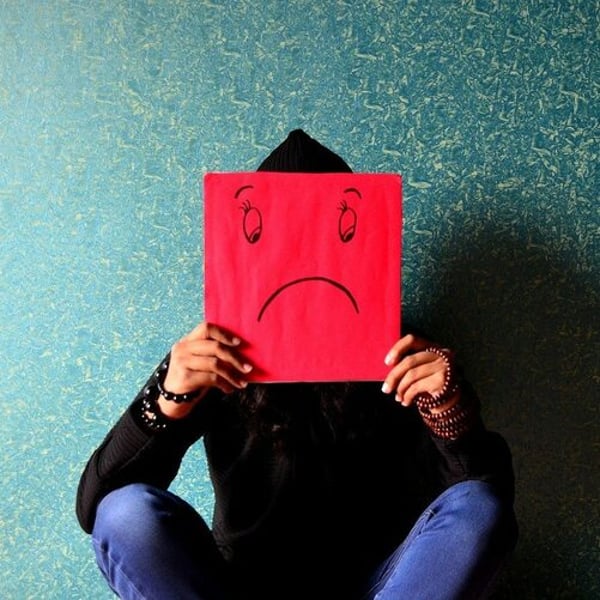
It’s tough out there and will probably get tougher. Europe’s retail and consumer goods sector emerged as the most “distressed” in Q4 2025, rising to its highest level since the global financial crisis, according to a new report.
Public domain
And the outlook is “materially fragile moving into 2026”, according to the aptly-named Weil European Distress Index (WEDI).
The quarter saw acute pressure on both liquidity and profitability, citing “weak demand, persistent cost inflation and tighter consumer spending continued to squeeze margins”.
Looking ahead, distress in the sector is expected to deepen further in 2026, citing “rising input costs – including increases in the UK minimum wage – begin to feed through more fully”.
Ongoing uncertainty in global supply chains, as trade settlements remain in flux, adds further downside risk, it added.
In all commerce, “liquidity and profitability pressures remain acute and distress is becoming increasingly uneven across sectors and countries”, the report continued. “As a result, corporate distress is expected to rise through 2026, reflecting weaker investment conditions, elevated borrowing costs and continued uncertainty around trade policy and geopolitical risk. This is likely to drive a widening divergence, with pressure intensifying in more exposed sectors and countries while others remain comparatively resilient.”
And while the UK was ranked third behind Germany and France in terms of distress levels in the final quarter of 2025, it has still seen “elevated pressure across liquidity, profitability and risk metrics, amid subdued business confidence and cautious investment”.
Adding to the bleak outlook, Neil Devaney, partner and co-head of Weil’s London Restructuring practice, said:“Distress remains persistent and increasingly uneven, driven by pressure on liquidity and investment. That divergence is most pronounced in Retail and Consumer Goods, which is set to be the most challenged sector in 2026.
“The sector is becoming more polarised, with smaller and mid-sized retailers under the greatest strain, while businesses with stronger balance sheets and established omnichannel models prove more resilient. In the UK, recent Budget measures – including higher National Insurance and Minimum Wage costs – are set to add further pressure into 2026. With growth expected to offer little relief over the coming years, these pressures are unlikely to ease quickly.”
From more than a thousand applications spanning around 100 countries, L’Oréal has selected 13 “agents of change” to join its sustainable innovation programme, L’Accelerator (with an emphasis on the “Or”), backed by €5 million in funding over five years.
Shutterstock
Among the awardees are six packaging and materials companies, notably Sweden’s PulPac and the UK’s Pulpex, focused on low-carbon paper packaging and recyclable paper bottles respectively. They are joined by Sweden’s Blue Ocean Closures, which aims to replace plastic components with fibre-based caps and lids.
Estonia’s Raiku has also been chosen for its premium, shock-absorbing, wood-based packaging. The UK’s Kelpi contributes sustainable packaging made from algae, while Japan’s Bioworks joins the programme with its high-performance bioplastics made from sugar cane.
In keeping with L’Oréal’s focus, natural ingredients for cosmetics are also in the spotlight, notably French company Biosynthis for its renewable and biodegradable raw materials. Also selected are green-chemistry solutions and bio-based materials from US company P2 Science, as well as ingredients from US company Oberon Fuels derived from upcycled wood and pulp waste.
On the circular economy front, L’Oréal welcomes Belgian company Novobiom, which uses fungi to transform waste into usable material, as well as French company Replace for its technology to recycle complex, multi-layer waste. Brazil’s Gás Verde has also been selected for its biomethane, offered as an alternative to fossil fuels in the cosmetics industry. Rounding out these companies is the British company Neutreeno, whose solution enables emissions to be calculated and reduced throughout the production chain.
L’Accelerator is being deployed by the L’Oréal Group in partnership with the University of Cambridge, in particular its Institute for Sustainability Leadership (CISL), whose teams will offer “intensive” support to the thirteen organisations selected by the programme.
This article is an automatic translation. Click here to read the original article.
eBay’s Circular Fashion Fund is returning for a fourth year as the digital retail giant continues to reinforce its “long-term commitment to advancing circularity in the fashion industry”.
eBay
This year, the programme is expanding its reach across the EU, Switzerland and Canada, opening applications to more businesses and start-ups “developing innovative solutions that extend the life of clothing and reduce textile waste”.
The annual programme, first launched in 2022 supporting entrepreneurs tackling the fashion and textile industry’s environmental footprint, from production to end-of-life, now want to select eight businesses with each receiving $50,000 (£37,000) in funding, alongside mentoring to help develop and scale their ideas.
One standout business will also be named the Global Winner of the Circular Fashion Fund, with the opportunity to receive an additional $300,000 investment from eBay Ventures.
With this expansion, eBay’s total global funding through the programme is set to reach $1.9 million by the end of 2026.
Alexis Hoopes, vice-president and global head of fashion at eBay, said: “Over the past three years, we’ve seen scalable solutions emerge in areas like textile recycling, resale and repair — but these businesses need capital and support to grow. With this expansion, we’re helping more founders build the infrastructure to make circular fashion an integral part of the fashion industry.”
Applications for the 2026 Circular Fashion Fund are now open and will close on 8 March.
Between 2015 and 2024, global trade in jewellery rose from €97 billion in 2015 to more than €130 billion in 2024. China lost ground, with its share of the global market falling from 23.5% to 15.7%. Italy posted a particularly strong rebound, increasing its share from 5.8% in 2015 to 8% in 2023, and reaching 11.2% in 2024, overtaking Switzerland (a hub for French luxury goods and a transit country for jewellery, including Italian-made pieces) and India. According to the sector report by Mediobanca’s Research Area, this outcome confirms the ability of Made in Italy to showcase design, quality and positioning at the top end of the market.
A necklace on display at Vicenzaoro
It should be noted, however, that part of Italy’s surge in 2024 was influenced by the ‘anomalous’ performance of exports to Turkey. As indicated by a note from Confindustria Federorafi’s Study Centre, in the first nine months of 2025 Italian sector exports fell by 15.2% compared with the same period of the previous year.
This pullback, partly a natural correction after the sustained growth of the past three years, is largely attributable to the contraction in exports to Turkey. After extraordinary growth in 2024 (+468.7%), Turkey recorded a sharp decline in 2025 (-52.2% between January and September). Sales to the US also decreased (albeit less than expected), while several leading markets- including the UAE, Switzerland, the UK, Spain, Japan, and China- are showing signs of growth.
There are several reasons for China’s loss of market share: the relocation of production to lower-cost countries (India, Thailand, Indonesia), restrictive US trade policies, and rising domestic demand, which has reduced exports. At the same time, new players have emerged: the UAE has established itself as an international hub thanks to its role as a logistics and tax platform, while Turkey and several South-East Asian countries have gained share thanks to manufacturing competitiveness and their ability to attract investment.
This article is an automatic translation. Click here to read the original article.