
Politics
‘Blue Ribbon Projects’ bill incentivizing conservation lands clears first committee

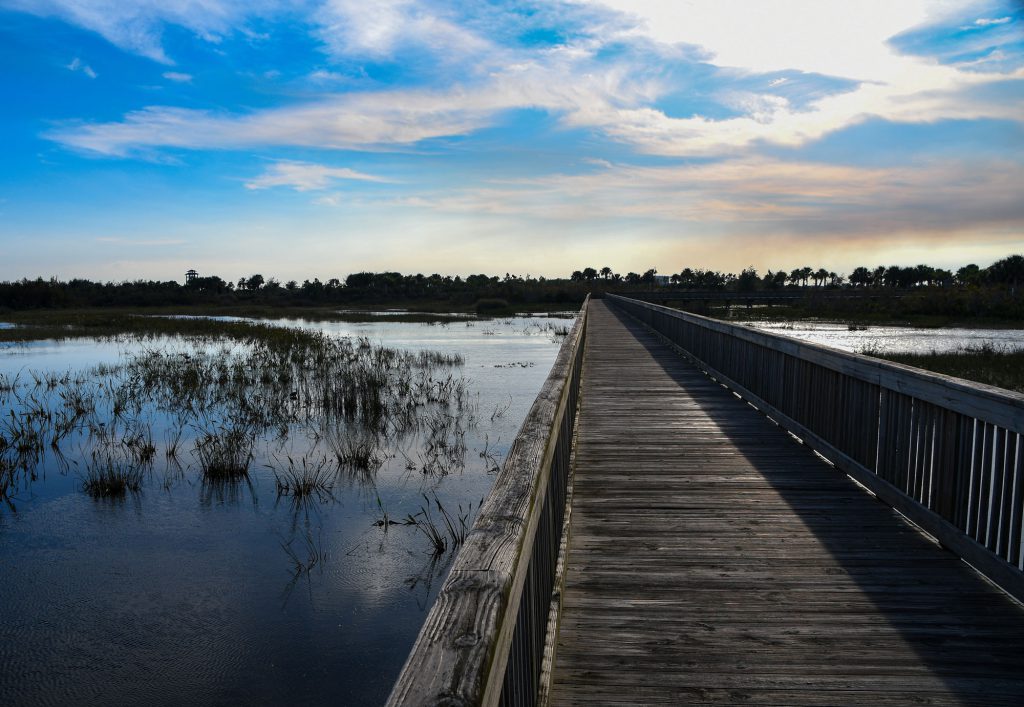
Members of the Senate Committee on Community Affairs have approved a proposal aimed at encouraging Florida’s largest private landowners to serve as long-term stewards of the environment.
The measure (SB 354) offers a framework supporters say better aligns growth, conservation and infrastructure planning. It cleared its first committee stop via a 7-1 vote, with Republican Sen. Kathleen Passidomo as the only “no” vote.
“I couldn’t even figure out how to fix it,” she said, calling it “a massive bill that leaves so much out.” She added that she’s willing to continue working with the bill sponsor, Sen. Stan McClain, to improve the bill.
“But it’s going to be a lot,” Passidomo said.
Several environmental groups and home rule hawks spoke against the bill. Other lawmakers on the committee raised concerns they hope to be worked out through the committee process, but most see an opportunity to streamline stagnant development while incentivizing land conservation.
The bill would establish “Blue Ribbon” projects, which would apply to landowners who control or own at least 10,000 or more contiguous acres. The measures would require participating landowners to conserve at least 60% of the property.
Under the bill, the plan must prescribe the development property over a 50-year planning period by meeting strict statutory requirements. Landowners would still have to earn approval from local governments based on compliance with the statutes, including development orders, and concurrency.
Two amendments also passed. One would add “consistent with the public purposes” language in state statute regarding parks, recreational activities, utility sites, reservoirs and lakes, or other uses that support such activities, expanding what would constitute conservation lands under the measure.
The other amendment is more technical and deals with public easements, adding the “consistent with public purposes” language and requiring an agreement between the landowner and the Department of Agriculture “regarding allowable uses for the easement.”
Elizabeth Alvey, Senior Director of Policy with Audubon Florida, was one of the environmental group members to speak against the bill. She said her group appreciates the bill’s intent and, initially, the group had not taken a stance on it. Now, though, Alvey said “the bill raises serious issues.”

She said two amendments filed and approved open the door to cover park land and recreational space, which she said could allow things like baseball diamonds and pickleball courts, things not typically thought of as conservation land.
Nevertheless, she praised McClain for his willingness to continue working to improve the bill and resolve issues, noting that “we have shared language and our ideas with him … and we look forward to working collaboratively to improve this bill.”
The proposal is born of a desire to implement smart growth strategies by ensuring growth occurs only where it can be supported. The proposal requires phased planning for water, wastewater, transportation, schools and utilities.
The stated Blue Ribbon project goals are to protect wildlife and natural areas; limit urban sprawl; provide a range of housing options including missing middle and affordable housing; create quality communities designed to reduce vehicle trips and promote multiple mobility options; and enhance local economic development objectives and job creation.
The measure also emphasizes sustainability beyond just conservation lands by ensuring new development supports population density in compact communities that are multi-mobility focused. It also seeks to ensure the state is a good steward of taxpayer dollars by allowing conservation lands to be secured without public dollars.
Rep. Lauren Melo is sponsoring the House version of the bill (HB 299). It awaits a hearing in the House Commerce Committee, followed by the State Affairs Committee.
The Senate bill still awaits hearings in the Appropriations Committee on Transportation, Tourism and Economic Development, followed by Rules.
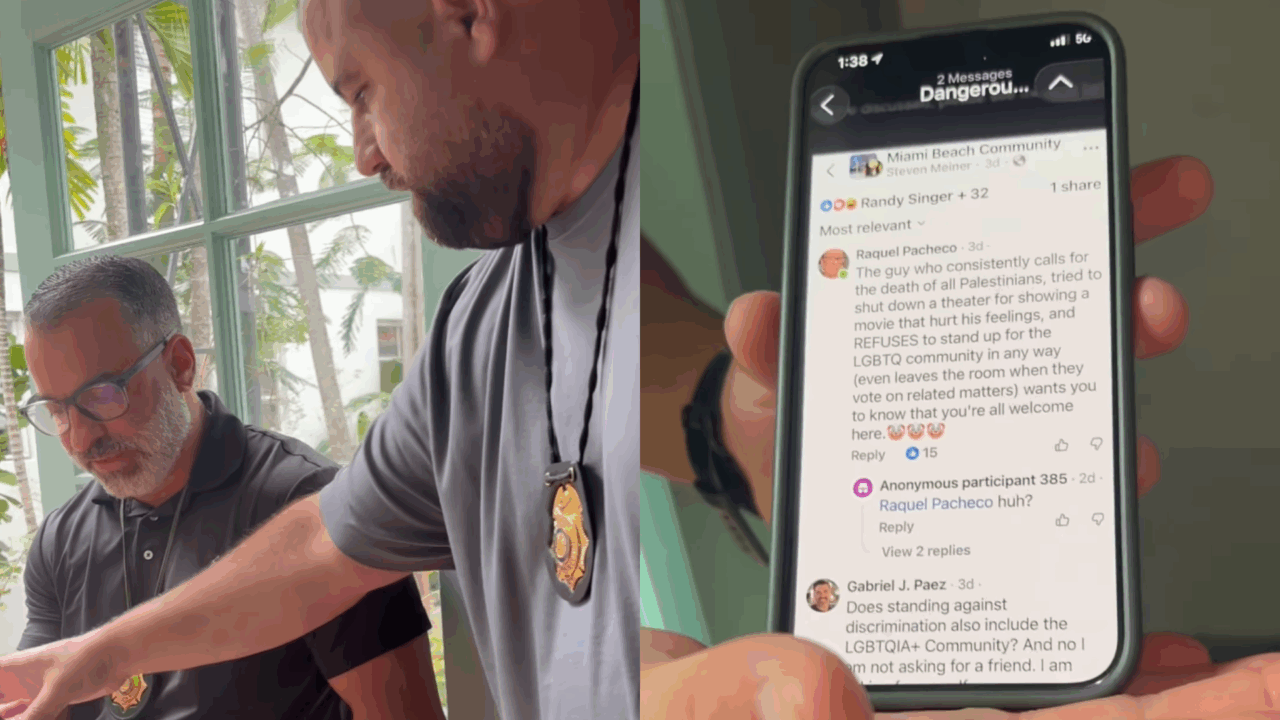
A Miami Beach resident, veteran and repeat political candidate says city police questioned her at home over a critical Facebook post she wrote about the Mayor — and she has posted a video online to prove it.
One of the officers appears to have provided security to Meiner and two City Commission candidates at a campaign event in October.
More on that later.
In the video, which Raquel Pacheco posted to Instagram, two Miami Beach Police officers arrived unannounced at her Flamingo Park home. They questioned her about a comment she made on a Facebook post in which Mayor Steven Meiner described the city as a welcoming place.
Pacheco asked, through her front door, whether she is facing criminal charges.
“Am I being charged with a crime? OK, you are here to investigate a statement that I allegedly made on Facebook,” Pacheco said, before opening the door once the officers confirmed they weren’t there to arrest her.
The officers say they wanted “to have a conversation” about the comment, which Pacheco neither confirmed nor denied she wrote. They said they were there “to prevent someone from getting agitated or agreeing with the statement” and acting violently.
The comment at issue described Meiner as someone “who consistently calls for the death of all Palestinians” — a reference to the Mayor’s since-aborted effort to evict a theater for screening a documentary about the West Bank critical of Israel — and “REFUSES to stand up for the LGBTQ community.”
“We’re not saying it’s true or not,” the shorter of the two officers said before re-reading the post’s reference to Palestinians. “That could probably incite somebody to do something radical. That’s all we’re here to talk about, and we wanted to get your side of it.”
He then advised Pacheco to “refrain from posting things like that.”
Pacheco said she will “maintain my First Amendment rights.”
“This is America, right?” she said.
She then posted the video online, writing in part, “If you need further evidence that Miami Beach has descended into a (fascist) nightmare, you’re not paying attention.”
She later told reporters the experience felt like intimidation.
“My overwhelming feeling was that freedom of speech as I know it died at my front step yesterday,” Pacheco said in an interview with CBS News. “It’s an incredibly, incredibly sad thing.”
In a statement to Axios Miami, the Miami Beach Police Department said the visit was conducted “out of an abundance of caution,” citing heightened national concerns about antisemitism and the fact that the post referenced an elected official. The Department characterized the encounter as a “brief, consensual” check to ensure there was no immediate threat, emphasizing its commitment to constitutional protections.
A Department spokesperson confirmed that Meiner’s Office flagged the post, prompting Intelligence Unit detectives to review it. Meiner defended the police follow-up in a statement to Axios, calling the Facebook claim false but framing the response as a safety assessment.
“This is a police matter,” he said in a statement. “Others might have a different view and that is their right.”
Photos of an October campaign event that Miami Beach business owner Margueritte Ramos posted on Facebook show the shorter of the two officers leaning against a wall in a home, where Meiner addresses a small audience.

A group photo taken outside the event features Meiner and 2025 Commission candidates Fred Karlton and Minique Pardo Pope, both of whom lost their respective races. Many of the attendees wear hats that read, “Miami Beach Mayor Steven Meiner.”

Pacheco, a U.S. Army National Guard veteran and former Chair of the Miami Beach Personnel Board, ran unsuccessfully for the Miami Beach Commission in 2021 and Senate District 36 in 2022. While she declined in the video to confirm whether the comment was hers, it came from her Facebook account, and she previously shared posts online accusing Israel of genocide using Nazi-era language like “final solution.”
Meiner, who is Jewish, has not publicly called for the death of Palestinians. Meiner has drawn criticism for opposing LGBTQ-friendly measures in the city, including one to rename a street after San Francisco politician Harvey Milk and another condemning the Miami-Dade School Board for rejecting recognition of LGBTQ History Monty.
Former Commissioner David Richardson accused Meiner of “building a record of voting against the LGBTQ community.” Meiner said he took offense to the claim, pointing to his vote for a measure designating October as LGBTQ History in Miami Beach.
In an interview with the Miami Herald, Pacheco described the police visit as an “intimidation tactic” meant to stifle her right to free speech. She has since enlisted the services of lawyer Miriam Haskell of the nonprofit Community Justice Project, who told the Herald the police “were sent to intimidate her and chill dissent, plain and simple.”
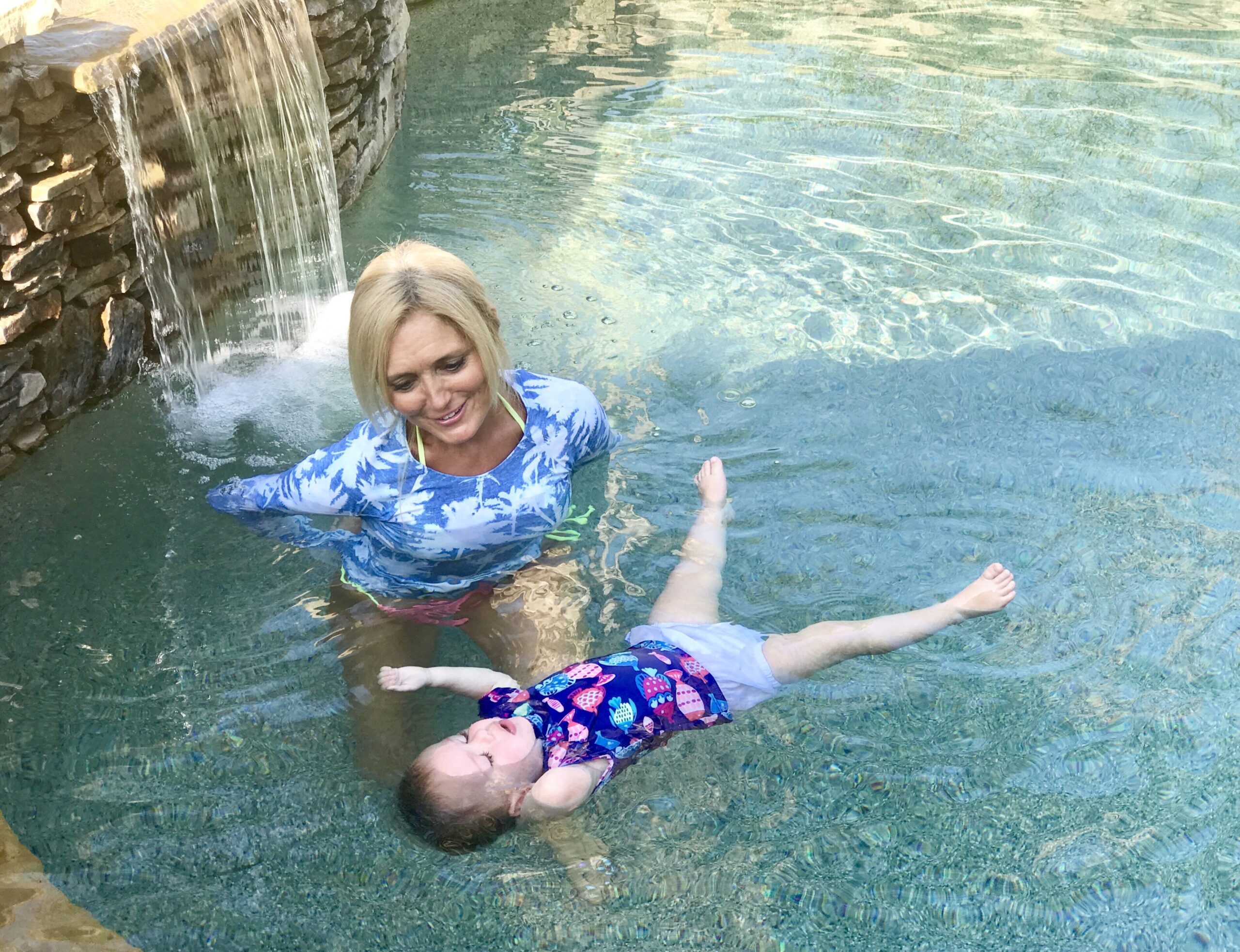
A House panel is on board with allowing older children to qualify for the state’s swimming lessons voucher program.
The House Health Care Budget Subcommittee held a hearing on the measure (HB 85) that calls for revising the popular swimming lessons voucher program to cover the cost of lessons. The program went into effect after Gov. Ron DeSantis signed legislation in 2024.
But Rep. Kim Kendall, a St. Augustine Republican and co-sponsor of the new bill, said the original age limit on the vouchers, for children 0 to 4 years old, is too restrictive. Her proposal would allow children 1 to 7 years old to qualify.
She told the panel that many stakeholders, including swim instructors, say the original program, though appreciated, isn’t practical.
“Ages 0 to 1, the babies show reflexes that look like swimming,” Kendell said. “But they’re too young to actually lift their head up enough in order to breathe out of the water.”
In that first year, she added, children simply aren’t actually learning to swim. She said the majority of infant deaths due to drowning don’t happen in pools or open water. They are most likely to occur in a bath tub in the home.
“It’s giving a false sense of security to the parents,” Kendell said.
She said that for many children under the age of 4, they’re not using the full amount of the voucher program. Kendall said swimming classes could have more participants by expanding the financial relief to families with kids a few years older.
Kendell noted that the number of children drowning in Florida over the past decade has about doubled.
“We simply want to take a great program and simply make it more efficient,” she said.

The subcommittee unanimously approved the bill. There is a companion bill (SB 428) moving through the Senate co-sponsored by Sen. Clay Yarborough, a Jacksonville Republican, and Sen. Carlos Guillermo Smith, an Orlando Democrat.
Politics
LaVon Bracy Davis, RaShon Young file bills to automatically register eligible Florida voters



How Expedia’s CTO is using AI to transform work for 17,000 employees—and travel for millions

TMZ Streaming Live, Come Into Our Newsroom and Watch Things Happen!

Smart glasses market will be worth $200 billion by 2040, HSBC says
-

 Politics8 years ago
Congress rolls out ‘Better Deal,’ new economic agenda
-
Entertainment8 years ago
New Season 8 Walking Dead trailer flashes forward in time
-
Politics8 years ago
Poll: Virginia governor’s race in dead heat
-
Politics8 years ago
Illinois’ financial crisis could bring the state to a halt
-
Entertainment8 years ago
The final 6 ‘Game of Thrones’ episodes might feel like a full season
-
Entertainment8 years ago
Meet Superman’s grandfather in new trailer for Krypton
-
Business8 years ago
6 Stunning new co-working spaces around the globe
-
Tech8 years ago
Hulu hires Google marketing veteran Kelly Campbell as CMO