Connect with us

Business

Chief people officers—and Jamie Dimon—say AI can’t learn ‘human skills.’ The world’s youngest self-made billionaires want to prove them wrong

Published

on


Leaders like JP Morgan CEO Jamie Dimon argue that EQ and critical thinking are the only skills that will survive the automation wave. Microsoft Satya Nadella would agree, calling emotional intelligence a required workplace skill. These statements are meant to give workers reassurance that AI won’t completely replace people, highlighting an irreplaceable human trait that the technology supposedly cannot acquire. The stakes are high, with some AI thought leaders such as Dario Amodei warning that half of all entry-level white-collar jobs will disappear, and soon, amid the AI wave.

But a Silicon Valley startup is challenging the assumption that human judgment is off limits to AI.

Mercor, a San Francisco-based AI firm, is hiring people from a vast list of professional career backgrounds to improve its AI, training the model to adopt core skills in a more human-like manner. In other words, they are building a business to prove executives like Jamie Dimon and  Satya Nadella wrong—and to hasten the replacement of people with AI in the workforce, closing the last mile of human employment.

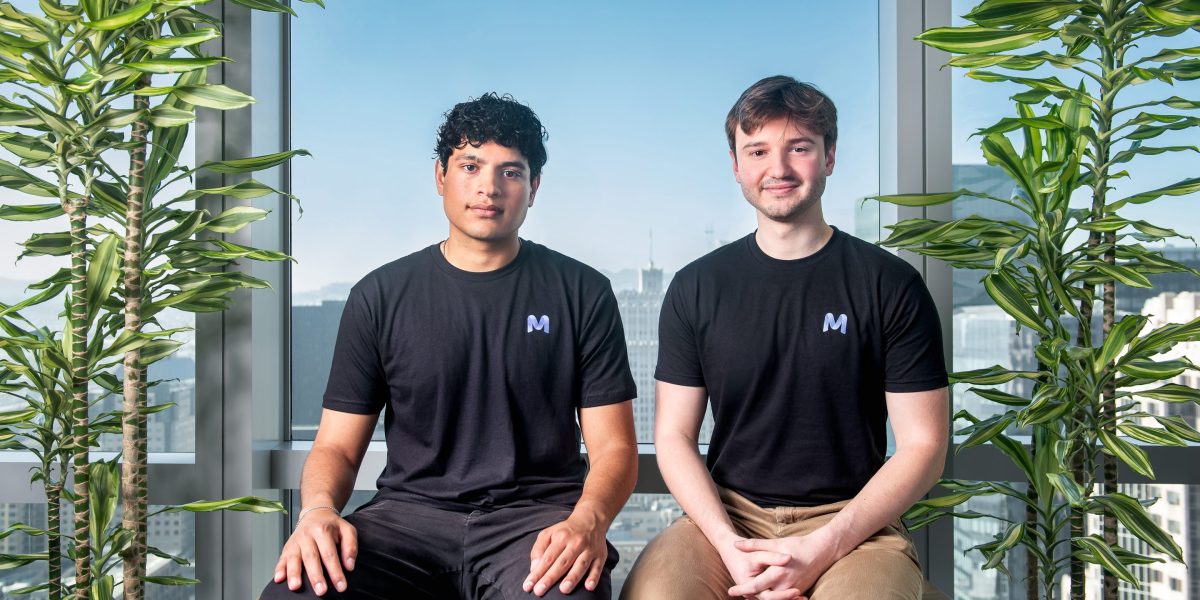
The company’s CEO Brendan Foody and co-founders Adarsh Hiremath and Surya Midha were recently minted the youngest self-made billionaires after the company was valued at $10 billion last November. That funding has given the 22-year-olds the resources needed to build out their ambitious AI venture.

Mercor’s mission is to bridge the gap between machine learning and human nuance. “Everyone’s been focused on what models can do,” Foody told Fortune in November. “But the real opportunity is teaching them what only humans know—judgment, nuance, and taste.”

The shift toward high-skilled gig work is a response to a volatile labor market where even professional skills aren’t enough to ensure a worker’s job security. According to the World Economic Forum’s 2025 Future of Jobs Report, employers estimate that 39% of core skills — such as problem-solving and communication — will be disrupted by 2030, with 40% of firms planning to reduce their workforce specifically due to AI automation. As entry-level white-collar roles begin to vanish, the demand for specialized knowledge and “human-in-the-loop” expertise have become critical currency for workers seeking to resist automation.

Simple work, fast money

Mercor’s career page lists dozens of job postings for contract work looking for individuals with subject-area expertise, including investment banking and private equity analysts, linguists, sports journalists, soccer commentators, astronomists and legal experts. 

The job postings offer hourly rates ranging from $10 for bilingual experts to as much as $150 for finance experts. Aside from competitive pay, the job’s perks include fully remote work. Mercor’s website claims an average hourly rate of $86, with about $2 million paid out to experts daily.

To apply, all applicants must do is submit an initial application followed by an AI interview tailored based on area of expertise, which is then reviewed by Mercor staff. Once hired, contractors evaluate how well their AI system completes micro-tasks — such as writing a financial memo or drafting a legal brief — using detailed rubrics to grade the AI’s performance. This allows for the AI to learn how people make decisions.

The company says it hired 30,000 contractors last year, with 80% being US-based, according to a Mercor spokesperson. The work day varies as contractors have no set hours. Some log 10 hours per week, others work 40 or more, with specific projects lasting weeks or months.

The Wall Street Journal recently found some of the humans who are teaching AI how to do the difficult, human-skill-heavy tasks in which they are experts. “I joked with my friends I’m training AI to take my job someday,” Katie Williams, 30, told the Journal. Williams, who has a background in news and social-media marketing, has worked at Mercor for about six months, watching videos and writing out transcripts of what happens in them, and rating the quality of videos generated by prompts.

The quest for nuance

The company’s newly launched AI Productivity Index, or Apex, benchmarks AI models on real-world knowledge in four fields: medicine, management consulting, investment banking and law. The system uses the same rubric and expert-generated tasks that its contractors help to create, grading models on their production ability. 

The index found that even the most advanced models, like GPT-5, failed to meet the “production bar” for autonomous work. GPT-5 achieved a top score of 64.2%, with scores varying for each category and scoring as low as 59.7% in investment banking.

Despite being far from perfect, the company says that AI models performing at 60% or better can reshape the nature of work as professionals work in tandem with the technology. “Perhaps a consultant can more easily complete a competitor analysis if given an initial draft from an AI,” the company wrote. As AI continues to evolve, the most human skill may no longer be doing the work, but possessing the right judgment required to critique it.


Source link

Continue Reading

Business

Down Arrow Button Icon

Published

on


In an era where fashion brands frequently pivot to chase the latest influencer trends, Carhartt remains an outlier by standing perfectly still. Despite the brand’s explosion in popularity among urban “hipsters” from Brooklyn to Berlin, CEO Linda Hubbard insists the company’s compass remains fixed on the job site.

“We’ve really been about the worker … we don’t try to be everything to everybody,” Hubbard told Fortune in a joint interview with Ford Philanthropy President Mary Culler, as the two Detroit-area brands join forces in a multi‑year partnership to power what Ford CEO Jim Farley calls “the essential economy.”

Farley estimated the essential worker shortage at more than 1 million factory, construction, and auto workers in June. “Today’s essential economy faces a critical crossroads,” Farley said in a statement to Fortune: “Stagnant productivity and an outdated belief that a four-year college degree is the only path to success. Given these 95 million jobs are the backbone of our country, we need to change that narrative. To help do that, Ford and Carhartt are joining forces in three critical areas: workforce development, community building, and the tools required by the men and women who keep the American Dream alive. It’s time we all reinvest in the people who make our world work with their hands.”

“We’re not going to change it overnight,” Culler told Fortune, but Ford “looked at ourselves” and decided there are barriers that they can work to break down. “The tools are expensive. Transportation is a barrier. And so we have to really start to tackle those things.”

Ford and Carhartt share Detroit DNA

Ford and Carhartt partnering has been “so seamless,” she added, thanks to sharing so many of the same values, and literally being neighbors in the same city of Detroit. Culler said the partnership personally resonates with her, having two kids who are graduating from college: “And you see how tight the job market is.” But of course, when her kids come back from college, she added, there’s always a stop they request: “[They] always love to go to the Carhartt store in Detroit when they come into town from school. That’s always a stop.”

The Ford and Carhartt camps know each other well from local volunteer efforts and a long history of collaboration, Culler said, but the cool factor is always undeniably on one side. This past summer, she recalled, she joined the Carhartt team for a volunteer project with Tool Bank USA, building benches for a big park.

“And the only reason I knew who the Carhartt people were was because they were outfitted in the coolest overalls ever,” she said. “And I wanted [to buy] them right away. And then the Ford people, of course, had their Ford blue volunteer shirts.”

Culler described the partnership as a logical union, saying she sees Ford trucks and Carhartt gear on most job sites she visits. The two companies are using their combined scale to move beyond “awareness building” into actual “tactics” to solve the problem facing the essential economy.

This “ethos” of giving back to the community and providing economic opportunity is what Hubbard believes makes the partnership so seamless. Whether it’s redeveloping the Michigan Central innovation hub or building park benches for southwest Detroit, the two teams have found immediate “synergy” in their shared values.

Hubbard smiled knowingly as she was informed of Carhartt’s hipster cache (GQ wrote the “always popular” brand was “having a moment” in 2023), but she waved it away, attributing the brand’s crossover appeal to its unwavering authenticity, noting many consumers are drawn to the “Carhartt DNA,” often passed down through generations of blue-collar families. Form is temporary, she seemed to say, but class is permanent. To her point, the Detroit Regional Chamber of Commerce reported in 2020 Carhartt had produced more than 10 million pieces of workwear in the U.S., making it the largest maker of workwear in the country.

“Everything that we make is work-worthy and we welcome anyone into the brand that wants to celebrate hard work,” she said. “So the fact that people want to wear it and maybe they’re not, you know, core workers is okay with us if they want to celebrate the people that work hard and celebrate a brand that tries to showcase that.”

Carhartt’s CEO added she never set out to run one of America’s coolest brands, but her winding path from public accounting to leading a 137-year-old Detroit label now sits at the center of a new push to help young people launch careers in the skilled trades—with Ford as her ally.​ “We are a workwear brand and we don’t try to be anything else.”

An unlikely path to Carhartt’s top job

Hubbard started her career in public accounting, far from the world of rugged jackets and hoodies now beloved by both job-site crews and Brooklyn twenty‑somethings. “If you told me I was going to be selling T‑shirts and hoodies at the end of my career, I’d have been like, huh, what?” she recalls, underscoring how unplanned her trajectory has been. She credited a series of opportunities, rather than a rigid master plan, with carrying her from spreadsheets to steering one of America’s most storied workwear companies.​

“The other thing in public accounting,” Hubbard said, pointing to her teal-green Carhartt work jacket. “You can’t dress like this.”

Culler seconded this, adding whenever she sees Linda around Detroit, “she’s always in a cool Carhartt jacket, even on her own. I always wear her. It’s so cool.”

Hubbard shrugged off the compliment, making clear her decades of accounting experience enable her to be a good CEO. (She joined Carhartt as CFO in 2002, after 20 years as an audit partner at Plante Moran, a stint that included a decade and counting on the board of the Federal Reserve Bank of Chicago. After 10 years as CFO, she served 10 years as president and COO before getting the top job at Carhartt in 2024.)

“We’ve really been about the worker and focused on their core worker,” she said. “And I think that the authenticity of that is maybe what attracts people to the brand—that we’ve stayed true to who we are.”

That improvisational career path shapes how she talks to young people about their own choices. Asked whether she plotted out her rise, she was blunt: “Absolutely not,” she said, emphasizing one opportunity simply led to another and the real goal is to stay open to evolving paths.​ The advice she offered to young job seekers is to “keep an open mind and think about, you know, just listen to the facts about what the opportunities are out there.”

But Ford and Carhartt are offering more tools to young job seekers through their partnership.

For a teenager unsure about college or a college student staring down debt, Hubbard and Culler said the key is both inspiration and practical support. Hubbard points young people to their “Join the Trades” portal, built with the National Center for Construction Education and Research, which helps users map their interests to specific trades, find training programs, and see which employers are hiring right now. Ford, meanwhile, works through partners like TechForce Foundation to provide scholarships, wraparound support, and even basics like tools and transportation—often the hidden costs that keep students from finishing technical programs.​

Both executives stress skilled trades roles often pay 25% to 50% more than the median wage and can serve as launchpads into management or even the C‑suite. Hubbard said she engaged with many manufacturing leaders at Farley’s Ford Pro Accelerate conference in September, even hearing some stories of CEOs who began as electricians and worked their way up.

“I met a couple of folks who started in the skilled trades, but then wanted to start their own business and they realized they needed a business degree to really run their business,” Culler said. “But that didn’t come till like 10 years later, after they had been, you know, a plumber and electrician. And I thought that was really amazing, because now they’ve they’ve sort of evolved.”

Hubbard smiled when informed of this editor’s New York-area connection to Carhartt: his father’s favorite store, the dadwear specialty shop in lower Manhattan known as Dave’s. (Just like Carhartt, the unpretentious workwear shop has acquired a hipster cache, for example partnering with the sneaker blog turned fashion magazine Highsnobiety in 2023.)

“I know Dave’s,” Hubbard said, displaying the instant recall of an executive in close touch with her footprint. “I was just there, not about a month ago, visiting with the owners. They are a great customer of ours.” She said the name is misleading, because “the owners of Dave’s are actually Bob and Adam, but it was originally founded by a Dave, and it’s just really great. It is a great Carhartt experience and just a New York experience for sure.”


Source link

Continue Reading

Business

Down Arrow Button Icon

Published

on


As corporate earnings soar and the U.S. GDP balloons, the American workforce isn’t feeling the same boom. American workers are taking home less of the country’s overall wealth, data from the Bureau of Labor Statistics show, and employment in the U.S. is set to continue to slow.

Labor share, or the portion of the U.S.’s economic output that workers receive through salary and wages, decreased to 53.8% in the third quarter of 2025, its lowest level since the BLS started recording this data in 1947, according to its labor productivity and costs report published last week. In the previous quarter, labor share was at 54.6%. This decade, the labor share average was 55.6%.

That’s despite corporate earnings skyrocketing, with profits for Fortune 500 companies hitting a record $1.87 trillion in 2024. The U.S. GDP grew 4.3% in the third quarter last year, exceeding economists’ predictions. 

That growth has not only come at the expense of how much of the pie of wealth workers are taking home, but also how many Americans are in the workforce, economists warn.

“That decline in the share of labor has got to be either falling earnings or falling numbers of people,” Raymond Robertson, a labor economist at Texas A&M’s Bush School of Government, told Fortune. “The falling share of income is having to do with the shift towards capital.”

Indeed, there are growing signs that as national income balloons, the U.S. workforce is deflating. Unemployment ticked down to 4.4% in December, but still sits above the 4.1% rate from 12 months before. Moreover, employers added just 584,000 jobs in 2025 compared to 2 million added in 2024.

The stark bifurcation of corporate victories and weak labor data raises concerns among economists of jobless growth jeopardizing the U.S. workforce, as well as a K-shaped economy, where the rich get richer while the poor get poorer, becoming more exaggerated.

“Data right now is very mixed,” Robertson said. “But I think it also all consistently points to this idea that things are getting worse for workers and much better for billionaires.”

Making sense of jobless growth

Robertson attributes weakening labor share averages to the rise in automation, which he noted is displacing workers, with productivity—a metric essentially measuring worker output—continuing to rise. Third-quarter GDP data showed nonfarm productivity growth soared to an annualized rate of 4.9%.

“All these things, bit by bit, are replacing people, and they’re concentrating income and their share of capital,” he said.

Goldman Sachs analysts Joseph Briggs and Sarah Dong estimated in a report this week, based on Department of Labor job numbers, that AI automation could displace 25% of all work hours. They predicted that over the course of the AI adoption period, a 15% increase in AI-driven productivity would displace 6% to 7% of jobs, and, at its peak, a 1 million increase in unemployed workers.

The displacement is substantial, the analysts said, but said the impacts of automation will be tempered by a wealth of new jobs created as a result of the technological changes.

Automation is expected to be a boon to corporate profits and GDP, expected to boost GDP by 1.5% by 2035, according to a Wharton brief published in September 2025. Early signs indicate AI is already driving productivity gains, with companies who invested $10 million or more in AI reporting significant productivity gains compared to organizations investing less in the technology, according to EY’s U.S. AI Pulse Survey.

Robertson added that growing unemployment, which he expects to see rise over the next few months, keeps wages down, allowing margins and profits to expand.

To be sure, the recent productivity surge has been an “open question,” Morgan Stanley economists wrote in a note to clients this week, not unanimously attributed to increased adoption of AI or automation. The analysts suggested this increase would be cyclical, or vestigates of pandemic-era habits of companies making more from less.

An Oxford Economists research brief published earlier this month suggested companies are disguising overhiring-related layoffs as a result of AI, but said automation-related workforce reductions have not yet happened en masse. Additionally, while unemployment has been ticking up over the past year, it is still relatively low.

An immigration crackdown backfires on U.S. labor

Mark Regets, senior fellow at National Foundation for American Policy, sees a different reason for a slowing workforce. He told Fortune President Donald Trump’s immigration crackdown has not done what Trump administration officials, such as White House Deputy Chief of Staff Stephen Miller, said it would in increasing the number of U.S.-born workers. Instead, according to Regets, Trump’s immigration policies have not only decimated the foreign-born workforce, but has also created fewer opportunities for domestic-born workers to find jobs.

The most recent BLS household survey reveals a decline of 881,000 foreign-born workers since January 2025, and a decline of 1.3 million workers since a March 2025 peak, consistent with the Congressional Budget Office’s report last year indicating shrinking U.S. population growth as a result of migrants being deported or refusing to come to the U.S. out of fear of hostile polities.

“The data is raising huge red flags that we are losing immigrants of all types that we otherwise would be advancing America’s economy,” Regets said.

The rising U.S. unemployment rate, up from 3.7% in December 2024 is counterevidence to Miller’s argument that harsher immigration policy would grow the U.S. workforce, he added. In fact, fewer immigrant workers may actually make it harder for U.S.-born individuals to find work.

“A company unable to find the workers it needs for some roles could shut down operations rather than continuing,” Regets said.

He noted that skillset diversity in a workplace could boost productivity and justify employing more people. Greater immigration can also increase consumer spending and stimulate businesses, as well as encourage businesses to take advantage of ample labor market availability and seek out their labor instead of offshoring jobs.

Reversing a shrinking labor force

While friendlier immigration policies could help reverse an exodus of foreign-born workers, Robertson said addressing the workplace automation push would be key to growing the U.S. workforce.

“There are trades that are technology-assisted,” he said. “Those are going to be in higher demand, but you really still have to have a significant investment in skills.”

The young generation of workers are already prepared to adapt to a changing labor landscape. Gen Z are flocking to trade schools in hopes of a finding a job as a carpenter or welder not so easily outsourced by AI, and in 2024, enrollment in vocation-based community colleges increased 16%, according to data from the National Student Clearinghouse. 

Companies have taken it upon themselves to provide reskilling opportunities to employees. An Express Employment Professionals-Harris Poll survey from 2024 found that 68% of hiring managers intended to reskill employees at some point during the year, up from 60% in 2021. While the U.S. Department of Labor updated guidelines to encourage states to adapt workplace development systems, Robertson argued the government hasn’t done enough in several decades to imbue the workforce with necessary skillsets for future jobs.

“Democrats and Republicans have not significantly invested in training [or] the retraining or active labor market programs that you need to match workers to jobs,” Robertson said. “That’s the obvious solution.”

Without changes, economists see the pattern of an employment slowdown continuing, but with greater concern about the ability for the U.S. economy to sustain growth.

“We need job growth to have a growing economy, and I think we need job growth to pay our debts,” Regets said. “I don’t know how you have job growth with a shrinking labor force.”


Source link

Continue Reading

Business

‘Hybrid creep’ is the latest trick bosses are using to get workers back in the office

Published

on


“Hybrid creep” is emerging as the newest way employers are nudging remote workers back to their desks, one extra office day and perk at a time rather than through blunt mandates. Framed as flexibility and culture-building, the quiet shift is reshaping what “hybrid” really means in 2026.​

The phrase, which appears to have been coined by the Boston-based videoconferencing software maker Owl Labs in its 2025 state of hybrid work report, describes a slow, often unspoken expansion of in‑office expectations, where a nominal two- or three-day schedule gradually tilts toward a de facto full-time presence. With formal policy changes largely failing to bring workers back by stick, the carrot that companies are turning to is more like a combination of social pressure, subtle incentives, and performance signals to pull workers back in.​​ The Wall Street Journal‘s Callum Borchers, who reported on the phenomenon, argued it’s a particularly passive aggressive form of workforce management, designed to raise office attendance without issuing a direct order.​

The tactics bosses are using

Hybrid creep often starts with adding more “anchor days,” as noted by Stylist, or days when teams are expected in the office for meetings, collaboration sessions, or client visits. Over time, those anchors spread across the week, making it harder for employees to keep meaningful work-from-home days.​

Promotions and plum assignments increasingly flow to the people who show up the most, sending a clear signal visibility matters as much as—or more than—output. At the same time, companies roll out social perks—free lunches, events, guest speakers—to make the office feel like the center of professional life again.​​

Many managers complain they still struggle to measure productivity and mentor staff they rarely see, especially younger workers learning on the job. Hybrid creep offers a way to restore in‑person oversight and informal coaching while avoiding the public relations hit of a strict mandate.​

This new species of hybrid creeper comes after several varieties of pandemic-era fauna flourished in the jungle of remote and hybrid work. The “coffee badger,” the millennial-tilted hybrid worker who swiped their badge in just long enough to have the proverbial cup of java before heading for the hills of the home office, may regard the hybrid creeper as their natural predator. The “job hugger,” on the other hand, the worker who discovered a new sense of loyalty to their employer after the “Great Resignation” curdled into the “Great Stay” and now the “no-hire economy,” will surely be amenable to the onset of hybrid creep.

Owl Labs found the coffee badger is thriving, at 43% of the workforce, but so is the silent creature of “hushed hybrid,” with 17% of hybrid workers having remote arrangements they don’t openly discuss. These findings align with what commercial real estate giant Jones Lang LaSalle termed the “non-complier” who is “empowered” to make their own schedule, out of some kind of value provided to the company.

Some employees welcome clearer routines and in‑person contact after years of scattered hybrid arrangements. For others, hybrid creep feels like a broken promise, eroding the flexibility that led them to accept or stay in a job in the first place.​

Critics warn tying advancement to badge swipes can punish caregivers, disabled workers, and those with long commutes, even when their performance is strong. Employee advocates also argue opaque expectations breed resentment, fueling quiet quitting or renewed job searches as workers realize the ground rules have changed.​

Career coaches advise workers to document results and press managers for explicit expectations—how many days in office, which days, and how that links to performance reviews. Clarity, they argue, is the best defense against a creeping requirement that never appears in writing but strongly shapes careers.​

For employers, the risk is over-reliance on hybrid creep will damage trust if workers feel manipulated rather than consulted. As the fight over where work happens enters another phase, the future of hybrid work may hinge less on policy documents and more on these quiet, incremental pushes back to the office. The Journal‘s Borchers noted hybrid creep is nearing a tipping point, as the badge-swipe company Kastle Systems’ back-to-work barometer has posted year-over-year gains in each of the past six months, and over 50% attendance is the norm as of early 2026, a new high over 2025’s attendance.


Source link

Continue Reading

Trending

Copyright © Miami Select.