
Politics
Florida Democrats fault Gov. DeSantis for misplaced priorities in final State of the State

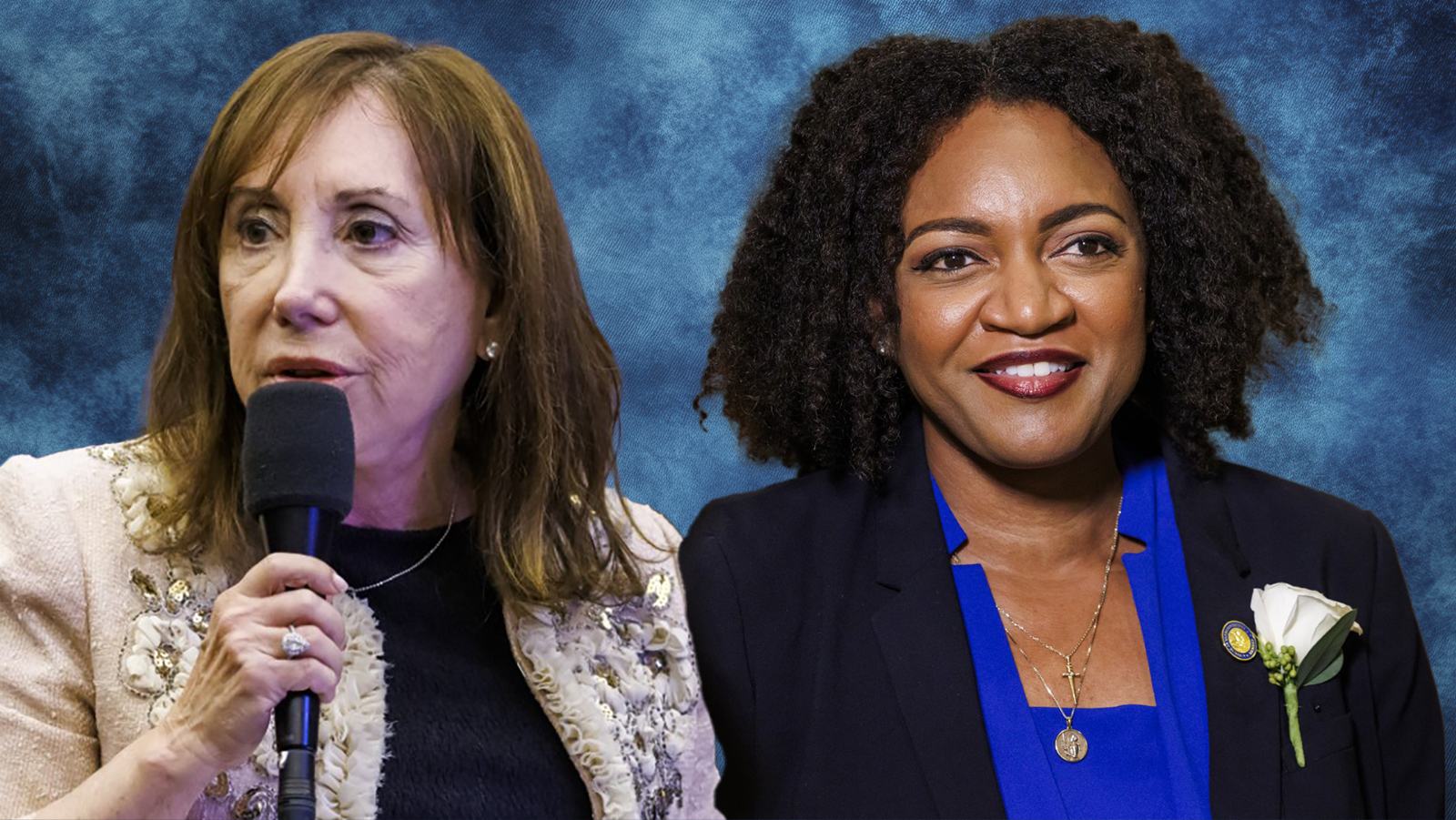
Florida Democrats criticized Gov. Ron DeSantis’ State of the State address, saying he carries a legacy of misplaced priorities into his final year in office.
Democratic leaders argued that DeSantis’ portrayal of Florida’s condition does not align with the financial pressures facing residents — particularly rising housing and insurance costs — and amounted to a retread of his “greatest hits” without outlining a clear vision for the year ahead.
In an official video response, Senate Democratic Leader Lori Berman said DeSantis remains “completely out of touch with reality,” arguing that Floridians have seen costs rise across the board while the administration has focused on politics and patronage. She accused the Governor of prioritizing political ambition over governing, saying his leadership has left Florida “less affordable and more corrupt.”
In his State of the State address, DeSantis painted Florida as a national model for economic growth, fiscal restraint and conservative governance, arguing the state has delivered results where other states have faltered.
He acknowledged rising property taxes and housing pressures, but argued those challenges stem largely from local government decisions and called for property tax relief.
DeSantis said recent legislative actions have helped stabilize insurance markets, while also emphasizing his administration’s record on immigration enforcement, public safety and cultural issues. He defended policies targeting diversity, equity and inclusion programs and pandemic-era restrictions and warned against the unchecked influence of artificial intelligence.
House Democratic Leader Fentrice Driskell said the address was overwhelmingly retrospective, focused more on defending and celebrating past actions than laying out a governing agenda for the coming Session.
“I didn’t hear too many new ideas; it sounded like he was dredging up some of his greatest hits,” she said.
“I never expected to hear about the time of COVID; there were so many quotes and weird historical references. It was kind of hard to keep track. I just expected more from the Governor’s last State of the State address.”
She pointed to what she described as a disconnect between the Governor’s rhetoric and everyday realities, arguing that Floridians continue to face underfunded schools, rising grocery and utility bills, congested roads and expensive health care.

Driskell also criticized DeSantis for attacking local government spending while proposing a 2026 budget that is roughly $24 billion larger than his first budget, calling it further evidence that the administration’s priorities are misaligned.
Berman echoed that criticism, arguing that the Governor’s focus on property tax cuts misses the core affordability problem facing homeowners and renters alike. She said lowering insurance costs would deliver more direct relief without hollowing out local services.
“We heard in his press conference this week that he said insurance is solved and that rates are going down, but we know Florida is twice the national average and rates going down, even 8% or 10%, are not solving the issue,” Berman said.
“We don’t think the Legislature has done enough on insurance and we’re going to continue to push. When you lower insurance rates you put money in people’s pockets directly, and that’s what we think should be the answer, not this property tax issue.”
Both Berman and Driskell highlighted Democratic proposals aimed at affordability that may not see the light of day during a Session likely to be dominated by Republican calls for property tax cuts — a move they argue will not provide meaningful relief.
Those proposals include a national insurance compact to spread hurricane risk, the Housing Options Made For Everyone (HOME) Act to preserve affordable housing and reduce costs for first-time homebuyers, and efforts to rein in wasteful or politically connected state spending.
“For eight years, he’s been focused on culture wars, grabbing headlines and an ever-growing list of grievances meant to keep people distracted and angry so that we don’t notice that Florida is becoming too expensive for too many Floridians,” Driskell said. “That’s his legacy: division, meanness and a growing affordability crisis.”
The two Democratic leaders also criticized DeSantis for pursuing a mid-decade redistricting effort, calling it a partisan gerrymander that violates Florida’s Fair Districts Amendments and undermines voters’ ability to choose their representatives.
Driskell criticized the Governor’s rhetoric on immigration and said the public lacks transparency to evaluate enforcement claims. She pointed to heightened national tensions and referenced a recent incident where an Immigration and Customs Enforcement agent shot and killed an American in Minneapolis, arguing that political escalation has gone too far and underscoring the need for accountability and restraint.
Driskell also challenged DeSantis’ portrayal of progress on education and public safety, arguing that many Floridians are still grappling with underfunded schools and other realities like rising utility and grocery bills, congested roads and costly health care that were largely absent from the Governor’s address.
Both leaders said the speech reinforced their view that DeSantis’ final year agenda is more focused on defending his political record and positioning himself nationally than on outlining solutions for Florida’s affordability crisis. With Republicans controlling the governor’s office and both chambers of the Legislature, they said the responsibility for delivering relief — or failing to do so — rests squarely on their shoulders.
“There is absolutely no excuse,” Driskell said. “Any failures in this Legislative Session, it’s on them.”
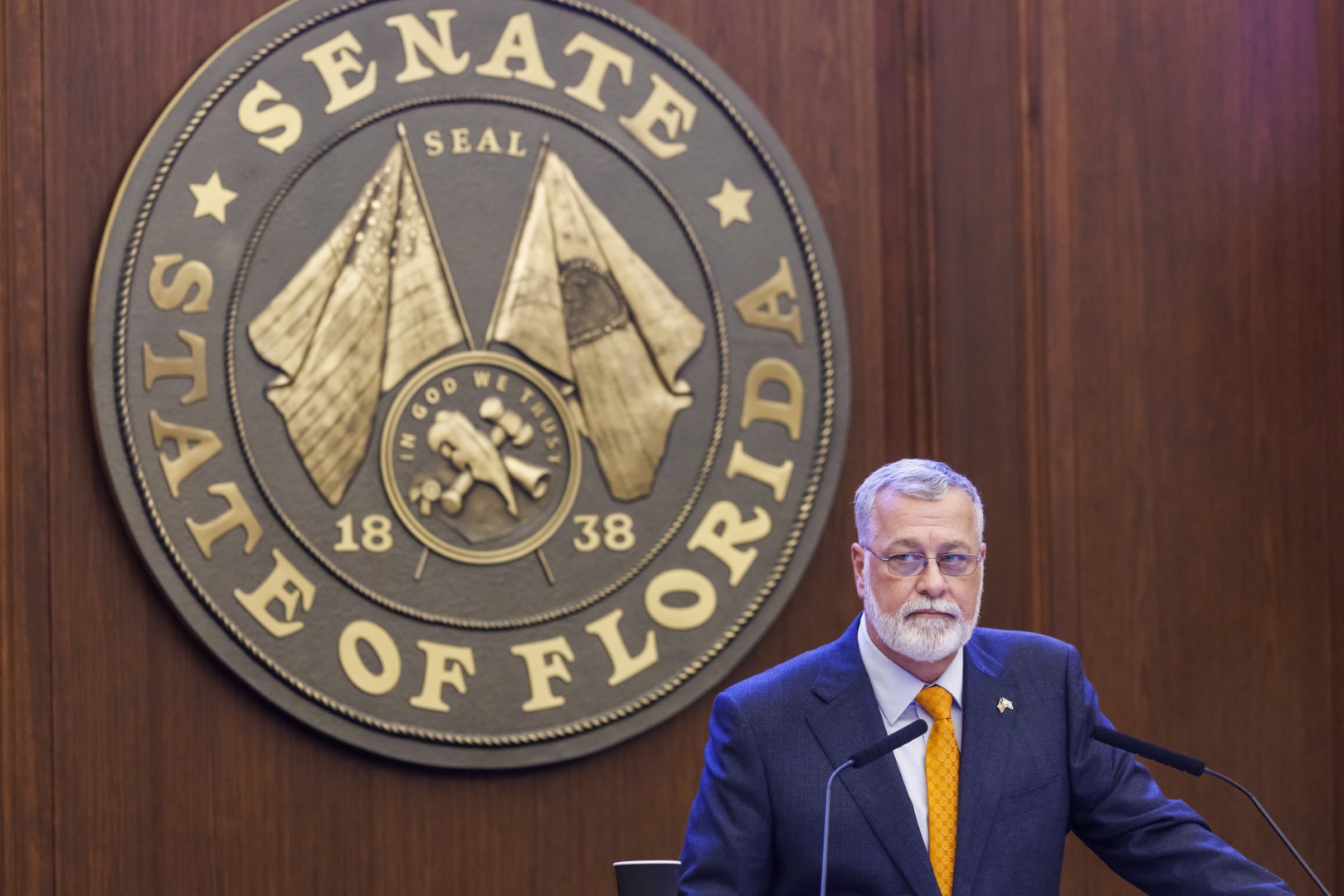
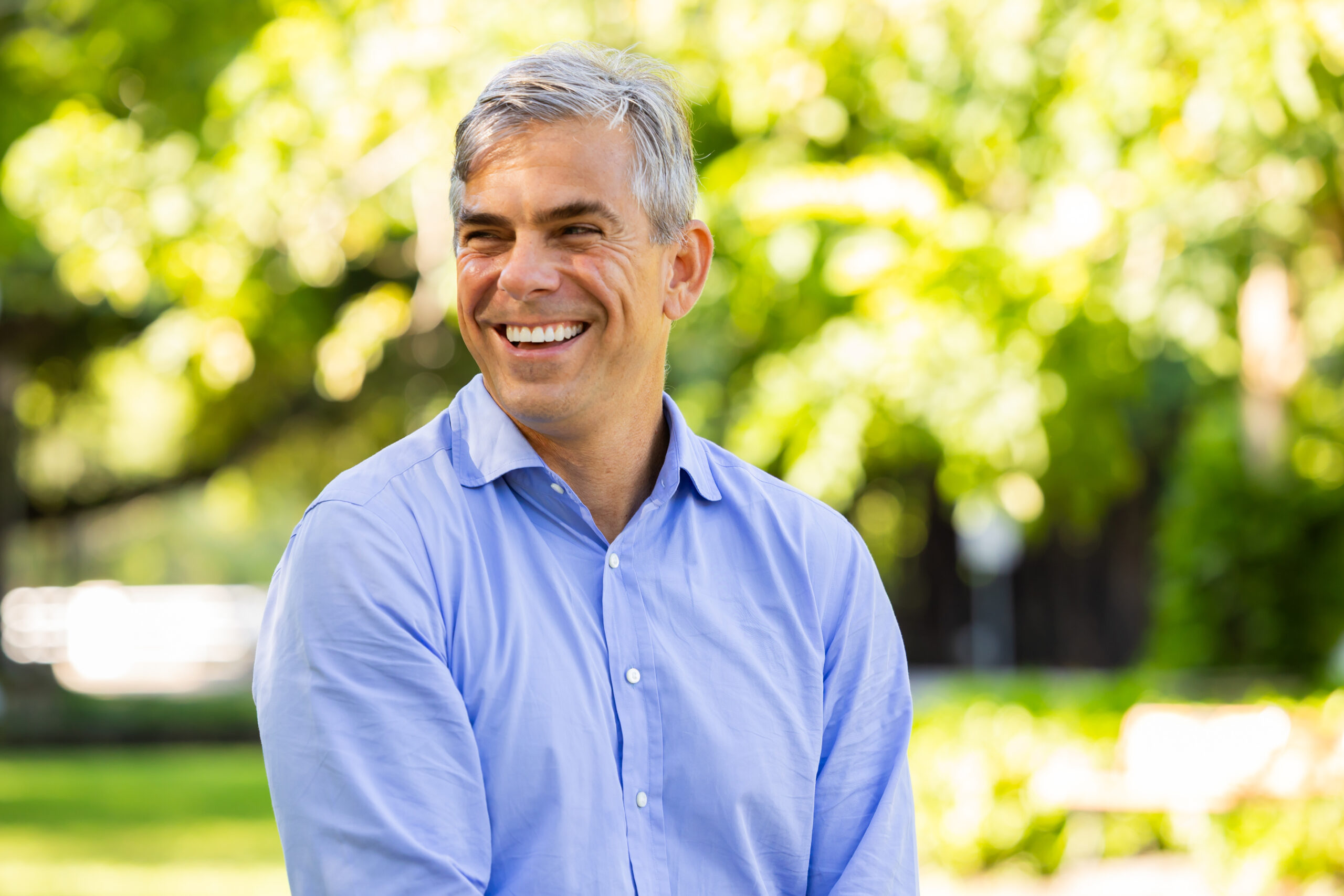

A House subcommittee is backing a proposed task force that would monitor and track antisemitic acts in Florida.
The 15-member House Government Operations Subcommittee gave unanimous support to the proposed Antisemitism Task Force measure (HB 111). The bill is sponsored by Rep. Mike Gottlieb, a Davie Democrat who spoke before the subcommittee and said the proposed panel has become necessary as hate crimes against Jewish residents have increased.
“From approximately 2014 to 2024 antisemitic incidents have increased by roughly 893%” across the United States, according to figures from the Anti-Defamation League (ADL), Gottlieb told the subcommittee. “That has to be 1,000% at least, because that number is reported incidents and we all know that there are incidents that are not reported.”
In 2024 alone, Gottlieb said, there were more than 9,000 antisemitic incidents in America, according to ADL figures.
Gottlieb’s bill proposes that the Task Force would be an offshoot of the Florida Office of Civil Rights and that office would provide support staff and other administrative services.
The Antisemitism Task Force would be composed of 18 members from across the state. Those panelists would be appointed by various agencies and officials, including the Legislature, Attorney General’s Office, Florida law enforcement and several other organizations. Each member would serve two-year terms.
The panel would also be expected to monitor antisemitic hate crimes and advise the state on possible changes in laws governing hate crimes. The Task Force would automatically disband Oct. 1, 2029, unless lawmakers approve an extension.
Rep. Susan Valdés, a Tampa Republican, asked Gottlieb if the Task Force would only be monitoring incidents of antisemitism or “hate in general.”
Gottlieb said it would be broader.
“The answer would be yes,” Gottlieb said. “You can’t only have one metric, one data point, because you’re going to compare it to other hate, other types of prejudice and racism.”

The bill is next slated to be considered by the House State Affairs Committee.
The measure has a companion bill (SB 1072) ready for consideration in the Senate that is sponsored by Alexis Calatayud, a Miami Republican.


‘TMZ Brunch Bus’ Kicks Off 2026 With Radio Queen, Cece Valencia

Ben Albritton downplays political tensions as Legislative Session starts

Fugees Collaborator John Forté Dead at 50
-

 Politics8 years ago
Congress rolls out ‘Better Deal,’ new economic agenda
-
Entertainment8 years ago
New Season 8 Walking Dead trailer flashes forward in time
-
Politics8 years ago
Poll: Virginia governor’s race in dead heat
-
Politics8 years ago
Illinois’ financial crisis could bring the state to a halt
-
Entertainment8 years ago
The final 6 ‘Game of Thrones’ episodes might feel like a full season
-
Entertainment8 years ago
Meet Superman’s grandfather in new trailer for Krypton
-
Business8 years ago
6 Stunning new co-working spaces around the globe
-
Tech8 years ago
Hulu hires Google marketing veteran Kelly Campbell as CMO