Connect with us

Politics

Daniel Perez warns of tough choices in 2026 as House braces for tax, insurance, drug-cost battles
Published

on


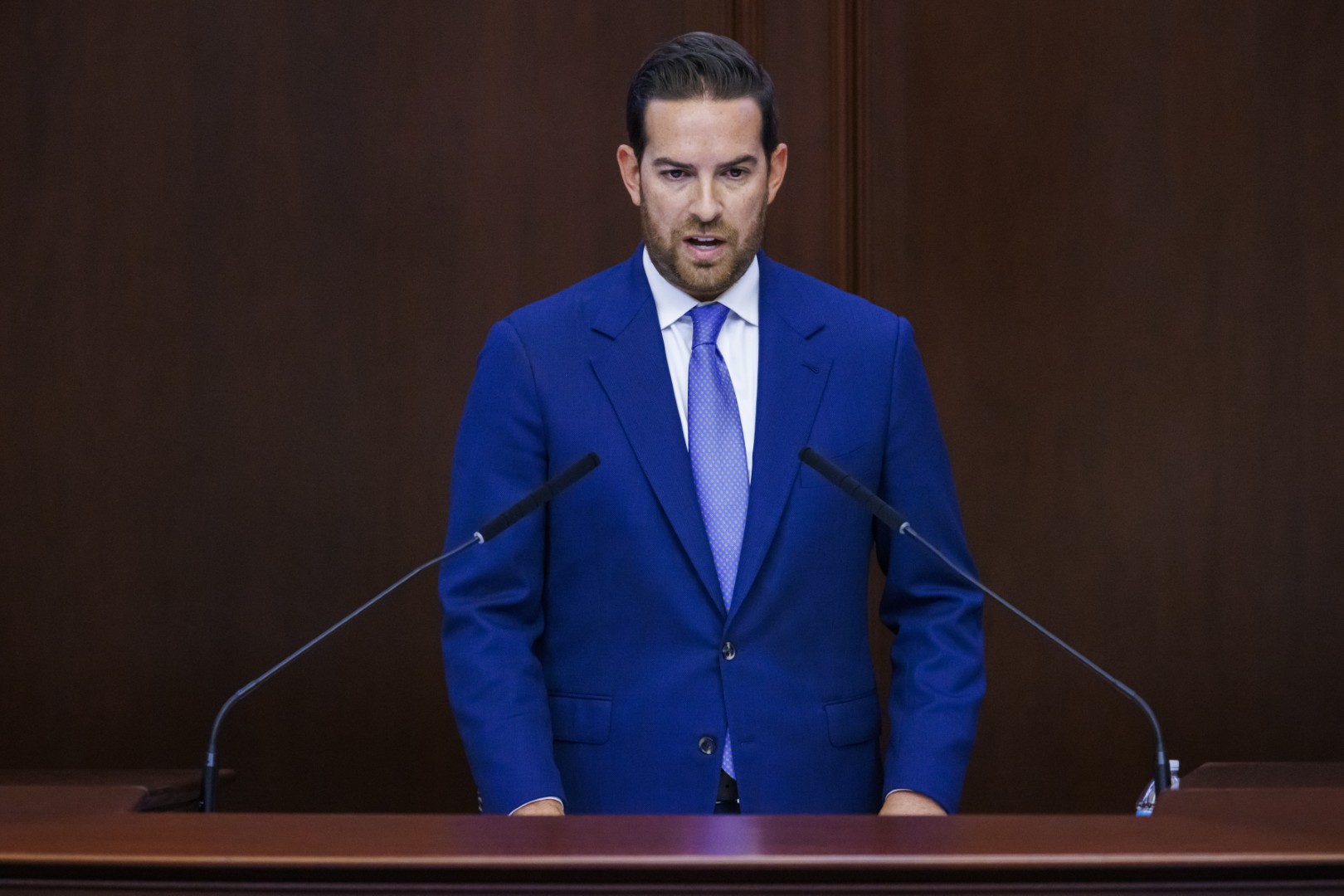
House Speaker Daniel Perez opened the 2026 Legislative Session by casting the chamber’s activities last year as a part of a necessary transition shaped by internal fights, bruising negotiations and a public rupture with Gov. Ron DeSantis.

When he took the gavel in November 2024, he said, House lawmakers entered the subsequent Session “believing that our service here could matter.”

“In the weeks and months that followed,” he continued, “our story took several surprising twists and turns.”

Perez’s message, while reflective, was largely a presaging of what lies ahead this year: a Session dominated by affordability pressures, property tax politics and a budget outlook that could force lawmakers to choose between trimming recurring spending and sustaining popular programs. “Affordability and insurance. Taxes and the economy. Prescription drug prices and the rising cost of public benefits,” Perez said.

“We must ensure Florida stays at the center of our planet’s race for the stars, and that our infrastructure keeps pace with our growth. Every child in Florida, from the unborn to our college graduates, deserves a fair shot at finding their own American Dream.”

The Miami Republican also used the moment to reflect on the volatility of the 2025 Session, when, in his telling, the House “found (its) voice” and “insisted on our independence.”

That included overrides of DeSantis’ budget vetoes, the investigation and dismantling of First Lady Casey DeSantis’ questionable Hope Florida charity, replacing DeSantis’ Special Session on immigration enforcement with one the Legislature devised and, ahead of the 2026 Session, introducing a fleet of bills with concrete property tax proposals while the Governor stalled on issuing his own.

When DeSantis fumed at the House’s open attempt to regain a coequal footing with the executive branch, Perez called the Governor “emotional” and prone to “temper tantrums” while stressing, “I consider him a friend. I consider him a partner.”

Under Perez, the House has also set to follow through on President Donald Trump’s call for mid-decade redistricting — an effort DeSantis and Senate President Ben Albritton also support, but have been slower to act on.

Perez framed the House’s comparative expeditiousness as an alternative to Tallahassee’s transactional culture.

“We learned that words without truth have no meaning. We learned that actions without humility lack consequence,” he said. “We learned that issues we tackle are not easily reducible to a slogan or an idea. … But difficult doesn’t mean impossible, and hard isn’t an excuse for cowardice.”

Those lines land in a Capitol still feeling the aftershocks of 2025, when budget and tax disputes between the House and Senate pushed the 60-day Regular Session into extended overtime. Perez’s friction with Albritton, whom he embraced before the Governor’s State of the State address Tuesday, remains a live factor. The Senate is again pushing Albritton’s “Rural Renaissance” package after it fell apart in the House last year, and Albritton has said he may prefer tackling major property tax relief after the Regular Session, which could collide with House urgency.

Hovering above it all is Perez’s feud with DeSantis, a rivalry that hardened last year and has since only been betrayed by a veneer of civility and common causes. On the most recent flashpoint, redistricting, the Governor this month called for a Special Session in April to redraw congressional lines — markedly later than when Perez views as ideal.

As for what will happen with that undertaking and many other hot-button issues the Legislature faces this year, it’s anyone’s guess, the Speaker said.

“Honestly, I don’t know what is going to happen,” he said. “That’s OK, because the journey is the best part.”


Source link

Continue Reading

Politics

Student polling place volunteer bills advance in House, Senate

Published

on


Bills from Jacksonville Republicans that would relax rules for students who volunteer at polling places cleared their first committee hurdles by unanimous votes.

The legislation (SB 564, HB 461), sponsored by Sen. Clay Yarborough and Rep. Kiyan Michael, says the ban on privately-funded election-related expenses would not bar high school students who are registered or preregistered to vote from voluntarily helping poll workers in exchange for community service hours that apply to Bright Futures scholarships.

Students can preregister to vote beginning when they turn 16.

The bill would take effect July 1, meaning that eligible students could begin participating in the process during the August Primaries this year if it becomes law.

Yarborough told the Senate Ethics and Elections Committee that this bill, if passed, “will be one of the greatest firsthand civics lessons, which they can experience as they go along, of one of our greatest rights and what it takes to conduct elections.”

Michael told the House Government Operations Subcommittee the bill allowed students to volunteer on weekends, addressing a potential shortage of volunteers, driving engagement and teaching a “civic lesson.”

“We’re always talking about, ‘We need to have our kids doing something positive,’ and this gives them the ability to volunteer at our polling locations,” she said.

Asked about potential dangers to the young volunteers from violence by Republican Rep. Paula Stark, Michael expressed confidence that the lead poll worker and the Supervisor of Elections could handle any issues.

Duval County Supervisor of Elections Jerry Holland spoke on behalf of the bill in both committees.

He said his grandson was looking for community service opportunities, and said volunteering would help students understand the process and get “exposed” to the role and “maybe come back and be part of our team in the future.”

“Maybe in the future, I’ll have a future poll worker,” he said in the House committee.

He also said that in the case of liability issues, the Supervisor of Elections would be responsible, just as with anyone else in a polling location.

The bills, which are identical, each have two committee stops ahead.

The League of Women Voters and the Southern Poverty Law Center support the legislation.


Source link

Continue Reading

Politics

Aaron Bean, Laurel Lee, Anna Paulina Luna advance insider trading ban with support of Mike Johnson

Published

on


Three Florida lawmakers helped craft a ban on insider trading for members for Congress. And this one has the support of Speaker Mike Johnson.

U.S. Reps. Aaron Bean, Laurel Lee and Anna Paulina Luna, all Republicans, co-introduced the Stop Insider Trading Act with U.S. Rep. Bryan Steil, a Wisconsin Republican who chairs the House Administration Committee.

“Too many in Congress seem more focused on playing the markets than serving the American people,” said Bean, a Fernandina Beach Republican. “We can’t allow Crazy Town to prioritize its stock portfolios over the future of our nation. Our job is to represent the people — not to act like day‑traders with privileged information.”

Luna’s support could prove especially important. The St. Petersburg Republican last year led a discharge petition gaining bipartisan support to force a full ban on owning stocks to the floor, over the opposition of Democratic and Republican leadership. But Luna also maintained communications with Johnson on the issue hoping to reach a compromise.

At a Florida event alongside Gov. Ron DeSantis, Luna signaled a deal was near.

“We actually have met with the Speaker of the House and that we are going to be putting something on the floor coming up this quarter that will permanently stop the insider trading,” Luna said.

Johnson voiced his support for the new proposal, which would prohibit members of Congress, along with spouses and children, from directly purchasing stocks, and require seven-day public notice before they, or those close family members, can sell stock.

“No member of Congress should be allowed to profit from insider information, and this legislation represents an important step in our efforts to restore the people’s faith and trust in Congress,” Johnson said. “Both Republicans and Democrats will have an opportunity to make their voices heard and affirm their support.”

Only Republican members were listed as introducing co-sponsors. But the list of supporters included House Freedom Caucus members like U.S. Rep. Chip Roy of Texas, moderates like U.S. Rep. Mike Lawler of New York, and members of leadership including Majority Leader Steve Scalise of Louisiana.


Source link

Continue Reading

Politics

Nick DiCeglie bill that aims to fix unintended consequences of hurricane recovery law flies through committee

Published

on


A bill proposed by Republican Sen. Nick DiCeglie meant to right the wrongs brought by 2025 legislation (SB 180) has cleared its first committee stop. 

SB 840, sponsored by DiCeglie of Pinellas County, would scale back the unintended consequences of SB 180, which was designed to prevent local governments from slowing rebuilding efforts after hurricanes.

But broad language in that law has instead been used to block unrelated comprehensive plan changes and development decisions well beyond storm-damaged areas. The matter pushed a group of cities and counties across the state to file a joint lawsuit against the state.

The Senate Committee on Community Affairs voted Tuesday to report SB 840 favorably after limited discussion. 

“As we were going through the legislative process there were provisions, 18 and 28, of Senate Bill 180 that had the term ‘burdensome and restrictive,’ and it was such a broad term that unfortunately we’ve seen across the state in many cases a paralyzation of local governments just trying to execute and advance some changes through their comprehensive plan,” DiCeglie said.

SB 840 would reduce the affected area from 100 miles to 50 miles from a hurricane’s track. DiCeglie said overlapping storms during the 2024 hurricane season effectively placed nearly the entire state under post-storm land use restrictions, prompting the change.

“That 100-mile radius ultimately impacted almost every inch of the state,” DiCeglie said.

The bill would also shorten the duration of SB 180 restrictions tied to Hurricanes Debby, Helene and Milton. Under SB 840, those provisions would expire on June 30, instead of remaining in effect through late 2027, as currently scheduled.

SB 840 would maintain a one-year prohibition on local governments imposing moratoriums or adopting more restrictive land use regulations that would delay rebuilding, but limits those restrictions to property that was actually damaged by a hurricane and requires documentation of storm-related damage.

The bill would allow local governments to continue certain actions after a storm, including planning decisions required by state or federal law, work in areas of critical state concern, and projects related to drinking water, sewer, stormwater and flood protection.

Committee members asked limited questions, focusing on the reduced geographic scope and the bill’s changes to SB 180’s expiration dates. Several Senators praised the bill as a necessary response to concerns raised by local governments since. No speakers appeared in opposition, and the Florida Association of Counties signaled support for the measure.

DiCeglie emphasized that SB 840 is intended to preserve the original intent of SB 180 while addressing its unintended consequences. The committee unanimously approved SB 840, advancing the bill to the Senate Judiciary Committee as lawmakers have officially reconvened for the 2026 Legislative Session.

This will ensure that regardless if a storm hits, communities within areas of critical state concern will be able to move forward with comprehensive planning decisions,” DiCeglie said.


Source link

Continue Reading

Trending

Copyright © Miami Select.