Business
Meet the Nvidia billionaire giving away his wealth—His son’s cancer battle inspired a recent $100 million gift
Published
3 hours agoon
By
Jace Porter
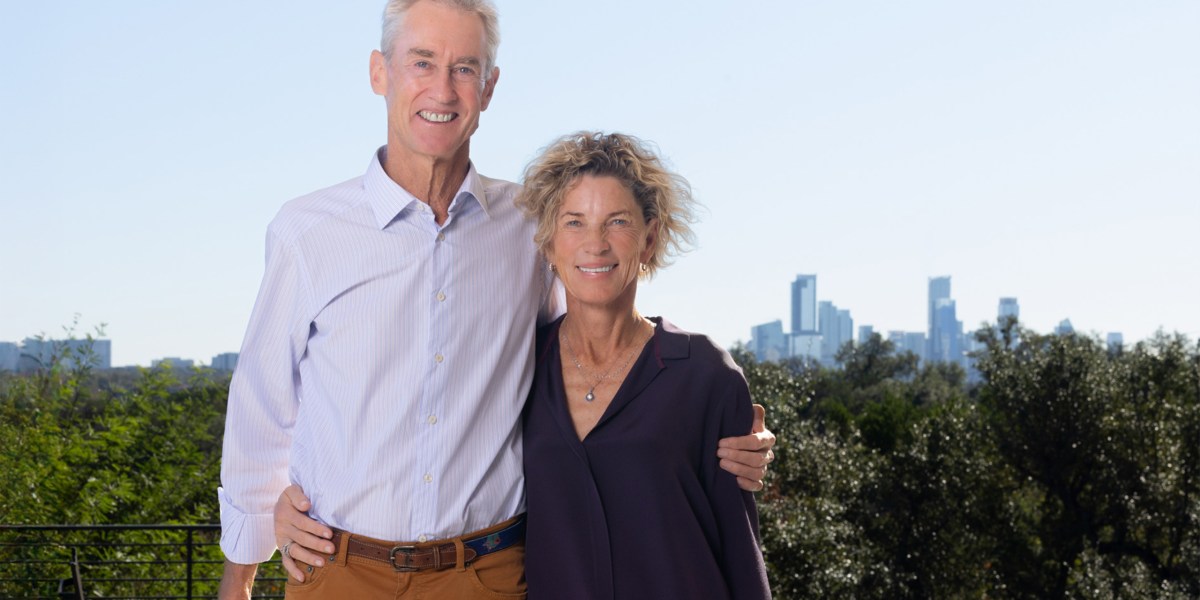
Billionaire Nvidia board member Tench Coxe and his wife Simone are donating $100 million to the University of Texas Medical Center in Austin.
The donation, one of the largest gifts in the university’s history, was driven by the couple’s personal history and values aligning with the university’s goal of improving healthcare access in Central Texas, where they live.
The medical center will include a new hospital to treat complex and serious conditions and an expansion of the UT MD Anderson Cancer Center, according to a statement from the university. It is expected to open in 2030.
“I hope in 25 years that people will say that UT has one of the best medical centers in the world, and it’s benefiting the whole community,” Coxe said in a video.
Coxe was managing director of Sutter Hill Ventures from 1989 to 2020, and joined the Nvidia board in 1993, an early supporter of Jensen Huang. Coxe is the third largest individual shareholder of Nvidia, behind founder Huang and board member and venture capitalist Mark Stevens, and has an estimated net worth of $7.7 billion, according to Forbes.
The couple relocated to Austin from Silicon Valley in 2020, and Coxe is also a part-owner of Austin FC. They are also Democratic supporters, and each donated $1 million to Beto O’Rourke’s 2022 gubernatorial campaign against Gov. Greg Abbott.
Investing in the future of healthcare
The couple’s personal experiences also influenced their choice to donate to the University of Texas. Their six-year-old son successfully underwent treatment for Burkitt lymphoma at the Lucile Packard Children’s Hospital at Stanford Medicine in 2003, which inspired them to pay it forward, Simone said. They also saw the need for more healthcare infrastructure in their own community.
“We have a close friend who had to travel to Houston [from Austin] for care she should have been able to get here at home,” Coxe said. As much as 25% of people in the region leave the area to seek care for serious medical needs, according to the university.
A key part of the Coxes’ decision to donate was speaking with the dean of UT’s Dell Medical School, Claudia Lucchinetti, and hearing her vision to change the model of healthcare by integrating university research with a modern healthcare system.
“Having spent my career backing strong leaders, meeting Claudia made it clear: Supporting the vision for the UT medical center is exactly the opportunity Austin needed,” Coxe said. The gift is unrestricted and the university says they will prioritize hiring world-class staff, construction, technology investments, and expanding access to healthcare.
The couple typically gives quietly or anonymously. In September 2025, Coxe gifted 1 million Nvidia shares, valued at more than $168 million, to undisclosed recipients, Bloomberg reported.
“One of the things that happens with bigger gifts is that it de-risks it a bit for some people,” Simone said. “Our approach to philanthropy is to invest and believe, knowing that there’s a risk and not everything’s going to be perfect. We hope by making this gift, we can help encourage others to take that same view.”
This story was originally featured on Fortune.com
You may like
Business
Why the $38 trillion national debt doomed Fed independence regardless of the Trump/Powell drama, top economist says
Published
20 minutes agoon
January 13, 2026By
Jace Porter
When Fed Chair Jerome Powell announced Sunday evening he was under criminal investigation from the DOJ this week, the markets braced for a shock. The probe—centered on a $2.6 billion renovation of the Fed’s Washington headquarters—was immediately branded by an unusually direct Powell as a “pretext” to force interest rate cuts. Futures went down.
Yet, Monday came, and while gold and silver went vertical, equities stayed calm and the dollar barely drifted. To economist Tyler Cowen, the renowned libertarian from George Mason University and author of the influential Marginal Revolution blog, this lack of market panic is the most revealing part of the drama. It isn’t that investors trust the administration’s motives; it’s that they have already accepted the “ugly little truth” that the Federal Reserve’s independence is a relic of a bygone era.
“What Trump did was terrible,” Cowen said on the technology podcast TBPN, referring to the administration’s erratic, “Captain Queeg” style of institutional pressure. “But to me, the reason markets didn’t react more is because we already wrecked the independence of the Fed. That’s the ugly little truth behind this story. It was already wrecked.”
In Cowen’s telling, the damage was done years ago, through fiscal policy. Budget deals, tax cuts and a chronic deficit have steadily narrowed the Fed’s real freedom to act, regardless of its formal mandate.
“The basic problem is our debt and deficits are so high that over time, we will monetize them to some extent and have higher inflation because we prefer that over higher taxes, no matter what we might say,” Cowen said on technology show TBPN.
That preference, Cowen argues, quietly undermines central bank independence. Even without overt political pressure, a heavily indebted democracy is one that limits its own monetary choices. At some point, inflation becomes the least politically painful way to manage obligations that voters are unwilling to finance through taxes or spending cuts.
A grim echo
This diagnosis is a grim echo of the work of Ray Dalio, the billionaire founder of top hedge fund Bridgewater Associates, who has long warned of the “Big Cycle” debt trap. Dalio’s framework suggests that nations with massive debts eventually run out of good options. They are left with a choice between three politically poisonous options: austerity (massive spending cuts), default (which would be unthinkable for a reserve currency), or inflation (“printing money” in order to devalue the debt).
Dalio has frequently agreed with Cowen that for the United States, inflation is the only path forward, since it is an invisible tax that a democracy will always prefer over the political suicide of massive tax hikes or the gutting of social programs. Speaking with fellow billionaire, Carlyle co-founder David Rubenstein, Dalio recently said, “My grandchildren, and great grandchildren not yet born, are going to be paying off this debt in devalued dollars.”
Cowen offered a prediction about how what Dalio calls the “ugly deleveraging” will look: the U.S. may require half a decade of 7% inflation to erode the debt’s value relative to the size of the economy.
“It’s highly unpleasant, and a lot of people will be thrown out of work and living standards will be lower,” Cowen said. “But we’ve already spent that money. We can’t default, and that’s what’s facing us over the next 10 to 15 years,” implying that, while default would ordinarily be a country’s way out of this kind of dilemma, America’s status as the richest economy in world history and the home of the world’s reserve currency make that unfeasible.
The irony, Cowen notes, is that America’s unique status allows it to run higher debt than almost any other nation, even the wealthy ones. That privilege may boost living standards today, but it still weakens political discipline tomorrow, allowing leaders to not only “get away with more debt” but also explicitly destabilize the Fed without worrying too much about market backlash.
Although neither Dalio nor Cowen have taken this argument about the debt into the feud between Powell and Trump, at its heart lies a similar dynamic: how can the U.S. improve living standards for its lower and middle class? Trump has been badgering Powell about interest rate cuts that would bring down mortgage rates and ease housing affordability, but that runs the risk of fueling an even higher inflation wave down the road, or sooner.
Albert Edwards, an outspoken and eccentric global strategist for Societe Generale, sounded eerily similar to Dalio and Cowen when he spoke to Fortune in November. “We’re going to end up with runaway inflation at some point,” Edwards said, “because, I mean, that’s the end game, right? There’s no appetite to cut back the deficits.”
The god out of the machine
There is, however, a deus ex machina that could change the course of things: the productivity miracle that many economists expect to come, driven by artificial intelligence. If AI could boost U.S. GDP growth by a full percentage point per year, Cowen said, the country might grow its way out of the debt trap without resorting to a decade of high inflation. Yet he is skeptical.
Roughly half the U.S. economy—government, higher education, much of healthcare, and the nonprofit sector—is structurally sluggish, he argues. AI may save workers enough time in these sectors to “hang out more at the water cooler,” but not enough to dramatically raise output. Meanwhile, innovation might just concentrate at already-productive sectors of the economy. Without a radical efficiency gain in the half of the economy that doesn’t produce “white or black-belt” AI tools, the debt clock will continue to outrun the AI revolution.
The result is a new, more dangerous era for the U.S. dollar.
“I’m not telling you not to worry” about Fed independence, Cowen said. “I’m telling you should have been worried to begin with.”
And yet, as Morgan Stanley noted in early January, something else appears on the calculus along with the latest rumbles about central bank independence: a 4.9% boost to annualized productivity, as suggested by fresh third-quarter GDP data.
“We believe much of the rise is cyclical,” economists led by Michael Gapen noted, adding “it remains an open question as to what is driving the productivity acceleration.”
Hello and welcome to Eye on AI. In this edition….Google launches the ability to make purchases directly from Google Search’s AI Mode and Gemini…Apple selects Google to power an upgraded Siri…Meta announces a new AI infrastructure team…researchers use AI to find new ways to edit genes.
It was another week with a lot of AI-related announcements. Among the bigger news items was Google’s launch of an e-commerce shopping checkout feature directly from Google Search’s AI Mode and its Gemini chatbot app. Among the first takers for the new feature is retail behemoth Walmart, so this is a big deal. Behind the scenes, the AI checkout is powered by a new “Universal Commerce Protocol” that should make it easier for retailers to support agentic AI sales. Google Cloud also announced a bunch of AI features to support agentic commerce for customers, including a new Gemini Enterprise for Customer Experience product that combines shopping and customer support (watch this space—the combination of those two previously separate functions could have big implications for the way many businesses are organized.) Home Depot was one of the first announced customers for this new cloud product.
It’s still early days for agentic commerce, but already many companies are panicking about how they make sure their products and sites surface highly in what these AI agents might recommend to users. A nascent industry of companies has sprung up offering what are variously called “generative engine optimization” (GEO) or “generative-AI optimization” (GAIO) services. Some of these echo longstanding internet search optimization strategies, but with a few key differences. GEO seems, at least for now, somewhat harder to game than SEO. Chatbots and AI agents seem to care a lot about products that have received positive earned media attention from reputable news outlets (which should be a good thing for consumers—and for media organizations!) as well as those that rank highly in trusted customer review sites.
But the world of AI-mediated commerce presents big governance risks that many companies may not fully understand, according to Tim de Rosen, the founder of a company called AIVO Standard, which offers companies a method for generative AI optimization and also a way to track and hopefully govern what information AI agents are using.
The problem, de Rosen told me in a phone call last week, is that while various AI models tend to be consistent in how they characterize a brand’s product offerings—usually correctly reporting the nature of a product, its features, and how those features compare to competing products and can usually provide citations to the sources of that information—they are inconsistent and error-prone when asked questions that pertain to a company’s financial stability, governance, and technical certifications. Yet this information can play a significant role in major procurement decisions.
AI models are less reliable on financial and governance questions
In one example, AIVO Standard assessed how frontier AI models answered questions about Ramp, the fast-growing business expense management software company. AIVO Standard found that models could not reliably answer questions about Ramp’s cybersecurity certifications and governance standards. In some cases, de Rosen said, this was likely to subtly push enterprises towards procurement decisions involving larger, publicly traded, incumbent businesses—even in cases when a privately-held upstart also met the same standards—simply because the AI models could not accurately answer questions about the younger, privately-held company’s governance and financial suitability or cite sources for the information they did provide.
In another example, the company looked at what AI models said about the risk factors of rival weight loss drugs. It found that AI models did not simply list risk factors, but slipped into making recommendations and judgments about which drug was likely the “safer choice” for the patient. “The outputs were largely factual and measured, with disclaimers present, but they still shaped eligibility, risk perception, and preference,” de Rosen said.
AIVO Standard found that these problems held across all the leading AI models and a variety of different prompts, and that they persisted even when the models were asked to verify their answers. In fact, in some cases, the models would tend to double-down on inaccurate information, insisting it was correct.
GEO is still more art than science
There are several implications. One, for all the companies selling GEO services, is that GEO may not work well across different aspects of brand information. Companies shouldn’t necessarily trust a marketing tech firm that says it can show them how their brand is showing up in chatbot responses, let alone believe that the marketing tech company has some magic formula for reliably shaping those AI responses. Prompt results may vary considerably, even from one minute to the next, depending on what type of brand information is being assessed. And there’s not much evidence yet on how exactly to steer chatbot responses for non-product information.
But the far bigger issue is that there is a moment in many agentic workflows—even those with a human in the loop—where AI-provided information becomes the basis for decision making. And, as de Rosen says, currently most companies don’t really police the boundaries between information, judgment, and decision-making. They don’t have any way of keeping track of exactly what prompt was used, what the model returned in response, and exactly how this fed into the ultimate recommendation or decision. In regulated industries such as finance or healthcare where, if something goes wrong, regulators are going to ask for exactly those details. And unless regulated enterprises implement systems for capturing all of this data, they are headed for trouble.
With that, here’s more AI news.
Jeremy Kahn
jeremy.kahn@fortune.com
@jeremyakahn
FORTUNE ON AI
Anthropic launches Claude Cowork, a file-managing AI agent that could threaten dozens of startups—by Beatrice Nolan
U.K. investigation into X over allegedly illegal deepfakes risks igniting a free speech battle with the U.S.—by Beatrice Nolan
Malaysia and Indonesia move to ban Musk’s Grok AI over sexually explicit deepfakes—Angelica Ang
Anthropic unveils Claude for Healthcare, expands life science features, and partners with HealthEx to let users connect medical records—by Jeremy Kahn
AI IN THE NEWS
Apple chooses Google’s AI for updated Siri. Apple signed a multi-year partnership with Google to power key AI features in its products, including a long-awaited Siri upgrade, the companies announced on Monday. The deal underscores Google’s resurgence in AI and helped push the market value of Google-parent Alphabet above the $4 trillion threshold. Apple said the agreement does not change its existing partnership with OpenAI, under which Siri currently hands off some queries to ChatGPT, though it remains unclear how the Google tie-up will shape Siri’s future AI integrations. The financial terms of the deal were not disclosed either, although Bloomberg previously reported that Apple was considering paying Google as much as $1 billion per year to access its AI models for Siri.
Meta announces new AI infrastructure team, including former Trump advisor. The social media giant said it was creating a new top-level initiative called Meta Compute to secure tens—and eventually hundreds—of gigawatts of data center capacity. The effort is being led by Daniel Gross, a prominent AI tech executive and investor who Meta had hired to help its Superintelligence Labs effort, and Santosh Janardhan, who is the company’s head of infrastructure. CEO Mark Zuckerberg said the way Meta builds and finances data centers will become a key strategic advantage, as the company pours money into facilities such as a $27 billion data center in Louisiana and nuclear-power partnerships to meet energy demand. Meta also named Dina Powell McCormick, who served in several key positions during the first Trump administration, as president and vice chair to help forge government partnerships and guide strategy, reporting directly to Zuckerberg. You can read more from the Wall Street Journal here.
Microsoft warns that DeepSeek is proving popular in emerging markets. Research published by Microsoft shows that U.S. AI companies are losing ground to Chinese rivals in emerging markets. The low-cost of open models built in China, such as DeepSeek, is proving decisive in spurring adoption in places such as Ethiopia, Zimbabwe, and Turkmenistan. Microsoft president Brad Smith said Chinese open-source models now rival U.S. offerings on performance while undercutting them on price, helping China overtake the U.S. in global usage of “open” AI, especially across Africa and other parts of the global south. By contrast, U.S. firms like OpenAI, Google, and Anthropic have focused on closed, subscription-based models—raising concerns that without greater investment, the AI divide between rich and poor countries will widen, and that U.S. companies may ultimately see their growth limited to more developed markets. Read more from the Financial Times here.
Salesforce launches updated Slackbot powered by Anthropic’s Claude. Salesforce is rolling out an upgraded Slackbot for Business+ and Enterprise+ customers that uses generative AI to answer questions and surface information across Slack, Salesforce, and connected services like Google Drive and Confluence. The new Slackbot is powered primarily by Anthropic’s Claude model. The company says the AI assistant respects user permissions and is designed to reduce reliance on external tools such as ChatGPT by working directly inside Slack, which Salesforce acquired for $27.1 billion in 2021. The launch comes as investors remain skeptical about enterprise software firms’ ability to benefit from the AI boom, with Salesforce shares down sharply over the past year despite its push to get businesses to adopt its “Agentforce” AI agents. Read more from CNBC here.
EYE ON AI RESEARCH
Microsoft, Nvidia and U.K. startup Basecamp Research make AI-aided breakthrough in gene editing. An international research team including scientists from Nvidia and Microsoft has used AI to mine evolutionary data from more than a million species to design potential new gene-editing tools and drug therapies. The team developed a set of AI models, called Eden, which were trained on a vast, previously unpublished biological dataset assembled by Basecamp. Nvidia’s venture capital arm is an investor in Basecamp.
The AI models can generate novel enzymes for large, precise gene insertions that could improve the ability of the body’s immune cells to target cancerous tumors. Basecamp has demonstrated the effectiveness of these gene-edited cells in laboratory tests so far, but they have not been tested in people. The Eden-designed gene editing enzymes can also make genetic edits that allow cells to produce peptides that can fight drug-resistant bacteria. Researchers say the work could dramatically expand the range of treatable cancers and genetic diseases by overcoming long-standing data and technical constraints in gene therapy. Experts caution, however, that the clinical impact will depend on further validation, safety testing, and regulatory and manufacturing hurdles. You can read more from the Financial Times.
AI CALENDAR
Jan. 19-23: World Economic Forum, Davos, Switzerland.
Jan. 20-27: AAAI Conference on Artificial Intelligence, Singapore.
Feb. 10-11: AI Action Summit, New Delhi, India.
March 2-5: Mobile World Congress, Barcelona, Spain.
March 16-19: Nvidia GTC, San Jose, Calif.
BRAIN FOOD
What if people prefer AI-written fiction, or simply can’t tell the difference? That’s the question that New Yorker writer Vaudhini Vara asks in a provocative essay that was published as a “Weekend Essay” on the magazine’s website a few weeks ago. While out-of-the-box AI models continue to struggle to produce stories as convincing as graduates of top MFA programs and experienced novelists, it turns out that when you fine-tune these models on an existing author’s works, they can produce prose that is often indistinguishable from what the original author might create. Disconcertingly, in a test conducted by researcher Tuhin Chakrabarty— who has conducted some of the best experiments to date on the creative writing abilities of AI models—and which Vara repeats herself in a slightly different form, even readers with highly-attuned literary sensibilities (such as MFA students) prefer the AI written versions to human-authored prose. If that’s the case, what hope will there be for authors of genre fiction or romance novels?
I had a conversation a few months ago with a friend who is an acclaimed novelist. He was pessimistic about whether future generations would value human-written literature. I tried to argue that readers will always care about the idea that they are in communication with a human author, that there is a mind with lived experience behind the words. He was not convinced. And increasingly, I’m worried his pessimism is well-founded.
Vara ultimately concludes that the only way to preserve the idea of literature as the transmission of lived experience across the page, is for us to collectively demand it (and possibly even ban the fine-tuning of AI models on the works of existing writers.) I am not sure that’s realistic. But it may be the only choice left to us.
FORTUNE AIQ: THE YEAR IN AI—AND WHAT’S AHEAD
Businesses took big steps forward on the AI journey in 2025, from hiring Chief AI Officers to experimenting with AI agents. The lessons learned—both good and bad–combined with the technology’s latest innovations will make 2026 another decisive year. Explore all of Fortune AIQ, and read the latest playbook below:
–The 3 trends that dominated companies’ AI rollouts in 2025.
–2025 was the year of agentic AI. How did we do?
–AI coding tools exploded in 2025. The first security exploits show what could go wrong.
–The big AI New Year’s resolution for businesses in 2026: ROI.
–Businesses face a confusing patchwork of AI policy and rules. Is clarity on the horizon?
Delta Air Lines just capped its centennial year with record revenue, record free cash flow, and a fresh jet order, even as its CEO warns that the “bottom end” of the industry is “struggling greatly” and Wall Street remains on edge over tariffs and the fragile economics of budget flying.
America’s most profitable airline used its fourth‑quarter 2025 earnings call on Tuesday to argue that premium-seeking, high‑income travelers—and the loyalty ecosystem built around them—are insulating it from the turbulence battering lower‑cost rivals and jittery investors. CEO Ed Bastian also talked openly about the struggles elsewhere in the industry. “The bottom end of the industry on the commodity side of the business has been struggling greatly,” he told analysts on the earnings call. The economic woes of average Americans don’t seem to be hitting Delta’s profits, though.
Delta said it expects adjusted earnings per share to come in between $6.50 to $7.50 in 2026, versus $5.82 for 2025. Those are impressive numbers, and would be a record for Delta, but the airline guided to $6 per share in October 2025 and guided to more than $7.35 per share for 2025 before tariffs started to bite. Traders sent Delta shares down more than 3% because even another year of high profits aren’t matching the Atlanta flagship carrier’s pre-tariff guidance.
Record year at 30,000 feet
Delta reported record full‑year revenue of $58.3 billion in 2025, up 2.3% year‑over‑year, with a 10% operating margin and $5 billion in pre‑tax income, cementing its status as the U.S. industry’s profit leader. Free cash flow hit $4.6 billion, the highest in Delta’s history, helping the carrier cut leverage by more than half over three years and leaving it with what executives called the strongest balance sheet and credit quality it has ever had.
In the December quarter, Delta generated $14.6 billion in revenue—also a record—while delivering a 10% operating margin and earnings of $1.55 per share, modestly above expectations despite a revenue miss and disruption from a government shutdown and FAA‑mandated flight reductions. The company is guiding investors to 20% earnings‑per‑share growth in 2026, with $3 billion–$4 billion of free cash flow and about 3% capacity growth, all concentrated in higher‑margin premium cabins.
Bastian and his executive team were explicit that the engine behind those results is Delta’s premium customer base and an increasingly sophisticated merchandising model that charges more for better seats and flexibility. President Glen Hauenstein, who is retiring next month after two decades shaping the airline’s commercial strategy, said premium revenue grew 7% in 2025 and that diversified, higher‑margin lines—premium, loyalty, cargo, maintenance, and travel products—now account for 60% of total revenue.
Delta’s partnership with American Express remains central to this high‑end tilt, with co‑brand remuneration up 11% to 8.2 billion dollars last year on the back of more than 1 million new card acquisitions and double‑digit spend growth every quarter. Roughly one‑third of active SkyMiles members now carry a Delta Amex card, and the airline expects high‑single‑digit growth in co‑brand remuneration in 2026 as it pushes toward a $10 billion target within a few years. Hauenstein said Delta sees “significant runway ahead as member engagement and penetration continues to rise.” (Like Delta, American Express has released a string of blowout earnings, driven by increasing spending from the same cohort of affluent Americans willing to spend.)
‘Bottom end’ of industry under pressure
For all the celebration, Bastian used some of his sharpest language yet about the divide opening up within U.S. aviation between premium‑heavy network carriers and budget airlines that rely on rock‑bottom fares. Citing the collapse or restructuring of several low‑cost players and the stalled growth of ultra‑low‑cost carriers, he noted consolidation in the industry earlier this week, with Allegiant and Sun Country announcing a $1.5 billion merger. He said Delta was “waiting to see what happens with Spirit” as the low-cost carrier navigates bankruptcy.
“That sector has been unable to grow here for the last several years,” he concluded, “and when that sector is not growing, it can’t contain its CASM [cost per available seat mile]. Its CASM goes up significantly every quarter, more than ours. And so that’s become a real challenge for that sector in the industry.” In other words, the only game in town for airline profits is more spending by high earners, and it’s fortunate that Delta is poised to capitalize on this amid what economists widely call a “K-shaped economy,” with the affluent thriving and the poor suffering in opposite directions.
Bastian predicted “further rationalization” among carriers that are not earning their cost of capital, saying it could come via consolidation, liquidation, or internal restructurings as investors lose patience with business models built on cheap seats that no longer cover costs. Hauenstein argued that 2025 showed just how wide the gap has become, saying Delta likely captured a higher share of total U.S. airline profits than ever before as competitors were “very challenged.”
To this point, Delta’s own Main Cabin customers—who skew more price‑sensitive—remain a weak spot in an otherwise glossy story. Bastian acknowledged that, while revenue trends have sharply accelerated into early 2026 and booking records were set last week, “we have not really seen Main Cabin move yet,” adding that hitting the top of the company’s guidance range “would definitely be the Main Cabin starting to move.”
That hesitancy comes amid Trump‑era tariffs that rattled markets and travel demand in 2025. Bastian described a year of volatility that delayed what he still sees as an eventual reset in how the bottom tier of the industry is priced. He cautioned that, even with a strong start to the year and corporate clients signaling more travel, Delta must “have a bit of caution” in its outlook after 2025 was knocked off course by policy shocks and economic jitters.
All new seat growth this year will be in premium cabins, and executives touted further gains from “merchandising” tools that slice each product into basic, main, and extra tiers, letting customers pay more for perks like earlier seat assignments or refunds. Hauenstein said those retailing initiatives represent “multibillion‑dollar opportunities” in the coming years, promising more revenue from the same travelers even if Main Cabin demand remains slow to catch up.
For this story, Fortune journalists used generative AI as a research tool. An editor verified the accuracy of the information before publishing.
Nick DiCeglie bill that aims to fix unintended consequences of hurricane recovery law flies through committee
Why the $38 trillion national debt doomed Fed independence regardless of the Trump/Powell drama, top economist says
V. Stiviano Says She Blacked Out Leaving Hotel, Woke Up in Middle of Street
Trending
-
Politics8 years agoCongress rolls out ‘Better Deal,’ new economic agenda
-
Entertainment8 years agoNew Season 8 Walking Dead trailer flashes forward in time
-
Politics8 years agoPoll: Virginia governor’s race in dead heat
-
Politics8 years agoIllinois’ financial crisis could bring the state to a halt
-
Entertainment8 years agoThe final 6 ‘Game of Thrones’ episodes might feel like a full season
-
Entertainment8 years agoMeet Superman’s grandfather in new trailer for Krypton
-
Business8 years ago6 Stunning new co-working spaces around the globe
-
Tech8 years agoHulu hires Google marketing veteran Kelly Campbell as CMO