Connect with us

Business

Wall Street expects Trump’s Fed plot to ‘backfire’ spectacularly—perhaps even shutting the door more firmly on rate cuts

Published

on


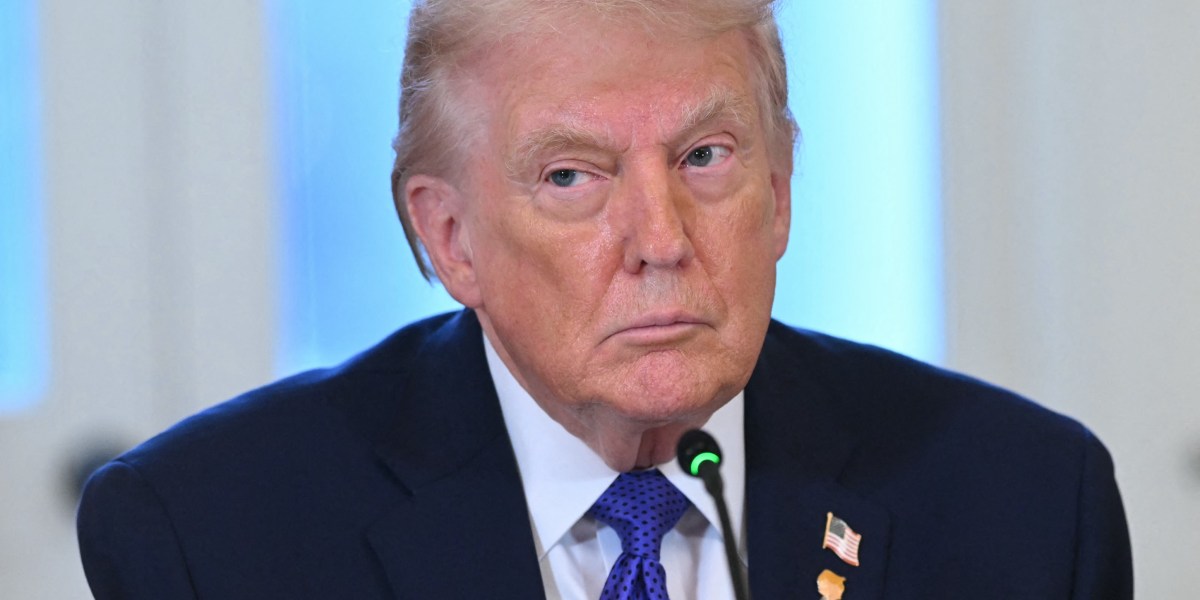
The Oval Office’s plan to force the Fed into submission is unlikely to work, Wall Street believes. In fact, they fear it may backfire so spectacularly that interest rate cuts which would have happened under Powell will be nixed as the central bank asserts its independence.

Over the weekend, Fed chairman Jerome Powell confirmed the Department of Justice had served the Federal Reserve with grand jury subpoenas relating to his Senate Banking Testimony on the renovation of Fed buildings.

It was a move that realists may have seen coming—after all, Trump has already levelled legal threats against other members of the rate-setting Federal Open Market Committee (FOMC)—but is unprecedented nonetheless. It comes after a year of lobbying by Trump, who wants the FOMC to cut the base rate to foster economic activity and reduce borrowing costs, regardless of the inflation risk.

Throughout 2025, Powell attempted to avoid the political melee, even when Trump threatened to fire him multiple times. The FOMC did deliver rate cuts, though clearly not quickly enough for Trump. The resulting escalation from the White House is further proof of political intervention into the legally independent Fed, analysts and investors agree.

However, Trump may not have banked on the fact that the FOMC (even under a new Fed chair this year) might want to make a point of that independence, and go to lengths to demonstrate it. As UBS’s Paul Donovan told clients this morning: “Any nominee from U.S. President Trump is likely to have to place additional emphasis on their independence to try and prove they are above politics. This might impact future policy decisions.”

As Bernard Yaros, lead U.S. economist for Oxford Economics, observed in a note yesterday: “The criminal investigation … could even backfire by making officials more reluctant to cut rates in the coming months and years.”

But there’s also another unexpected fallout which Trump is unlikely to enjoy: Powell may choose to stay on as a bastion of independence after a new Fed chairman is nominated. While his time as Fed chairman expires this year, his term on the Board of Governors does not expire until 2028. “If Powell was looking for a reason to stay on as a Governor … this could be one,” noted Deutsche Bank’s Jim Reid this morning. “It’s very unusual to stay on but [former Fed Chairman Marriner] Eccles did so in 1948 for 3.5 years to help protect and secure Fed independence after the Treasury were trying to fund large post war time debts.”

An unpopular plan

Investors might have hoped Trump had learned his lesson when it came to meddling with the Fed: When he threatened to fire Powell earlier this year, markets shifted uneasily, and the Republican president was forced into a swift U-turn.

According to reports, the action taken this week hasn’t been hugely popular within the White House. Axios reported today, citing two anonymous sources, that Treasury Secretary Scott Bessent told the president that the investigation “made a mess,” which could be bad for financial markets.

Even if the chips fall in favor of President Trump and he successfully ousts both Powell and Governor Lisa Cook, as well as managing to insert a dovish Fed chairman at the head of the table, there’s still an economic fallout to be dealt with. This could include a weaker dollar, a steeper yield curve, and higher long-term inflation expectations, according to Thierry Wizman, global FX and rates strategist at Macquarie Group. If Trump succeeds, “it may result in a Fed that will be more pliant with respect to those White House wishes, especially if Congress concedes its role. That means a Fed that keeps interest rates lower than they otherwise would be.”

This means that inflation, held in check by higher rates, may increase in the longer view and, as such, “nominal assets, such as fixed-coupon long-term bonds, will look less attractive as stores of real value.”

This story was originally featured on Fortune.com


Source link

Continue Reading

Business

Meet the Nvidia billionaire giving away his wealth—His son’s cancer battle inspired a recent $100 million gift

Published

on


Billionaire Nvidia board member Tench Coxe and his wife Simone are donating $100 million to the University of Texas Medical Center in Austin. 

The donation, one of the largest gifts in the university’s history, was driven by the couple’s personal history and values aligning with the university’s goal of improving healthcare access in Central Texas, where they live.

The medical center will include a new hospital to treat complex and serious conditions and an expansion of the UT MD Anderson Cancer Center, according to a statement from the university. It is expected to open in 2030.

“I hope in 25 years that people will say that UT has one of the best medical centers in the world, and it’s benefiting the whole community,” Coxe said in a video. 

Coxe was managing director of Sutter Hill Ventures from 1989 to 2020, and joined the Nvidia board in 1993, an early supporter of Jensen Huang. Coxe is the third largest individual shareholder of Nvidia, behind founder Huang and board member and venture capitalist Mark Stevens, and has an estimated net worth of $7.7 billion, according to Forbes

The couple relocated to Austin from Silicon Valley in 2020, and Coxe is also a part-owner of Austin FC. They are also Democratic supporters, and each donated $1 million to Beto O’Rourke’s 2022 gubernatorial campaign against Gov. Greg Abbott. 

Investing in the future of healthcare 

The couple’s personal experiences also influenced their choice to donate to the University of Texas. Their six-year-old son successfully underwent treatment for Burkitt lymphoma at the Lucile Packard Children’s Hospital at Stanford Medicine in 2003, which inspired them to pay it forward, Simone said. They also saw the need for more healthcare infrastructure in their own community. 

“We have a close friend who had to travel to Houston [from Austin] for care she should have been able to get here at home,” Coxe said. As much as 25% of people in the region leave the area to seek care for serious medical needs, according to the university. 

A key part of the Coxes’ decision to donate was speaking with the dean of UT’s Dell Medical School, Claudia Lucchinetti, and hearing her vision to change the model of healthcare by integrating university research with a modern healthcare system. 

“Having spent my career backing strong leaders, meeting Claudia made it clear: Supporting the vision for the UT medical center is exactly the opportunity Austin needed,” Coxe said. The gift is unrestricted and the university says they will prioritize hiring world-class staff, construction, technology investments, and expanding access to healthcare. 

The couple typically gives quietly or anonymously. In September 2025, Coxe gifted 1 million Nvidia shares, valued at more than $168 million, to undisclosed recipients, Bloomberg reported.  

“One of the things that happens with bigger gifts is that it de-risks it a bit for some people,” Simone said. “Our approach to philanthropy is to invest and believe, knowing that there’s a risk and not everything’s going to be perfect. We hope by making this gift, we can help encourage others to take that same view.”

This story was originally featured on Fortune.com


Source link
Continue Reading

Business

MrBeast has a $2.6 billion net worth, but even he’s in the red and having to borrow cash right now: ‘That’s how little money I have’

Published

on


Some successful entrepreneurs sitting atop billion-dollar businesses say they may look rich on paper, but take a peek into their bank accounts, and they’re actually cash poor. Social media mogul Jimmy Donaldson, known to his 460 million YouTube followers as MrBeast, claims he’s just as broke as everyone else despite running a $5 billion entertainment empire. 

“I’m borrowing money. That’s how little money I have,” Donaldson told the Wall Street Journal earlier this month. “Technically, everyone watching this video has more money than me and their bank account if you subtract the equity value of my company, which doesn’t buy me McDonald’s in the morning.”

The 27-year-old entrepreneur has said that he keeps less than $1 million for himself, despite being a billionaire and owning more than half of his $5 billion company Beast Industries. Aside from his nine-figure Amazon deal and popular YouTube channel with 107 billion lifetime views, Donaldson hit the ultra-rich club—at least on paper—from a slew of successful businesses. He’s launched ventures including multimillion-dollar chocolate brand Feastables; Lunchly, a Lunchables-esque packaged food product; MrBeast Burger, a virtual restaurant that only allows for pickup and drop-off; and production company MrBeast LLC, which helps manufacture his viral videos.

Through his assets, Donaldson is projected to be worth at least $2.6 billion—although he emphasized it’s not a fat wad of cash burning a hole in his pocket. Forbes has also estimated that his annual earnings reached $85 million between April 2024 and April 2025, a far cry from the typical American salary of $62,088 a year. However, that doesn’t mean he’s splurging on luxuries and only flying private. Donaldson claimed he’s actually in the red.

“It’s funny talking about my personal finances, because no one ever believes anything I say,” Donaldson explained. “They’re like, ‘You’re a billionaire!’ I’m like, ‘That’s net worth.’ I have negative money right now.”

“I wake up, I just work…I’m just so busy working I don’t really think about my personal bank account,” Donaldson continued. “I’m just laser-focused on making the greatest videos as possible, and building the business as big as possible.”

Why MrBeast says he’s in the red

Donaldson rakes in eight-figure earnings and runs a $5 billion business, yet still claims to be broke. So where is all of his money going? Right back into his business ventures, the YouTube star says. 

“I personally have very little money because I reinvest everything (I think this year we’ll spend around a quarter of a billion on content). Ironically I’m actually borrowing $ from my mom to pay for my upcoming wedding,” Donaldson wrote on X in response to a post heralding him as the only billionaire under 30 who didn’t inherit their wealth. 

“But sure, on paper the businesses I own are worth a lot,” he continued. 

The billionaire entrepreneurs who say they’re broke—or act like it

Other billionaire founders have echoed that they don’t feel as wealthy as their net worth suggests. Ben Francis, the founder and CEO of $1.5 billion sportswear brand Gymshark, insisted that his $1.3 billion net worth is “all on paper,” and that his wealth isn’t a “real” marker of success.

“People assume there is some bank balance with my name on it that has billions in which is just completely untrue,” Francis said on The SuperPower Podcast in 2023. “None of it is real.”

After all, it only takes one negative earnings report or fierce new industry competitor to jolt his net worth. Since Francis owns 70% of the company, his fortune is wrapped up in the success of his assets—which can fluctuate in value at any given moment. 

“It could double, it could [halve],” the Gymshark founder continued. “That’s why I think it’s important that no individual should ever pin their self-worth on things like wealth, net worth, or anything financial.”

Even the billionaires who do have cash to burn are just skirting by, out of choice. Lucy Guo, the cofounder of $29 million company Scale AI, isn’t keen to spend the $1.3 billion stake she has in the business. The youngest self-made billionaire woman in the world doesn’t like to “waste” money, opting to fly commercial, drive an old Honda Civic, wear Shein clothes, and leverage meal deals to get the best price. In fact, she believes flashing wealth and needlessly splurging on life luxuries is a sign of insecurity; Guo doesn’t feel the need to prove she’s successful. 

“Who you see typically wasting money on designer clothes, a nice car, et cetera, they’re technically in the millionaire range,” Guo told Fortune last year. “It’s like, act broke, stay rich.”


Source link

Continue Reading

Business

Investors cry foul over former NYC Mayor Eric Adams’s crypto launch: ‘Such an obvious rug’

Published

on


On Monday night, hours after announcing his “NYC Token” at a press conference in Times Square, former New York City Mayor Eric Adams launched his cryptocurrency. The purpose of the token was unclear—beyond a vague promise by Adams that it would combat antisemitism—but investors bought it up anyway, briefly sending its market cap to $600 million. Then it crashed. 

It didn’t take long for crypto observers to declare NYC Token had all the hallmarks of a dreaded rugpull—a common scam where someone launches a cryptocurrency then quickly extracts the value, leaving retail investors with worthless tokens. According to Nicolas Vaiman, the founder of the crypto analytics firm Bubblemaps, as well as blockchain transactions reviewed by Fortune, the developer likely netted around $1 million in proceeds after withdrawing profits from the market. 

Though it remains unclear whether Adams received any of the proceeds, the incident recalled similar debacles of celebrity memecoin launches, including Argentina President Javier Milei’s Libra scandal in early 2025 and Haliey ‘Hawk Tuah girl’ Welch’s failed launch in late 2024. “This is such an obvious rug,” said Vaiman. 

A representative for Adams did not respond to a request for comment. 

$NYC Token

When Adams revealed his “NYC Token” project to a gaggle of reporters in Times Square on Monday morning, he was short on specifics. The former mayor declined to clarify who else was involved with the cryptocurrency, and instead pointed to a website without functioning buttons. He added that the project would teach New York’s children about the virtues of blockchain technology and fund initiatives fighting antisemitism. 

Adams has long been a crypto booster. He started his mayoral term by declaring he would receive his first three paychecks in Bitcoin and palling around with Brock Pierce, the former Mighty Ducks star who earned his fortune on blockchain projects including the stablecoin Tether. 

Eddie Cullen, a former NYC mayoral candidate and founder of the crypto company Crescite, claims that he began sharing ideas with Adams’s inner circle for a NYC token around June 2025. A press release from his political action committee Innovate NY describes plans to support a trademarked initiative called NYC Token that would “channel blockchain technology to drive new city revenue,” and Cullen shared a presentation with Fortune detailing the project that he says he also shared with Adams’s team. 

Cullen says that he had no warning about Monday’s announcement and plans to send Adams a cease-and-desist. “I’m going to hold him accountable,” he told Fortune. “I’m more shocked that he would just go out and do this.” 

It remains unclear who besides Adams was involved with the token’s launch, with a new website listing C18 Digital as an associated entity. Delaware corporation records indicate that a limited liability company called C18 Digital was incorporated on Dec. 30, 2025. 

The muddled history of the token’s origination is just the tip of the iceberg. When a cryptocurrency launches, the developers behind the project will typically fund the new market with other assets such as USDC, a U.S. dollar-backed stablecoin, or the popular cryptocurrency Solana in a so-called “liquidity pool” so that users can both buy and sell the new token. 

But the NYC Token did not follow that approach, instead doing a one-sided liquidity pool that only comprised the token itself. When users began to buy it, injecting the liquidity pool with USDC, a wallet associated with the developer withdrew $2.5 million of those USDC. According to Vaiman, this kind of sell-off is more subtle because it doesn’t look like the wallets are selling the token itself. Hayden Davis— the infamous figure behind the Argentina Libra scandal, which saw investors lose $250 million in a memecoin associated with the country’s president—used a similar approach. 

After reports of a rugpull went viral on X on Monday night, a new account associated with the token announced that it had added new funds to the liquidity pool. Still, according to Vaiman, the developers likely were able to net around $1 million in profit. 

“I truly have no explanation on why they did it,” Vaiman said. “Is this as simple as just pure grift? Maybe I’m overoptimistic and I don’t want to believe that’s the case, but maybe this is what it is.” 


Source link

Continue Reading

Trending

Copyright © Miami Select.