
Politics
Senate Committee approves bill that gets a facelift with amendment on local control for residential development

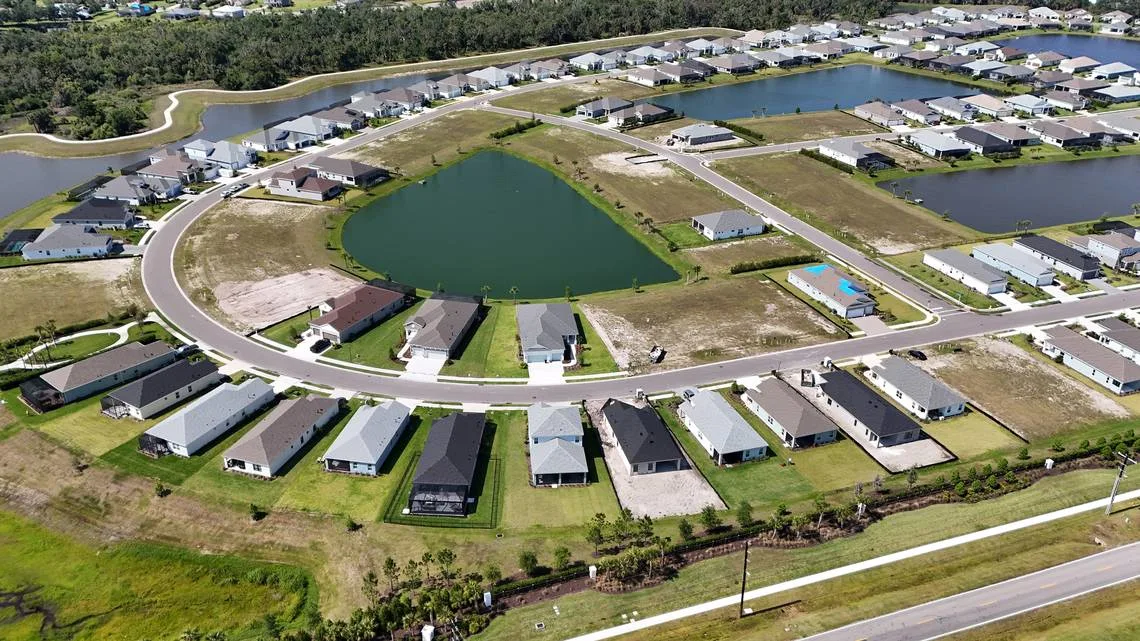
A Senate bill seeking to limit local government control for deciding new residential development was reworked with a strike-all amendment that gutted the original proposal.
With a short discussion Monday, the Senate Judiciary Committee unanimously approved the amended SB 208 during Monday’s hearing.
Bill sponsor Sen. Stan McClain, an Ocala Republican, called the amendment “a negotiated compromise amongst all the key stakeholders.”
Chadwick Leonard, Conservation and Planning Advocacy Coordinator for 1000 Friends of Florida, supported the amendment and said it was about “making sure that local control and the voice of the citizens are being heard.”
Other organizations, including the Florida Chamber of Commerce, the Florida Association of Counties, and the Florida League of Cities, all signaled their support for changes.
The original bill, which contained several provisions, would have overrode any local local rules on the books, so applications to “fill in” more housing in existing residential areas would be required to be approved without having any public hearing, comprehensive plan, amendment, rezoning, variance if the proposed development was similar to existing housing’s density and standards.
The original bill also would have prohibited local governments from banning residential development “on the basis of compatibility” if the proposed development was next to a similar residential development.
But the newly-tooled amended five-page bill will several provisions now says, “Local government comprehensive plans and land development regulations must include factors for assessing the compatibility of allowable residential uses within a residential zoning district and future land use category. Such factors may include intensity, density, scale, building size, mass, bulk, height and orientation, lot coverage, lot size and configuration, architectural style, permeability, screening, buffers, setbacks, stepbacks, transitional areas, signage, traffic and pedestrian circulation and access, and operational impacts, such as noise, odor, and lighting.”
Local government staff must specifically identify how the project isn’t compatible if they are going to deny an application for rezoning, subdivision, or a site plan approval on compatibility grounds, the amended bill said.
And the amended bill added, “References to ‘community character’ or ‘neighborhood feel’ are not sufficient in and of themselves to support a denial of an application on compatibility grounds.”

However, a local government could still set conditions or terms in approving an application to deal with compatibility concerns.
The amended bill had exemptions for rural, agricultural, conservation, open space, mixed-use, industrial, commercial use, master planned communities and historic districts.

Gov. Ron DeSantis has appointed two members to Disney World’s governing board that the state notoriously took over in 2023.
DeSantis has named banker Matt Ravenscroft and lawyer David Woods to the Central Florida Tourism Oversight District (CFTOD).
“Ravenscroft is the Executive Vice President and Director of Sunrise Bank in Orlando,” DeSantis said in a press release to announce the choices. “Previously, he served as a Senior Vice President of Old Florida Bank, United Heritage Bank, and Citrus Bank. Ravenscroft earned his bachelor’s degree from the University of Central Florida.”
Woods works at Woods & Woods, P.A., DeSantis highlighted.
“His practice areas include real estate, wills, trusts, and estates,” DeSantis said. “Woods earned his bachelor’s degree in communication and media studies from Florida State University and his juris doctor from St. Thomas University.”
Their appointments are subject to Senate confirmation.
The CFTOD oversees the largely behind-the-scenes side of Disney World — roads, infrastructure and emergency services that respond when guests are hurt or sick.
The special district, however, was thrown into the national media limelight in 2023 during the infamous DeSantis-Disney feud.
Then-Disney CEO Bob Chapek hesitatingly spoke out against Florida’s Parental Rights in Education Act, which critics called the “Don’t Say Gay” law.
What came next was a wave of backlash among Florida Republicans.

The Legislature passed a 2023 law that gave DeSantis the power to appoint members onto the CFTOD, which had formerly been called the Reedy Creek Improvement District.
Previously, Disney had largely controlled its own governing board. DeSantis said it was inappropriate for The Mouse to have such an advantage above the other theme park operators in Orlando.
These days, the CFTOD is no longer in the headlines.
CFTOD Administrator Stephanie Kopelousos — DeSantis’ former Senior Advisor and the Director of Legislative Affairs — handles day-to-day operations. But the public fight against Disney and Republicans has died down. In a sign of a healed relationship, DeSantis appointed Disney World President Jeff Vahle to a high-profile University of Central Florida Trustee position last year.
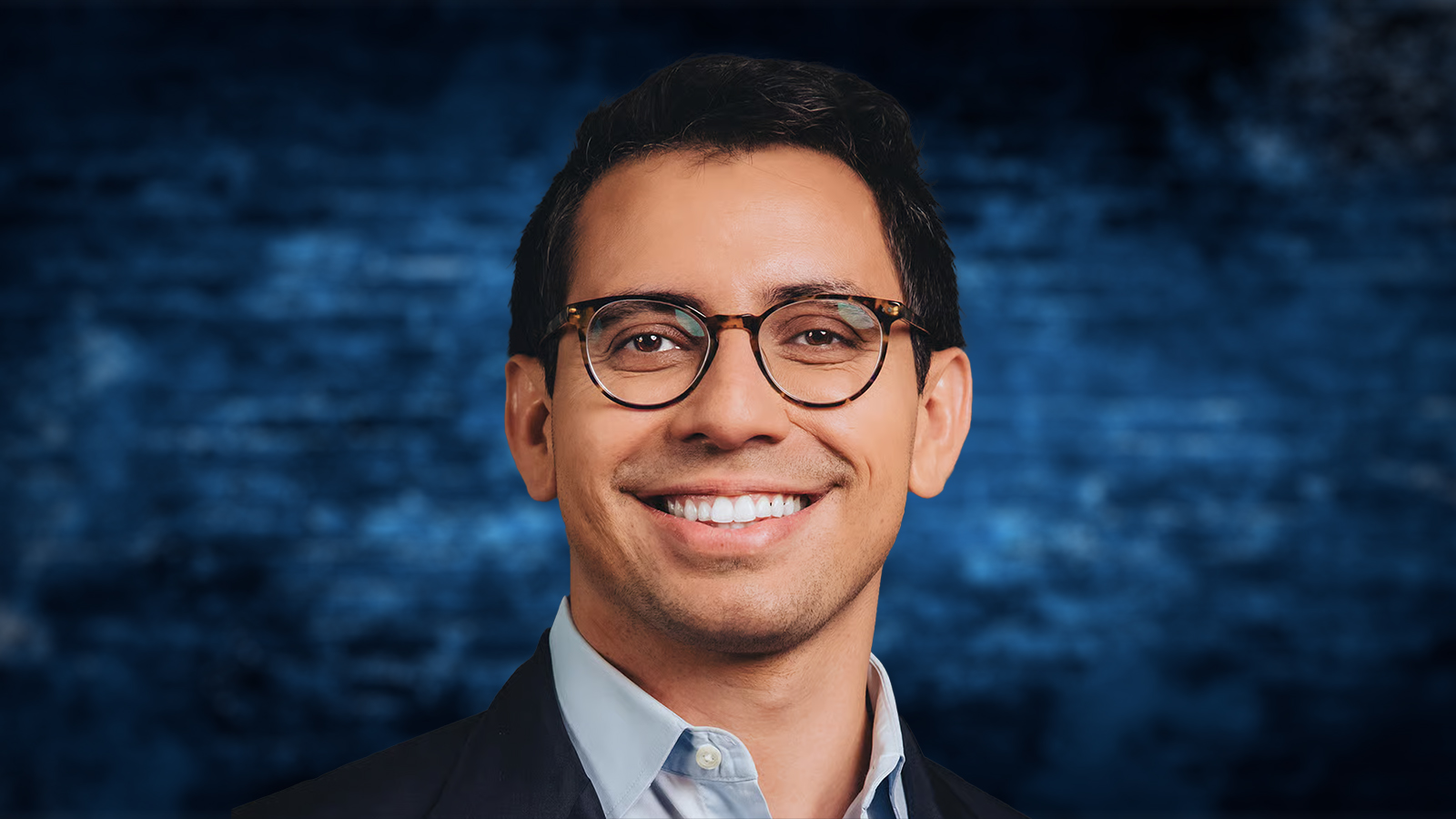
When it comes to raising money for his extremely online campaign for Florida Governor, Republican James Fishback is a fish out of water.
Despite weeks of earned media on various national outlets, it appears Floridians have little interest in writing the Madison Republican a check. His first fundraising report, encompassing activity through the end of last year, is more suited to a campaign for a Soil and Water Board than one to replace Gov. Ron DeSantis.
Fishback raised an anemic $950 since opening his campaign account, a number that looks even worse when his list of very small-dollar donors is considered.
Campaign Treasurer and “Chief Strategy Officer” Alexander Munguia got the ball rolling by contributing a whopping $50.
Aaron Baker, a repeat candidate for U.S. Congress whom Fishback touted in a recent interview with Tucker Carlson as his preference over U.S. Rep. Randy Fine in Florida’s 6th Congressional District, chipped in $100.
Benjamin Salyers, a fireman from Palm Bay, led all donors with $500 contributed.
Munguia also leads the Florida First PAC, a vehicle to accommodate donors who wish to give above state contribution limits. The account has yet to receive one contribution.
We reached out to Munguia for some context for the fundraising report, but did not immediately hear back Tuesday morning.
Fishback is far behind every plausible candidate in the race in terms of resources.
U.S. Rep. Byron Donalds, who has repeatedly been called a “slave” and other pejoratives by Fishback, ended 2025 with roughly $45 million raised.

Former House Speaker Paul Renner, who hasn’t gotten nearly the national showcase Fishback has despite a record of conservative accomplishments in Tallahassee, raised nearly $5.5 million by the end of 2025.
Lt. Gov. Jay Collins just launched his campaign Monday, but his first fundraising report likely will show he belongs in the race.
National media has given Fishback a platform befitting a serious candidate, though that effort is turning into a punchline given the laughably low amount Fishback has raised in an open race.


Gov. DeSantis names 2 members to Disney World’s governing board

Polygon Labs buys two crypto startups for $250 million as it looks to compete with Stripe

‘Sinners’ Star Miles Caton Says Film’s Success Has Been a Blessing, DMs Are Crazy
-

 Politics8 years ago
Congress rolls out ‘Better Deal,’ new economic agenda
-
Entertainment8 years ago
New Season 8 Walking Dead trailer flashes forward in time
-
Politics8 years ago
Poll: Virginia governor’s race in dead heat
-
Politics8 years ago
Illinois’ financial crisis could bring the state to a halt
-
Entertainment8 years ago
The final 6 ‘Game of Thrones’ episodes might feel like a full season
-
Entertainment8 years ago
Meet Superman’s grandfather in new trailer for Krypton
-
Business8 years ago
6 Stunning new co-working spaces around the globe
-
Tech8 years ago
Hulu hires Google marketing veteran Kelly Campbell as CMO