Good morning. As President Donald Trump has initiated tariff wars and threatened individual companies, his second term has been marked by pilgrimages of CEOs from Big Tech and beyond to bestow gifts upon POTUS and perform public acts of praise.
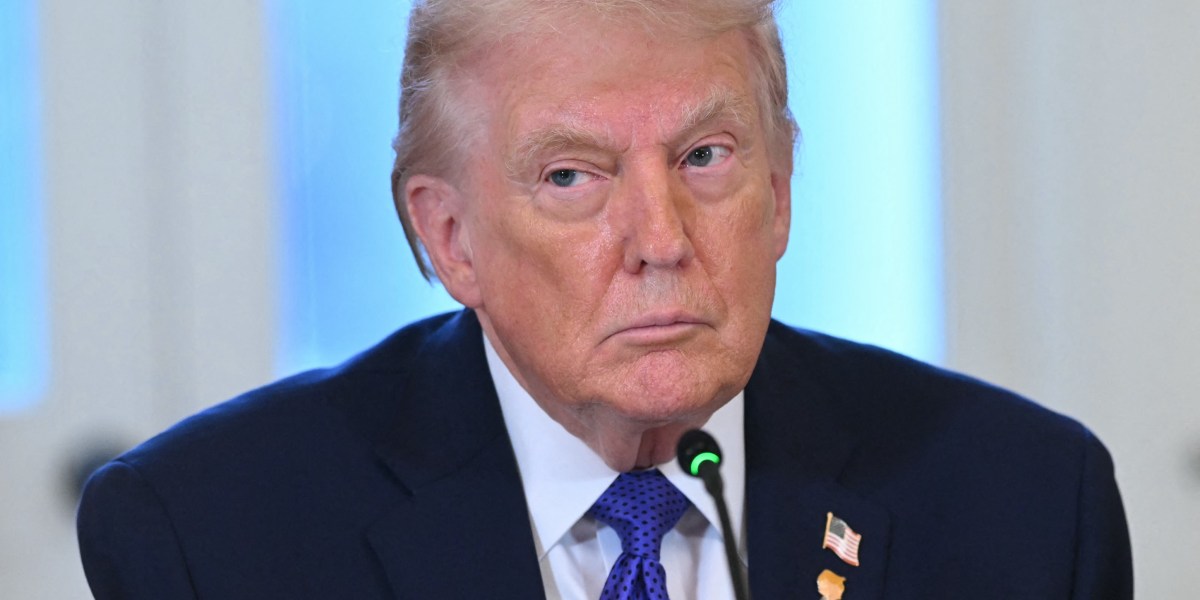
A clearly miffed Trump on Sunday called Exxon “too cute,” and he said he’s inclined to keep the world’s largest Big Oil giant out of Venezuela.
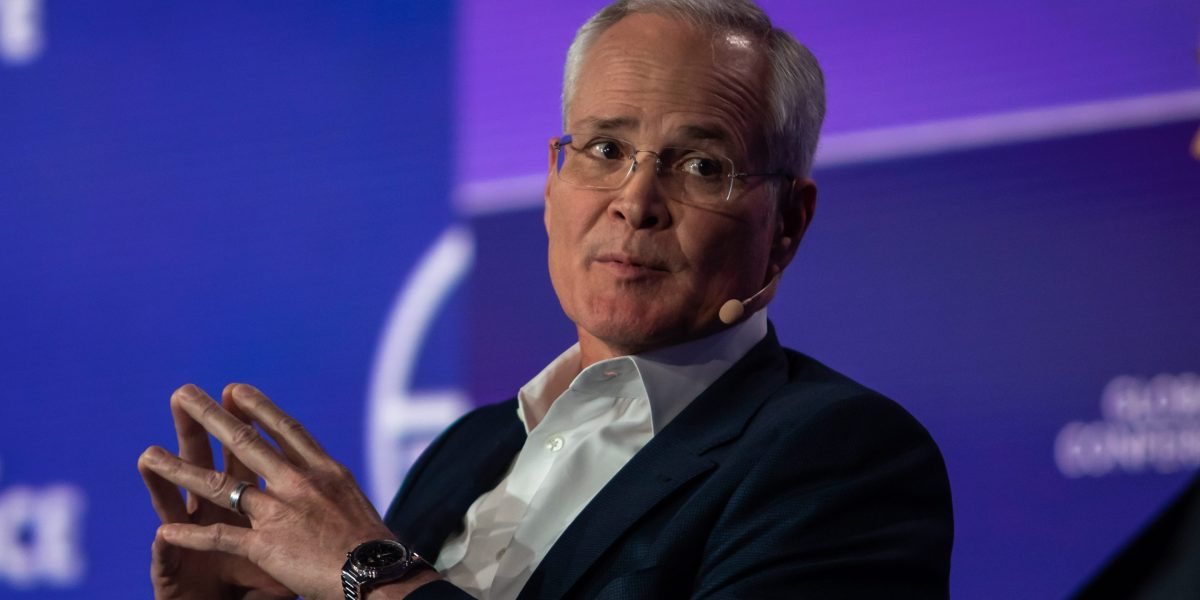
Woods, an Exxon lifer who succeeded Rex Tillerson as CEO in 2017 when his boss went to work for Trump, is a reserved but strong-spoken chief who has emerged as an unofficial industry spokesman.
Woods is a believer in the famed, disciplined ‘Exxon way.’ He’s always cordial but blunt. He’ll tell you Exxon won’t invest in renewables—Exxon is about molecules, not electrons—and that Exxon shouldn’t be blamed for climate change.
And he’s not going to appease the president by upsetting Exxon shareholders—an ongoing conundrum for the business leaders. Energy analysts said Exxon stock likely would have suffered if Exxon overcommitted to spending billions in Venezuela in its current, uneconomic state. Exxon’s stock ticked down only slightly by 0.5% on Monday—despite Trump’s critical words—and maintained a market cap of about $529 billion.
“There was nobody to say anything, except Darren, and he’s eloquent as heck,” said Jim Wicklund, veteran oil analyst and managing director for PPHB energy investment firm.
Sometimes it comes down to who has the most leverage.
“This is Trump’s problem. There’s no urgency by the industry at all to go back into Venezuela. And there’s almost no inducement other than guaranteeing profitability, which they can’t do,” Wicklund said. “You can sweeten the terms, but the political risk outweighs that variable by a factor of 10.”—Jordan Blum
Federal prosecutors’ criminal investigation of Federal Reserve Chair Jerome Powell has sparked outrage across politics and finance and stoked fear that the probe could erode the Fed’s independence and ultimately destabilize the U.S. economy. Top Republican lawmakers issued rare rebukes of the president over the action, which was also denounced by every living former Fed chair. Wall Street analysts are almost universally negative about the news.
Target’s ICE problem
The federal immigration crackdown in Minnesota has put Minneapolis-based retailer Target in a bind as customers demand the company do more to keep agents out of its stores. Late last week, a video circulated online of agents arresting two Target employees in a store; they were both U.S. citizens and later released. Target hasn’t commented on the matter, but retailers argue they have little power to keep law enforcement from their premises.
Meta’s new AI infrastructure initiative
Meta is launching a new initiative called Meta Compute to build out AI infrastructure. Two new hires will help oversee the effort. Daniel Gross, who previously co-founded Safe Superintelligence with Ilya Sutskever, will co-lead the project, and Wall Street veteran and former Trump advisor Dina Powell McCormick will help broker agreements with governments to finance and deploy data centers globally.
A mysterious productivity surge
U.S. productivity surged in the third quarter, according to a Morgan Stanley report last week. That’s usually an indicator of non-inflationary economic growth, but analysts aren’t exactly sure what’s causing it.
Maduro bets spark insider training concerns
An anonymous user on prediction markets platform Polymarket made more than $400,000 betting that Venezuelan President Nicolás Maduro would leave office, with the bulk of the wagers placed shortly before the announcement of his capture. Rep. Ritchie Torres (D–NY), who last week introduced a bill that would limit government employees’ betting on Polymarket, toldFortune that the use of prediction platforms by federal workers is “corrupting the government itself.”
Paramount Skydance’s new fight for Warner Bros.
Paramount Skydance on Monday launched two new efforts to disrupt Warner Bros. Discovery’s planned sale to Netflix: nominating its own candidates for election to Warner Bros. board and suing the company to reveal details about the Netflix deal. Warner Bros. rejected a revised hostile acquisition bid by Paramount last week.
Craigslist nostalgia
Craigslist, the decades-old online classifieds site, is still the go-to platform for some millennials who are nostalgic for the earnestness of the early web. Craigslist does not use algorithms to track users’ activity or guess their next move; it also doesn’t support ratings, “shares” or “likes” that foster clout-chasing, leaving Wired to wonder if it’s the “last real place on the internet.”
The markets
S&P 500 futures were down 0.13% this morning. The last session closed up 0.16%. STOXX Europe 600 was flat in early trading. The U.K.’s FTSE 100 was up o.o5% in early trading. Japan’s Nikkei 225 was up 3.1%. China’s CSI 300 was down o.6%. The South Korea KOSPI was up 1.47%. India’s NIFTY 50 was down 0.25%. Bitcoin was at $92K.
Good morning. CFO confidence is on the upswing as 2026 begins, and digital transformation in finance has overtaken enterprise risk management as the top goal for the year ahead.
That’s a key finding of Deloitte’s latest CFO Signals Spotlight report, released this morning. Half of the finance chiefs surveyed named digital transformation as their foremost priority for 2026, followed by cash management optimization and capital allocation. The findings are based on a recent Q4 survey of 200 CFOs across industries at North American companies with at least $1 billion in annual revenue.
Steve Gallucci, global and U.S. leader of Deloitte’s CFO Program, told me the shift reflects how finance leaders are moving from exploration to execution when it comes to technology—particularly AI.
“Efficiency and productivity are certainly part of the equation,” Gallucci said. “But more broadly, we’ve been on this digital evolution for some time.”
In recent years, as advanced technologies like agentic AI burst onto the scene, boards and C-suite leaders have shown increasing interest. Finance chiefs took a cautious approach to implementing these tools. Deloitte’s Finance Trends report finds that finance leaders are now influencing enterprise strategy, driving cost optimization, advancing digital transformation, and building tech-enabled teams.
Last year, many companies focused on testing, creating use cases, and developing comfort with AI, Gallucci noted. But according to the Q4 survey, 87% of CFOs said AI will be extremely or very important to how their finance departments operate in 2026.
“What we’re seeing in some of the answers to the Q4 survey questions is that continued evolution,” Gallucci said. Finance leaders are taking a more deliberate, enterprise-wide approach to transformation and AI is accelerating that commitment, he added.
The report outlines six key areas CFOs plan to prioritize this year: Leveraging digital tools to transform finance operations; going all in on AI; embedding AI agents directly into finance workflows; keeping close watch on changes in buyer behavior; tapping internal talent to manage costs; and exploring more deal-making opportunities.
CFOs also appear focused on redeploying existing finance talent to work alongside AI-driven systems. About half of respondents said their organizations plan to hire or promote internally to help keep worker costs in line for 2026.
As CFOs and finance leaders lean into digital transformation, there’s an expectation that they’re going to have to reskill their existing talent, Gallucci said.
“We’re not seeing a decline in the number of finance professionals as a result of investments in technology and AI,” he said. But as leaders look to the future—both in finance and across the broader enterprise—they are increasingly focused on boosting productivity through technology and combining those tools with the skills of their existing workforce and an agentic digital workforce, he explained.
Competition and consumer dynamics add pressure
While technology transformation tops the agenda, competitive pressure remains a driving force. About half of CFOs cited rising competition as having the biggest impact on their companies, followed closely by shifts in customer behavior and demographics.
Competitive pressures are always near the top of CFOs’ minds, Gallucci said. But what’s different now is how they’re responding—looking across industries to see how others are using AI and digital tools, and applying those lessons quickly, he said.
Gallucci also pointed to evolving consumer demand as a key factor to watch, particularly as major banks and retailers release their fourth-quarter earnings.
There’s evidence of a K-shaped economy, he added. “CFOs are paying close attention to what that means for growth, pricing, and investment strategy.”
Clare Kennedy was appointed CFO of Spencer Stuart, a global advisory firm, effective Jan. 12. Kennedy succeeds Christine Laurens as part of a planned succession and in support of Laurens’ retirement from full-time executive work. Kennedy, who is based in London, joins Spencer Stuart from Maples Group, an international advisory firm, where she served as global chief operating officer. She joined Maples Group from Freshfields, an international law firm, where she served as its global CFO. Kennedy previously spent 18 years at Linklaters, an international law firm, where she held a variety of senior finance and commercial leadership roles. She began her career at Arthur Andersen and EY as a chartered accountant, specializing in tax.
Gillian Munson was appointed CFO of Duolingo, Inc. (NASDAQ: DUOL), a mobile learning platform, effective Feb. 23. Matt Skaruppa will step down after nearly six years with the company; he will remain CFO until Munson starts her new role, at which time he will assume an advisory role. Munson assumes the CFO role after serving on the Duolingo board of directors since 2019 as chair of the audit, risk and compliance committee. She was most recently the CFO of Vimeo and previously held CFO positions at Iora Health, Inc. and XO Group Inc.
Big Deal
A joint statement on Monday from tech giants Apple and Google announced that they have entered into a multi-year collaboration under which the next generation of Apple Foundation Models will be based on Google’s Gemini models and cloud technology. These models are said to power future Apple Intelligence features, including a more personalized Siri coming this year.
The tech giants stated: “After careful evaluation, Apple determined that Google’s AI technology provides the most capable foundation for Apple Foundation Models and is excited about the innovative new experiences it will unlock for Apple users. Apple Intelligence will continue to run on Apple devices and Private Cloud Compute, while maintaining Apple’s industry-leading privacy standards.”
Google and others took the early lead in the AI race, while Apple’s iPhone has lagged rivals on some AI features. Following earlier AI missteps, the Cupertino, Calif.-based company acknowledged last year that a major Siri upgrade would not arrive until sometime in 2026.
“This is what the Street has been waiting for with the elephant in the room for Cupertino revolving around its invisible AI strategy, but we believe this is an incremental positive to both AAPL and GOOGL,” Wedbush Securities analysts wrote in a Monday note on the Apple–Google partnership. Wedbush maintains an Outperform rating on Apple and continues to target a $350 price for the stock.
Going deeper
“Trump threatens to keep ‘too cute’ Exxon out of Venezuela after CEO provides reality check on ‘uninvestable’ industry” is a Fortune article by Jordan Blum.
Blum writes: “As other oil executives lavished President Trump with praise at the White House, Exxon Mobil CEO Darren Woods bluntly said the Venezuelan oil industry is currently ‘uninvestable,’ and that major reforms are required before even considering committing the many billions of dollars required to revitalize the country’s dilapidated crude business. Read the complete article here.
Overheard
“Buying a movie studio is hardly buying secure, hard assets.”
—Jeffrey Sonnenfeld, Yale professor and founder of the Yale Chief Executive Leadership Institute, and Stephen Henriques, a senior research fellow, write in a Fortune opinion piece titled “A Cautionary Hollywood Tale: The Ellisons’ Lose-Lose Paramount Positioning” regarding the multiple bids for Warner Bros. Discovery.
The Oval Office’s plan to force the Fed into submission is unlikely to work, Wall Street believes. In fact, they fear it may backfire so spectacularly that interest rate cuts which would have happened under Powell will be nixed as the central bank asserts its independence.
Over the weekend, Fed chairman Jerome Powell confirmed the Department of Justice had served the Federal Reserve with grand jury subpoenas relating to his Senate Banking Testimony on the renovation of Fed buildings.
It was a move that realists may have seen coming—after all, Trump has already levelled legal threats against other members of the rate-setting Federal Open Market Committee (FOMC)—but is unprecedented nonetheless. It comes after a year of lobbying by Trump, who wants the FOMC to cut the base rate to foster economic activity and reduce borrowing costs, regardless of the inflation risk.
However, Trump may not have banked on the fact that the FOMC (even under a new Fed chair this year) might want to make a point of that independence, and go to lengths to demonstrate it. As UBS’s Paul Donovan told clients this morning: “Any nominee from U.S. President Trump is likely to have to place additional emphasis on their independence to try and prove they are above politics. This might impact future policy decisions.”
As Bernard Yaros, lead U.S. economist for Oxford Economics, observed in a note yesterday: “The criminal investigation … could even backfire by making officials more reluctant to cut rates in the coming months and years.”
But there’s also another unexpected fallout which Trump is unlikely to enjoy: Powell may choose to stay on as a bastion of independence after a new Fed chairman is nominated. While his time as Fed chairman expires this year, his term on the Board of Governors does not expire until 2028. “If Powell was looking for a reason to stay on as a Governor … this could be one,” noted Deutsche Bank’s Jim Reid this morning. “It’s very unusual to stay on but [former Fed Chairman Marriner] Eccles did so in 1948 for 3.5 years to help protect and secure Fed independence after the Treasury were trying to fund large post war time debts.”
An unpopular plan
Investors might have hoped Trump had learned his lesson when it came to meddling with the Fed: When he threatened to fire Powell earlier this year, markets shifted uneasily, and the Republican president was forced into a swift U-turn.
According to reports, the action taken this week hasn’t been hugely popular within the White House. Axios reported today, citing two anonymous sources, that Treasury Secretary Scott Bessent told the president that the investigation “made a mess,” which could be bad for financial markets.
Even if the chips fall in favor of President Trump and he successfully ousts both Powell and Governor Lisa Cook, as well as managing to insert a dovish Fed chairman at the head of the table, there’s still an economic fallout to be dealt with. This could include a weaker dollar, a steeper yield curve, and higher long-term inflation expectations, according to Thierry Wizman, global FX and rates strategist at Macquarie Group. If Trump succeeds, “it may result in a Fed that will be more pliant with respect to those White House wishes, especially if Congress concedes its role. That means a Fed that keeps interest rates lower than they otherwise would be.”
This means that inflation, held in check by higher rates, may increase in the longer view and, as such, “nominal assets, such as fixed-coupon long-term bonds, will look less attractive as stores of real value.”
The only surprising quality regarding President Trump unleashing federal investigators to prepare potential prosecution criminal charges against the highly respected Federal Reserve Chairman Jay Powell — a Trump appointee himself — is that anyone is surprised by this news.
Financial markets initially dropped before rebounding as investors blew off Trump’s Justice Department move as the flailing bluster of a lame duck and a fissure opened in the GOP, with open concern about the sacred independence of the DOJ as well as of the Federal Reserve.
For example, prominent Republican Sen. Thom Tillis, of the Senate Banking Committee, asserted that “It is now the independence and credibility of the Department of Justice that are in question.”
Similarly, Republican Rep. French Hill, chairman of the House Financial Services committee, called this investigation “an unnecessary distraction that could undermine this Administration and sound monetary decisions.”
Even Trump’s own Treasury Secretary, Scott Bessent, challenged Trump on his “revenge probe” of Powell.
The sequential, dramatic waves of prosecutions against such officials as Trump’s former National Security Advisor John Bolton, former FBI chiefs James Comey and Christopher Wray, New York Attorney General Letitia James, former CIA chief John Brennan, Federal Reserve Governor Lisa Cook, former Homeland Security official Miles Taylor, Sen. Adam Schiff, cybersecurity chief Christoper Krebs, and former special counsel Jack Smith, among others, is alarming. As Trump’s Truth Social messaging shows, he has personally directed such prosecutions, showing a weaponization of the judiciary against perceived political enemies. Some critics see this as the impulsive emotional fits of the crazed Queen of Hearts from Alice in Wonderland, screaming “off with their heads” regarding any who displease her. However, what is missed is that these moves are far more deliberate actions, part of a larger tactical pattern.
The charges against Powell — that he lied to Congress due to building renovation costs overruns — is ludicrous and such charges will surely be dismissed in court. The alleged 40% cost overruns may be true but they are not criminal. let alone reckless. The actual Fed renovations are costing $2.5 billion, which is 40% overbudget due to cost inflation, but Trump admitted last month that his own East Wing demolition and construction of a new White House ballroom has ballooned to 200% over budget. This is truly stunning as this project was only six months ago and Trump should know how to estimate construction accurately as a builder himself.
These costs are not out of line, given that this is the first comprehensive renovation in the 90 years since the Marriner Eccles building was built in 1937. By contrast, the nearby Hart, Russell, and Dirksen Senate Office buildings and the Cannon House Office building have continuously undergone massive renovations over the decades.
Plus, regardless of the nature of these common cost overruns, not a penny of this is from U.S. taxpayer funds. The Fed is funding these renovations out of its own budget as the Fed is entirely operationally self-sufficient, funded primarily by its own investment income on the U.S. Treasury bonds it owns.
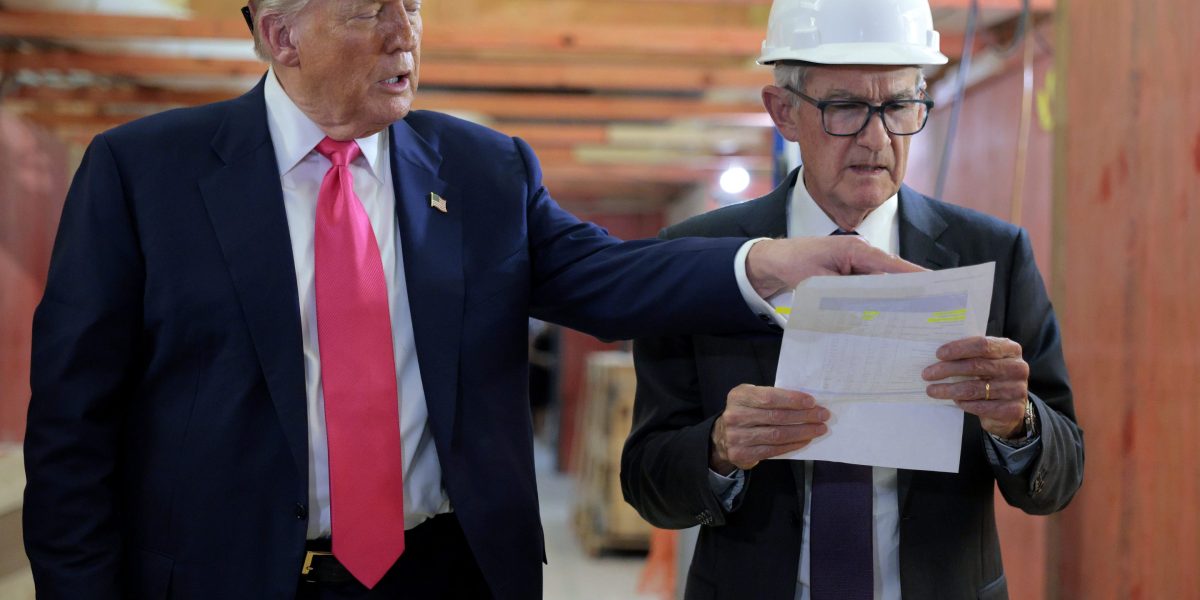
Trump’s attempted ambush of Powell on national TV this summer, during a tour of the construction site, backfired, with Powell correcting and embarrassing him. Trump’s false statement that the renovations had ballooned to $3.1 billion was shown to incorrectly include a separate, already-completed renovation of a different building.
On the surface, Trump is angry that the Federal Reserve is not cutting rates faster and further and that is how chairman Powell explains why he is being targeted as he complained: “This new threat is not about my testimony last June or about the renovation of the Federal Reserve buildings. … Those are pretexts. The threat of criminal charges is a consequence of the Federal Reserve setting interest rates based on our best assessment of what will serve the public, rather than following the preferences of the President.”
Fully 71% of the 200 CEOs at my recent Yale CEO Summit complained that Trump had already eroded the independence of the Federal Reserve via actions from his administration, and 81% stated that they prefer Governor Chris Waller as Powell’s prospective successor when the chairman’s term ends this spring, presuming he will fortify Fed independence.
So, if this lawfare attack is not an impulsive tantrum, what is the strategic rationale? Like Trump’s false assertion this month that the attack on Venezuela was driven by the advance interest of U.S. oil producers, which they soundly denied, claiming Venezuela was “uninvestable,” this was more of Trump’s diversionary maneuvering. In my new book, Trump’s Ten Commandments (Simon & Schuster), I label this his “Wall of Sound” tactic to change the public narrative from his faltering polling with Gallup’s end of year national survey reporting only 36% of the nation approving and the Economist/YouGov finding that 57% disapprove. Even over half of MAGA/Trump voters don’t support Trump on his handling of the Epstein files and affordability and healthcare. His ICE/immigration tactics have plummeted 30% in recent polling.
But Trump has succeeded in his mission of getting every media outlet to drop their 24/7 hammering on his weaknesses on salient domestic policies. Plus, he is pulling three other levers in this Fed/Powell diversionary maneuver — he invokes his “hub & spoke” leadership model where there are no independent agencies of control, his crushing of adversaries with selective retribution, and his deft manipulation of the classic mass communication propaganda tool “sleeper effect” where a false message is repeated in an unrelenting determined way and eventually gets traction.
These are four of the 10 tools in Trump’s tool kit that I label his “Ten Commandments.” He selects them deliberately and not truly impulsively despite his bravado. Trump is far from tone deaf or foolish. He is dumb as a fox, but even foxes, generally symbol of intelligence and slyness, become victims of their own presumed cleverness.
The opinions expressed in Fortune.com commentary pieces are solely the views of their authors and do not necessarily reflect the opinions and beliefs of Fortune.






 Politics8 years ago