
Politics
A final Session to secure Florida’s education future


Florida policymakers are convening for the final Legislative Session of Gov. Ron DeSantis’ tenure, as well as the last for House Speaker Danny Perez and Senate President Ben Albritton. As always, education policy sits at the top of the agenda, and the Foundation for Florida’s Future is urging lawmakers to act on priorities that will shape student outcomes for years to come.
Reading: Invest in literacy
Florida’s reading scores on the National Assessment of Educational Progress (NAEP) have fallen to their lowest levels since before 1999. Meanwhile, states such as Mississippi — drawing inspiration from reforms that originated in Florida — are now outperforming us.
While a broad recommitment to literacy is necessary, lawmakers can make an immediate, high-impact investment by ensuring every elementary school has a dedicated reading coach. These highly trained instructional leaders work directly with teachers to improve reading instruction schoolwide.
Today, nearly 800 elementary schools report having no active reading coach. Because not all districts prioritize funding for proven literacy strategies, policymakers should establish a dedicated literacy coach fund and require participating districts to better align reading plans with state priorities. This approach would give students a much-needed boost while providing the state greater accountability over literacy outcomes.

School choice: Protect Florida’s progress
Florida has been the gold standard for school choice for two decades, distinguished by its scale and responsiveness to families. That progress, however, is not guaranteed.
Current concerns about tracking and funding students stem from technological limitations, not bureaucratic failures. Adding new administrative requirements for parents and schools would be a mistake. The solution to a technology problem should be technological.
Florida can look to other states with education scholarship account programs that have successfully addressed these challenges. Investing in modern student tracking systems and adopting a common data governance standard such as EdFi — already used in Texas, Indiana, and Arizona — would strengthen accountability without discouraging participation.
Additional bureaucracy would stifle innovation, deter families, and risk turning a life-changing scholarship program into a difficult-to-navigate government system. Lawmakers should proceed with caution.

Generative AI: Implement reasonable guardrails
Florida has led the nation in protecting students from the harms of social media and cell phone use in schools. The next step is establishing reasonable guardrails for Generative Artificial Intelligence.
Policymakers should focus on two priorities. First, protecting student data by requiring transparency, auditing of interactions, and robust parental notice and controls.
Second, the state must prevent minors from accessing Generative AI products that use addictive, human-like deception to form relationships. These interactions pose serious emotional risks, tragically illustrated by the experience of Florida’s Megan Garcia and the loss of her son, Sewell. These powerful technologies should not be allowed to reach children unchecked.
Higher education accountability: Capture return on investment
The One Big Beautiful Bill requires colleges and universities receiving federal student aid to report annual wage outcomes for graduates. Programs whose graduates consistently earn less than high school diploma-only workers will no longer qualify for federal aid.
Florida can reinforce this accountability by ensuring the same data reported federally is also shared with the state, giving students and policymakers clearer insight when choosing degree programs.
Florida already boasts one of the nation’s strongest higher education systems, but transparency and incentive alignment remain essential to keeping student outcomes front and center.
Policy changes lives. While this is a lame-duck year for many state leaders, Florida has an opportunity — and a responsibility — to deliver meaningful reforms that keep the state at the forefront of education policy.
To view the full policy agenda, click here.
___
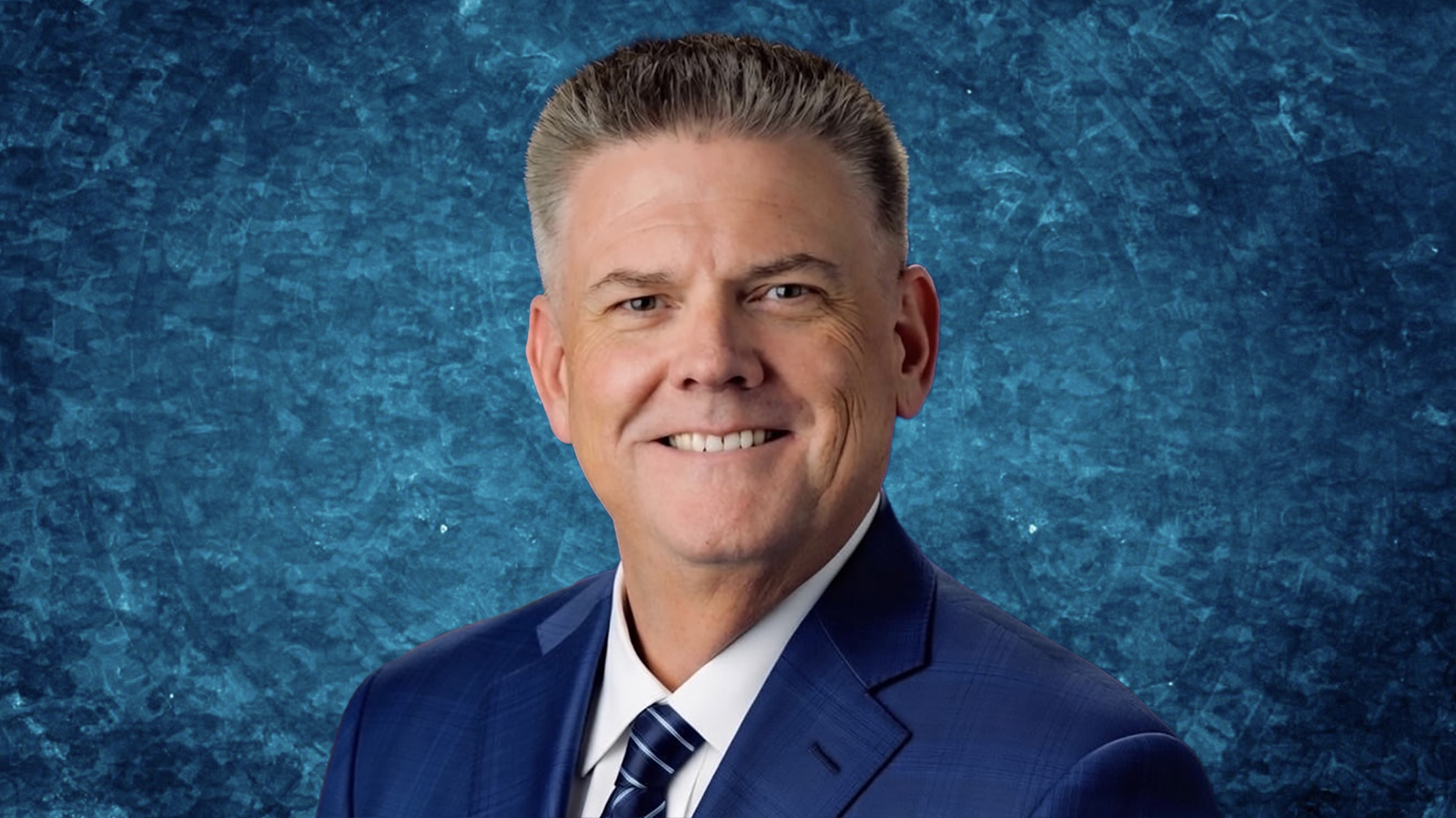
Patricia Levesque is executive director of the Foundation for Florida’s Future.

As Florida lawmakers convene for the 2026 Legislative Session, health care advocates are calling on state leaders to prioritize access to and affordability of health care.
Advocates from across Florida gathered virtually last week to highlight mounting pressure on families, particularly children, as federal health policy changes take effect. The expiration of enhanced federal premium tax credits and the passage of last year’s One Big Beautiful Bill Act are projected to result in more than 10 million people nationwide losing coverage over the next decade.
In Florida alone, an estimated more than 1.5 million residents could lose insurance or face significantly higher premiums.
The situation is compounded by ongoing delays in implementing the state’s KidCare expansion and by Florida’s refusal to expand Medicaid, leaving hundreds of thousands of residents in what is commonly known as the Medicaid coverage gap.
Among the proposals Florida Voices For Health wants lawmakers to consider this Session are SB 1222, which would provide consumer protections related to medical debt; HB 1043, aimed at addressing shortages in the doula workforce; and HB 1091 and SB 1136, which focus on improving children’s oral health through better coordination between schools and families.
They are also urging lawmakers to strengthen Florida’s Medicaid program and press forward with the KidCare expansion. In 2023, the Governor signed a bill championed by then-House Speaker Paul Renner that expanded eligibility for KidCare — the state’s version of the federal children’s health insurance program — by allowing families that earn up to 300% of the federal poverty level to qualify. The prior threshold was 200%.
However, implementation has stalled amid an ongoing lawsuit over a federal stipulation requiring states to comply with a 12-month continuous eligibility requirement, even if they miss monthly premiums. The rule applies to all states, but Florida was the only one to challenge it.
While state leaders say the federal requirement is too costly and restrictive, the legal fight has effectively frozen a policy that lawmakers from both parties supported and subsequently left families who would otherwise qualify in limbo.
“The expiring subsidies and this failure to implement KidCare expansion are really a double whammy for children in Florida,” said Joan Alker, Executive Director of the Center for Children and Families at Georgetown University. “It’s critically important for families’ economic security and access to care to have insurance — and for children, having short gaps in coverage is problematic.”
Florida Health Justice Project Policy Director Melanie Williams said the upcoming Session is pivotal and, if lawmakers act, could “be remembered as a turning point: when Florida chose to protect families, support healthy births and childhoods, and build a stronger, more equitable future for our state.”

It’s unclear whether the bills supported by Florida Voices for Health will gain traction, though the dental screenings measure starts Session with cross-party support, with Republican Sen. Alexis Calatayud and Democratic Rep. Kelly Skidmore sponsoring SB 1136 and HB 1091, respectively.
The measure would allow schools to conduct visual dental screenings — without diagnosing or treating oral conditions — as part of an existing preventive program, after parents receive written notice and an opportunity to opt their children out.
“We want to make sure, in our continued collaborative discussions on supporting parents’ rights, that we’re working with Democrats to empower parents with this information and provide next-step opportunities, especially for lower-income families that may not have access to regular dentist visits,” Calatayud told Florida Politics ahead of Session.
“We’re explicitly allowing and creating an opt-out provision if parents don’t want it, but this is an important public health opportunity to give kids of all socioeconomic backgrounds equal access to dental hygiene.”
Calatayud and Skidmore filed their bills last week, and they were assigned Committee references on Monday. SB 1222’s first stop is the Senate PreK-12 Education Committee; HB 1091’s is the Student Academic Success Subcommittee.
Miami Democratic Rep. Ashley Gantt is sponsoring HB 1043 to establish the Doula Workforce Development Support Program. The program, which would be housed at FloridaCommerce, aims to reverse the state’s rising maternal mortality and morbidity rates by providing grants to existing doula training organizations so they can expand, particularly in “rural maternity-care deserts” and urban counties with high maternal morbidity disparities.
The trend disproportionately affects Black women and is not unique to Florida. Nationally, maternal mortality — the death of a woman during pregnancy, childbirth, or up to a year after delivery — rates are two to three times higher among Black women than White women.
Additionally, AHCA data on Medicaid births shows a significant racial disparity for neonatal deaths and live infant deaths, with a 2024 report noting that in nearly half of neonatal deaths and live infant deaths, the mother was Black; Black women accounted for about a third of overall births in the dataset.
HB 1043’s first stop is the Health Professions & Programs Subcommittee. Democratic Sen. Rosalind Osgood is sponsoring a similar, but not identical, bill.
Meanwhile, Doral Republican Sen. Ana Maria Rodriguez is sponsoring SB 1222, which aims to curb aggressive debt-collection practices against patients who incur medical debt, particularly while eligibility for financial assistance is still being determined. In those instances, the bill prohibits medical debt creditors and collectors from using or threatening to use actions such as property liens, arrests, lawsuits, or reporting the debt to consumer reporting agencies. It has been referred to the Health Policy, Banking and Insurance and Rules committees.
Taken together, Florida Voices for Health says its preferred legislation would significantly address the health care access and affordability crises.
“When we talk about doing things that would affect the ACA, would affect Medicaid, would affect county funding — it affects the patients that I’m going to see tomorrow. This last-ditch idea of ‘If all else fails, they can go to the ER’ does a disservice to residents in Florida,” said Dr. David Woolsey, an emergency medicine doctor at Jackson Health System and the Vice President of SEIU Local 1991.
Politics
Senate Committee approves bill that gets a facelift with amendment on local control for residential development

A Senate bill seeking to limit local government control for deciding new residential development was reworked with a strike-all amendment that gutted the original proposal.
With a short discussion Monday, the Senate Judiciary Committee unanimously approved the amended SB 208 during Monday’s hearing.
Bill sponsor Sen. Stan McClain, an Ocala Republican, called the amendment “a negotiated compromise amongst all the key stakeholders.”
Chadwick Leonard, Conservation and Planning Advocacy Coordinator for 1000 Friends of Florida, supported the amendment and said it was about “making sure that local control and the voice of the citizens are being heard.”
Other organizations, including the Florida Chamber of Commerce, the Florida Association of Counties, and the Florida League of Cities, all signaled their support for changes.
The original bill, which contained several provisions, would have overrode any local local rules on the books, so applications to “fill in” more housing in existing residential areas would be required to be approved without having any public hearing, comprehensive plan, amendment, rezoning, variance if the proposed development was similar to existing housing’s density and standards.
The original bill also would have prohibited local governments from banning residential development “on the basis of compatibility” if the proposed development was next to a similar residential development.
But the newly-tooled amended five-page bill will several provisions now says, “Local government comprehensive plans and land development regulations must include factors for assessing the compatibility of allowable residential uses within a residential zoning district and future land use category. Such factors may include intensity, density, scale, building size, mass, bulk, height and orientation, lot coverage, lot size and configuration, architectural style, permeability, screening, buffers, setbacks, stepbacks, transitional areas, signage, traffic and pedestrian circulation and access, and operational impacts, such as noise, odor, and lighting.”
Local government staff must specifically identify how the project isn’t compatible if they are going to deny an application for rezoning, subdivision, or a site plan approval on compatibility grounds, the amended bill said.
And the amended bill added, “References to ‘community character’ or ‘neighborhood feel’ are not sufficient in and of themselves to support a denial of an application on compatibility grounds.”

However, a local government could still set conditions or terms in approving an application to deal with compatibility concerns.
The amended bill had exemptions for rural, agricultural, conservation, open space, mixed-use, industrial, commercial use, master planned communities and historic districts.


Down Arrow Button Icon

Federal cuts amplify health care access, affordability debates

Two Southeast Asia 500 companies may merge—forming Malaysia’s largest construction conglomerate
-

 Politics8 years ago
Congress rolls out ‘Better Deal,’ new economic agenda
-
Entertainment8 years ago
New Season 8 Walking Dead trailer flashes forward in time
-
Politics8 years ago
Poll: Virginia governor’s race in dead heat
-
Politics8 years ago
Illinois’ financial crisis could bring the state to a halt
-
Entertainment8 years ago
The final 6 ‘Game of Thrones’ episodes might feel like a full season
-
Entertainment8 years ago
Meet Superman’s grandfather in new trailer for Krypton
-
Business8 years ago
6 Stunning new co-working spaces around the globe
-
Tech8 years ago
Hulu hires Google marketing veteran Kelly Campbell as CMO