Connect with us

Business

Billionaire philanthropist MacKenzie Scott donates $45 million to LGBTQ+ youth hotline organization, The Trevor Project

Published

on


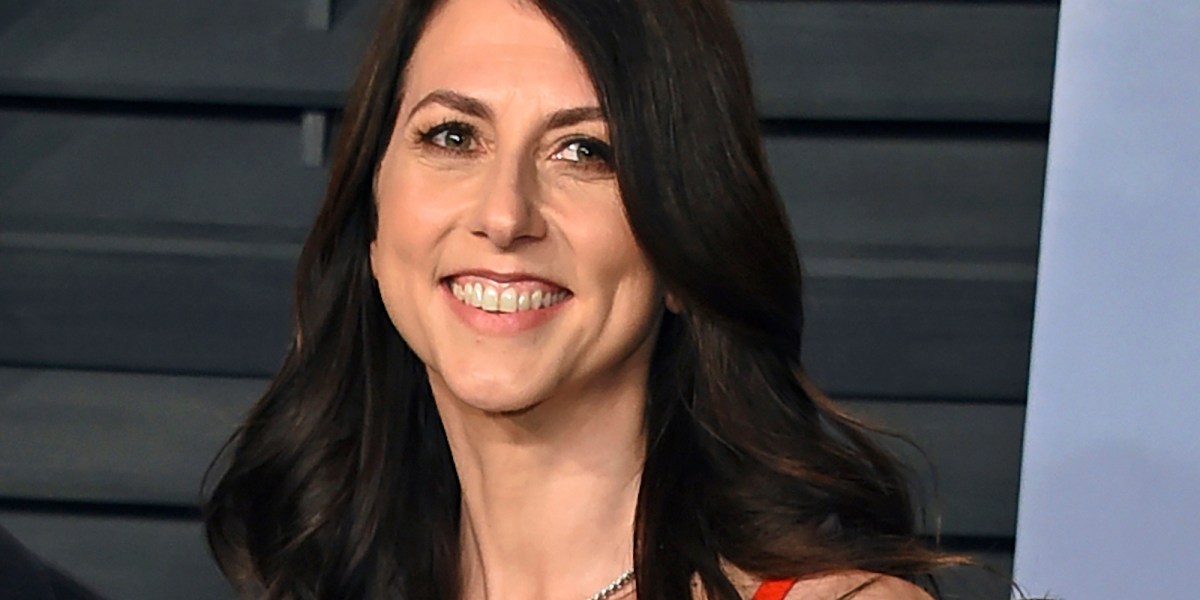
The Trevor Project, known for its hotline for LGBTQ+ youth, received $45 million from billionaire and author MacKenzie Scott at the end of 2025, the organization said Monday.

The gift is the largest in the organization’s history but also a major boon following years of management turmoil, layoffs and the loss of significant federal funding over the summer.

“I literally could not believe it and it took some time. I actually gasped,” said Jaymes Black, CEO of The Trevor Project, when they were notified of Scott’s gift.

Scott, whose fortune largely comes from her ex-husband Amazon founder Jeff Bezos, gave more than $7 billion to nonprofits in 2025, but this gift to The Trevor Project was not included among the donations she disclosed on her website in December. Scott previously gave The Trevor Project $6 million in 2020.

In July, the Trump administration stopped providing specific support for gay, trans and gender nonconforming young people who called the 988 National Suicide & Crisis Lifeline. The Trevor Project was one of the organizations staffing that option and lost $25 million in funding, the nonprofit said.

The Trevor Project continues to run an independent hotline for LGBTQ+ young people that Black said reaches about 250,000 young people annually, but they served another 250,000 callers through the 988 Press 3 option, which was tailored for LGBTQ+ young people.

U.S. Department of Health and Human Services’ Substance Abuse and Mental Health Services Administration (SAMHSA) reported more than 1.5 million contacts were routed through the service between Sept. 2022 and July 2025.

The Trevor Project has gone through years of internal turmoil after exploding in size from an organization with an annual budget around $4 million in 2016 to over $83 million in 2023, according to its public tax returns. The nonprofit’s board removed its CEO in 2022 and has gone through a series of layoffs, including in July. Black said the project’s 2026 budget was $47 million.

“We are a smaller organization than we were before,” Black said. “And we will continue to be really intentional and really mindful around growth and what growth really means for the organization.”

After it lost the 988 funding, The Trevor Project launched an emergency fundraiser that brought in $20 million to date, Black said, which they also hope Scott saw as proof that the organization was determined to stick around and make it through this period.

“MacKenzie Scott’s folks were clear, like this gift was made for long-term impact,” Black said, adding that they would take their time deciding how to use the funds.

Thad Calabrese, a professor at New York University who researches nonprofit financial management, said it’s not at all uncommon for nonprofits that grow very quickly to run into financial problems. But he also said the cuts and general instability in especially federal funding for nonprofits has upended many organizations’ business models.

“Academic research has often viewed public funding as very stable, as a signal to donors that you’ve arrived as an organization, but the reality is you are now also open to changing political fortunes,” he said.

He said research is also unclear whether diversifying an organization’s revenue streams is always a better financial strategy.

“You’re less dependent upon a few funders, but on the other hand, if you have a lot of different revenue streams, do you have the management capacity for that?” Calabrese asked, speaking generally and not commenting specifically on The Trevor Project.

Scott has distinguished herself among the biggest individual donors by giving large, unrestricted gifts to nonprofits, often with a focus on equity or social justice. With the exception of an open call in 2023, she does not ask for project proposals nor accept applications.

Despite the size of her gifts, which now often exceed the recipient organization’s annual budget, research from the Center for Effective Philanthropy has found that concerns about nonprofits misusing Scott’s funds or growing unsustainably have largely not been born out. That may be because Scott’s team, the members of which are largely unknown, conducts extensive research on organizations before making grants.

In an essay announcing her 2025 gifts, Scott said, “The potential of peaceful, non-transactional contribution has long been underestimated, often on the basis that it is not financially self-sustaining, or that some of its benefits are hard to track. But what if these imagined liabilities are actually assets? … What if the fact that some of our organizations are vulnerable can itself be a powerful engine for our generosity?”

Black called Scott’s second gift “a powerful validation,” of The Trevor Project’s mission and impact, saying, “We’re calling this our turnaround story.”

___

Associated Press coverage of philanthropy and nonprofits receives support through the AP’s collaboration with The Conversation US, with funding from Lilly Endowment Inc. The AP is solely responsible for this content. For all of AP’s philanthropy coverage, visit https://apnews.com/hub/philanthropy.


Source link

Continue Reading

Business

Trump threatens to keep ‘too cute’ Exxon out of Venezuela after CEO provides reality check

Published

on


As other oil executives lavished President Trump with praise at the White House, Exxon Mobil CEO Darren Woods bluntly said the Venezuelan oil industry is currently “univestable,” and that major reforms are required before even considering committing the many billions of dollars required to revitalize the country’s dilapidated crude business.

Two days later, a miffed Trump told reporters Jan. 11 that he would “probably be inclined to keep Exxon out” of Venezuela. “I didn’t like their response. They’re playing too cute,” Trump said.

Woods, an Exxon lifer who succeeded Rex Tillerson as CEO in 2017 when his boss went to work for Trump, is a reserved but strong-spoken chief who has emerged as an unofficial industry spokesman as the leader of the world’s largest Big Oil giant.

But he’s inadvertently crossed swards with the president who wants U.S. Big Oil players to invest more than $100 billion in the Venezuelan oil sector—and to do it quickly.

“There was nobody to say anything, except Darren, and he’s eloquent as heck,” said Jim Wicklund, veteran oil analyst and managing director for PPHB energy investment firm, noting that Exxon stock most likely would have fallen if Woods had overcommitted to Venezuela.

“This is Trump’s problem. There’s no urgency by the industry at all to go back into Venezuela. And there’s almost no inducement other than guaranteeing profitability, which they can’t do,” Wicklund said. “You can sweeten the terms, but the political risk outweighs that variable by a factor of 10.

“We don’t need Venezuelan oil. It’s going to hurt everybody else (including U.S. producers) if we boost Venezuelan production because, right now, we’re awash in oil.”

But Trump also wants more oil to keep lowering prices because it means cheaper prices at the pump to help win the midterm elections.

Exxon and ConocoPhillips, specifically, had their Venezuelan oil assets expropriated by the government in 2007, costing them billions of dollars. Although Venezuela has the world’s largest proven oil reserves, its oil output has plunged to one-third of its volumes from the turn of the century because of mismanagement, labor strikes, and U.S. sanctions.

Trump has used the 2007 expropriations as a pretense for the shocking Jan. 3 military attack and arrest of leader Nicolás Maduro. Trump has repeatedly called the expropriations the largest theft in American history.

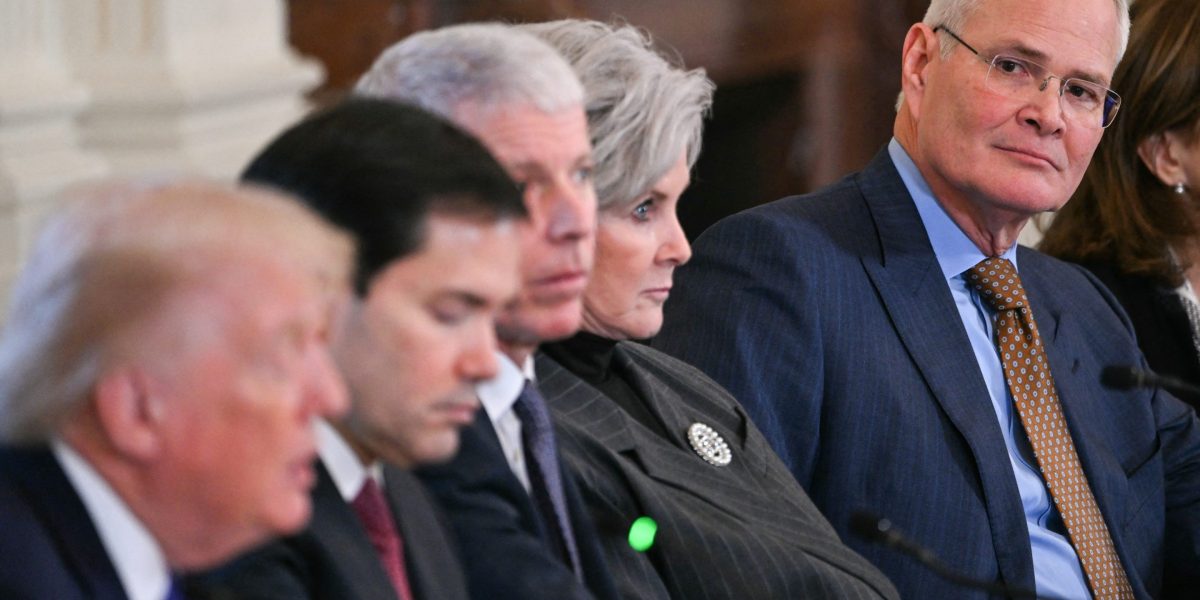
He called an impressive group of global oil executives to the White House on Jan. 9 to discuss how they will go into Venezuela, invest, and turn the industry around.

But Woods more than anyone put a damper on Trump’s enthusiasm to move fast and spend big. Woods promised to set a technical team to Venezuela within two weeks to assess the situation. But any major financial commitments would take much longer.

“The questions will ultimately be: How durable are the protections from a financial standpoint? What do the terms look like? What are the commercial frameworks, the legal frameworks?” Woods said. “All those things have to be put in place in order to make a decision to understand what your return will be over the next several decades for these billions of dollars of investment.”

Exxon did not respond to requests for comment Jan. 12, and the White House declined further comment.

Oil desires meet reality

Dan Pickering, founder of the Pickering Energy Partners consulting and research firm, said he expected “cheerleading” from the oil executives, and they “delivered in spades” except for Woods.

“If you only had to have one snippet about what’s actually going to happen, Exxon gave it to you,” Pickering said. “We could have hung up after that.”

The reality: More than doubling Venezuela’s current oil production likely would take until 2030 and cost about $110 billion, according to research firm Rystad Energy, while tripling back to levels from 2000 would take well over a decade and cost closer to $185 billion.

Exxon Mobil recently pioneered the oil industry offshore of Guyana, Venezuela’s southern neighbor, and it makes more sense to keep investing there than to move back into Venezuela, Wicklund said.

“If you have the choice of committing capital to another well in Guyana, an offshore well in Brazil, making an acquisition in the Permian basin, or spending $20 billion and waiting a couple of years to get an incremental drop of oil out of Venezuela, then it comes in last,” Wicklund said.

You must spend to rebuild the infrastructure in Venezuela long before it can return to profitability and, even though the oil is already discovered, it isn’t cheap to produce because the extra heavy grade of Venezuelan crude requires extra effort to get out of the ground. Diluent—essentially a very light oil—is needed to thin out and get the heavy crude to flow out of wells.

“You’re talking about having to bring in oil to get the oil out. It’s basically sludge,” Wicklund said.

Maybe Woods could have “sugarcoated” his message a bit more, but he did still promise boots on the ground quickly—just not money, Wicklund said.

“He may regret saying that today, but none of it would have changed reality.”

That said, Trump remains in a position of strength in Venezuela because controlling the oil can force the acting Venezuelan government to cooperate.

“The U.S. doesn’t need the oil, but it’s a perfect way to control Venezuela,” Wicklund said. “Why did you leave everybody in place? Stability. They all hate you, yes, but now Trump owns on the purse strings. It is kind of brilliant, and nature will take its course in the economics of the oil and gas industry.”


Source link

Continue Reading

Business

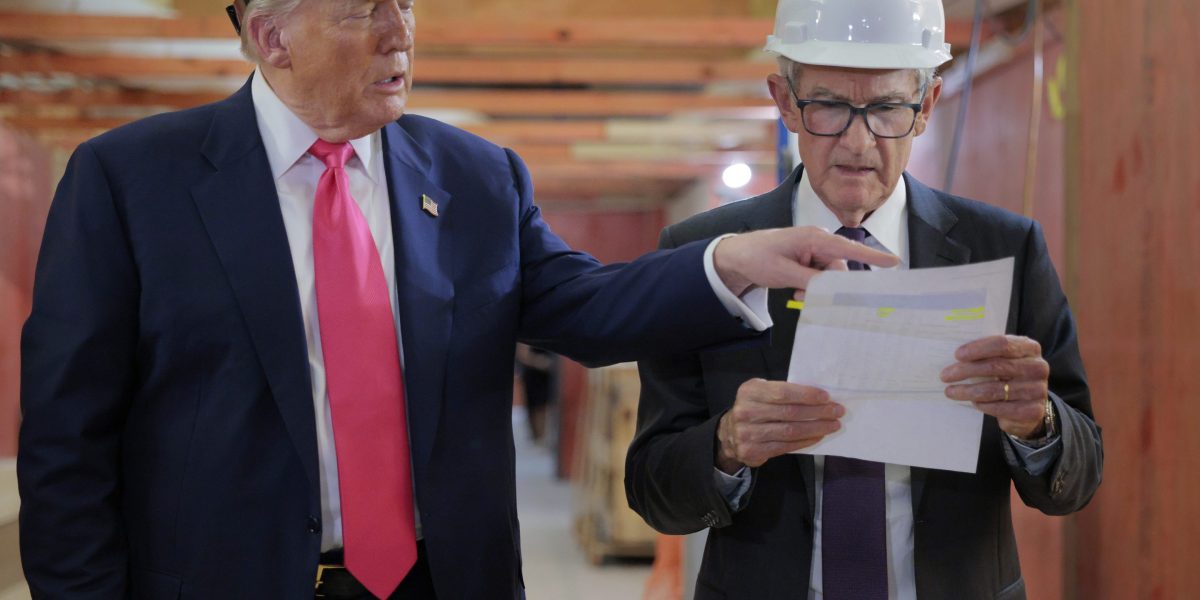
Is Powell’s Fed head independence dead? It’s just one more diversionary Trump trick

Published

on


Is Powell’s Fed head independence dead? It’s just one more diversionary Trump trick | Fortune

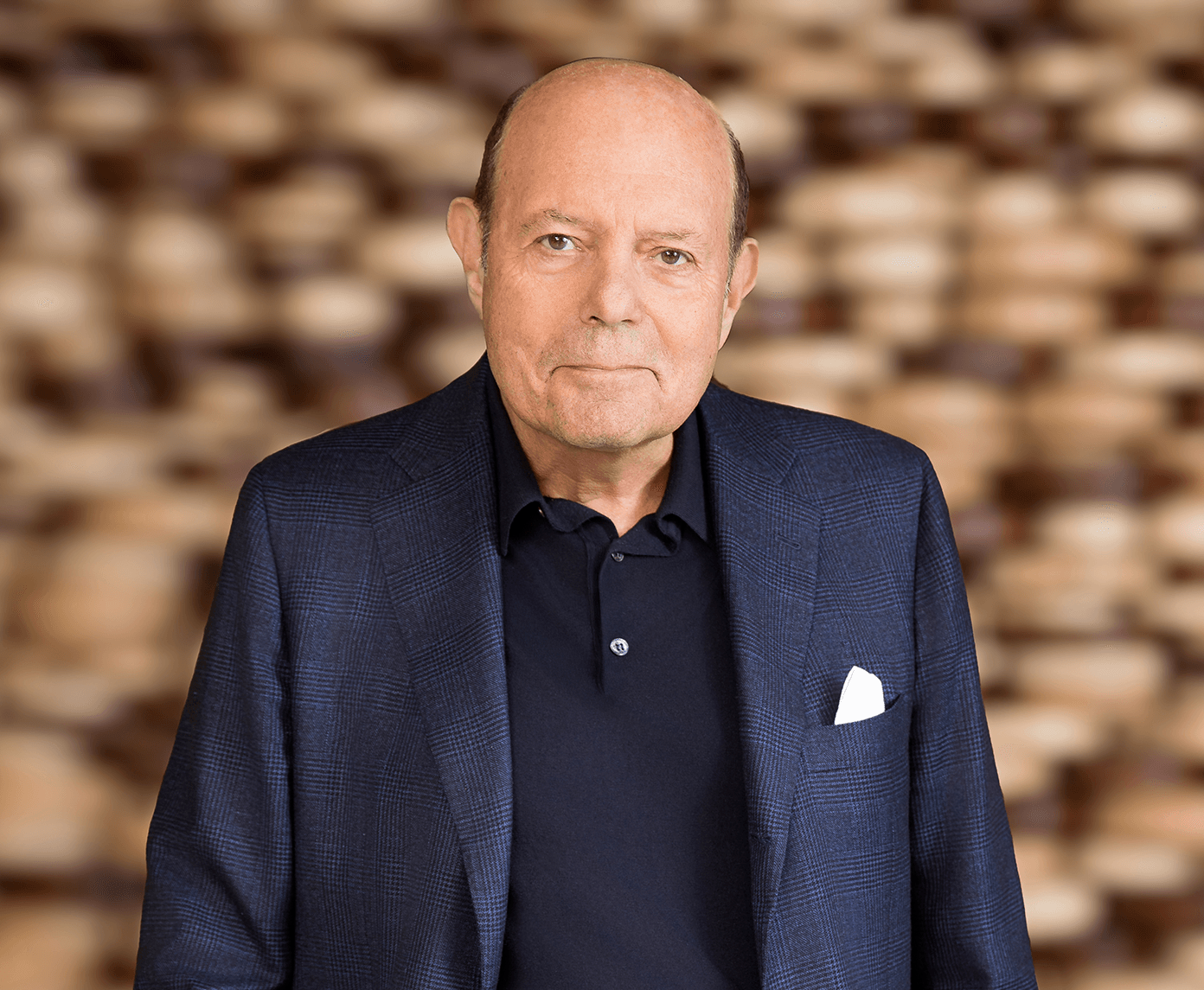
Jeffrey Sonnenfeld is Lester Crown Professor of Leadership Practice at the Yale School of Management and founder of the Yale Chief Executive Leadership Institute. A leadership and governance scholar, he created the world’s first school for incumbent CEOs and he has advised five U.S. presidents across political parties. His latest book, Trump’s Ten Commandments, will be published by Simon & Schuster in March 2026. Stephen Henriques is a senior research fellow of the Yale Chief Executive Leadership Institute. He was a consultant at McKinsey & Company and a policy analyst for the governor of Connecticut.


Source link

Continue Reading

Business

Down Arrow Button Icon

Published

on


The alphabet soup of interpretations for today’s economy has lately landed on the letter “K” to describe the diverging ways inflation has impacted Americans: boom times for the asset-wealthy at the top, and a much more painful moment for those struggling to stay afloat amid rising prices for groceries and electricity.

The logic of the K-shaped economy has been used to explain why consumption has yet to dip towards recession levels. While low-income shoppers are cutting back on spending, high earners keep infusing the economy with their cash, fueled by stock and real estate gains. One estimate by Moody’s Analytics calculated last year that the top 10% of earners made up nearly half of all consumer spending.

Economists as well as Fed Chair Jerome Powell have said that model will be unsustainable in the long run, risking widening wealth inequality or a broader economic downturn if the wealthy are unable to maintain their spending habits.

But what if they can? Analysts have warned that a stock market slump could force high rollers to tighten their belts too, but some economists say there is reason to believe lavish spending will persevere. Many of the economy’s highest spenders fall relatively neatly into demographic age groups with predictable consumption habits. For them, there could yet be good times ahead.

Instead of K-shaped, a more useful way to break down the current economy would be by age groups, according to Ed Yardeni, president of Yardeni Research, who in a blog post last week described how he might interpret today’s divergence in spending.

“We believe that a better way to understand consumer resilience is to focus on what we call the ‘gen-shaped’ economy,”  the market veteran wrote.

The highest spenders today are the 76 million baby boomers who made out the best from appreciating asset prices over the past few years. Meanwhile, Gen Zers and millennials are relatively new to the labor force. A high youth unemployment rate, tight labor market for junior roles, and mounting student loan and credit card debt mean many younger Americans are struggling financially, Yardeni explained, and likely account for much of the spending slowdown at the bottom end of the K.

Baby boomers might be leaving their healthy paychecks behind as they retire in greater numbers, but they depart the workforce as the wealthiest generation in history, with a net worth of around $85.4 trillion, he added. While younger Americans struggle to buy their first home or break into the stock market, boomers retain their tight grip on assets. Because of their deep pockets in savings, Yardeni expects boomers to keep up their spending well into retirement.

Gen Z and millennials will have to wait until later in their career to dream of having similar net worths. In the meantime, Yardeni wrote, many are likely to continue receiving financial support from their well-off parents. 

Younger Americans do eventually stand to inherit much of the wealth baby boomers have accumulated. The so-called “Great Wealth Transfer” could be worth as much as $124 trillion, with nearly $300 billion inherited last year alone. But this mass inheritance will take time to play out in its entirety, with some analysts estimating Gen Z and millennials will continue receiving these funds until 2048. 

To be sure, the wealth transfer will be contested between widows and charities as well as children, and not all younger Americans are likely to receive enough financial support from their parents to compete in today’s economy with many struggling to afford a home. 

But for now, there are few signs of sunsetting for baby boomers’ amassed wealth. In 2023, more than half of corporate equities and mutual fund shares were in the generation’s hands. 

“Baby boomers can’t possibly spend all this, so some of this is going to flow down,” Yardeni said in a video last week discussing the gen-shaped economy.


Source link

Continue Reading

Trending

Copyright © Miami Select.