
Politics
Redistricting is happening. But when will it finish and who will draw the maps?

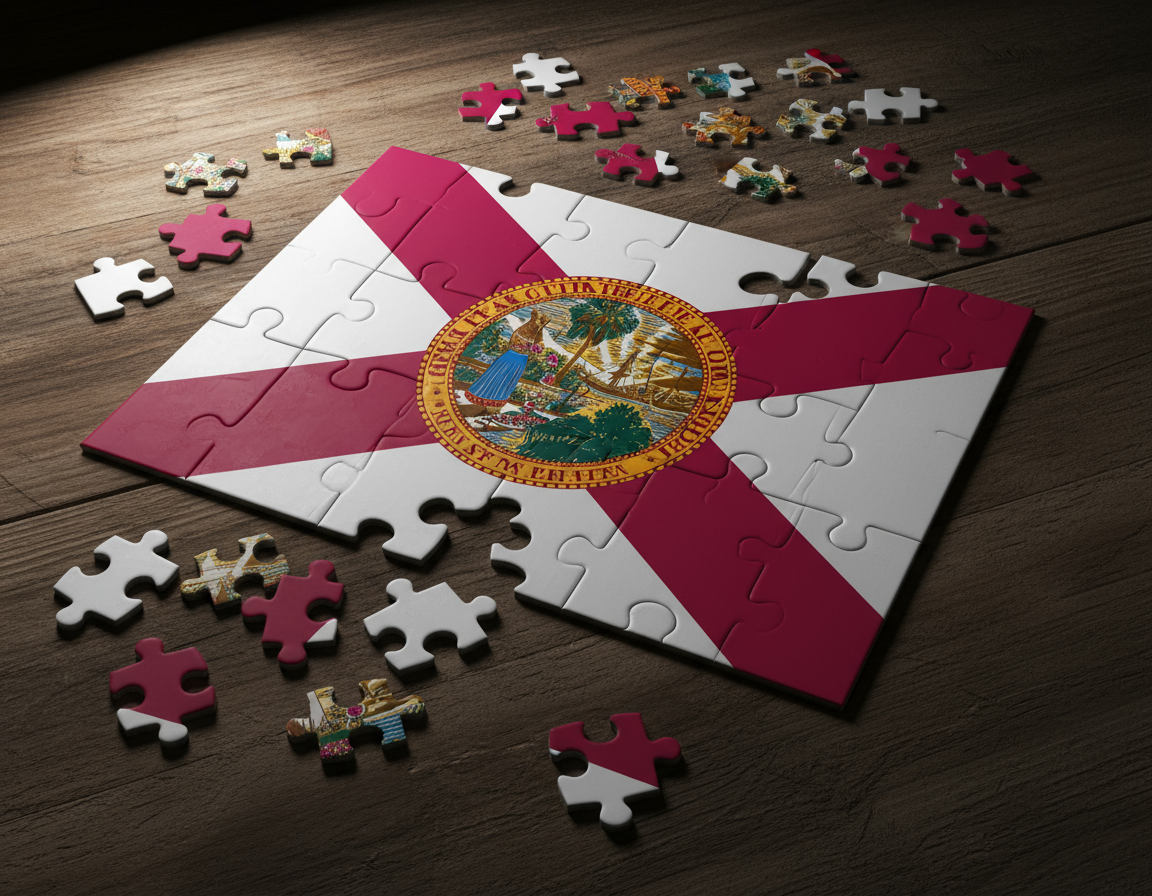
The drawing of political boundaries normally only takes place in the wake of the decennial census. But a half-dozen states drafted new congressional maps in 2025, and Florida leaders say the Sunshine State will follow suit this year.
That has political consultants and candidates for Congress in both parties anxious to see the new cartography. But House Speaker Daniel Perez appears at odds with both Gov. Ron DeSantis and Senate President Ben Albritton about when redistricting should occur.
DeSantis, days before the start of the Regular Session, called a Special Session on redistricting for April 20. That should allow time for the U.S. Supreme Court to reach a decision on Louisiana v. Callais, which could impact how racial demographics can be used to craft political boundaries.
The Fair Districts Amendment to Florida’s Constitution, passed by voters in 2010, prohibits the diminishment of voting power for racial minorities. But a high court ruling could determine if such a restriction means race would predominate the redistricting process.
“There’s a Supreme Court decision that’s going to affect the validity of some of these districts nationwide, including some of the districts in the state of Florida,” DeSantis said.
But Perez announced a redistricting committee last August. A committee named weeks later has already met twice ahead of the Regular Session, though no specific maps have been discussed. Perez has signaled a desire to complete the process during the Session.
“Members can expect the process will unfold thoughtfully, deliberately and transparently,” Perez said.
Albritton for his part appears to be taking the lead from DeSantis and said in a memo to all Senators that “no ongoing work regarding mid-decade redistricting taking place in the Senate at this time.”
Among the consulting class, that has created a certain amount of consternation. Terry Miller, a political consultant in Southwest Florida, said he appreciates the Governor’s logic, but that many campaigns are already underway.
“The Governor is right not to get too far out in front of things. I don’t want to waste money and time for something to not work in the court’s eyes and be back where we started,” Miller said. “But from a political point of view, I want certainty. I want to know who we’re campaigning to and messaging to.”

Miller, a Republican consultant, lives in Florida’s 19th Congressional District, currently the only open federal race in Florida due to U.S. Rep. Byron Donalds’ run for Governor. Miller is currently working with Jim Schwartzel’s campaign, one of 12 federal campaigns that were already up and running before the close of 2025.
Every other member of Florida’s congressional delegation intends to seek re-election. But speculation swirls around incumbents because of the looming redistricting process.
In Washington, D.C., rumors swirl around whether maps may thrust Democratic U.S. Reps. Jared Moskowitz and Debbie Wasserman Schultz to compete in South Florida, or for the same to happen to Democratic U.S. Reps. Maxwell Frost and Darren Soto in Central Florida.
But there are only eight Democrats among Florida’s 28-member U.S. House delegation. Any change in the lines would undoubtedly also impact the 19 Republican U.S. Representatives from Florida.
The very nature of the conversation, though, has fueled adamant objections from Democrats about the legality of embarking on redistricting this year at all. Florida House Democratic Leader Fentrice Driskell has said the only reason Republicans have even considered new cartography is because of pressure from President Donald Trump, who has publicly urged all Republican-controlled states to redistrict.
“Trump wants to rig the Midterm Elections to prevent the American people from holding his administration accountable,” she said.
State Rep. Bruce Antone, the ranking Democrat on the House Redistricting Committee, noted that Florida never embarked on off-year redistricting absent a court order, and he only knows of three times that happened. But he suspects that so much political pressure will come from Trump and DeSantis that lawmakers will redraw lines anyway.
“I think there is more of a push coming from Gov. DeSantis than the White House. But Speaker Perez is his own person. He is not easily pushed around,” Antone said.
“But I think this is something where he has to at least begin the process. I don’t sense an appetite from the Speaker or the Senate President that this is something they want to do, but they may not have a choice. Too many people across the nation are watching this, and it determines their future.”
Notably, Trump’s political team, immediately after Perez announced he would appoint a redistricting committee, was pushing the Speaker as a potential candidate for Attorney General. Perez has since said he won’t run for that job, and Trump then endorsed Attorney General James Uthmeier, whom DeSantis appointed to the Cabinet post last year.
But Antone said if Perez intends to run for any public office or seek an appointment in the future, he may need to play ball on redistricting.
That has left Democratic consultants suspicious of the entire process.
“We already know the GOP is looking to heavily redistrict and gerrymander areas across Florida in order to help Trump with the Midterms,” said Jeremy Rodriguez, an Orlando-based political consultant who worked on Soto’s last congressional campaign.
“This isn’t about representing the people of Florida, it’s about Trump maintaining control as democracy continues to erode and turn into authoritarianism.”
That said, Antone’s main question heading into Session is: Who will produce the maps lawmakers may have to consider? The FloridaRedistricting.gov site used in the 2022 decennial redistricting process has published no new maps since 2022.
“I’m wondering who is drawing the maps,” Antone said.
DeSantis already made clear who he wants as Florida’s cartographer. He said he would ask Commerce Secretary Alex Kelly to work again with the Governor’s Office for the redistricting process. Before his current role, Kelly worked as Deputy Chief of Staff to DeSantis and drew the controversial map the Governor strong-armed the Legislature into approving in 2022, after vetoing maps that originated in a traditional process.
Kelly also drew other maps approved by the Legislature, including one that the Florida Supreme Court in 2015 tossed for violating Fair Districts by allowing undue influence by partisan political players to shape lines.
But that 20-year-old ruling was legally undermined in July when the current Florida Supreme Court upheld the DeSantis-signed, and Kelly-drawn, map. That decision said the lines the prior court had put in place for the 2016 elections — which included a Tallahassee-to-Jacksonville district that elected Black Democrat Al Lawson to Congress for three election cycles — violated the U.S. Constitution’s equal protection clause by crafting a map predominantly based on race.
“The Legislature’s obligation to comply with the Equal Protection Clause is superior to its obligation to comply with the Non-Diminishment Clause as interpreted by our Court,” reads a majority opinion by Chief Justice Carlos Muñiz. “The plaintiffs did not prove the possibility of complying with both the Non-Diminishment Clause and the Equal Protection Clause in North Florida. Therefore, they did not meet their burden to prove the invalidity of the Enacted Plan.”
DeSantis and Perez have both cited the language of that ruling as placing urgency on redistricting now instead of after the 2030 census. While the 2022 fight centered around the Lawson district in North Florida, the Governor and Legislature decided to settle on lines crafted by legislative cartographers in South Florida, ones that left in place minority-empowering districts that historically have elected Black Democrats and Cuban American Republicans for decades.
The long-held belief in Tallahassee was that those districts are all protected by the Voting Rights Act approved by Congress in 1965. But a host of court rulings, the Muñiz opinion most recent among them, has eroded the federal direction over the last 10 years.
“Exploring these questions now, at the mid-decade point, would potentially allow us to seek legal guidance from our Supreme Court without the uncertainty associated with deferring those questions until after the next decennial census and reapportionment,” Perez wrote in a memo to Representatives when announcing the House Redistricting Committee.
Rep. Mike Redondo, a Miami Republican in line to become House Speaker in 2030, was named as Chair of the committee. He did not return calls to Florida Politics on the subject, but so far he has suggested urgency in crafting the lines.
“It would be irresponsible to delay the creation and passage of a new map, especially until after Session. It would also be irresponsible to any who are called to civil service,” Redondo said at the first meeting of the committee. “And most importantly, it would be irresponsible to the citizens of Florida.”
But through two meetings, there remain no maps for anyone to review, outside those produced by online activists eager to grow the number of seats in Florida. One frequently shared by pro-Trump accounts would leave Florida with 25 Republican-leaning seats and only three favoring Democrats.
“Democrats are going all-in on redistricting and stretching state laws to their limits wherever they can. We can’t afford to leave a single seat on the table in Florida,” posted X user Erickson with a copy of that map.
But of note, a provision of the Fair Districts Amendment unchallenged in Muñiz’s Summer ruling prohibits drawing districts intentionally to the benefit or detriment of a political party. Whether the Louisiana decision opens the door to openly partisan gerrymandering, as recently displayed in Texas, California and, before 2010, in Florida, remains uncertain. But in 2019, the U.S. Supreme Court held that questions about partisan gerrymandering were “not justiciable” in federal courts, leaving enforcement of any prohibitions to state courts.
Florida Politics reached out to a number of political consultants who did not return calls. But Republican leaders have hoped to see a new map this year, one even friendlier than the one DeSantis signed in 2022 that produced four Republican pickups in House seats in Florida that year.
When lawmakers last conducted redistricting, Florida Republicans had achieved a statewide advantage in voter registrations over Democrats only a few months before. But as of Nov. 30, there were more than 1.4 million more Republicans than Democrats in a state of about 13.5 million people.
Of course, there remain other guidelines on redistricting that court precedent requires lawmakers to consider when drawing any political boundaries. Geographic boundaries like water bodies, major roadways, and existing city limits and county lines all normally play varying levels of importance in the process.
Miller, for his part, has tried to stay out of conversations in light of his work on congressional campaigns. He did say that as a Lee County resident, he long has hoped the county would be wholly included in one congressional district.
Rodriguez, while he doesn’t feel like redistricting should happen, said the process will impact the entire landscape of Florida, so he will be paying close attention to the outcomes. But he also stressed that data changes significantly year to year. He also suggested that changing the lines won’t impact the political atmosphere of the Midterms.
“A critical demographic to focus on as well is the Latino community, which made a pronounced shift, particularly among men, toward Republican candidates in recent presidential cycles,” he said.
“However, this trend is not locked in. Current data suggests perspectives are shifting rapidly due to key issues like the affordability crisis, business concerns and immigration policy. It is crucial for candidates to focus on economic messaging and acknowledging the importance of the Latino community to gain their support.”
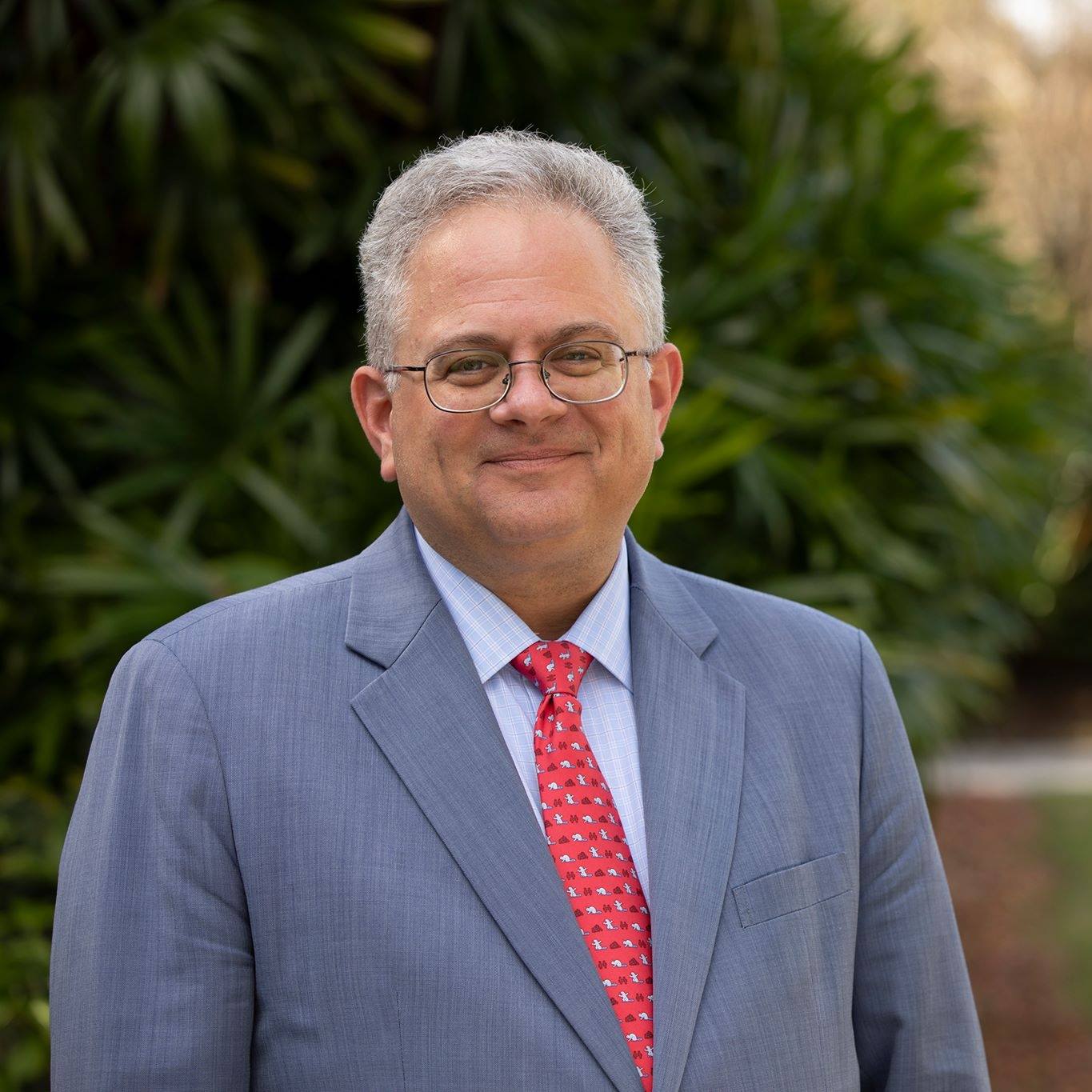
If anyone is considering challenging the so-far unopposed Harry Cohen for Hillsborough County Commission, they might start to reconsider.
Cohen, a Democrat representing District 1 on the County Commission, has always been a prolific fundraiser. The fourth quarter of 2025 was no different, with more than $56,000 banked for his campaign over the three-month period ending Dec. 31. The haul brings his total 2026 campaign total to more than $80,000.
His committee, Hillsborough Together, didn’t post any fundraising activity in the fourth quarter, but after raising $105,000 in the third quarter of 2025, the account is flush with nearly $240,000 on hand.
“I am truly humbled by the level of support my campaign has received,” Cohen said. “I am very committed to the work — the actual day-to-day delivery of public services: whether it is repaying roads or funding key public safety and infrastructure improvements, it is a constant focus on maintaining and improving our quality of life. I work to build consensus and get things done. Effectiveness is the best campaign.”
Cohen’s latest fundraising haul included 117 contributions, averaging about $480 each.
He received $1,000 each from, among others, the local Teamsters union; the political committee supporting the local firefighters union; the Tampa Police Benevolent Association; the Tampa Bay chapter of real estate development association NAIOP; waste hauling company Waste Management; the political committee supporting Tampa General Hospital; the political committee supporting Hillsborough County Commissioner Gwen Myers; the Akerman law firm; U.S. Rep. Kathy Castor; former University of South Florida President Betty Castor; and prominent Tampa lawyer Ron Christaldi.
Cohen officially kicked off his campaign in October, with a standing-room-only event at Pane Rustica including three Tampa Mayors: current Mayor Jane Castor and former Mayors Bob Buckhorn and Sandy Freedman, the latter of whom also contributed $1,000 to Cohen’s campaign in the fourth quarter.
Cohen is one of only two Democrats on the Hillsborough County Commission. He was first elected to the Commission in 2020, replacing former Commissioner Sandy Murman, a Republican. Prior to his service on the Commission, Cohen served two terms on the Tampa City Council. He ran for Tampa Mayor in 2019, finishing third before now-Mayor Jane Castor went on to defeat the late David Straz overwhelmingly in a runoff election.
Cohen landed at No. 23 on Florida Politics’ list of Tampa Bay’s Most Powerful Politicians last year. Cohen must navigate the complexities of governing amid a GOP supermajority, a task that is particularly challenging considering he once served from the majority.
Cohen survived his 2022 re-election bid — just two years after his successful election, which flipped a seat from red to blue — in a cycle that was the political version of Game of Thrones’ red wedding. He won by less than a percentage point, a razor-thin victory that looked like a landslide compared to two of Cohen’s Democratic colleagues. Former Commissioner Mariella Smith lost her seat by nearly 6 percentage points, while former Commissioner Kimberly Overman lost hers by about 5 percentage points.

Politics
Nick DiCeglie bill exempting heated tobacco products from cigarette taxes clears first committee
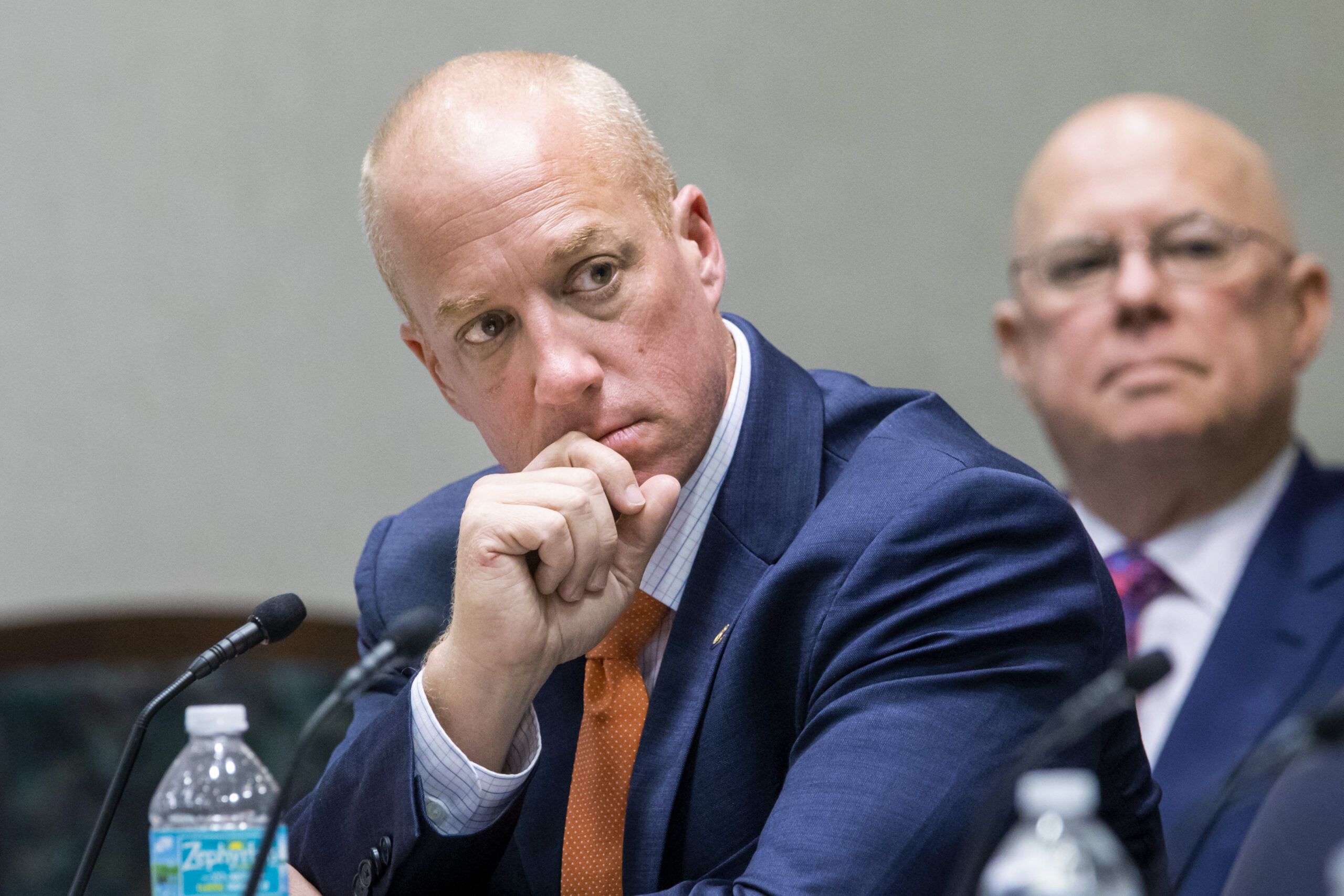
A bill aimed at changing how Florida taxes emerging tobacco alternatives has cleared its first committee stop this week with little opposition.
Sen. Nick DiCeglie, a St. Petersburg Republican, presented SB 754 before the Senate Committee on Regulated Industries, where it was reported favorably without debate.
The proposal would create a statutory definition for “heated tobacco products” and exempt those products from being taxed as cigarettes. Under current law, cigarettes are subject to a specific excise tax, while other nicotine products such as vaping devices are not. DiCeglie said the bill is designed to treat heated tobacco products more like vapes for tax purposes.
“This bill will statutorily define heated tobacco product, and excludes heated tobacco products from taxation as cigarettes,” DiCeglie told the committee Monday.
DiCeglie said heated tobacco products are a less harmful alternative to traditional cigarettes, though they still contain nicotine. He said the products heat tobacco rather than burn it, and claimed they contain significantly fewer harmful additives and toxins.
“We know that cigarettes are incredibly harmful, and this heated tobacco product is an alternative to that,” DiCeglie said. “This product has around 95% less harmful additives and toxins and all of those things, and is very similar to the vape product.”
DiCeglie said the bill aims to provide a tax incentive for smokers who may be trying to move away from combustible cigarettes.
According to the bill text, SB 754 defines heated tobacco products as tobacco-containing devices that heat, but do not burn, tobacco and produce an inhalable aerosol rather than smoke. The bill specifically removes heated tobacco products from both the cigarette excise tax and Florida’s “other tobacco products” tax category, while making conforming changes to state statutes.
Democratic Sen. Darryl Rouson raised concerns about youth access, citing issues with minors obtaining vaping products. DiCeglie acknowledged the concern, but said SB 754 is limited to tax policy and does not address age restrictions or enforcement. He said he would research existing regulations and be prepared to provide more detailed answers at the bill’s next committee stop.
“I don’t want any product to get in the hands of kids,” DiCeglie said.

With no further debate, the committee voted to advance SB 754. The measure now moves forward in the legislative process as lawmakers head into the 2026 Legislative Session starting Tuesday.
Politics
Jared Moskowitz demands the House Judiciary Committee investigate DOJ inquiry of Federal Reserve
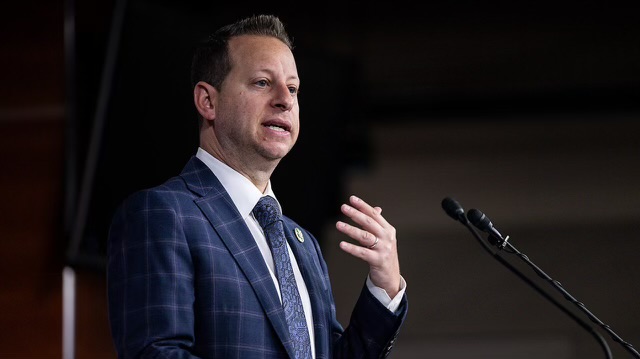
U.S. Rep. Jared Moskowitz wants the House Judiciary Committee to investigate the Justice Department’s inquiry of Federal Reserve Chair Jerome Powell.
After the Fed released a video statement from Powell saying the agency was subpoenaed over costs of a building project, the Parkland Democrat called into question the motives of the Donald Trump administration’s investigation, specifically the actions of Attorney General Pam Bondi.
Moskowitz said U.S. Rep. Jim Jordan should follow the lead of Senators and check the administration’s power.
“As a member of the Judiciary Committee, I hereby am calling for Chairman Jordan (former chair of the Weaponization committee, ironic) to open an immediate investigation into the DOJ inquiry of Fed Chair Jerome Powell,” Moskowitz posted on X.
Under Democratic President Joe Biden, Jordan, an Ohio Republican, led a Select Subcommittee on the Weaponization of the Federal Government. That focused on investigations by the Democratic administration that Republicans in Congress alleged were targeting political opponents, including Trump.
But Democrats say the Department of Justice under Trump has been used to attack critics, including former FBI Director James Comey and New York Attorney General Leticia James, who were both indicted under Bondi only to see courts quickly dismiss charges.
Powell, who has been at odds with Trump over interest rates, has maintained that attacks on the cost of renovations of the Fed’s headquarters were incorrect. He criticized the launch of a criminal investigation
“The threat of criminal charges is a consequence of the Federal Reserve setting interest rates based on our best assessment of what will serve the public, rather than following the preferences of the President,” Powell said.
“This is about whether the Fed will be able to continue to set interest rates based on evidence and economic conditions — or whether instead monetary policy will be directed by political pressure or intimidation.”
Trump and Powell famously engaged in an argument at a press conference in July about whether the costs of the building renovations had exceeded $3 billion. Powell said that calculation can only be reached by including prior renovation costs completed nearly six years ago. Trump at the event said he would back off the questions about renovation costs if Powell lowered interest rates.



With cash on hand exceeding $300K, Harry Cohen is sending would-be rivals a message

On your Marks – Allen fires, Williams falls: 2026 Masters day two summary

Billionaire philanthropist MacKenzie Scott donates $45 million to LGBTQ+ youth hotline organization, The Trevor Project
-

 Politics8 years ago
Congress rolls out ‘Better Deal,’ new economic agenda
-
Entertainment8 years ago
New Season 8 Walking Dead trailer flashes forward in time
-
Politics8 years ago
Poll: Virginia governor’s race in dead heat
-
Politics8 years ago
Illinois’ financial crisis could bring the state to a halt
-
Entertainment8 years ago
The final 6 ‘Game of Thrones’ episodes might feel like a full season
-
Entertainment8 years ago
Meet Superman’s grandfather in new trailer for Krypton
-
Business8 years ago
6 Stunning new co-working spaces around the globe
-
Tech8 years ago
Hulu hires Google marketing veteran Kelly Campbell as CMO