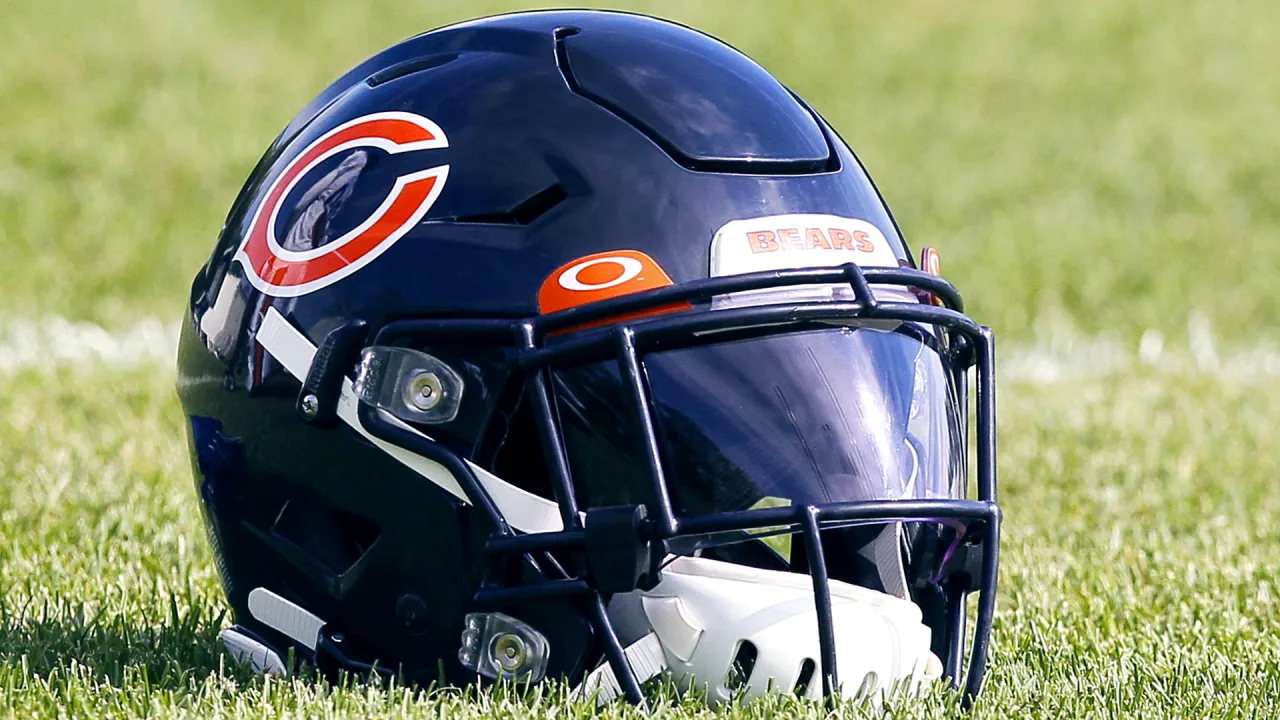
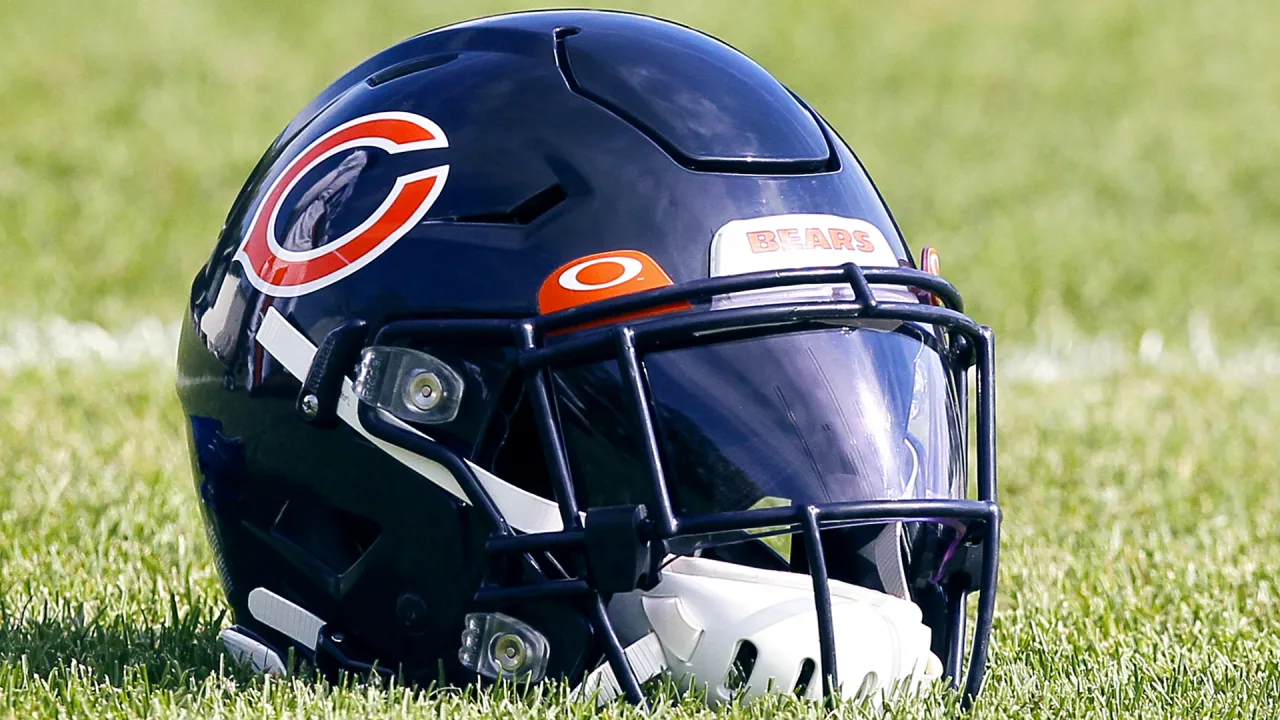
Bears ownership may be looking in Indiana for a stadium.
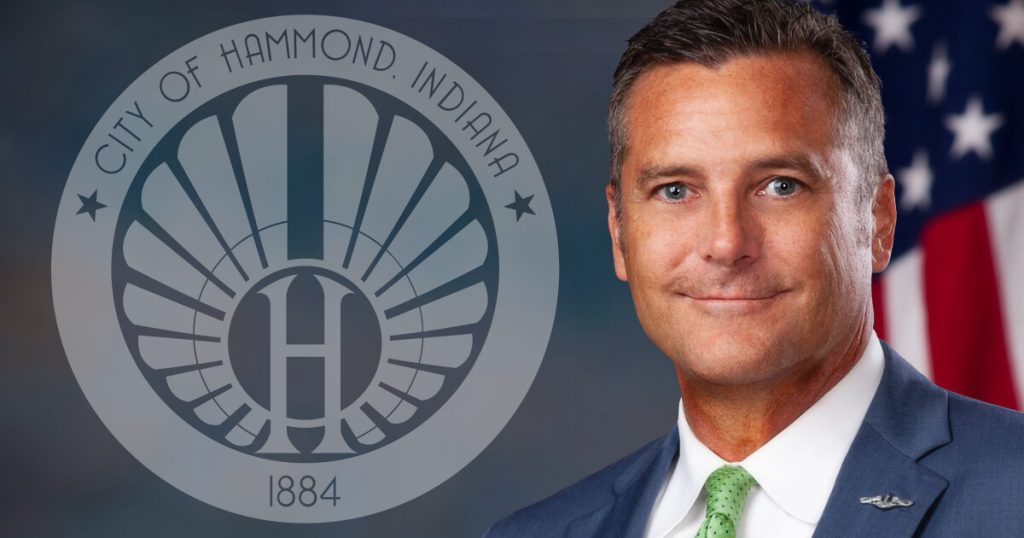
The mayor of Hammond, Indiana wants to put together an offer to entice the National Football League’s Chicago Bears franchise owners to move to his city. Mayor Thomas McDermott Jr. has said he would “bend over backwards” to get the Bears ownership move to Hammond and would “knock down buildings” to clear a spot if necessary. The Indiana Governor Michael Braun, and several state legislators would support building a stadium for the football team. There is no offer on the table from Indiana. Hammond is less than 30 miles south of Chicago. The Illinois legislature apparently is not in the mood to spend money for a Bears’ football venue nor is the Illinois Governor JB Pritzker. In December 2025, the Bears’ franchise President and CEO Kevin Warren sent another letter to Bears’ ticket holders, marketing partners and fans updating them on how a possible move to suburban Arlington Heights, Illinois from Chicago is going. Well it turns out that moving to Arlington Heights is not going according to plan and another strategy may be needed.
“Consequently, in addition to Arlington Park, we need to expand our search and critically evaluate opportunities throughout the wider Chicagoland region, including Northwest Indiana,” Warren wrote in his letter. “This is not about leverage. We spent years trying to build a new home in Cook County. We invested significant time and resources evaluating multiple sites and rationally decided on Arlington Heights. Our fans deserve a world-class stadium. Our players and coaches deserve a venue that matches the championship standard they strive for every day. With that in mind, our organization must keep every credible pathway open to deliver that future.” In February 2023, Bears’ ownership bought the Arlington Park racetrack property in the Chicago suburb in Arlington Heights for $197 million with the hopes of building a stadium-village. Nothing has happened.
COTTON BOWL The Miami Hurricanes continue to be one of college football’s most frustrating programs
The 2026 College Football Playoff Championship brings together two programs that took very different paths to reach the sport’s biggest stage. Miami enters the title game at 13 and 2 after a season defined by physicality, defensive toughness, and a late year surge that stunned the national landscape. Indiana arrives at 15 and 0 as the most complete team in the country, a group that dominated its semifinal opponents and erased any lingering doubts about its legitimacy. Both teams earned their place in this moment, and both bring compelling storylines into Hard Rock Stadium.
How Miami fought its way to the championship stage
Miami’s run through the playoff bracket was built on a rugged defense and a balanced offense that controlled tempo and punished opponents. Wins over Texas A and M, Ohio State, and Ole Miss showcased a team that could adapt to any style of play. Quarterback Carson Beck thrived behind a powerful offensive line, using play action and long drives to keep opposing defenses off balance. The Hurricanes’ semifinal victory over Ole Miss was a testament to their toughness and discipline, especially in the fourth quarter when they closed out the Rebels with poise.
Miami’s rise has also been supported by a strong NIL foundation. Businessman John Ruiz has been one of the most visible supporters of the program, providing compensation to athletes within NCAA guidelines and helping elevate the program’s national profile. Hugh Hathcock has also played a major role, contributing significant resources to strengthen the athletic department and ensure long term stability for scholar athletes. These efforts have helped Miami build a competitive roster capable of reaching the sport’s highest level.
Indiana’s dominant march to the title game
Indiana’s season has been nothing short of remarkable. Under coach Curt Cignetti, the Hoosiers have transformed into a powerhouse built on efficiency, physicality, and elite quarterback play. Their playoff performances were overwhelming. A 38 to 3 dismantling of Alabama followed by a 56 to 22 rout of Oregon left no doubt that Indiana belonged in the championship. Heisman winner Fernando Mendoza delivered eight touchdowns with only five incompletions across those two games, a staggering level of production on the biggest stage.
Behind the scenes, Indiana’s rise has been fueled by billionaire Mark Cuban, who has made multiple major donations to support the program’s NIL efforts. Cuban’s commitment has helped Indiana compete for top transfer portal talent and build depth across the roster. His backing has been instrumental in elevating the Hoosiers from a surprise contender to a legitimate national title threat.
What to expect Monday night at Hard Rock Stadium
When Miami and Indiana meet on January 18, fans should expect a physical, emotionally charged contest. Indiana brings the nation’s most complete team, a group that has dominated every major opponent it has faced. Miami counters with home field advantage, a punishing defense, and an offense capable of controlling the clock and limiting possessions.
Both programs arrive well funded, well supported, and fully prepared thanks to the influence of their major backers. Ruiz and Hathcock have helped Miami rebuild its foundation, while Cuban’s investments have pushed Indiana into the national elite. Their financial commitment has ensured that both teams enter the championship with deep rosters, strong infrastructure, and the resources needed to compete at the highest level.
The result is a matchup worthy of the moment. Two programs with different histories but similar ambition now stand one win away from a national title. Monday night promises intensity, strategy, and a showcase of what modern college football has become.
Building on the tech-infused, arena-based success of the men’s TGL, this new league is designed to bring women’s golf into a high-octane, prime-time environment. Here is everything you need to know about the launch, the players, and the financial landscape of WTGL.
2025 Mike Ehrmann/TGL
What is WTGL? The Future of Women’s Golf
WTGL is a tech-driven, indoor simulator league that features the world’s best LPGA stars. Unlike traditional 72-hole stroke play across vast courses, WTGL matches are held in a custom-built arena, combining a massive simulator for long shots with a dynamic, motorized chipping and putting complex for the short game.
Key Dates for 2026 and Beyond
* Inaugural Season: The league is scheduled to debut in Winter 2026-27.
* The Schedule: Matches will take place during the LPGA offseason (typically between late November and January), ensuring no conflict with the traditional tour schedule.
* Venue: All matches will be played at the SoFi Center in Palm Beach Gardens, Florida—the same state-of-the-art, 1,500-seat venue used by the men’s TGL.
Who’s Involved? Teams and Ownership
While the full roster of players and team names is still being finalized, the “founding fathers” and investors of the league are already making waves.
The Power Players
* TMRW Sports: Led by Tiger Woods, Rory McIlroy, and CEO Mike McCarley, the group provides the technological backbone and the SoFi Center venue.
* The LPGA: Commissioner Craig Kessler has championed WTGL as a “pillar of visibility” to grow the fan base and commercial value of the athletes.
Early Ownership & Investors
The team structure will mirror the men’s league, with city-based franchises.
* Alexis Ohanian: The Reddit co-founder and lead owner of Los Angeles Golf Club (LAGC) has expressed “first right of refusal” for a women’s team in LA.
* Celebrity Backing: Current TGL investors like Serena Williams, Venus Williams, Giannis Antetokounmpo, and Michelle Wie West are expected to play significant roles in the expansion of the women’s division.
Nelly Korda
Athletes: Who Will Compete?
While the official roster will be released throughout 2026, the league is built specifically for LPGA Tour Stars. Fans can expect to see the biggest names in the game—potentially including icons like Nelly Korda, Lydia Ko, or Rose Zhang—competing in a “mic’d up” environment that emphasizes personality and team strategy.
Money, Profits, and Sponsorships
The financial outlook for women’s golf in 2026 is at an all-time high, and WTGL is a major catalyst.
2026 Financial Landscape
A record-breaking $132 million across 33 events.
WTGL Commercial Model is Expected to follow the TGL blueprint: high-value media rights and “simulcast” sponsorship.
Title Sponsor will be SoFi which remains the primary venue partner, with more league-wide sponsors to be named in mid-2026.
Investment Strategy will include Teams being sold as high-growth tech/sports assets, similar to NWSL or WNBA franchises.
Sponsorship Value
The draw for sponsors like FM Global, Ally Financial, and KPMG (who are already heavily invested in the LPGA) is the demographic. TGL’s inaugural season drew the second-youngest audience in sports (behind only the NBA). WTGL aims to capture that same Gen Z and Millennial interest, offering brands a “prime-time” window that traditional golf often misses.
Craig Kessler LPGA Commissioner
Why It Matters: The Growth of the Game
WTGL isn’t just a new tournament; it’s a shift in how golf is consumed. By moving the game into a 2-hour, fast-paced format, the LPGA is looking to:
* Increase Visibility: Putting female athletes on national TV during the winter months.
* Highlight Personalities: Using mic’d up players to build “fan-to-athlete” connections.
* Drive Innovation: Proving that women’s sports can lead in the “Sportainment” category.
> “WTGL creates another global stage for our athletes—one that helps fans connect more deeply with them and continues to elevate the visibility and growth of women’s golf.” — Craig Kessler, LPGA Commissioner
Very few football experts in January of 1969 thought the Jets could be competitive against Baltimore.
On January 11th, 1969, the thinking about the nearly officially named Super bowl was this. Baltimore was going to beat the New York Jets and the game would not be close. The National Football League would continue to show its superiority in the biggest game of them all, the Super Bowl. In 1967, Vince Lombardi’s Green Bay Packers easily beat the American Football League’s Kansas City and in 1968, Lombardi’s Packers defeated the American Football League’s Oakland Raiders. Of course, what was omitted in that thinking was that Lombardi’s Packers beat almost everyone and won NFL Championships in 1961, 1962, 1965, 1966 and 1967.
The AFL’s New York Jets-NFL’s Baltimore Colts game was the turning point in the popularity of the Super Bowl. The National Football League and most of the football media thought the old league would just be better all the time and that dominance was going to carry on well into the 1970s. There was a thought that somehow the NFL needed to come up with a new formula so that just NFL teams would appear in the Super Bowl. That would make the game more competitive and appealing.
The New York Jets franchise led by the owner Sonny Werblin was the free spending rebels from the rebel league although Werblin was gone as one of the Jets organization’s owners in 1968. New York quarterback Joe Namath had a large contract, wore long hair and played in white shoes. The Colts quarterbacks, Earl Morrall and Johnny Unitas both had crew cuts. Namath was known as Broadway Joe, a nickname given to him by former Colt and Jet offensive lineman Sherman Plunkett. Unitas was known as Johnny U and wore black high-top shoes.
Namath had a public perception of being a playboy who enjoyed New York life to its fullest and was a braggart. Unitas had little to say.
While the Jets coach Weeb Ewbank was studying films of the Colts and analyzing why the Chiefs and Raiders lost, Namath was talking and was ahead of his time as a trash talk pioneer. Except Namath only said two things and was probably only echoing what his coaching staff and teammates were thinking.
Namath said there were four quarterbacks in the AFL who were better than Morrall, the Colts starter and then said, “We are going to win this game. I guarantee it.”
Ewbank had to convince his Jets to keep quiet and play football and not say a thing about beating Baltimore. He was in one way seeking NFL respect but in another way laughing at the Super Bowl. Weeb knew his Jets could win and the AFL was a quality league.
“They weren’t giving the AFL anything,” he said years later. “I thought there were two great teams in Super Bowl I and II. They were fine ball clubs. I don’t think there has ever been much better material than they had at Kansas City. They had great athletes and the Raiders were a good football team.
“In both games, they let themselves get upset. In the first game, they had an interception in the third quarter and the Chiefs weren’t any good in the ballgame after that after Green Bay scored. Then the Raider game, they had a dropped punt and a recovery and then they weren’t in the game anymore.
“When we went into out game, we said no matter what happened, we weren’t going to let it upset us. Whether it be an official call, an interception, a fumble or what. Why we weren’t going to let that upset us. We were going to stick to the game plan.”
But one thing Ewbank didn’t count on was Namath sounding more like Muhammad Ali than the average football player.
Ewbank brought the Jets to Fort Lauderdale to work out prior to the game. The Jets stayed at the Galt Ocean Mile Hotel where Namath was given the same room that Vince Lombardi used the year before. The Jets trained at the New York Yankees Fort Lauderdale spring training complex and he was given Mickey Mantle’s locker. Twists of fate?
Maybe, but Namath broke the athlete’s code. He guaranteed a win. Ewbank was not amused.
“We had gone down there as 17 points underdogs which I liked,” he recalled. “I told the guys don’t pay any attention to what I say because I want to try to make it 21 if I can. Don’t you guys do anything to stir them up. Well, I could have shot Joe when he said that.”
But Namath and the Jets were confident and really believed they were better than the Colts.
“That’s true and I understood Coach Ewbank,” said Namath. “The next day I saw Coach Ewbank and he said my goodness these guys (the Colts) are overconfident and I have been working on that and here you are giving them fuel to get fired up for the game.
“I simply said, Coach if they need clippings to fire them up, then they are in trouble. That was that. He made me aware that he was very upset that I had said what I did and I felt badly about it after that. Fortunately we won.”
The Jets did go out and won 16-7. The AFL had arrived nearly 10 years after Hunt and Bud Adams decided to go ahead with their plan.
The Jets apparently didn’t think too highly of the Tiffany Trophy the organization received for winning the game. The team left it behind in Miami’s Orange Bowl in a backroom and returned to New York.
“The important thing was we won,” said Namath.
Namath, Ewbank and the rest of the Jets permanently etched the term Super Bowl into the American mindset. Namath, the quarterback, became a TV host, sex symbol, rebel, hero and salesman. The Jets victory that day might have been crushing for old line NFL owners and the sports media that fawned over the NFL, but NFL Commissioner Pete Rozelle saw a silver lining. In the NFL Publication, The Super Bowl, Celebrating a Quarter of a Century of America’s Greatest Game, Rozelle admitted the Jets’ upset that day mushroomed interest in football.
An excerpt from the book “America’s Passion: How a Coal Miner’s Game Became the NFL in the 20th Century”.