Connect with us

Politics

House fails to override Donald Trump’s veto of protections for Miccosukee Tribe’s Osceola Camp
Published

on


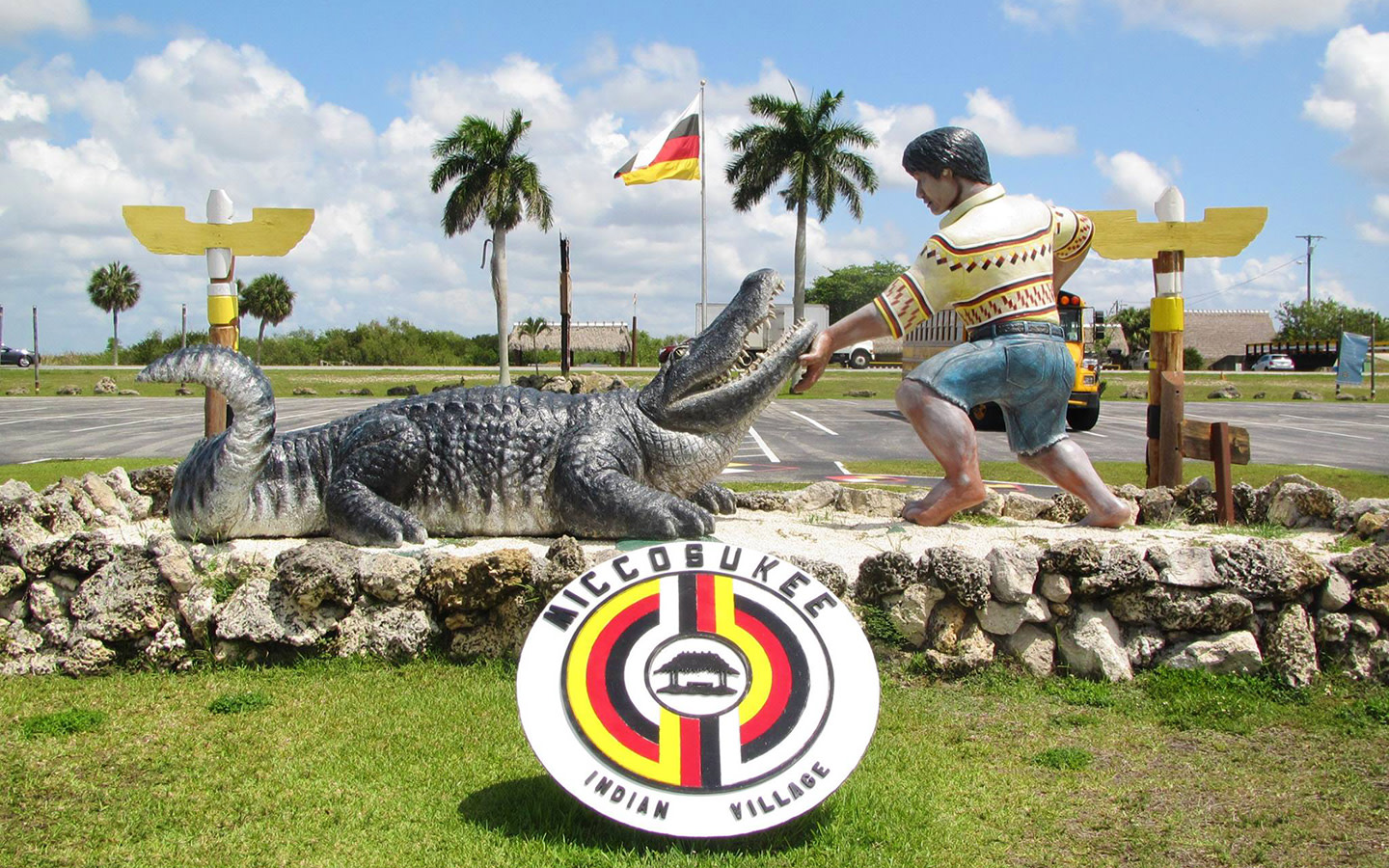
The House failed to override President Donald Trump’s veto of flooding protections for the Miccosukee Tribe’s Osceola Camp. Instead, the issue was referred back to the House Natural Resources Committee.

The House voted 236-188 to support the legislation, with seven members voting “present.” But an override of the veto would have required two-thirds of lawmakers, or 287 votes.

In total, 24 Republicans voted with all Democrats in attempting to override the bill.

The bill (HR 504) was sponsored by U.S. Rep. Carlos Giménez, a Miami-Dade Republican, and supported by the Florida congressional delegation.

Still, Trump nixed the bipartisan legislation at the end of 2025 after it passed the House on a voice vote and the Senate by unanimous consent, marking one of the first vetoes of his second term.

Trump called the bill “special treatment” and raised a lawsuit brought by the Tribe that briefly halted operations at Alligator Alcatraz, a migrant detention center opened by the state in the Florida Everglades.

“My Administration is committed to preventing American taxpayers from funding projects for special interests, especially those that are unaligned with my Administration’s policy of removing violent criminal illegal aliens from the country,” Trump wrote in a veto message. “Ending the massive cost of taxpayer handouts and restoring fiscal sanity is vital to economic growth and the fiscal health of the Nation.”

U.S. Rep. Debbie Wasserman Schultz, a Weston Democrat, criticized the veto and the President’s logic in a speech on the House floor.

“It does not appropriate or authorize any new spending. The Congressional Budget Office verified that,” she said. “And this bill, in no way bestows special treatment, as it was alleged in the veto message, because the site wasn’t authorized when it was inhabited on these points. It appears the President’s staff gave him bad advice, bad facts, or both.”

But despite the bill passing in the House without any objection in July, the prospect of overriding a veto proved daunting in the lower chamber.

U.S. Rep. Bruce Westerman, House Natural Resources Committee Chair, was the only lawmaker to speak on the floor against the bill. He acknowledged that the bill passed without objection, but suggested that Congress respect the President’s check on the legislative branch.

“HR 504, passed the House Committee on natural resources in June 2025, and the House of Representatives in July 2025,” he said. “However, I respect the President’s views on this legislation and his commitment to fiscal responsibility.”


Source link

Continue Reading

Politics

Florida GOP backs James Uthmeier for Attorney General

Published

on


Incumbent Attorney General James Uthmeier has nominal opposition in August’s Primary, but he has the official imprimatur of the state’s Republican Party well ahead of the first votes being cast.

“James Uthmeier represents the very best of our party and our movement,” said Republican Party of Florida Chairman Evan Power. “He earned the trust of Governor Ron DeSantis through his appointment as Attorney General and the endorsement of President Donald Trump by consistently delivering for Florida. This unanimous endorsement reflects the unity of our party and our shared confidence in James to continue leading and winning for Florida.”

Uthmeier was DeSantis’ Chief of Staff before being appointed to replace former AG Ashley Moody, who herself was appointed to replace current Secretary of State Marco Rubio in the United States Senate.

As evidenced by the unanimous vote to endorse him at Saturday’s meeting of the state party,  the Republican apparatus approves of what Uthmeier has done with his opportunity, lauding him for being “focused on fighting federal overreach, standing up for victims, protecting parental rights, and ensuring Florida remains the freest state in the nation.”

“The Republican Party of Florida is united and focused on winning,” Power added. “James Uthmeier has delivered for Florida, and we are proud to stand with him as he continues the important work of defending our state and our values.”

“Florida’s conservative grassroots leaders have helped us to become the deep red ‘Free State of Florida!’ It’s an honor to have your support and I will not let you down,” Uthmeier said on social media after receiving the endorsement.


Source link

Continue Reading

Politics

President pushes to cap credit card interest at 10% as banks balk

Published

on


Reviving a campaign pledge, President Donald Trump wants a one-year, 10% cap on credit card interest rates, a move that could save Americans tens of billions of dollars but drew immediate opposition from an industry that has been in his corner.

Trump was not clear in his social media post Friday night whether a cap might take effect through executive action or legislation, though one Republican senator said he had spoken with the president and would work on a bill with his “full support.” Trump said he hoped it would be in place Jan. 20, one year after he took office.

Strong opposition is certain from Wall Street and the credit card companies, which donated heavily to his 2024 campaign and to support his second-term agenda.

“We will no longer let the American Public be ripped off by Credit Card Companies that are charging Interest Rates of 20 to 30%,” Trump wrote on his Truth Social platform.

Researchers who studied Trump’s campaign pledge after it was first announced found that Americans would save roughly $100 billion in interest a year if credit card rates were capped at 10%. The same researchers found that while the credit card industry would take a major hit, it would still be profitable, although credit card rewards and other perks might be scaled back.

Americans are paying, on average, between 19.65% and 21.5% in interest on credit cards according to the Federal Reserve and other industry tracking sources. That has come down in the past year as the central bank lowered benchmark rates, but is near the highs since federal regulators started tracking credit card rates in the mid-1990s.

The Republican administration has proved particularly friendly until now to the credit card industry.

Capital One got little resistance from the White House when it finalized its purchase and merger with Discover Financial in early 2025, a deal that created the nation’s largest credit card company. The Consumer Financial Protection Bureau, which is largely tasked with going after credit card companies for alleged wrongdoing, has been largely nonfunctional since Trump took office.

In a joint statement, the banking industry was opposed to Trump’s proposal.

“If enacted, this cap would only drive consumers toward less regulated, more costly alternatives,” the American Bankers Association and allied groups said.

The White House did not respond to questions about how the president seeks to cap the rate or whether he has spoken with credit card companies about the idea.

Sen. Roger Marshall, who said he talked with Trump on Friday night, said the effort is meant to “lower costs for American families and to reign in greedy credit card companies who have been ripping off hardworking Americans for too long.”

Legislation in both the House and the Senate would do what Trump is seeking.

Sens. Bernie Sanders and Josh Hawley released a plan in February that would immediately cap interest rates at 10% for five years, hoping to use Trump’s campaign promise to build momentum for their measure.

Hours before Trump’s post, Sanders said that the president, rather than working to cap interest rates, had taken steps to deregulate big banks that allowed them to charge much higher credit card fees.

Reps. Alexandria Ocasio-Cortez and Anna Paulina Luna have proposed similar legislation. Ocasio-Cortez is a frequent political target of Trump, while Luna is a close ally of the president.

___

Republished with permission of the Associated Press.


Source link

Continue Reading

Politics

Gov. DeSantis appoints, reappoints 5 to Florida Gaming Control Commission

Published

on


Five seats on the Florida Gaming Control Commission (FGCC) have been tentatively settled after Gov. Ron DeSantis made appointments and reappointments this week.

DeSantis announced Julie Brown has been appointed as Chair of that board that oversees gambling issues in the state while Peter Cuderman and William Spicola were appointed as general members of the panel. DeSantis reappointed John Michael D’Aquila and Tina Repp as returning board members, a  news release said.

Brown is being elevated on the gaming board as she currently serves as Vice Chair of the panel. Brown is well versed in Florida government service and was the former Secretary of the Florida Department of Business and Professional Regulation. She’s also a former Commissioner on the Florida Public Service Commission.

Cuderman is also experienced in government work as he’s the previous Director of Legislative Intergovernmental Affairs for the Florida Governor’s office. He’s also the Founding Partner of Fidelis Fund, a Florida-Based private equity company involved with Main Street businesses. Cuderman was also a commissioned officer in the United States Marine Corp.

Spicola is a lawyer at the law firm Komisar Spicola, based in Tallahassee. He’s also a member of the Second Judicial Nominating Procedures Committee and a member of the Florida Bar Judicial Nominating Procedures Committee.

Returning to the board is D’Aquila who is the owner and accountant at D’Aquila Advisors based in Jacksonville Beach. He’s also a member of the American and New York Institutes of Certified Public accountants and was a previous member of the Sawgrass Country Club Finance Committee and the Northeast Florida Society of Financial Professionals.

Repp’s return to the board comes as she is a health care fraud investigator for Qlarant. She’s also been a Special Agent for the FBI as she was an investigator of financial crime, government fraud, elder fraud and transnational organized crime.

The FGCC is composed of five members and is tasked with establishing executive and regulatory standards for gambling in Florida. It’s an area that has been elevated in profile in the past couple of years.

The FGCC recapped its 2025 operations and confiscated some $14.47 million in illegal gambling funds and another 6,725 illegal slot machines from illegal gambling operations, according to a news release issued by the agency. Those figures are significantly higher than in 2024.

In that previous year, state gambling regulators confiscated 1,287 illegal slot machines and some $7.11 million in cash associated with those unlawful gambling operations that were seized.

The appointments adn reapppointments by DeSantis still need final approval by the Florida Senate.


Source link

Continue Reading

Trending

Copyright © Miami Select.