Connect with us

Business

The U.S. naval blockade of Venezuela has cost $700 million already—and is rising by $9 million daily

Published

on


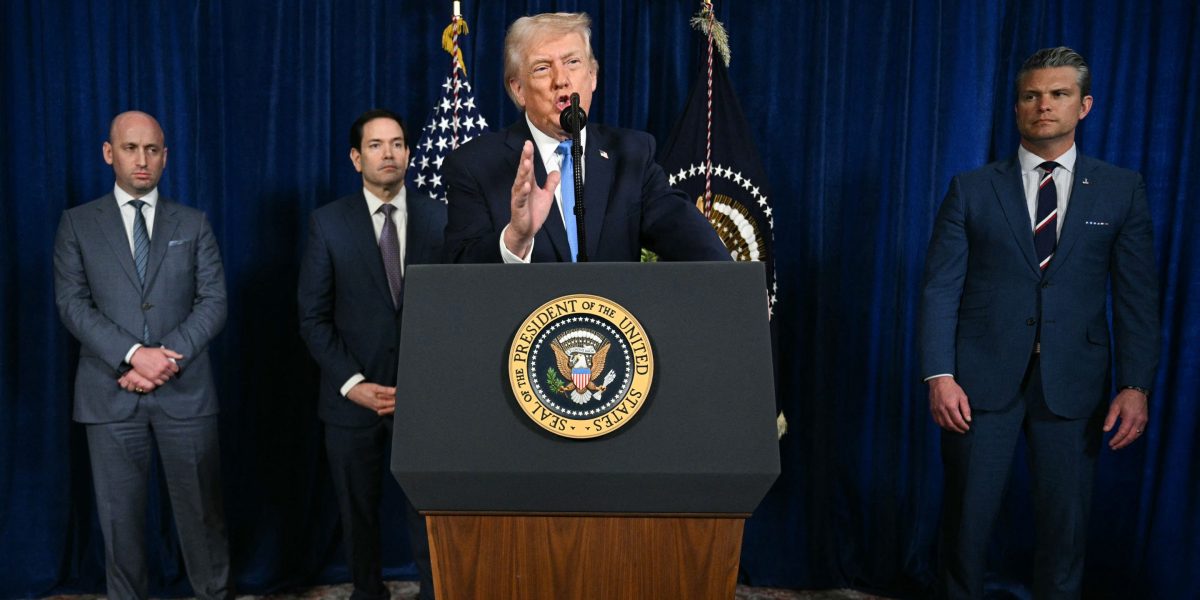
The ongoing U.S. naval blockade of Venezuelan has cost an estimated $700 million and counting with two more oil tankers seized Jan. 7, as President Donald Trump aims to sell more Venezuelan crude oil to American refineries and convince U.S. oil companies to return to embattled nation.

Operating the USS Gerald R. Ford and its aircraft carrier strike group costs more than $9 million per day—adjusted for inflation—since being ordered to Latin American waters in October, according to a prior report from the Center for a New American Security. Those costs do not account for the boat strikes that began in late August—killing more than 100 people thus far—or the Jan. 4 attacks in Venezuela that resulted in the arrests of leader Nicolás Maduro and his wife.

Trump has argued the U.S. does not want a prolonged occupation so long as Maduro’s vice president and now-acting president, Delcy Rodríguez, defers to the U.S. And he is pushing for U.S. oil companies to work in Venezuela to rebuild the dilapidated industry and get oil and dollars flowing again.

The White House did not refute the financial numbers of the blockade nor provide additional information, with spokesperson Anna Kelly saying in a statement that Maduro’s arrest saves American lives, stops the flow of drugs and criminals, initiates a deterrence in the Western Hemisphere, and creates economic opportunities for Venezuelans and Americans.

 David Goldwyn, Atlantic Council fellow and State Department special envoy for international energy affairs in the Obama administration, told Fortune that Trump is operating with an “incoherent strategy.”

“A lot has been spent, and little has been gained,” Goldwyn said. “It’s really hard to see what the upside is. Maduro has been removed, but the rest of the regime are all still in place.”

“The prize he’s trying to manufacture of special access to resources for U.S. companies seems to be unwelcome by most.”

Indeed, Trump is scheduled to meet Jan. 9 with oil executives, including leaders from Chevron, Exxon Mobil, and ConocoPhillips. The companies did not respond to requests for comment.

Chevron is the only American oil company operating in Venezuela—under a special license—producing nearly 20% of the country’s oil.

Trump argued the American oil companies are “ready to go in” and spend billions of dollars to rebuild Venezuela’s energy infrastructure and dramatically increase the flow of oil to bring revenues back to Venezuela and the U.S.

But the reality is different. Once a major player churning out nearly 4 million barrels of oil daily, Venezuela’s volumes have plunged from 3.2 million barrels daily in 2000 down to fewer than 1 million barrels today from a combination of mismanagement, underinvestment, and escalating U.S. sanctions. More than doubling Venezuela’s current oil production likely would take until 2030 and cost about $110 billion, said research firm Rystad Energy.

Apart from Chevron, U.S. companies have previously expressed reservations about returning because of the political instability, high costs, and weaker oil prices. ConocoPhillips and Exxon are still owed billions of dollars from Venezuela from the 2007 expropriation of their assets resulting international tribunal rulings.

“We’ve been expropriated from Venezuela two different times. We’d have to see what the economics look like,” Exxon CEO Darren Woods told Bloomberg in November. “We have our history there.”

How Trump plans to profit from Venezuelan oil

In the meantime, Trump said on social media the U.S. will take between 30 million and 50 million barrels of Venezuelan crude over time to sell from the United States. The proceeds would be controlled by the White House, although the details remained vague.

Presumably, more oil would be sold to U.S. refineries that are configured to process the heavy grade of crude that comes from Venezuela, and Venezuelan state oil company PDVSA would receive most of the proceeds.

Depending on the number of barrels—and based on the current benchmark price for oil in the U.S.—that much oil could be worth between $1.6 billion and $2.8 billion.

PDVSA confirmed in a Jan. 7 statement that it is negotiating with the U.S. in a framework similar to those with Chevron and other international companies. “PDVSA ratifies its commitment to continue building alliances that promote national development in favor of the Venezuelan people and that contribute to global energy security.”

The effort implies the U.S. will auction the oil barrels through the U.S. Department of Energy and hold the proceeds in escrow as leverage for Venezuelan cooperation, said Matt Reed, vice president of the geopolitical and energy consultancy Foreign Reports. Most recently, about 80% of Venezuelan oil exports went to China and nearly 15% to the U.S.

“It sounds like a twist on the old, UN ‘oil for food’ program that allowed Iraq to sell oil but only tap revenue for essential goods like food and medicine. The difference this time is that Washington will decide where the oil goes. U.S. refiners will probably get priority depending on Gulf Coast demand,” Reed said. “It’s unclear how or whether the US will profit from this. Rather, Washington is counting on this leverage to twist arms in Caracas.”

As for the Trump oil summit with executives, Reed said, “Washington can offer incentives but only Caracas can convince American firms to take the plunge and invest over the long term.”


Source link

Continue Reading

Business

Bill Gates donated $8 billion to Melinda French Gates’ foundation due to their divorce settlement

Published

on


Melinda French Gates has transformed her relatively young Pivotal Philanthropies Foundation into one of America’s largest private foundations almost overnight, in part due to her split with ex-husband Bill Gates.

As part of the pair’s high-profile divorce announced in 2021, Gates agreed to make a $7.88 billion donation—one of the largest ever—to French Gates’ private foundation, according to a tax filing, as previously reported by the New York Times’ DealBook.

Gates’ donation skyrocketed Pivotal Philanthropies Foundation’s assets by more than 1,000% to about $7.4 billion in 2024, according to a tax filing. That’s up from $604 million at the end of 2023.

French Gates’ Pivotal Philanthropies now finds itself in the ranks of philanthropy power players, just over a year after Gates and French Gates separated their philanthropic efforts in May 2024. Among those power players is Mackenzie Scott, who donated $7.2 billion to various organizations in 2025 alone. Scott has donated $26 billion since 2020, just after her divorce from Amazon founder Jeff Bezos.

The multibillion-dollar Gates donation to Pivotal is part of a previously promised $12.5 billion that French Gates said would be disbursed thanks to her “agreement with Bill.”  These funds have been fully paid out, and Gates’ donation makes up part of the money, a spokesperson for Pivotal Philanthropies confirmed to Fortune.

After resigning in May 2024 as co-chair of the Bill and Melinda Gates Foundation, now the Gates Foundation, French Gates said the $12.5 billion would be used “on behalf of women and families.” French Gates, who has a net worth of $17.7 billion, according to the Bloomberg Billionaires Index previously told Fortune billionaires like herself “owe something back to society.

It’s unclear where the additional $4.6 billion was allocated. The funds could have been given to French Gates’ LLC, Pivotal, which does not file a tax return, according to DealBook

Founded in 2022, Pivotal Philanthropies Foundation, which aims to “accelerate the pace of social progress for women and young people” operates within a group of organizations that also includes Pivotal Initiatives Fund for policy and advocacy work as well as Pivotal Ventures, which focuses on direct investments and partnerships, according to Pivotal’s website. While Pivotal Philanthropies is bound by strict 501(c)(3) rules governing minimum payouts, self-dealing restrictions, and detailed reporting requirements, as an LLC, Pivotal Ventures operations aren’t subject to strict reporting, giving it more freedom, flexibility, and anonymity than a nonprofit.

One organization that has already benefited from Pivotal Philanthropies’ previous donations is Durham-based nonprofit Rewriting the Code, which supports young women working in or looking to enter tech careers. The organization, now in its 10th year, according to founder Sue Harnett, received $5 million from Pivotal Philanthropies in 2025.

Thanks in part to the funding from Pivotal, Harnett has grown her organization from one employee in 2019 to 26 as of this year. In 2026, the company is looking to focus on helping computer science students and women early in their tech career get trained for a world where AI is ubiquitous. 

The funding from Pivotal has been instrumental to continuing these programs, and importantly, keeping them free for the women who need them, said Harnett.

“It’s transformative,” Harnett told Fortune. “It has allowed us to serve thousands more women than we ever could. It’s allowed us to build up a staff that has a variety of talents that we really need to be able to serve the women of our membership as well as we possibly can.”


Source link

Continue Reading

Business

Harvard economist Ricardo Hausmann warns against Trump’s profit motive in rebuilding Venezuelan
Published

on


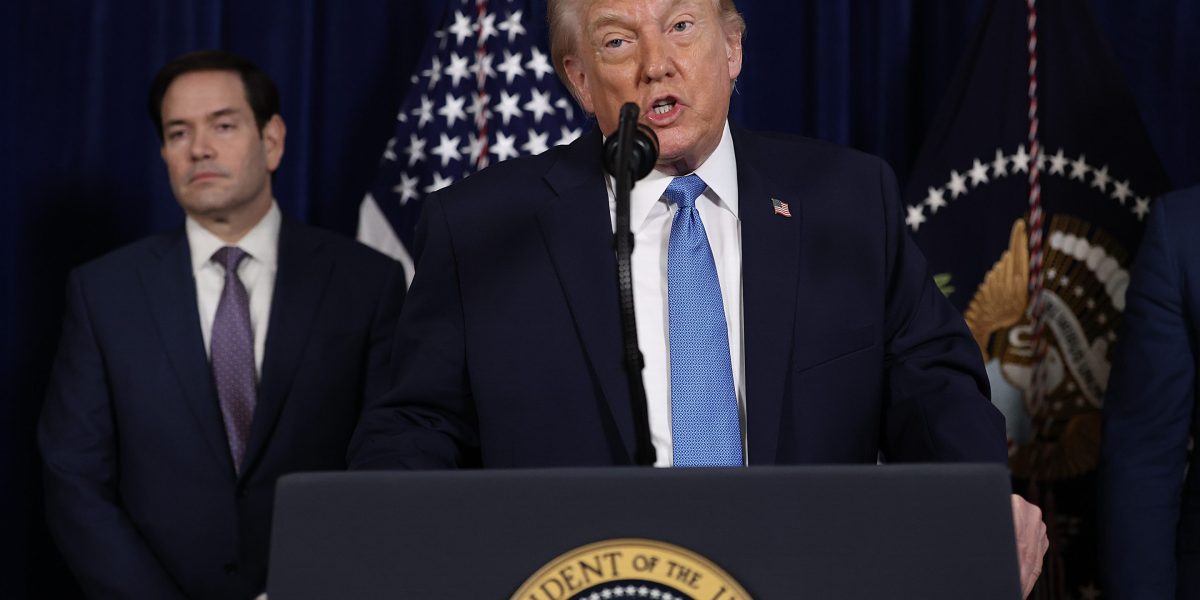
President Donald Trump has assured the people of Venezuela that his undertaking to restore the country’s oil infrastructure will be mutually beneficial to both them and the U.S. 

Ricardo Hausmann, professor of the practice of international political economy at the Harvard Kennedy School, isn’t convinced. 

“There’s a reason why there’s no profit motive in government,” Hausmann told Fortune, referring to the U.S. controlling the Venezuelan oil market. “Profit motive in government is what we call corruption.” 

Trump has unveiled lofty plans to revive Venezuela’s troubled oil industry, just days after U.S. forces captured Venezuelan leader Nicolas Maduro over the weekend. The White House explicitly said Maduro’s arrest—and the U.S.’s subsequent takeover of some of the country’s affairs—was an effort to dominate the Western Hemisphere, invoking the 19th century Monroe Doctrine to justify intervention in Venezuela. Venezuela is home to the world’s largest proven crude oil reserves.

“This is one of the countless good energy deals President Trump has brokered to restore American energy dominance that will benefit the American people, American energy companies, and the Venezuelan people,” White House spokesperson Taylor Rogers told Fortune in a statement.

The president said he will control the country and its oil market for years, reportedly meeting with U.S. oil company executives to discuss Venezuela’ s oil industry. On Tuesday, he announced Venezuela’s interim leadership would provide the U.S. with 30 million to 50 million barrels of oil, the proceeds from which would be sold at market rates, not discounted rates, and distributed to both the U.S. and Venezuela. The proceeds will go into U.S.-controlled bank accounts overseen by Trump, according to the White House.

“We will rebuild it in a very profitable way,” Trump said in an interview with the New York Times on Thursday. “We’re going to be using oil, and we’re going to be taking oil. We’re getting oil prices down, and we’re going to be giving money to Venezuela, which they desperately need.”

Trump’s government capitalism

Trump’s industry interventions and turn to state capitalism have become the hallmark of his second term: In August 2025, the U.S. government secured a 10% stake in Intel, becoming the largest shareholder of the struggling chipmaker. Earlier that month, Nvidia and AMD made a deal with the U.S. government to share 15% of revenue from chip sales to China.

These kinds of large-scale agreements are not only rare, but in the case of Nvidia and AMD, unprecedented and potentially unconstitutional according to some legal experts, as the U.S. Constitution prohibits duties on exports.

Hausmann, who served as the Venezuelan minister of planning from 1992 to 1993, argued Trump’s heavy hand in market affairs is counter to the purpose of government, which is not supposed to make money, but rather provide stability and policy that allow businesses to thrive.

In the case of Venezuela, Hausmann said, Trump’s prioritization of extracting oil for a short-term profit is not just a philosophical misalignment with his vision of government; it’s plain a bad idea.

“Having a policy because you want to make money, you’re going to be dramatically disappointed in any scenario you want to imagine,” Hausmann said. “If you want Venezuela to recover, money is going to go into Venezuela, not out of Venezuela. Venezuela is going to need to attract resources. It’s not [that] resources are going to go away.”

Trump told Fox News’ Sean Hannity this week that oil companies would need to spend at least $100 billion to revive Venezuela’s oil industry.

The state of Venezuelan oil

Hausmann noted that Trump’s strategy of leveraging oil to return Venezuela to economic prosperity is futile without restoring democratic leadership to the country, which can implement credible policy to stabilize the oil industry. 

When Maduro took power in Venezuela in 2013, Venezuelans were about four times wealthier than today; Venezuela was the richest country in South America in 2001. These periods of wealth aligned with higher oil production, which has since atrophied. When Hugo Chavez became president in 1999, Venezuela was producing around 3.5 million barrels of oil daily. Today, that total is around 1 million barrels per day.

Economists and public policy thinkers attribute this precipitous drop to the breakdown of the country’s oil infrastructure following decades of mismanagement, corruption, and U.S. sanctions. Chavez, for example, fired about 10,000 employees of state-owned oil giant Petróleos de Venezuela S.A. (PDVSA) in 2003 for participating in a two-month strike. PDVSA’s revenue would collapse about a decade later.

Analysts said Trump’s proposed solution of giving U.S. oil companies access to Venezuela to repair the infrastructure (and granting the U.S. access to 30% of the world’s oil reserves) is an expensive endeavor costing at least $10 billion annually for several years. Beyond repairing infrastructure, those companies will need to commit to the more-expensive extraction of heavy crude oil that makes up the vast majority of what is found in Venezuela’s Orinoco Belt.

The steep costs of rebuilding the oil industry means U.S. companies are going to need assurance that their investments will be worth it, Miguel Tinker Salas, a professor emeritus of history at Pamona College and author of The Enduring Legacy: Oil, Culture, and Society in Venezuela, told Fortune.

“I don’t think any large U.S. major company is going to want to invest without a series of guarantees, because you’re talking about billions of dollars of investment,” Tinker Salas said. “This is an investment for the long term, not for the short term.”

Hausmann suggested that one way for private oil companies to be lured to Venezuela—particularly when they have easier access to large oil reserves in Guyana and Namibia—is to address why the infrastructure of the industry decayed in the first place.

“These are self-inflicted wounds. If you want to recover oil, you need to go back to rule of law,” he said. “Let’s be very mechanical: You need to change the hydrocarbons law. And to change the hydrocarbons law, you need a congress that people think is legitimate.”

Hausmann’s vision for a Venezuelan future

The hydrocarbon laws to which Hausmann is referring originated in 1943, outlining that foreign oil companies must pay Venezuela 50% of their oil profits, a price companies were willing to pay to have access to the country’s massive reserves.

After PDVSA was established in 1976, foreign oil companies were able to partner with the state-owned giant, but at a steep cost: a 60% equity stake in their joint ventures. Chavez delivered a death knell to the industry decades later, according to Hausmann, seizing and nationalizing the assets of U.S. oil companies like ConocoPhillips and Exxon Mobil, which then left the country. Today, only Chevron, under a special U.S. license, continues to do business in Venezuela.

Venezuelan opposition leader María Corina Machado previously expressed intent to reform these hydrocarbon laws to increase foreign investment by getting rid of ownership restrictions. But Trump seems unlikely to give power to Venezuela’s popular political figures. He said Machado lacked the support necessary to lead the country, despite evidence of widespread backing for her and Edmundo González, who ran against Maduro in the 2024 election. Maduro’s vice president, Delcy Rodríguez, is Venezuela’s interim leader.

Hausmann said U.S. oil companies are aware of the political instabilities within Venezuela, another factor that may inform their decision to not immediately invest in the country. However, the economist also indicated that while Venezuela’s 303 billion barrels of oil in reserves make oil an obvious industry to expand, it’s not all the country has to offer. He suggests that if a democratic leader can come into power, Venezuela can invest more heavily in its other industries, such as tourism and its Caroni River, from which it derives 64% of its hydroelectric capacity.

“Venezuela has become much, much bigger than its oil, and Venezuela has an enormous potential in many other things,” Hausmann said. “You might say that the easiest thing would be oil, but even oil is not that simple.”


Source link

Continue Reading

Business

The 6-7 craze offered a brief window into the hidden world of children. Even more, it showed how much of social life happens online

Published

on


In case you managed to miss it, 6-7 is a slang term – spoken aloud as “six seven” – accompanied by an arm gesture that mimics someone weighing something in their hands.

For the most part, adults responded with mild annoyance and confusion.

But as media scholars who study children’s culture, we didn’t view the meme with bewilderment or exasperation. Instead, we thought back to our own childhoods on three different continents – and all the secret languages we spoke.

There was Pig Latin. The cool “S” doodled on countless worksheets and bathroom stalls. Forming an L-shape with our thumb and index finger to insult someone. Remixing the words of hand-clapping games from previous generations.

6-7 is only the latest example of these long-standing practices – and though the gesture might not mean much to adults, it says a lot about children’s play, their social lives and their desire for power.

You can see this longing for power in classic play like spying on adults and in games like “king of the hill.”

Kids spend much of their days watched and controlled – and will jump at the chance to turn the tables. H. Armstrong Roberts/ClassicStock via Getty Images

A typical school day involves a tight schedule of adult-directed activities; kids have little time or space for agency.

But during those in-between times when children are able to stealthily evade adult surveillance – on playgrounds, on the internet and even when stuck at home during the pandemic – children’s culture can thrive. In these spaces, they can make the rules. They set the terms. And if it confuses adults, all the better.

As 6-7 went viral, teachers complained that random outbursts by their students were interrupting their lessons. Some started avoiding asking any kind of question that might result in an answer of 67. The trend migrated from schools to sports arenas and restaurants: In-N-Out Burger ended up banning the number 67 from their ticket ordering system.

The meaninglessness of 6-7 made it easy to create a sense of inclusion and exclusion – and to annoy adults, who strained to decipher hidden meanings. In the U.S., siblings and friends dressed as the numbers 6-7 for Halloween. And in Australia, it was rumored that houses with 6-7 in their address were going for astronomical prices.

Remixing games and rhymes

Since before World War I, historians have documented children’s use of secret languages like “back slang,” which happens when words are phonetically spoken backwards. And nonsense words and phrases have long proliferated in children’s culture: Recent examples include “booyah,” “skibidi” and “talk to the hand.”

6-7 also coincides with a long history of children revising, adapting and remixing games and rhymes.

For example, in our three countries – the U.S., Australia and South Korea – we’ve encountered endless variations of the game of “tag.” Sometimes the chasers pretend to be the dementors from Harry Potter. Other times the chasers have pretended to be the COVID-19 virus. Or we’ll see them incorporate their immediate surroundings, like designating playground equipment as “home” or “safe.”

Similar games can spread among children around the world. In South Korea, “Mugunghwa kkochi pieotseumnida” – which roughly translates to “The rose of Sharon has bloomed,” a reference to South Korea’s national flower – is similar to the game “Red Light, Green Light” in English-speaking countries. In the game “Hwang-ma!,” South Korean children in the early aughts shouted the word and playfully struck a peer upon seeing a rare, gold-colored car, a game similar to “Punch Buggy” and “Slug Bug” in the U.S. and Australia.

A group of young children play a game in a field on an autumn day.

Variations of ‘Red Light, Green Light’ exist around the world. Jarek Tuszyński/Wikimedia Commons, CC BY-SA

Historically, children have reworked rhymes and clapping games to draw on popular culture of the day. “Georgie Best, Superstar,” sung to the tune of “Jesus Christ Superstar,” was a popular chant on U.K. playgrounds in the 1970s that celebrated the legendary soccer player George Best. And a variation of the clapping game “I went to a Chinese Restaurant” included the lyrics “My name is, Elvis Presley, girls are sexy, Sitting on the back seat, drinking Pepsi.”

Making space for children’s culture

One reason 6-7 became so popular is the low barrier to entry: Saying “6-7” and doing the accompanying hand movement is easy to pick up and translate into different cultural contexts. The simplicity of the meme allowed young Korean children to repeat the phrase in English. And deaf children have participated by signing the meme.

Because the social worlds of children now exist across a range of online spaces, 6-7 has been able to seamlessly spread and evolve. On the gaming platform Roblox, for example, children can create avatars that resemble 6-7 and play games that feature the numbers.

The strange words, nonsensical games and creative play of your childhood might seem ridiculous today. But there’s real value in these hidden worlds.

With or without access to the internet, children will continue to transform language and games to suit their needs – which, yes, includes getting under the skin of adults.

A great deal of attention is given to the omnipresence of digital technologies in children’s lives, but we think it’s worth taking a moment to appreciate the way children are using these technologies to innovate and connect in ways both creative and mundane.

Rebekah Willett, Professor in the Information School, University of Wisconsin-Madison; Amanda Levido, Lecturer, Southern Cross University, and Hyeon-Seon Jeong, Professor of Digital Media Education, Gyeongin National University of Education

This article is republished from The Conversation under a Creative Commons license. Read the original article.

The Conversation


Source link

Continue Reading

Trending

Copyright © Miami Select.
