
Fashion
CFDA unveils new fashion manufacturing grants backed by Ralph Lauren

Published
January 9, 2026
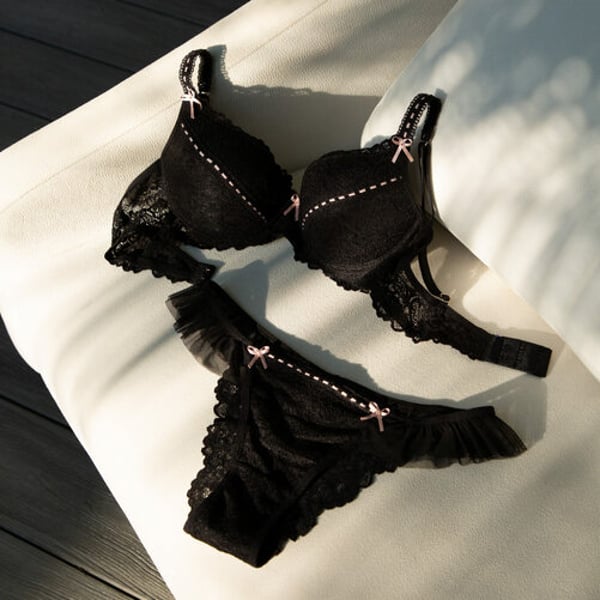
The lingerie market saw a slight downturn in 2025. Ahead of its 2026 edition, to be held from January 17 to 19 at the Porte de Versailles exhibition centre (15th arrondissement of Paris), the Salon International de la Lingerie has published a market study for 2025. Conducted by Kantar using data collected between January and October, it shows that the women’s lingerie market in France was worth €2.01 billion over the year. This is down on 2024, when the figure reached €2.08 billion.
Co-commissioned by the Fédération de la Maille, de la Lingerie et du Balnéaire, the study highlights a market in transition, with more deliberate consumption (-2.6%), signalling a shift towards greater sustainability and quality. This is reflected in clear premiumisation (+3.1% in the average price), indicating that women are now favouring more considered purchases and higher value-added products, according to Kantar.
Support, an “absolute priority” for most women
In more detail, bras, bustiers and bralettes account for 57% of annual spend: this stability confirms their status as a priority category in women’s purchases, well ahead of thongs, briefs and knickers, which account for 37% of spending. According to the study, French women prioritise quality products offering support, aesthetics, comfort and durability, even if that means spending more.

In terms of sizes, C-cup is now the most common in France, with a marked shift towards fuller cups: 7% of women wear an E-cup or above, and D-cup is gaining ground, including among younger generations. This anatomical reality explains why the need for support remains an “absolute priority for the vast majority of women,” according to the study. Kantar emphasises the fashion dimension of the bra in women’s wardrobes, beyond its technical function, with lace, embroidery, architectural lines, and colours.
The rise of socks and home wear
The women’s legwear market reached €323.4 million in 2025, and socks appear to be establishing themselves as a fashion accessory in their own right. Accounting for 68% of spending in the legwear segment, they gained nearly six percentage points in one year. Nightwear is also asserting itself as a fast-growing premium segment. Pyjamas are consolidating their dominant position (41% of spending) amid clear premiumisation, while “pyjama shorts” are posting robust growth of 40%, rising from 8.7% to 12.2% of the market.

Home wear, which accounts for 12.4% of the market, is also continuing to grow. According to the study, this reflects the emergence of a new approach to home wear, balancing comfort, aesthetics and versatility. The enthusiasm for yoga, Pilates and at-home workouts is creating demand for pieces designed to accompany every moment of the day, from waking to workout, reflecting a lifestyle that values wellbeing and personal balance.
Lingerie on the rise in most retail outlets
Across retail, lingerie is strengthening on several fronts. After a difficult 2024, specialised chains in city centres and shopping centres are staging a strong comeback in the lingerie market, regaining 2.6 percentage points of market share to reach 30.9% of sales, according to Kantar. Independent boutiques are also performing well, with an increase of 0.4 points, underlining that cutting-edge expertise and ultra-personalised service are resonating with a demanding clientele.

At the same time, e-commerce continues to make steady headway, with a 21% market share (+0.5 points), demonstrating the complementary nature of distribution channels. Conversely, mass-market food retail is losing ground (-2 points to 20.2%), pointing to a profound reshaping of the retail landscape, where expertise and service now take precedence over accessibility alone.
Finally, 2025 saw a resurgence of structured corsets, graphic waist-cinchers, waist shapers and sophisticated suspender belts. Long associated with a bygone era, these icons of seduction are making a comeback, worn either over or under other garments, as a layering piece or as the centrepiece of an outfit.
This article is an automatic translation.
Click here to read the original article.
Copyright © 2026 FashionNetwork.com All rights reserved.

Published
January 9, 2026
It’s no exaggeration to say that Uniqlo is outperforming the market. While the apparel sector is struggling across Europe, the Japanese retailer- the flagship brand of Fast Retailing group- posted double-digit sales growth in Europe last quarter.
For the brand- which saw total sales rise by almost 15% year on year to 1.028 trillion yen (€5.6 billion) in the first quarter of its staggered financial year, which ended in late November- Europe is the most dynamic region. There, group sales surged 34%, helped by favourable exchange rates, to 134 billion yen (€730 million). Europe now accounts for over 13% of the retailer’s sales, up from 11% a year earlier. This growth was also accompanied by a double-digit increase in operating income in the region, while overall operating income jumped by nearly 34%.
This momentum is being driven by a significant marketing push and a strategy of store openings. By the end of November, Uniqlo operated 91 stores in Europe and had opened nine additional outlets in the September–November 2025 period alone, including flagships in Brussels; Birmingham and Glasgow in the UK; and Munich and Düsseldorf in Germany.
France is no exception, with two openings last quarter. This acceleration was already noted by the panel firm Numerator which, in its Worldpanel study presented in September, observed that in 2025 the Japanese retailer saw the number of transactions jump by more than 26% to 4.4 million, placing Uniqlo 47th among the most purchased brands in France.

“France is a major market for Uniqlo,” confirms Yuki Yamada, the brand’s managing director for France, speaking to FashionNetwork.com. “Our offer does not follow trends. Uniqlo is a benchmark brand that speaks to everyone, meeting real needs for practicality, versatility, simplicity, and minimalism, all inspired by our Japanese values. Our customers are both loyal and increasingly numerous. Ultimately, it all comes down to three words: design, quality and excellent value for money. The consistency and relevance of our positioning place Uniqlo on a very positive trajectory in Europe, as in the UK and Germany. France, with its rich history in the fashion sector, plays a key role in our European expansion and growth objectives.”
In fact, France is Uniqlo’s number-one market in terms of store locations. Uniqlo- which reports double-digit like-for-like sales growth in Europe last quarter- already benefits from an extensive network in the capital and continues to densify it. After unveiling an 800‑square‑metre, two‑storey space in the Bastille district in the autumn, the Japanese giant has announced a new 1,300‑square‑metre flagship near the Champs‑Élysées, set to open in the first half of 2026. This will be one of 15 European openings planned for its financial year ending in August 2026, with other projects in the UK, the Netherlands, and Germany.
“Paris and the Île-de-France region constitute a particularly strategic area, offering international visibility and customer density,” explains the head of the French entity. “Uniqlo operates eleven of its thirty French stores there. We consider the capital and its region to have strong development potential; as such, we choose highly targeted locations, either districts with high footfall or with lifestyle potential, with regulars and local customers. In parallel with the Île-de-France, we are developing the brand in the regions, carefully identifying local needs and setting up where demand is strongest.”
Towards medium-sized cities
So, while Uniqlo needs to densify its network in other European countries that are far less well served than France, France remains key to its development project, with formats adapted to each city or district.
“The local roots of each store are enhanced through creative partnerships and by highlighting the cultural or historical heritage of each location. Our services such as the Re.Uniqlo Studio or the UTme T-shirt printing service are also part of this dynamic, providing a platform for local players and bringing exclusive content to our customers,” says Yuki Yamada. “Our roadmap involves developing our network in medium-sized cities and consolidating the major metropolises. Without divulging precise figures, the Île-de-France region is a key driver for Uniqlo in France, thanks to resident and tourist footfall and the international aura of this fashion capital. However, growth in the regions is also a priority, driven by targeted openings in medium-sized cities where interest in our LifeWear is just as strong, and growing. We find that in the regions, the weather guides purchases more, and they are also generally more planned than in Île-de-France. That said, the bestsellers remain HEATTECH and AIRism, and interest in seasonal collections is just as strong. Having opened stores in France’s biggest cities, we are now looking at opportunities in medium-sized cities.”

Moreover, according to the group, store openings help to boost the brand’s online business, which already accounts for 20% of sales in Europe. The openings are said to create a halo effect for Uniqlo’s e-commerce activity in the catchment area, with double-digit sales increases following the outlet’s inauguration.
“We are very attentive to the omni-channel experience,” confirms Yuki Yamada. “It fundamentally informs our location strategy. Our e-commerce site is our largest flagship. It is an essential lever in our growth plan, including in France. We are strengthening the seamless customer experience between digital and physical stores with Click & Collect, fast delivery, stock visibility, editorial content and technological integration.”
With Uniqlo’s European business surpassing the €2‑billion sales mark in its most recent financial year ending in August 2025, France is set to contribute once again, helping the Japanese retailer to set a new record across the Old Continent in 2026.
This article is an automatic translation.
Click here to read the original article.
Copyright © 2026 FashionNetwork.com All rights reserved.


Argentina has repaid its $20 billion credit line from Trump administration, Scott Bessent says

Nina Dobrev vs. Nicola Peltz Beckham Who’d You Rather?! Bday Babes Edition

France’s women’s lingerie market declines, valued at just over €2 billion in 2025
-

 Politics8 years ago
Congress rolls out ‘Better Deal,’ new economic agenda
-
Entertainment8 years ago
New Season 8 Walking Dead trailer flashes forward in time
-
Politics8 years ago
Poll: Virginia governor’s race in dead heat
-
Entertainment8 years ago
The final 6 ‘Game of Thrones’ episodes might feel like a full season
-
Politics8 years ago
Illinois’ financial crisis could bring the state to a halt
-
Entertainment8 years ago
Meet Superman’s grandfather in new trailer for Krypton
-
Business8 years ago
6 Stunning new co-working spaces around the globe
-
Tech8 years ago
Hulu hires Google marketing veteran Kelly Campbell as CMO