Connect with us

Politics

Marco Rubio offers threefold plan for future of Venezuela, including release of political prisoners
Published

on


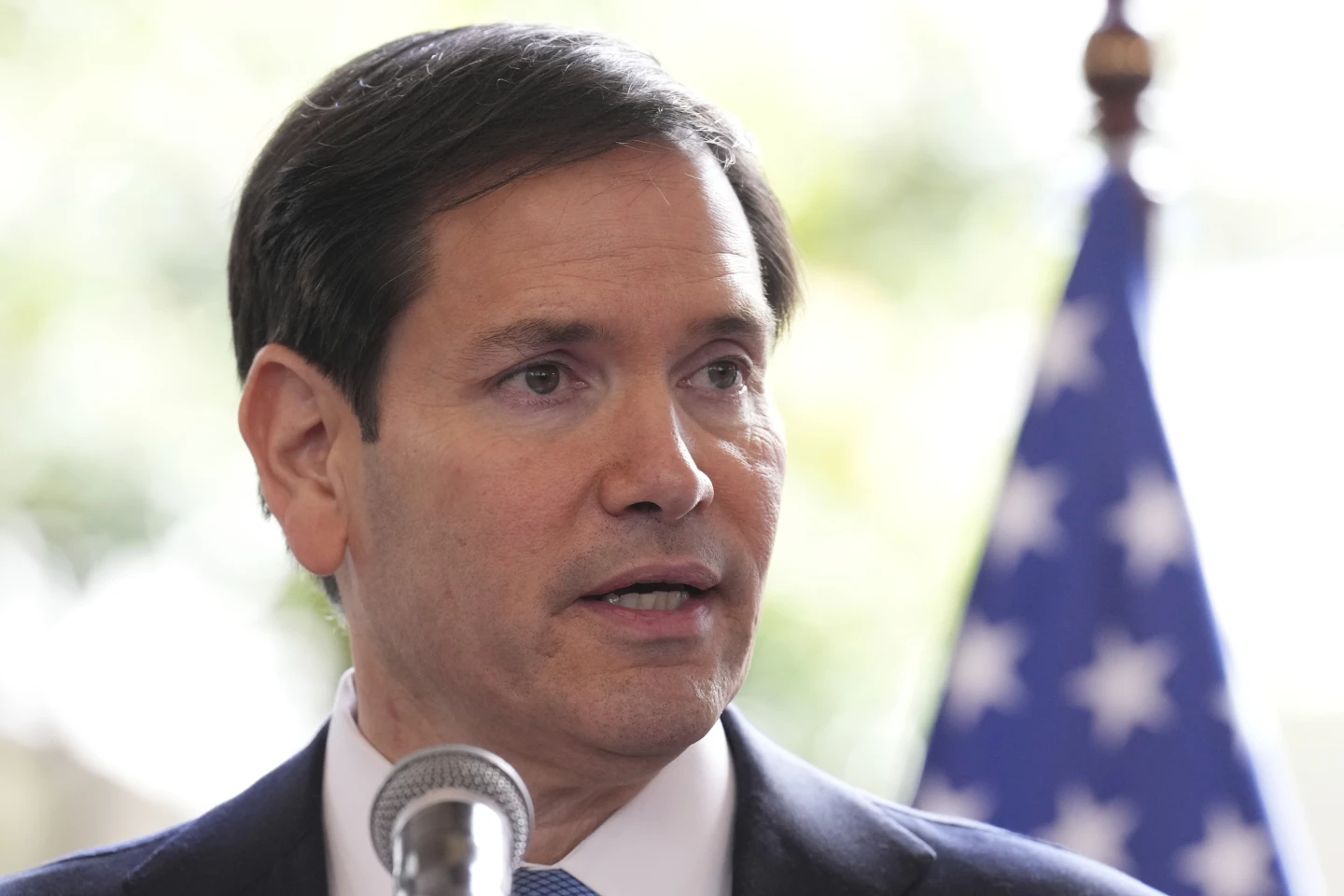
Secretary of State Marco Rubio is laying out a “threefold process” to make Venezuela’s government secure going forward.

He spoke to press after detailing the plan to Congress, and as Florida lawmakers call for the release of political prisoners incarcerated under deposed President Nicolás Maduro.

“Step one is the stabilization of the country. We don’t want it descending into chaos,” Rubio told press after briefing lawmakers. “Part of that stabilization, and the reason why we understand and believe that we have the strongest leverage possible, is our quarantine.”

Even before Maduro was arrested in an overnight raid last weekend, the U.S. ordered a quarantine of all oil being shipped out of Venezuela in violation of sanctions, as reported by Reuters. U.S. Southern Command on Wednesday morning announced the capture of a Venezuelan tanker in the Caribbean by the U.S. Coast Guard. Rubio announced another ship was also captured the same day.

Rubio said the U.S. will control the flow of the crude now.

“We are in the midst right now, and in fact, about to execute on a deal to take all the oil. They have oil that is stuck in Venezuela,” Rubio said. “They can’t move it because of our quarantine and because it’s sanctioned. We are going to take between 30 and 50 million barrels of oil. We’re going to sell it in the marketplace at market rates, not at the discounts Venezuela was getting.”

He said under U.S. control, the profits will be disbursed in a way that benefits the Venezuelan people, not the Maduro regime. On the horizon, Rubio wants to see a return to legitimate economic activity.

“The second phase will be a phase that we call recovery, and that is ensuring that American, western and other companies have access to the Venezuela market in a way that’s fair,” he said.

He also wants to “begin to create the process of reconciliation nationally within Venezuela, so that the opposition forces can be amnestied and released and from prisons or brought back to the country, and begin to rebuild civil society.”

That is an especially important goal to several lawmakers in Florida, a state home to 49% of Venezuelans living in the U.S.

U.S. Rep. María Elvira Salazar, a Coral Gables Republican, posted messages on social media several times on Wednesday demanding Venezuela Interim President Delcy Rodríguez release individuals from custody.

“For decades, the Venezuelan regime has imprisoned, tortured and disappeared dissidents. From (Hugo) Chávez to Maduro, political prisoners have been used as weapons of terror to silence an entire nation,” Salazar posted on X.

“Delcy Rodríguez must FREE all political prisoners IMMEDIATELY. The United States will not stand idly by while the Venezuelan regime continues to imprison and torture innocent people. FREE THEM ALL. NOW.”

Rubio said the final phase in Venezuela will be a transition, which could overlap with reconciliation and recovery.

He said operational details of current efforts in Venezuela could not be discussed for “obvious” reasons related to national security.


Source link

Continue Reading

Politics

Bills would create Office of Corrections Ombudsman to monitor prisons

Published

on


Saying existing law does not provide adequate and independent oversight of the Florida’s Department of Corrections, two Florida GOP lawmakers have proposed an Office of Corrections Ombudsman to ensure accountability, monitor conditions of confinement, and investigate complaints. 

The measure (SB 1160) is sponsored in the Senate by Sen. Ana Maria Rodriguez, who represents Monroe and a part of Miami-Dade County, and in the House (HB 889) by Rep. Susan Valdés, a Tampa Republican. The idea has been pushed for several years by criminal justice reform advocates. The bill says the legislation is necessary “to create an independent entity as a unit of the legislative branch of state government in order to restore public trust in the department.”

The bills come a month after an investigation into a Panhandle state prison by the Southern Poverty Law Center found that overcrowding and overstaffing resulted in a high concentration of complaints by inmates about excessive force and staff misconduct.

And they come more than five years after the U.S. Department of Justice’s Civil Rights Division and the U.S. Attorney’s Office in the Middle District of Florida issued a report regarding Florida’s Lowell Correctional Institution, the state’s largest and oldest women’s prison. The report found reasonable cause to believe that Lowell failed to protect prisoners from sexual abuse by staff.

Nine states have created corrections ombudsman positions since 2018, while another two have created quasi-oversight bodies, according to Michele Deitch, Director of the Prison and Jail Innovation Lab at the University of Texas, which runs the National Resource Center for Correctional Oversight.

“It’s greater recognition of deaths in custody, of the violence going on inside, of poor conditions,” Deitch said.

“A lot of those are coming to light through journalistic accounts and through advocates’ reports and from people who have been incarcerated, but it’s also the fact that legislators are recognizing that what we’re doing now isn’t working. There are high recidivism rates, and we’re spending a lot of money on prisons and not knowing if they’re getting anything of real value from it, given the high recidivism rates and the poor conditions.”

The Federal Prison Oversight Act in 2024 established an independent ombudsman office to investigate complaints from incarcerated people, their families, and prison staff.

The office would:

— Receive, track, investigate and attempt to resolve complaints concerning correctional facilities made by or on behalf of incarcerated persons, supporters of incarcerated persons, and the public.

— Monitor and evaluate conditions of confinement and treatment of incarcerated persons in correctional facilities.

— Collect and analyze data relating to serious incidents, violence and deaths in correctional facilities.

— Recommend solutions to systemic problems as well as policy changes and corrective actions necessary to “protect the health, safety, welfare, and rights of incarcerated persons.”

— Provide information to incarcerated individuals, supporters of the incarcerated, and the public about the rights of those individuals.

The Legislature would create a Corrections Oversight Committee of 15 voting members to meet quarterly to advise the ombudsman. They would include four members of the Legislature and 11 members of the public representing various constituencies, including a man and woman who have previously served a prison sentence of at least three within the 10 years preceding their appointment.

The Legislature would appoint an ombudsman to a five-year term, and he or she could be reappointed for an additional five years. The Legislature would be required to allocate $250,000 to fund the office.

Accompanying legislation (HB 891, SB 1162) would create a public records exemption for correspondence and communications with the Office of the Corrections Ombudsman and the Corrections Oversight Committee.

___

Reporting by Mitch Perry. Florida Phoenix is part of States Newsroom, a nonprofit news network supported by grants and a coalition of donors as a 501c(3) public charity. Florida Phoenix maintains editorial independence. Contact Editor Michael Moline for questions: [email protected].


Source link

Continue Reading

Politics

Court rules Florida Medicaid termination letters fly in face of federal law

Published

on


A federal Judge ruled this week that Florida violated the constitutional rights of hundreds of thousands of people it had removed from the Medicaid rolls following the end of the COVID public health emergency, when it sent beneficiaries “vague, confusing and often incorrect and misleading” termination letters.

In a 273-page ruling in the class action, U.S. District Judge Marcia Morales Howard ordered the state in the next two months to send appropriate Medicaid termination notices to roughly 500,000 low-income people whose benefits the state terminated for financial reasons following the pandemic and were not subsequently reenrolled in the safety-net health care program.

The notice must advise the people of the court’s ruling and, at a minimum, must include “an unambiguous statement” explaining the financial reasons behind the terminations and to whom the decision applies.

“Such notice will ensure that all Class Members have the information needed to determine whether the State’s decision to terminate their Medicaid benefits was correct,” she wrote. “Class Members who believe the State made an error may then pursue the available administrative remedies to correct that error.”

Those “remedies” include an opportunity to request an administrative appeal of their termination, which would enable someone to temporarily be reenrolled in Medicaid pending the outcome of the hearing. The notice must include information about administrative procedures permitting the payment of past medical bills if an error is found.

Howard in her ruling also barred the Department of Children and Families (DCF) — the Florida agency that determines whether people qualify for Medicaid — from terminating someone’s benefits for financial eligibility unless it provides proper notice.

At a minimum, that notice must include the enrollee’s household size, the state-determined countable household income, the eligibility category in which the enrollee had been receiving benefits, and, if it changed, the reason for the change.

DCF did not immediately comment on the ruling or whether it plans to appeal the decision.

‘Welcome news’

Center for Children and Families Executive Director Joan Alker said Thursday she still was reading the lengthy ruling but that she wasn’t surprised by the Judge’s conclusions.

Alker, who has spent more than 20 years studying Florida’s Medicaid program, said the state has a “really complicated” Medicaid eligibility system for children, which includes the optional Medicaid expansion called KidCare. The more complicated the system, she said, the more important it is for termination letters to be easily understood.

“I think it’s welcome news for families here, the Judge recognized that this was a very serious problem that families were facing,” she said. “And again, I’ll say I found the notices extremely difficult to understand and, obviously, I’m a health policy professor who’s been working on this stuff for decades.”

Medicaid is a safety net health care program jointly administered and paid for by the state and federal governments. Just under 4 million people were enrolled in Medicaid in Florida as of Nov. 30, 2025, the latest available data.

During the COVID pandemic, the federal government increased by 6.2% its contributions to the Medicaid program. The increased funding came with the caveat that states couldn’t disenroll people during the pandemic.

The policy ballooned Florida’s Medicaid caseload from 3.8 million people in March 2020, before the pandemic, to more than 5.75 million in March 2023.

Congress agreed the continuous eligibility requirement would end March 31, 2023, and that, post-pandemic, states could return their Medicaid programs to their normal operations. That process was known as Medicaid “unwinding.”

Florida started its Medicaid unwinding on April 1, 2023, and by the following year DCF redetermined the Medicaid eligibility of more than 4 million people.

Attorneys for Florida Health Justice Project and the National Health Law Program filed the lawsuit in Jacksonville in 2023 on behalf of people who erroneously lost benefits. Howard agreed to certify it as a class action in 2024.

“This ruling is a victory for the millions of Floridians who rely on Medicaid for essential health care. Medicaid agencies inevitably make mistakes when deciding eligibility. Clear, easy-to-understand notices are essential to catch and correct those mistakes before someone loses health care. The Court’s decision will ensure that Floridians have that critical protection from now on,” Sarah Grusin, senior attorney at the National Health Law Program, said in a prepared statement Thursday.

“It also underscores that states cannot shirk their constitutional obligations. Florida has known about the problems with their notices for years but has not addressed them, citing the cost and complexity of making changes to the computer system that generates notices. But as the Court emphasized, state officials cannot justify violating the constitutional rights of their citizens because they claim the fix is too expensive.”

‘Poorest of the poor’

There are two broad category groups: “SSI-Related Medicaid” for people who are aged, blind or disabled in the community, and “Family-Related Medicaid” for children, parents and other caretakers of children, pregnant women, and former foster children under the age of 26.

The lawsuit focuses on “Family Related Medicaid” beneficiaries, whom Howard described as some of the state’s “most vulnerable citizens.”

“They are primarily pregnant and postpartum women, infants, and children. And as is evident from the applicable income standards, these individuals are the poorest of the poor,” Howard said. “Prior to terminating the Medicaid benefits on which these individuals depend, the Constitution requires the State of Florida to provide them with adequate notice. The State of Florida is violating this constitutional requirement. “

Regardless of the eligibility group, residents also must meet certain income requirements, which vary by, among other things, age and household composition.

The complicated details of how household income is derived are laid out in policy manuals which, Howard noted in her ruling, are “plainly designed for internal use by those who have been taught how to use it.”

Howard’s lengthy ruling also touches on the DCF call center operations and its website.

Using April 2024 as an example, Howard noted, the call center received more than 1.9 million phone calls, of which 593,923 were resolved with an interactive voice response system through which people can self serve.

Another 1.38 million-plus callers asked to speak with an agent for a variety of reasons, including long wait times and abandoned phone calls; only 32% (444,319 callers) who requested to speak with a live agent succeeded. Upon reaching an agent, those interactions lasted for an average of nine minutes and 28 seconds, including the time the agent spent working on the case after the call ended.

Meanwhile, termination letters referred residents to the DCF website to learn more about eligibility requirements, but Howard noted in her ruling that the webpage didn’t provide all the information people needed or the links to get the information. In some instances, information on DCF’s homepage was incorrect or incomplete.

“The length of this Order might suggest that the question before the Court — whether the State’s notices are constitutionally adequate — is overly complex or a razor close call. It is neither. The length of this Order is not reflective of the complexity of the legal issue, it is reflective of the complexity and unreasonably confusing nature of the notices. It is driven by the need to address the complete inadequacy and borderline incomprehensibility of the notices and the inadequacy of the other resources identified as remedying the failure of the NOCAs (notices of case action) at issue,” she wrote.

“As detailed in this Order, the Court’s review of the evidence and the notices — their structure, the confusing, contradictory, and often misleading reasons they provide, and the lack of alternate available sources for the necessary information — inescapably leads to the conclusion that the State’s notices are fundamentally insufficient to satisfy the requirements of due process.”

___

Reporting by Christine Sexton. Florida Phoenix is part of States Newsroom, a nonprofit news network supported by grants and a coalition of donors as a 501c(3) public charity. Florida Phoenix maintains editorial independence. Contact Editor Michael Moline for questions: [email protected].


Source link

Continue Reading

Politics

Woman sues FDOT, alleging harassment from boss, rebukes from HR following complaints

Published

on


A former Florida Department of Transportation (FDOT) employee is suing the agency for forcing her out of her job after she complained about her hostile boss who tried to control her and made sexual remarks.

Grace Rodriguez filed the lawsuit before the new year in the U.S. District Court’s Orlando division. She accused FDOT of sexual harassment, discrimination, creating a bad working environment and retaliation.

Rodriguez’s boss, Moataz “Mo” Hassan, an Operations Engineer in Central Florida’s District 5, “frequently displayed uncontrolled rage and intimidation in the workplace, including yelling at subordinates at the top of his lungs and slamming his phone on the ground in Plaintiff’s presence,” the lawsuit said.

Rodriguez said her boss continued to get more possessive and make sexual comments the longer she worked there. What she wore became a regular topic of conversation and he got jealous when she interacted with her male coworkers, the lawsuit said.

“Throughout Plaintiff’s employment, Hassan repeatedly told Plaintiff that she was ‘his’ and that she ‘belonged to him,’” the lawsuit said. “Hassan’s statements were not benign workplace expressions but assertions of sexual dominance and ownership over a female subordinate, reinforcing his control over Plaintiff’s body, conduct, and continued employment.”

Rodriguez says Hassan told her she was not allowed to close her office door, demanding she smile and “imposed the silent treatment when Plaintiff did not comply with his expectations,” the lawsuit said.

He told her in his native country, “women are considered second class citizens,” per the lawsuit.

“In or around March 2024, Plaintiff was not feeling well and asked whether she could be sent home, Hassan told Plaintiff that she could not leave, and when Plaintiff went to leave his office Hassan aggressively grabbed Plaintiff by the arm and told her not to leave.”

The lawsuit said a month later, Hassan “initiated unsolicited discussions with Plaintiff about his sex life, stating that he had not had sex in a long time and that he was seeking a woman who would do what he told her. Plaintiff reasonably perceived these statements as sexual propositions intertwined with Hassan’s supervisory authority.”

Once, he gave her a Quran and talked regularly about his religion even though Rodriguez said she was a Christian, according to the lawsuit.

“Even where Hassan’s conduct was not explicitly sexual, it imposed expectations of submission rooted in both Plaintiff’s sex and Hassan’s articulated religious beliefs, expectations that permeated Plaintiff’s daily interactions, were reinforced through intimidation and abuse of authority, and were never checked by FDOT,” the lawsuit reads.

The lawsuit only names FDOT as a defendant, not Hassan.

Rodriguez complained to human resources after the situation with her boss kept escalating and she became fearful for her safety when he aggressively waved a shovel at her, the lawsuit said.

FDOT Human Resources Manager Marisol Bilbao told Rodriguez “that if she wanted to survive at FDOT, she needed to ‘put a smile on (her) face and shut up,’” the lawsuit alleged.

Bilbao also suggested that Rodriguez change her clothing and attitude to avoid being perceived as being the one causing problems and said “harassment works both ways,” according to the lawsuit.

Then, Rodriguez said Bilbao went directly to Hassan on May 2, 2024, and briefed him on Rodriguez’s confidential concerns about him.

“Human Resources and management repeatedly reframed Plaintiff’s complaints as interpersonal or cultural issues and failed to take corrective action, while continuing to share Plaintiff’s concerns with Hassan,” the lawsuit said. 

The next day, Hassan told Rodriguez that he no longer trusted her because he knew that she had reported him to HR. He threatened to have Rodriguez removed from her job, the lawsuit alleged.

Another manager told Rodriguez if she recanted her accusations, “her job could be salvaged,” the lawsuit added. 

Rodriguez said she received a negative performance review, which was out of place given her previous good work history. “This off-cycle evaluation was initiated only after Plaintiff engaged in protected activity and was used to generate purported performance issues where none had previously existed,” the lawsuit reads.

On June 11, 2024, Rodriguez filed an official complaint with FDOT’s Equal Opportunity Office alleging sexual harassment and retaliation.

Her days at FDOT were numbered. So were Hassan’s, according to the complaint.

Rodriguez said she was pressured to resign under threat of termination the same day she filed the complaint.

“FDOT’s internal investigation formally concluded that Hassan had not committed violations of Title VII or the Florida Civil Rights Act. Nevertheless, shortly after the conclusion of that investigation, FDOT terminated Hassan’s employment,” according to the lawsuit.

Florida Politics requested a copy of FDOT’s internal investigation into Hassan in late December, but FDOT has not responded to a records request nor a request for comment on the litigation.

Rodriguez’s attorney and Hassan also did not respond to messages for comment.


Source link

Continue Reading

Trending

Copyright © Miami Select.