
Politics
Anti-vax discrimination, behind-the-counter ivermectin access bill filed in the House

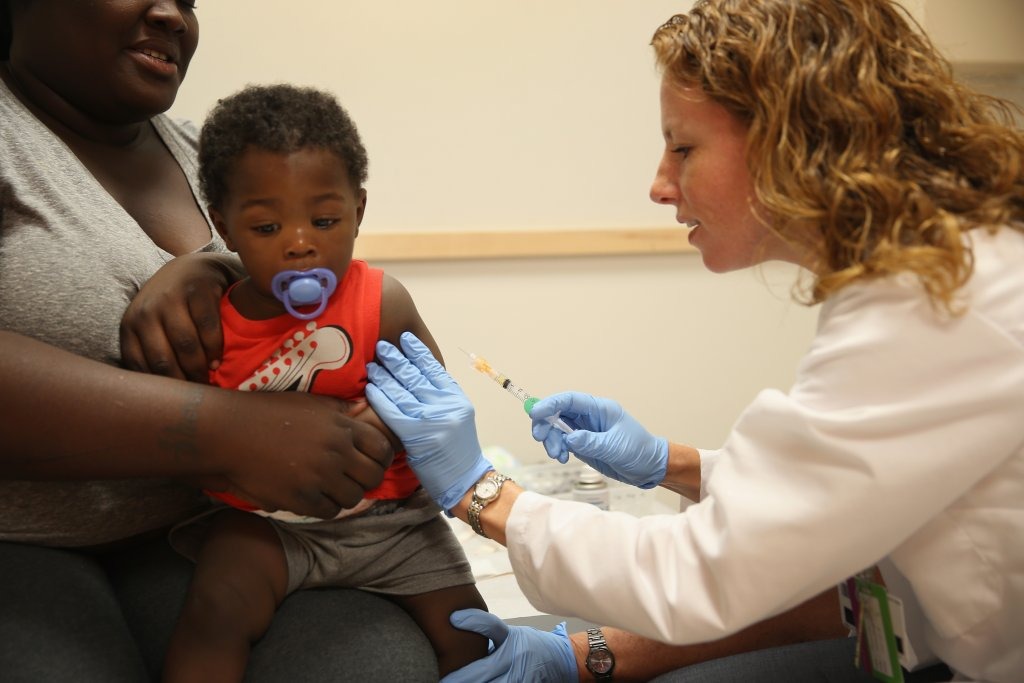
A House Republican is charging back into a continuing fight over vaccines and doctors that created a huge rift during last year’s Legislative Session.
Rep. Jeff Holcomb late last month filed HB 917, a proposal that takes aim at doctors who refuse to treat patients based on their vaccination schedule while also delving into other contentious health care treatment disputes.
The administration of Gov. Ron DeSantis backed a similar bill last year championed by Department of Health (DOH) Secretary and State Health Officer Dr. Joseph Ladapo, but the vaccine provision was stripped from the bill.
In an email to the Florida Phoenix, Holcomb said he “feels strongly” the bill will pass this year.
“We saw during the COVID pandemic that medical decisions were made without proper safety measures. We have a similar situation with the childhood vaccine schedule. The vaccines our children are mandated to have do not have sufficient safety studies. This was confirmed yesterday with CDC shrinking the recommended childhood vaccine schedule,” he said, referencing the decision Monday to shrink the recommended number of childhood vaccines from 17 to 11.
Holcomb’s bill doesn’t eliminate any vaccine mandate now in Florida statute or rule.
The bill does amend Florida’s Patient’s Bill of Rights and Responsibilities to make clear that a health care provider or facility cannot discriminate against a patient based upon the patient’s vaccination status.
Additionally, Holcomb’s bill would add “vaccine status” to the list of reasons protected in law why patients cannot be discriminated against. That list now includes race, national origin, handicap and source of payment.
The bill would allow DOH or the appropriate licensing board to discipline providers who discriminate against patients based on vaccine status. The penalties in law vary from restricting, suspending or revoking a license to imposing administrative fines, or both.
Florida Chapter of the American Academy of Pediatrics President Rana Alissa, a Jacksonville physician, said the association does not support HB 917.

“When you have somebody that is unvaccinated and coming with fever, what if that patient has measles? If they are going to come and be in the waiting room with people who have leukemia, or for any reason they do have a lower immune system, they are going to expose them to measles,” Alissa said.
Physician’s offices aren’t designed to safely accommodate unvaccinated patients, she said.
“You have to change the way clinics are built. You have to have a different waiting room, you have to have a different stairs, you have to have a different elevator. You have to have negative-pressure rooms to accommodate these unvaccinated kids when they have signs and symptoms of the illness,” she said.
“You want to force them to take unvaccinated kids? Then you have to help them reconstruct their clinics and you have to basically accommodate them accordingly.”
The language is identical to what the DeSantis administration pushed for last year in a far-reaching bill that addressed an array of DOH-related issues, from background screening requirements for staff at medical marijuana treatment centers to physician licensure requirements.
While HB 1299 ultimately passed and was signed by the Governor, it didn’t contain the anti-discrimination language the DeSantis administration wanted.
Another vaccine-related provision in HB 917 left over from the 2025 Session addresses messenger ribonucleic acid (mRNA) vaccines.
The Legislature in 2023 passed a law that banned governmental entities, business establishments and educational institutions from discriminating against someone based on mRNA vaccination status. Essentially, the law banned the use of vaccine passports in Florida. But it was valid only through June 2025.
The DeSantis administration tried unsuccessfully last year to make the ban permanent in HB 1299, but the Legislature refused to go along. Lawmakers did agree, however, to extend the ban through June 2027. HB 917 would make the ban permanent.
DeSantis in September criticized the Legislature for refusing to go along with his health-care proposals. Specifically regarding the mRNA provisions, DeSantis said: “That’s got to be made permanent. I mean, everyone is glad that we did that. Even the far left, I don’t hear them, at least publicly they won’t admit they’re for vaccine passports. It doesn’t make sense. So, they need to do that.”
The Governor and Ladapo said over the Summer that they want to eliminate all vaccine mandates from Florida statutes. That would require legislative buy-in that isn’t clear the Governor and Ladapo, his state health czar, can expect.
In the meantime, DOH has proposed changing its rules regarding vaccine requirements for school and day care, specifically removing requirements for children to receive the hepatitis B, varicella (chicken pox), and haemophilus influenza B, or Hib, vaccine. DOH is proposing to also eliminate those vaccines, along with the pneumococcal conjugate vaccine for admission to a licensed day care facility.
It held a lengthy public meeting on the proposed rule changes in December.
Vaccines maintained, disclosure added
HB 917 wouldn’t eliminate any vaccine mandate from statute. But the legislation would require every licensed health care provider authorized to vaccinate children to advise parents and legal guardians of the “unique risks, benefits, safety, and efficacy of each vaccine included on the Centers for Disease Control and Prevention’s Child and Adolescent Immunization Schedule.”
Holcomb’s bill would require health care providers to give parents and legal guardians the option of following “alternative vaccination schedules that may consist of not more than one injection or oral administration at each encounter.”
Parent and legal guardians would be required to sign a document attesting they have been provided the requisite immunization information.
Behind-the-counter ivermectin
HB 917 would authorize pharmacists to sell ivermectin “behind the counter.”
Ivermectin is an effective treatment for parasites in animals and for use by humans to treat parasites such as head lice and scabies, according to the National Institutes of Health. The Food and Drug Administration has not approved ivermectin for treatment or prevention of COVID, and so far recommends against taking it for COVID, instead suggesting people get vaccinated for protection.
Nevertheless, there was buzz during the pandemic about using it for treatment for COVID.
HB 917 provides pharmacists who sell ivermectin from behind the counter with immunity from civil and criminal liability as well as disciplinary protections.
Specifically, HB 917 would authorize pharmacists to provide ivermectin to patients and customers as long as the pharmacist provides written information about the indications and contraindications of the use of ivermectin and the appropriate dosage for using ivermectin. The information must advise the person to seek follow up care from a primary care physician.
There is no age restriction in HB 917 for the purchase of ivermectin. Holcomb has also filed HB 29, to legalize over-the-counter sale of ivermectin. That means it wouldn’t be limited but freely accessible.
HB 29 has been referred to three House committees. There is no Senate companion.


As Florida moves forward with rulemaking that could significantly alter long-standing childhood immunization requirements — and as lawmakers introduce legislation reshaping vaccine policy — parents, physicians, business leaders, and public health advocates have launched Florida Families for Vaccines, a new statewide coalition focused on preserving evidence-based vaccine protections.
The group’s launch comes as the Florida Department of Health considers changes affecting requirements for several childhood vaccines and reporting standards through Florida SHOTS, while lawmakers prepare for debate on House Bill 917, filed by Rep. Jeff Holcomb. The proposal would reshape how vaccination status is treated in health care and school settings.
Medical professionals warn that changes to Florida’s immunization framework could have far-reaching consequences for children, families, and communities statewide.
“As a pediatrician and President of the Florida Chapter of the American Academy of Pediatrics, I am deeply concerned about proposals to remove requirements for Hepatitis B, Varicella, Hib, and Pneumococcal conjugate vaccines that protect infants and children from severe, sometimes fatal infections,” said Rana Alissa, M.D., an associate professor of pediatrics and board-certified pediatrician in Jacksonville. “These immunizations are cornerstones of public health. Weakening requirements, altering Florida SHOTS reporting, or broadening exemptions risks reversing decades of progress and invites outbreaks of preventable diseases.”
Physicians who practiced before widespread vaccination recall the devastating effects of once-common childhood illnesses.

“I vividly remember caring for children with Haemophilus influenzae infections before the Hib vaccine existed,” said Paul Robinson, M.D., F.A.A.P., an adolescent medicine physician in Tallahassee and past president of the Florida Chapter of the American Academy of Pediatrics. “Removing Hib from Florida’s vaccine requirements, or weakening record-keeping and exemption standards, is not just shortsighted — it’s dangerous. These diseases haven’t disappeared; they’re controlled because Florida maintains strong requirements and reliable reporting through Florida SHOTS.”
Parents say the issue transcends politics. A recent statewide poll by the University of North Florida’s Public Opinion Research Lab found nearly two-thirds of Florida voters oppose eliminating childhood vaccine requirements, reflecting broad concern about weakening school health protections.
For some families, the debate is deeply personal.
“In 2009, my daughter Lawson went from a healthy, vibrant 18-year-old to fighting for her life in a matter of hours,” said Cathy Mayfield, a Tallahassee parent and founder of Run for Lawson, whose daughter died of meningitis. “We lost her within 36 hours — a loss no parent should ever endure. That is why vaccines matter. They prevent diseases that can steal our children without warning.”
Public health experts caution that weakening immunization standards could invite preventable outbreaks.

“As a pediatric infectious disease physician, I cared for children before the varicella vaccine and saw ‘simple chickenpox’ turn into pneumonia, encephalitis, and needless hospitalizations,” said Dr. Nectar Aintablian, a pediatric infectious disease specialist in Tallahassee. “Vaccines work so well we forget the suffering they prevent. Florida’s long-standing requirements, paired with tools like Florida SHOTS, are what keep these protections strong.”
Support for maintaining vaccine protections extends beyond the medical community. Business leaders note that stable immunization policies underpin workforce reliability and economic growth.
“When preventable diseases spread, the ripple effects hit families, employers, and local businesses alike,” said Julio Fuentes, President and CEO of the Florida State Hispanic Chamber of Commerce.
Florida Families for Vaccines aims to provide parents and community members with a unified voice as the policy debate unfolds.
“As Florida considers changes to its vaccine rules, I hope we maintain the consistent, evidence-based protections that have served families well,” said Northe Saunders, President of American Families for Vaccines. “That’s why we launched Florida Families for Vaccines — to give parents and community members a trusted place to engage and speak up.”
Meanwhile, HB 917, which does not yet have a Senate companion, would add vaccination status to Florida’s Patients’ Bill of Rights, limit providers’ ability to deny care based on vaccination status, expand parental opt-out options for school requirements, impose new consent and disclosure standards before vaccinating minors, and allow pharmacists to dispense ivermectin without a prescription. If approved, the bill would take effect July 1.
As rulemaking proceeds and lawmakers convene for the 2026 Legislative Session, Florida Families for Vaccines plans to engage parents, health professionals, and community leaders statewide through public comment and advocacy.
The group’s launch underscores a central reality of the months ahead: decisions made in Tallahassee will shape Florida’s public health, schools, and families for years to come.


Russell & Bromley physical stores at risk in potential takeover

Liesa Priddy crosses $215K raised for HD 82 bid

Amiri names Japan’s Yuta Jinguji its latest ambassador
-

 Politics8 years ago
Congress rolls out ‘Better Deal,’ new economic agenda
-
Entertainment8 years ago
New Season 8 Walking Dead trailer flashes forward in time
-
Politics8 years ago
Poll: Virginia governor’s race in dead heat
-
Entertainment8 years ago
The final 6 ‘Game of Thrones’ episodes might feel like a full season
-
Politics8 years ago
Illinois’ financial crisis could bring the state to a halt
-
Entertainment8 years ago
Meet Superman’s grandfather in new trailer for Krypton
-
Business8 years ago
6 Stunning new co-working spaces around the globe
-
Tech8 years ago
Hulu hires Google marketing veteran Kelly Campbell as CMO