Connect with us

Business

Beyond the CES hype: why home robots need the self-driving car playbook

Published

on


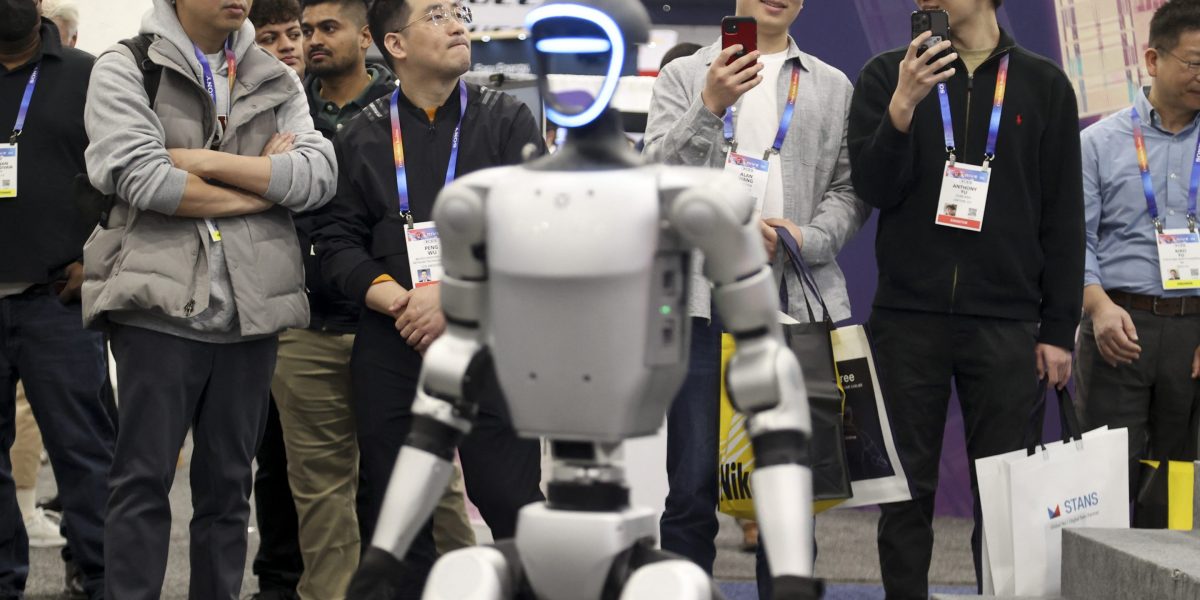
With CES 2026 upon us and some predicting that the first affordable home robot will set off a technological race to market this year, those walking the conference floor in Las Vegas this week can expect thrilling robot demos and big promises we’ve been hearing since the 1960s. The explosion of AI has thrown the humanoid home robot hype machine into full tilt, and to be fair, an AI home revolution is indeed underway. 

While we’ve embraced Roombas, smart thermostats, and AI-powered security systems like Ring doorbells for years, significant issues remain, such as data availability, privacy, and social acceptance, before we achieve Jetson-era assistants who will not only fold our laundry and help us care for our children and aging parents, but be trusted to do so.  

As our cars continue to gain more autonomy, it would seem the time is ripe for home robots. After all, if the AI, sensors, computing hardware, and other components required for autonomy have become powerful and safe enough for the road, why can’t they take on the home?

I’ve been around computers since receiving my Commodore 64 as a kid. Now, as an AI and robotics professor and a founder of an AI startup, I’m exploring how computer-based systems interact with our world. While we have come far, there are many technological hurdles the industry must overcome to deliver fully autonomous humanoid robots.

The Autonomy Myth

For all the hype and advances in AI programming, over 46 percent of companies fail to turn their exciting, demo-ready proofs of concepts into something usable in the real world—in part because systems lack the data and experience to complete their AI training. In the home robotics space, being an early adopter puts a large portion of that training onus on users (paying users in fact) while also bringing up larger issues of privacy and safety.

Like autonomous cars and systems on the road, home robots must function safely and efficiently 99.999% of the time because one mistake could lead to catastrophic results such as a stovetop burner being left on, a missed pill, or a fall in the shower. In addition to being trained on the massive amounts of data captured by cameras, sensors, and experiments in the real world, home robots must also be prepared to perceive, reason, and act in the face of unexpected scenarios. 

This ability to adapt to real-world and unexpected situations has been a thorn in the side of autonomous cars on the road (remember that they were supposed to be available in 2020).While synthetic data, simulations, and experience help fill these holes, teams like Waymo’s Fleet Response also keep humans in the loop to help the AI make decisions and act fast when faced with scenarios that confound or confuse them.

Robots coming into our private homes will run into far more unexpected scenarios that range from each building’s unique physical map to the culture—the so-called patterns of life—of those who live there. No matter how much training is done off-site, setting up and continuously training for our environments today means sending to the cloud rich personal data about everything from when we sit down to eat to how we resolve conflicts with and parent our children. 

Amidst the ongoing privacy issues surrounding door cameras and the backlash over social media giants exploiting user data to train their own models, today’s robots invite both passive and active observers into our homes and leave our data exposed to bad actors.

Take the automotive road to success by solving one problem at a time

Working to resolve this privacy issue is one of the exciting challenges before the industry today. Even as we strive to find solutions here, developers and early adopters anxious for home robots that can actually deliver today can take a lesson from the automotive industry’s success. 

Ten years ago, our cars had basic cruise control, and today, that early AI assistance has evolved into adaptive cruise control, lane following systems, and more. Autonomous cars are, in fact, several AI systems working in concert. 

While the auto industry has been peeling off problems and use cases, one by one, we have not woven this sort of progress into the home. Over two decades after Roombas first entered our homes, most of our smart devices—Alexa assistants, Ring doorbells, and AI chatbots—still don’t physically interact with or move through the world around us.

The right refrigerator might notify us when we’re low on milk and even create a grocery order for us to approve, but there’s still no robot to unpack the groceries, let alone do our ironing or hang up our clothes—two of the many promises featured way back in this 1960s BBC predictions video.

Going up? Social acceptance is essential in stepping up new technology

While many of us would love to hand off our housework and even, at times, our kids to a trusty robot, the industry needs to do more than make them safe and reliable while being respectful of social expectations around privacy. Innovators also have to convince us to trust them.

Today, we take passenger elevators for granted, but as the very first autonomous vehicle, they were radical when introduced in the 19th century. Humans could suddenly step into a box, perhaps hear gears grind, and then exit the box on a different floor—and even as safety features were innovated, that was terrifying. That’s why when this remarkable feat became as easy as the push of a button, human operators remained on board.

Elevator operators are now a sign of prestige, but in the early days of this technology, their presence was essential to building trust and acceptance to evolve the social norm.

Similarly, while it’s hard to avoid stories about AI backlash since ChatGPT exploded, the technology has quietly been assisting us for years via services like credit card fraud detection. Credit card companies implemented protective algorithms without advertising the fact, and avoided backlash from users by bringing the human back into the equation once transactions were flagged for review.

In the home, another human is not the answer, which brings us back to the most challenging piece of the puzzle. While the home robotics industry can find success by addressing smaller problems that require less data and compute, innovators must also solve the much larger problem of how to acquire and protect the data that will fuel, train, and inform our trusty helpers.

We may not have to wait 50 years to catch up to the Jetsons, but the path is certainly longer and more complex than the home robot demos you’ll see at CES suggest. When walking the halls this week, don’t ignore the less exciting but useful window washer, bartender, or snowblower. Be inspired by the promise of those walking robots, even as we focus on the challenges that lie ahead. 

The opinions expressed in Fortune.com commentary pieces are solely the views of their authors and do not necessarily reflect the opinions and beliefs of Fortune.


Source link

Continue Reading

Business

Oil prices rise as Iran crackdown suggests Tehran fears a ‘dire security threat to the regime’

Published

on


Crude oil futures pointed to continued gains on Sunday as markets weighed potentially transformative events in Iran, which has been wracked by protests across the country.

U.S. oil prices rose 0.56% to $59.45 a barrel, and Brent crude climbed 0.52% to $63.67 a barrel, as reports said President Donald Trump is weighing military options in Iran to follow through on his threats to attack if the government kills protestors.

Iran, which pumps 3 million-4 million barrels per day, has seen protests spread nationwide amid an economic crisis. Human rights groups estimate hundreds have died from the government’s crackdown, as the regime’s piecemeal attempts to appease Iranians have failed.

The government cut off internet access in the country last week, slowing the flow of information on the latest developments. But various reports and expert assessments indicate the unrest is posing a major threat to Tehran’s authority.

In particular, the security apparatus that keeps the leadership in power is showing cracks, according to the Institute for the Study of War (ISW).

“There are further indications that the ongoing protests are challenging the ability and willingness of Iranian security forces to crack down on the protests,” the think tank said in a recent report. “The IRGC Intelligence Organization released a statement on January 10 that it is ‘dealing with possible acts of abandonment.’ This statement suggests that some Iranian security forces may have already defected or that the regime is very concerned about this possibility.”

It cited additional reporting that pointed to some officers anticipating the regime’s collapse, forces in one city refusing to fire on protesters, and the possibility the government will deploy the regular army.

These rank-and-file troops, known as the Artesh, are less ideological and more representative of the Iranian population than the Islamic Revolutionary Guard Corps, ISW said. That raises the risk Artesh troops, who aren’t trained to handle civil unrest, could defect and indicates internal security forces are stretched thin, it added.

A separate analysis from ISW noted that the government is treating the protests as a military issue instead of a law enforcement one. It also said Tehran “has taken the rare step of using the IRGC Ground Forces to suppress protests because it has likely determined that these protests represent a dire security threat to the regime.”

Energy markets are digesting the implications of political upheaval in Iran, a top OPEC member with the world’s third largest proven oil reserves. In fact, anti-government protests have already spread to Iran’s oil sector with workers at a large refining and petrochemical complex going on strike.

Market tracker Kpler said in post on X on Saturday that Iran’s regime faces a tipping point and is under unprecedented strain.

“Though a full collapse remains a low-probability event, the rising risk is already lifting the geopolitical premium in oil markets. Any disruption—through factional conflict, export curbs or external intervention—could prompt near-term price spikes, despite global surpluses,” it added.

“Over the medium term, regime change could unlock sanctions relief and reshape trade flows, with European, Indian and Japanese refiners poised to benefit, while Chinese independents and Middle Eastern producers face stiffer competition.”


Source link

Continue Reading

Business

Anthropic debuts Claude for Healthcare, partners with HealthEx for patient electronic health records

Published

on


AI lab Anthropic is making a major push into healthcare with the launch of Claude for Healthcare and an expansion of its life sciences offerings.

The announcement, timed to coincide with the start of the JPMorgan Healthcare Conference in San Francisco this week, comes just days after OpenAI unveiled ChatGPT for Health. That’s no coincidence and reflects the growing competition among leading AI labs to build specialized products for lucrative industries like healthcare, finance, and coding.

The Claude for Healthcare announcements include a partnership with HealthEx, a startup that allows patients to see all of their electronic medical records in a single place and control access to that data. The partnership includes a way for users to connect their personal medical records to Anthropic’s Claude in order to use the chatbot to answer health-related questions.

“HealthEx lets people bring their health records into a conversation with Claude and ask important questions in everyday language—What does this lab result mean? What should I bring up with my doctor? How has this number changed over time?—and get answers grounded in their own health history,” Amol Avasare, product lead at Anthropic, said.

The announcements also include a similar set of connectors for Function Health, a company that helps patients schedule lab tests and interpret the results, as well as integrations with Apple Health and Android Health Connect that will be rolling out to beta testers next week. For now, the connectors to HealthEx and Function Health are available to Claude Pro and Max subscribers in the U.S.

Health-related queries are among the leading consumer use cases of AI chatbots. But so far, Anthropic has been less focused on serving the general consumer market than its rival OpenAI, which boasts more than 800 million weekly users. Anthropic is thought to have far fewer consumer users and has instead concentrated on specialized use cases, such as software coding, that more naturally appeal to enterprise customers. It has pulled ahead of OpenAI in enterprise marketshare according to several recent surveys. It has also recently been creating more tailored versions of Claude to serve other industry or professional verticals, such as Claude for Financial Services and Claude for Life Sciences.

Anthropic has said it is interested in serving consumers as well as large organizations, and today’s announcements were aimed at both consumers and enterprise customers, such as hospitals, insurers, and pharmaceutical companies.

New offerings for healthcare providers, insurers, and pharma

The company said it was adding connectors to industry-standard databases including the Centers for Medicare & Medicaid Services Coverage Database, the International Classification of Diseases (ICD-10), the National Provider Identifier Registry, and PubMed.

These connectors are designed to help healthcare providers with tasks like speeding up prior authorization requests, supporting claims appeals, coordinating care, and triaging patient messages.

For life sciences companies, Anthropic is expanding beyond its initial focus on preclinical research to support clinical trial operations and regulatory work. New connectors include Medidata for clinical trial data and ClinicalTrials.gov. It is also launching connectors to bioRxiv and medRxiv—which are repositories for medical and biological research papers, usually before their findings have been peer reviewed; Open Targets, a database of identified drug targets; and ChEMBL, a database of bioactive compounds that could be used to make drugs.

The company is working with major healthcare and pharmaceutical companies including AstraZeneca, Sanofi, Genmab, Banner Health, Flatiron Health, and Veeva, among others. In a video clip Anthropic provided to reporters, it showed how Claude can now help a pharmaceutical company design a protocol for a Phase II clinical trial of a hypothetical drug designed to treat Parkinson’s Disease. It reduced the time it takes to draft the protocol design from many days to just about an hour.

Letting Claude use medical records to answer patient queries

Among the centerpieces of the new consumer health offerings is the partnership with HealthEx, which can help patients consolidate medical records from more than 50,000 health systems.

Fortune talked with executives from both companies exclusively about the new offering.

“Personal health records today are scattered across providers, and it can be difficult to get a complete view,” Avasare told Fortune. “HealthEx built a way to use Claude to unify those records with user consent and strong controls. Users decide what to share and can revoke access at any time, and their health data is never used for model training.”

HealthEx cofounders Priyanka Agarwal, now the company’s CEO, and Anand Raghavan, its CTO.

Photo courtesy of HealthEx

Users enable the HealthEx connector inside Claude, verify their identity, and connect their patient portal logins. HealthEx then unifies records across providers. When users ask Claude health-related questions, Claude uses Model Context Protocol (MCP)—an open standard Anthropic developed for connecting AI to external data sources—to securely retrieve relevant portions of the record for each specific question.

To enhance data privacy, Claude requests only the categories of information most likely to be relevant to a question—such as medications, allergies, recent lab reports, or doctor notes—rather than pulling an entire medical record. If relevance isn’t obvious, Claude can prompt users to broaden the scope, asking if they want to look further back in their history, Avasare said.

Priyanka Agarwal, cofounder and CEO of HealthEx, said the partnership addresses a fundamental problem in American healthcare: making it easier for consumers to access and understand their own health data.

“We’re giving every American a safe, private way for them to use their health data with AI,” Agarwal told Fortune. “We know that AI based on personal context is going to be more effective at providing support.” She said that by connecting medical records to HealthEx and HealthEx to Claude, users will get “responses [that] are grounded in your health history, not generic advice.”

According to Anthropic, the healthcare and life sciences announcements are possible because of recent improvements to Claude’s underlying capabilities. When tested on simulations of real-world medical and scientific tasks, Claude Opus 4.5, Anthropic’s latest model, substantially outperforms earlier releases. The company also said Opus 4.5 with extended thinking shows improvements in producing correct answers on honesty evaluations, reflecting progress on reducing factual hallucinations.


Source link

Continue Reading

Business

Buddhist monks are walking barefoot from Texas to DC with their dog, drawing crowds across the South

Published

on


A group of Buddhist monks and their rescue dog are striding single file down country roads and highways across the South, captivating Americans nationwide and inspiring droves of locals to greet them along their route.

In their flowing saffron and ocher robes, the men are walking for peace. It’s a meditative tradition more common in South Asian countries, and it’s resonating now in the U.S., seemingly as a welcome respite from the conflict, trauma and politics dividing the nation.

Their journey began Oct. 26, 2025, at a Vietnamese Buddhist temple in Texas, and is scheduled to end in mid-February in Washington, D.C., where they will ask Congress to recognize Buddha’s day of birth and enlightenment as a federal holiday. Beyond promoting peace, their highest priority is connecting with people along the way.

“My hope is, when this walk ends, the people we met will continue practicing mindfulness and find peace,” said the Venerable Bhikkhu Pannakara, the group’s soft-spoken leader who is making the trek barefoot. He teaches about mindfulness, forgiveness and healing at every stop.

Preferring to sleep each night in tents pitched outdoors, the monks have been surprised to see their message transcend ideologies, drawing huge crowds into churchyards, city halls and town squares across six states. Documenting their journey on social media, they — and their dog, Aloka — have racked up millions of followers online. On Saturday, thousands thronged in Columbia, South Carolina, where the monks chanted on the steps of the State House and received a proclamation from the city’s mayor, Daniel Rickenmann.

The physical toll of the monks long walk

At their stop Thursday in Saluda, South Carolina, Audrie Pearce joined the crowd lining Main Street. She had driven four hours from her village of Little River, and teared up as Pannakara handed her a flower.

“There’s something traumatic and heart-wrenching happening in our country every day,” said Pearce, who describes herself as spiritual, but not religious. “I looked into their eyes and I saw peace. They’re putting their bodies through such physical torture and yet they radiate peace.”

Hailing from Theravada Buddhist monasteries across the globe, the 19 monks began their 2,300 mile (3,700 kilometer) trek at the Huong Dao Vipassana Bhavana Center in Fort Worth.

Their journey has not been without peril. On Nov. 19, as the monks were walking along U.S. Highway 90 near Dayton, Texas, their escort vehicle was hit by a distracted truck driver, injuring two monks. One of them lost his leg, reducing the group to 18.

This is Pannakara’s first trek in the U.S., but he’s walked across several South Asian countries, including a 112-day journey across India in 2022 where he first encountered Aloka, an Indian Pariah dog whose name means divine light in Sanskrit.

Then a stray, the dog followed him and other monks from Kolkata in eastern India all the way to the Nepal border. At one point, he fell critically ill and Pannakara scooped him up in his arms and cared for him until he recovered. Now, Aloka inspires him to keep going when he feels like giving up.

“I named him light because I want him to find the light of wisdom,” Pannakara said.

The monk’s feet are now heavily bandaged because he’s stepped on rocks, nails and glass along the way. His practice of mindfulness keeps him joyful despite the pain from these injuries, he said.

Still, traversing the southeast United States has presented unique challenges, and pounding pavement day after day has been brutal.

“In India, we can do shortcuts through paddy fields and farms, but we can’t do that here because there are a lot of private properties,” Pannakara said. “But what’s made it beautiful is how people have welcomed and hosted us in spite of not knowing who we are and what we believe.”

Churches, families and towns host the monks along their path

In Opelika, Alabama, the Rev. Patrick Hitchman-Craig hosted the monks on Christmas night at his United Methodist congregation.

He expected to see a small crowd, but about 1,000 people showed up, creating the feel of a block party. The monks seemed like the Magi, he said, appearing on Christ’s birthday.

“Anyone who is working for peace in the world in a way that is public and sacrificial is standing close to the heart of Jesus, whether or not they share our tradition,” said Hitchman-Craig. “I was blown away by the number of people and the diversity of who showed up.”

After their night on the church lawn, the monks arrived the next afternoon at the Collins Farm in Cusseta, Alabama. Judy Collins Allen, whose father and brother run the farm, said about 200 people came to meet the monks — the biggest gathering she’s ever witnessed there.

“There was a calm, warmth and sense of community among people who had not met each other before and that was so special,” she said.

Monks say peace walks are not a conversion tool

Long Si Dong, a spokesperson for the Fort Worth temple, said the monks, when they arrive in Washington, plan to seek recognition of Vesak, the day which marks the birth and enlightenment of the Buddha, as a national holiday.

“Doing so would acknowledge Vesak as a day of reflection, compassion and unity for all people regardless of faith,” he said.

But Pannakara emphasized that their main goal is to help people achieve peace in their lives. The trek is also a separate endeavor from a $200 million campaign to build towering monuments on the temple’s 14-acre property to house the Buddha’s teachings engraved in stone, according to Dong.

The monks practice and teach Vipassana meditation, an ancient Indian technique taught by the Buddha himself as core for attaining enlightenment. It focuses on the mind-body connection — observing breath and physical sensations to understand reality, impermanence and suffering. Some of the monks, including Pannakara, walk barefoot to feel the ground directly and be present in the moment.

Pannakara has told the gathered crowds that they don’t aim to convert people to Buddhism.

Brooke Schedneck, professor of religion at Rhodes College in Memphis, Tennessee, said the tradition of a peace walk in Theravada Buddhism began in the 1990s when the Venerable Maha Ghosananda, a Cambodian monk, led marches across war-torn areas riddled with landmines to foster national healing after civil war and genocide in his country.

“These walks really inspire people and inspire faith,” Schedneck said. “The core intention is to have others watch and be inspired, not so much through words, but through how they are willing to make this sacrifice by walking and being visible.”

On Thursday, Becki Gable drove nearly 400 miles (about 640 kilometers) from Cullman, Alabama, to catch up with them in Saluda. Raised Methodist, Gable said she wanted some release from the pain of losing her daughter and parents.

“I just felt in my heart that this would help me have peace,” she said. “Maybe I could move a little bit forward in my life.”

Gable says she has already taken one of Pannakara’s teachings to heart. She’s promised herself that each morning, as soon as she awakes, she’d take a piece of paper and write five words on it, just as the monk prescribed.

“Today is my peaceful day.”


Source link

Continue Reading

Trending

Copyright © Miami Select.