Connect with us

Fashion

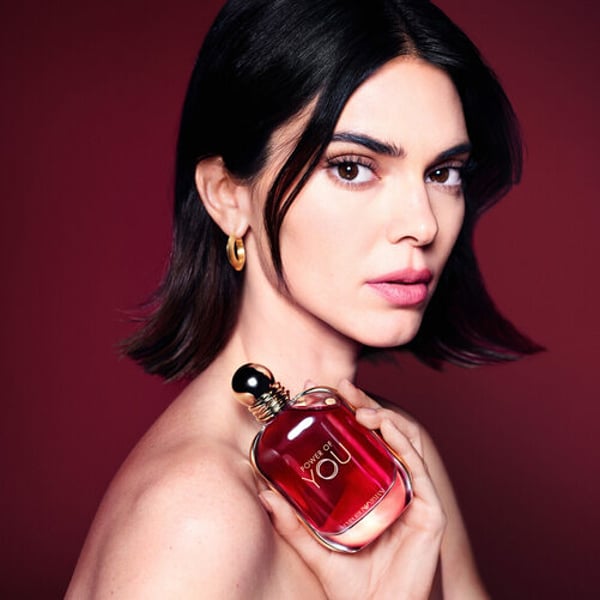
Emporio Armani names Kendall Jenner as global fragrance ambassador

Published

on


Published


January 6, 2026

Emporio Armani has named supermodel Kendall Jenner to be its new global fragrance ambassador, to feature in its next Power of You eau de parfum campaign, the fashion house and L’Oréal announced on Tuesday.

Kendall Jenner for Emporio Armani – Emporio Armani

 
“Joining the Emporio Armani family was a total no-brainer. I’ve always loved that they empower you to just be who you are. The Power of You Eau de Parfum scent is everything- it’s magnetic, rich, and feels really sensual,” said Jenner, whose debut campaign will launch in February 2026.
 
Jenner, a model and entrepreneur whose work spans fashion, beauty, and business, first came to prominence on E!’s Keeping Up with the Kardashians back in 2007. She currently appears in The Kardashians on Hulu and Disney+.

Recognised as a world-renowned top model, Jenner’s career accelerated after a breakthrough at Marc Jacobs’ Fall 2014 show. She has since appeared on the covers of Vogue, Harper’s Bazaar, and Allure worldwide, and has walked for leading global fashion houses across couture, ready-to-wear, and lingerie.
 
“Jenner is a leading figure on the global fashion stage, uniting refined runway presence with disciplined entrepreneurial acumen. Her distinguished career, marked by headlining Haute Couture presentations, high-profile international campaigns, and the stewardship of her own brands has earned a loyal worldwide audience and the considered respect of industry leaders. Navigating with clarity across fashion, beauty, and business, she exemplifies a multifaceted talent defined by poise, consistency, and enduring impact,” said the house of Armani and L’Oréal, its global beauty licensor, in a joint release on Tuesday.
 
In 2023, Jenner became a global brand ambassador for L’Oréal Paris, serving in key makeup campaigns and reflecting the brand’s message of confidence and self-worth.
 
Beyond the runway, Jenner is the founder of 818 Tequila, an award-winning brand recognised with more than 30 international distinctions. Her commitment to responsible practice includes support for 1% for the Planet and a partnership with S.A.C.R.E.D. on the 818 Bricks Program, which transforms agave byproducts into sustainable building materials.
 
Jenner’s link-up with Armani sees her join a pantheon of beauties and great actors that has included Cate Blanchett, Aaron Taylor-Johnson, Sydney Sweeney, Nathalie Emmanuel, Nicholas Galitzine, Keith Powers, singer Jackson Wang, and model Madisin Rian.   
 
Away from the spotlight, Jenner is an avid equestrian who has competed in horseback riding competitions, a décor enthusiast with a refined eye for design, and a car lover who enjoys both the artistry and thrill of automotive culture, the release underlined.
 
Armani’s beauty range with L’Oréal is renowned for several iconic products: its Luminous Silk and Power Fabric foundation ranges, Vertigo Lift mascara, Eye Tint eyeshadow, liquid lipsticks Lip Maestro and Lip Maestro Satin, and Lip Power lipstick. The brand also encompasses men’s and women’s fragrance collections, among which are the iconic and refillable Acqua di Giò, Armani Code, Sì, and My Way, as well as the Haute Couture fragrance range Armani/Privé.
    
Armani’s longstanding commitment to environmental and social responsibility is embodied by the brand’s global water initiative Acqua for Life, which, since its inception in 2010, has focused on providing universal access to drinking water in water-scarce regions.  
 
To continue to enhance the brand’s relationship with the world of filmmaking, since 2018 Armani has served as official beauty sponsor of the Venice International Film Festival. Also among the brand’s film festival partnerships are the Berlin International Film Festival and the San Sebastian International Film Festival. 
 

Copyright © 2026 FashionNetwork.com All rights reserved.


Source link

Continue Reading

Fashion

The sneaker boom had a long run. Now some analysts say it’s over

Published

on


By

Bloomberg

Published


January 11, 2026

For nearly two decades, sports brands benefited as people swapped out dress shoes for sneakers when heading everywhere from the airport to fancy restaurants and even the office.

Nike

That’s been a boon for Adidas AG, Nike Inc. and Puma SE, which capitalized on consumers’ changing tastes by serving up snazzy, comfy kicks that people wanted to wear on and off the playing field. The rising demand for sports shoes also underpinned the rapid growth of challengers like Hoka and On Holding AG, which emerged in the wake of the financial crisis and quickly became popular brands.

Now the future of that longstanding sneaker boom is being called into question, most notably by Bank of America analysts led by Thierry Cota. They rocked the footwear world last week with a 61-page analysis concluding that the growth prospects for these sports brands are rapidly dimming.

They argue that the sporting goods sector had enjoyed a 20-year “upcycle” that lifted sneakers from less than a quarter of world footwear sales to at least a half — a trend that culminated during the Covid pandemic, when millions of people were suddenly working from home. “With this structural shift largely complete, prospects for future revenue growth are now significantly reduced,” the analysts said.

They accompanied that view with a rare “double downgrade” of Adidas, abandoning their “buy” rating and declaring the stock one of the least attractive in the industry. 

Their contention that the sneaker boom has passed its peak prompted a backlash from skeptics who say the casual footwear trend has room to run. Longtime industry analyst Matt Powell, an adviser at consulting firm Spurwink River, conveyed that sentiment on LinkedIn, where he posted a Barron’s article about the research and commented: “C’mon, man! No evidence of this.”

Adidas shares plunged as much as 7.6% in response to the downgrade on Tuesday, before recovering part of those losses by the end of the week.

Sneakers now make up about 60% of footwear sales in the US, according to Beth Goldstein, an analyst at Circana in New York. Sport shoes have won over the population as part of a wider societal push toward comfort, health and wellness, priorities that probably aren’t going to disappear anytime soon, she said. The US sneaker category grew 4% last year through November, while the fashion category dropped 3%, she added.

“The sneaker business is larger than ever,” she said. “I wouldn’t even call casualization a trend — it’s just a key consumer preference.”

Yet the sneaker makers have run into headwinds since the pandemic as they sometimes failed to keep up with shoppers’ fickle tastes, saw sales cool particularly in China, and faced the threat of US tariffs. Shares of Adidas are down by almost a third in the past year, and even On Holding’s stock is down by more than 10% in the period, despite strong revenue growth.

“We don’t believe the casualization trend is over — rather, it has stabilized, with wardrobes now more balanced,” said Poonam Goyal, an analyst at Bloomberg Intelligence.

“The category has moved beyond the pandemic-driven demand spike and is now operating in a more normalized environment.”

There are signs that sneakers are bleeding into the dress shoe category. In 2025, the top-traded loafer on Stockx, an online resale platform, was the New Balance 1906L, which looks like the offspring of a preppy boat shoe and a marathon trainer. It’s also common these days to see movie stars and fashion influencers donning spiffed-up, expensive versions of trainers, often in collaboration with luxury brands like Gucci and Moncler.

The analysts at Bank of America didn’t suggest that people are going to ditch their sneakers for patent leather oxfords anytime soon. Rather, they indicated that sporting goods — after booming during the pandemic — have since mid-2023 been growing at a slower-than-average pace compared with the past couple of decades.

While that typically could mean the industry is poised to take off again, no big rebound is apparent, the analysts argued. They cited data ranging from recent credit card purchases to sluggish sales figures from Asian footwear and apparel suppliers to less-than-bullish commentary from industry leaders regarding the outlook for 2026.

If the sporting goods industry grew by an average of about 9% a year since 2007, as millions of people traded in dress shoes for sneakers, the future annual expansion may only be about 4% or 5%, they suggested.

Their optimistic take is that the industry is in a prolonged slump because of consumers fearing economic conditions and recent stumbles at Nike. That could mean that the sneaker boom still has legs and will resurge as early as 2027. 

“The alternative is much worse and more likely, in our view,” the Bank of America analysts added. “The emergence of a new, less favorable long-term industry paradigm.”


Source link

Continue Reading

Fashion

As natural resources dwindle, luxury fashion must pursue sustainability says Square Management study

Published

on


Published


January 11, 2026

Long defined by rarity, artisanal excellence, and desirability, the luxury sector now faces an unprecedented equation: how can it continue to create value without further increasing pressure on natural and social resources? This is the question addressed by the report “Business models for sustainable luxury,” published by the consultancy Square Management, which offers an in-depth analysis of the transformation of luxury business models through the lens of planetary boundaries.

Repair is one of the pillars of sustainable fashion – Shutterstock

The study’s first finding is that luxury occupies a strategic position in the ecological transition. With global sales of 364 billion euros in 2024 and considerable symbolic weight, it wields significant influence across the creative industries as a whole. Yet this influence plays out against a backdrop of multiple pressures: the growing scarcity of raw materials (gold, leather, cashmere); tighter regulation (the CSRD directive, the AGEC law, the Green Deal); the increasing integration of ESG criteria into financial valuation; evolving consumer expectations; and shifting cultural norms around consumption.

A strategy to be implemented globally

In the face of these shifts, the study shows that marginal adjustments are no longer enough and urges the luxury sector to undertake a profound transformation of its business models. To frame this reconfiguration, the report draws on the circular economy’s “9Rs” framework, which ranks sustainability strategies from the least to the most transformative, from recycling to calling into question overproduction.

The study highlights a wide variety of models already in play. The least ambitious strategies focus on waste-to-energy (Recover) or the recycling of raw materials (Recycle), with examples including Guerlain‘s refillable bottles and Prada‘s Re-Nylon line. More structurally significant are upcycling approaches (Repurpose, Remanufacture, Refurbish), which turn unsold items and dormant stock into creations with high symbolic value: Balenciaga, Jean Paul Gaultier, Coach, and Jeanne Friot exemplify this blend of circularity, creativity, and storytelling.

Reducing production and buying less: two key ideas for sustainability

Repair is a crucial lever. By extending product lifespans, it avoids the most emissions-intensive stages of the life cycle. Maisons such as Hermès, Chanel, and Cartier have made it a pillar of their client relationships, while platforms such as Tilli are helping to structure this practice at scale. Re-use and rental are also fast-growing markets, driven by younger generations: 65% of luxury consumers say they are interested in buying second-hand, according to the “True-Luxury Global Consumer Insights” report (BCG-Altagamma, 2023), a figure that is rising steadily.

When it comes to sustainability, the luxury industry must embrace its leadership role by fundamentally transforming the way it operates.
When it comes to sustainability, the luxury industry must embrace its leadership role by fundamentally transforming the way it operates. – Shutterstock

The most transformative models are those aimed at reducing production itself, namely Reduce, Refuse (superfluous purchases), and Rethink. On-demand manufacturing, pre-orders or limited production, as practised by Gabriela Hearst or MaisonCléo, help limit unsold stock while reinforcing exclusivity. Some houses go further still, committing to regenerative models: Kering invests in regenerative agriculture, while Chloé embeds social and environmental impact at the heart of every product as a mission-driven company. However, the report emphasises that these transformations face major obstacles.

The limits of the “do less harm” philosophy

Internally, many obstacles are cited to the introduction of circular models: complex logistics, high costs, cognitive resistance, and a cultural attachment to ownership. To overcome these, the study’s authors identify several key factors, including enhanced traceability (notably via blockchain), co-opetition between players to pool costs and, above all, the ability to reframe sustainable luxury symbolically, not as a renunciation, but as a new form of prestige.

The study also highlights a strategic shift: luxury can no longer settle for “doing less harm.” It is now expected to create positive, measurable, and shared value that is compatible with planetary boundaries. A transformation that profoundly redefines the very notion of desirability.

This article is an automatic translation.
Click here to read the original article.

Copyright © 2026 FashionNetwork.com All rights reserved.


Source link

Continue Reading

Fashion

Aritzia surpasses $1 billion in revenue as brand demand surges

Published

on


Published


January 11, 2026

Canadian fashion retailer Aritzia announced on Thursday a 42.8% increase in net revenue for the third quarter ended November 30, driven by strong demand across all channels and all geographies. 

Aritzia surpasses $1 billion in Q3 revenue as brand demand surges. – Aritzia

Aritzia posted net revenue of $1.04 billion, marking the highest quarterly revenue in the company’s history. Comparable sales increased 34.3 percent, with double-digit growth across retail and e-commerce and in both Canada and the United States. 

By region, in the United States, net revenue increased 53.8% to $621.1 million, compared to $403.7 million in Q3 2025. Net revenue in Canada increased 29.0% to $419.2 million, compared to $325.0 million in Q3 2025.

Retail revenue rose 35.1 percent to $657.3 million, while e-commerce revenue surged 58.2 percent to $383.0 million. Over the past 12 months, Aritzia opened 13 new boutiques and repositioned four, bringing its total global store count to 139.

Net income rose 87.5 percent to $138.9 million, while adjusted net income per diluted share climbed 54.9 percent to $1.10.

“Our performance was fueled by unparalleled demand for our everyday luxury offering. This was driven by our digital initiatives, which included the launch of our app, our new boutique openings and our strategic marketing investments. Our impressive growth in the United States continued as net revenue increased 54%, highlighting our expanding awareness and the tremendous momentum of the Aritzia brand,” said Jennifer Wong, chief executive officer.

Momentum has continued into the fourth quarter, according to Wong, who cited strong holiday demand for the Winter assortment and effective execution across Aritzia’s three growth pillars: geographic expansion, digital growth and increased brand awareness.

Looking ahead, Aritzia expects fourth-quarter net revenue between $1.10 billion and $1.125 billion, representing growth of 23 to 26 percent. For the full fiscal year, the company forecasts net revenue of $3.615 billion to $3.64 billion, up approximately 33 percent from fiscal 2025.

Copyright © 2026 FashionNetwork.com All rights reserved.


Source link

Continue Reading

Trending

Copyright © Miami Select.