
Politics
Checking the pulse of Florida health care news and policy

Welcome back to Diagnosis, a vertical focused on the intersection of health care policy and politics.
— Lifeline —
Florida has been awarded more than $209 million through the federal Rural Health Transformation Program, funding state officials say will significantly expand access to health care services in rural communities.
Gov. Ron DeSantis announced the award on Wednesday, calling it a significant investment to strengthen rural health care infrastructure through workforce development, innovation and expanded access to care. The funding will support a statewide plan that includes expanded clinical training and rural rotations, startup funding for rural and satellite clinics and investments in mobile health units, remote patient monitoring and advanced telehealth services.
The Agency for Health Care Administration will oversee implementation of the program and is expected to release related procurements in the coming months.
AHCA Secretary Shevaun Harris said the funding reflects feedback from providers and rural communities about their most pressing needs. She credited the Governor’s leadership for positioning the state to secure the award and said the focus will be on long-term improvements.
This award reflects the voices of our providers, stakeholders and rural communities who told us what they need most and we are laser-focused on creating lasting impacts in our rural communities by building a stronger workforce, leveraging innovation and expanding access to care. These investments will deliver sustainable improvements for rural families across Florida,” Harris said.
Health care advocates welcomed the funding, noting that rural communities often face provider shortages and long travel distances for essential services. Justin Senior, CEO of the Safety Net Hospital Alliance of Florida, said the investment will help hospitals better serve patients regardless of their ability to pay.
Florida Association of Community Health Centers President and CEO Jonathan Chapman said the funding will improve recruitment and retention of providers while expanding training opportunities across the state and Sarah Catalanotto, Executive Director of the Suwannee River Area Health Education Center, said the initiative will bring services closer to home, particularly for behavioral health and chronic disease management.
George E. Weems Memorial Hospital CEO David Walker added, “For rural hospitals, this funding is a lifeline.”

— Work smarter —
As 2026 approaches, health care systems nationwide are facing a familiar squeeze: rising costs, flat reimbursements and growing political pressure.
But one Florida hospital is showing that the path forward isn’t simply about getting bigger, it’s about getting smarter.
Tampa General Hospital has emerged as a model for how health systems can expand access and improve outcomes without sacrificing quality. Ranked the No. 1 hospital in Tampa Bay by U.S. News & World Report, the academic health system boasts two specialties ranked in the national Top 20 and eight others ranked in the Top 50.
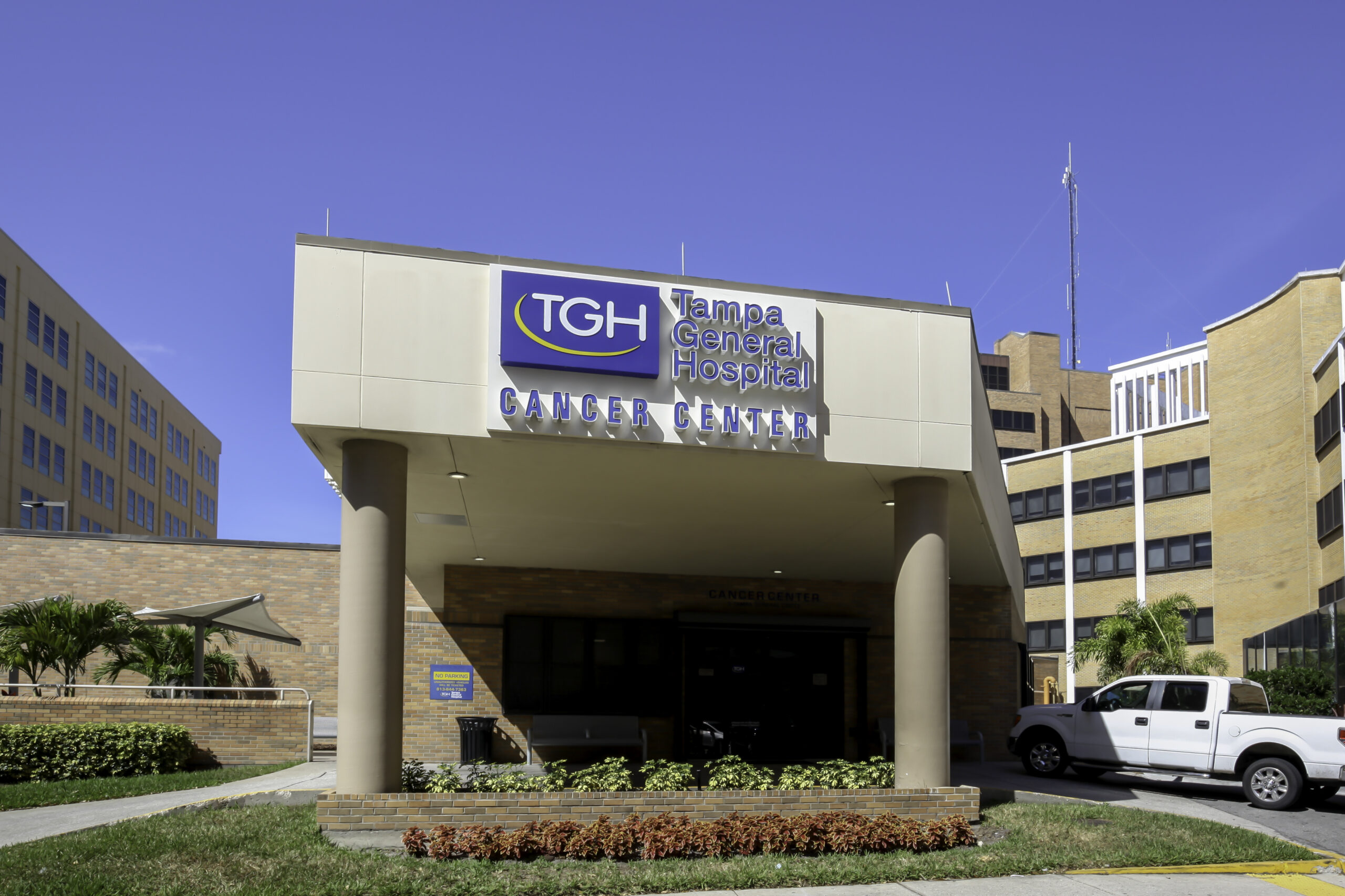
A key advantage is Tampa General’s close integration with the University of South Florida, a member of the Association of American Universities and home to Florida’s top-ranked medical school. That partnership fuels clinical research, workforce development, and the rollout of advanced treatments across the system.
Since CEO John Couris took the helm eight years ago, Tampa General has grown from a single hospital with 17 locations into a network of eight hospitals and more than 150 sites stretching from Palm Beach to Hernando County. Couris insists the growth strategy isn’t about scale for its own sake, but about improving care coordination, quality and patient outcomes.
That approach is evident in targeted acquisitions and partnerships, including the 2023 acquisition of three hospitals in Citrus and Hernando counties and a collaboration with Palm Beach County to enhance care at Lakeside Medical Center in Belle Glade.
Technology has also played a central role. Through a partnership with Palantir Technologies, Tampa General deployed advanced analytics and artificial intelligence tools that have delivered measurable results, including faster imaging turnaround times, reduced patient placement delays, and a sepsis program credited with saving more than 700 lives.
Couris credits the organization’s success to culture, emphasizing trust, transparency and talent development. It’s a philosophy that has allowed the organization to adapt and innovate despite industry challenges.
“When people trust one another, organizational performance explodes—operationally, clinically and strategically,” he recently told Health Leaders Media.

— Welcome aboard —
Gov. DeSantis has appointed five new members and reappointed four others to the panel that regulates dental licensure and practice standards statewide.
New to the Florida Board of Dentistry is Marc Anderson, a dentist at Anderson Dental and a member of the Florida Army National Guard, following prior service in the U.S. Air Force. Anderson earned a biology degree from the University of California-Los Angeles, a dental medicine doctorate from the University of Southern California and is currently pursuing a law degree from the University of New Hampshire.

Also appointed is Andrew Forrest, founder and clinical director of Orange Park Dental Partners. Forrest holds a teaching appointment as a clinical assistant professor in the University of Florida’s Department of Periodontics and previously served as a faculty reviewer for a McGraw-Hill Clinical Dentistry textbook. He earned a master’s degree in oral immunology from the University of Florida and a DDM from the University of Miami.
Dr. Chadwick Marshall, owner and surgeon at Chadwick J. Marshall Oral & Maxillofacial Surgery, brings extensive professional leadership experience, including service as a Board member and former President of the Florida Society of Oral and Maxillofacial Surgery and the Okaloosa-Walton Dental Society. He earned degrees from Florida State University and the University of Florida.
Jessica Stilley-Mallah, a periodontist at the Periodontal Health Center in Tampa, previously served as President of the West Coast District Dental Association and is a member of the American Dental Association Dental Content Committee. She earned degrees from the University of Florida and The Ohio State University.
Rounding out the new appointees is Elizabeth Traverso, an Assistant State Attorney in the Sixth Judicial Circuit and a 2022 Prosecutor of the Year honoree for her work on gang prosecutions. The Board of Dentistry must include two “laypersons” — people who are not and have never been dentists, dental hygienists or other oral health professionals.
Reappointed to the Board are Dr. Bradley Cherry, Karyn Hill, Angela Johnson and Nicholas White, all of whom continue their service following prior terms.
— Welcome aboard, Part II —
DeSantis also closed 2025 with a quartet of appointments to the Florida Board of Osteopathic Medicine, which oversees licensure and regulation of osteopathic physicians in the state.
New to the Board is Terry Reid-Paul, Vice Chancellor of Academic Affairs at Keiser University. Reid-Paul has experience in academic leadership and health care education. She is an active member of the American Society of Radiologic Technologists and was honored with the Mallinckrodt Award of Excellence for Outstanding Leadership Performance in 2007. Reid-Paul earned her bachelor’s degree from Florida Atlantic University and her master’s degree in business administration and health care management from the University of Phoenix.

Also appointed is Derek “Patrick” Rooney, a Shareholder at GrayRobinson, P.A., with a strong background in public service and economic development. Rooney currently serves as President of the Charlotte County Economic Development Partnership, Chair of the Punta Gorda Utility Advisory Board, and Treasurer of the Tiger Bay Club of Southwest Florida. He earned his bachelor’s degree in political science and international relations from Florida International University and his law degree from American University.
The Governor also reappointed Dr. Monica Mortensen, a pediatric endocrinologist with Nemours Children’s Health. Mortensen previously practiced at Central Florida Family and Project Health and brings clinical experience in pediatric specialty care. She earned her bachelor’s degree in biology from Loyola University and her Doctor of Osteopathic Medicine degree from Midwestern University.
The second reappointment was Dr. William Kirsh, a practicing physician at the University of Miami Hospital and Clinics and former Chief Medical Officer of Sentry Data Systems. Kirsh is Board-certified in family medicine, geriatrics, hospice and palliative medicine. His academic background includes degrees from Florida State University, Johns Hopkins University and Southeastern University.
— ICYMI —
“JJ Grow bill aims to dissolve Citrus County Hospital Board” via Mike Wright of Florida Politics — A bill filed by Rep. Grow would dissolve the Citrus County Hospital Board, a body created in 1949 to oversee what became Citrus Memorial Hospital, ending its existence on Oct. 1, 2026. The legislation would transfer remaining assets and oversight of the county’s long-term hospital lease to the Citrus County Board of County Commissioners. Hospital Board leaders say the move reflects years of discussion and structural changes that rendered the Board obsolete after hospital operations shifted to a nonprofit foundation and, in 2013, to a 50-year lease with HCA. “We’ve been talking about this for six years,” said Board Chair Dr. Mark Fallows. Attorney William Grant said officials want to “sunset in a way that’s consistent with the mission and the good work” of the Board. The measure follows years of financial instability, restructuring, and a recent settlement with state regulators.

“Proposal would extend Florida medical pot registrations for up to two years” via Mitch Perry of the Florida Phoenix — The legislation (SB 1032) by Sen. Alexis Calatayud also would allow doctors to increase significantly the supply limits that qualified doctors can prescribe to patients. The bill would allow doctors to issue certifications for up to 10 70-day supply limits of smokable medical marijuana, rather than three. Doctors could also issue up to 20 35-day supply limits, up from the existing six. The proposal would waive the $75 registration and annual renewal fees to receive a medical marijuana ID card for any military veteran honorably discharged from the U.S. armed forces. A similar measure (HB 719) was filed in the House last month by Rep. Bill Partington. His bill would go further by requiring the Florida Department of Health to establish reciprocity agreements allowing patients from other states to qualify for a registration card “within one business day.”
“NWF Health Network expands Christmas adoptions, bringing the gift of family to 22 Florida kids” via Janelle Irwin Taylor of Florida Politics — NWF Health Network, with various community partners, is expanding its Christmas adoption ceremony program to two new counties, and adding family reunification in Leon County. Five children will be adopted in Okaloosa County by three families in a ceremony on Monday in Fort Walton Beach. Two children will also officially be adopted by their forever parents on Monday in Milton, Santa Rosa County. It’s the first time NWF Health Network has hosted Christmastime adoptions in the two counties. Additionally, Leon County’s ceremonies, held on Friday, will include reunifications where children temporarily removed from a parent or guardian’s care are returned. Nine families will be reunited. Another two families will adopt a total of four children in ceremonies in Tallahassee.

— RULES —
The Agency for Health Care Administration revised the public notice published Sept. 30, 2025, in Vol. 51 No. 190 of the Florida Administrative Register regarding an amendment to the Medicaid State Plan for provisions authorized in the General Appropriations Act for fiscal year 2025-26. More here.

— PENCIL IT IN —
Jan. 8
9 a.m. — The EDR Self-Insurance Estimating Conference meets to review State Employees’ Health Insurance expenditures. Room 117, Knott Building.
Jan. 12
1:30 p.m. — The Senate Health Policy Committee meets. Room 412, Knott Building.
4 p.m. — The Senate Children, Families and Elder Affairs Committee convenes. Room 301, Senate Office Building.
Jan. 14
10:30 a.m. — The House Health Care Budget Subcommittee meets to consider health-related appropriations. Room 314, House Office Building.
11:30 a.m. — The Senate Appropriations Committee on Health and Human Services meets. Room 412, Knott Building.
1:30 p.m. — The House Health Care Facilities & Systems Subcommittee meets. Room 404, House Office Building.
4 p.m. — The House Health Professions & Programs Subcommittee meets. Room 102, House Office Building.