Connect with us

Business

Forget an MBA: Hasbro forces workers to sit through a Monopoly-style board game to see if they’re fit for the C-suite—and it’s a tactic approved by Reid Hoffman

Published

on


On the way up the corporate ladder, it’s not uncommon for companies to invest heavily in training their next generation of leaders—often by bringing in outside consultants, enrolling high performers in executive leadership programs, or even sending them off to top-ranked MBA programs.

At Hasbro, the toy giant behind Monopoly, Nerf, and Scrabble, the path to senior leadership looks a little different.

The company’s rising stars first undergo a two-day crash course in business fundamentals and the inner workings of the toy industry, taught by senior executives including CEO Chris Cocks himself. The curriculum spans strategy, capital allocation, and real-world case studies.

Then comes the final test.

On day three, participants are dropped into Toy Tycoon, an immersive, role-playing strategy game designed to simulate the pressures of running a toy company. Cocks has described it as “Monopoly meets a crash course MBA meets startup hustle, Hasbro-style.”

Players are grouped into teams and named co-CEOs of companies armed with existing Hasbro brands. Each round represents a year in business. As the game progresses, the decisions grow more complex—and the consequences more severe. Players must decide when to hire, where to invest, and how to scale operations, all while balancing sales, supply chain constraints, and human resources.

“As a company built on play, it makes sense for us to use a strategy game to develop future leaders,” Brian Baker, Hasbro’s senior vice president of board games, Play-Doh, and Nerf told Fortune. “Toy Tycoon helps our rising talent think like owners, work across teams, and build confidence making decisions, all while staying true to who we are as a company.”

A look at Toy Tycoon (Courtesy of Hasbro).

“I think the job of a CEO is very similar to a grand strategy game,” Cocks added to The Wall Street Journal. “Moving pieces on a complex game board has a lot of dynamism around it, and that’s partially why I like it.”

That philosophy fits naturally at Hasbro, an $12 billion company whose products revolve around play—and whose CEO is an avid gamer himself. Cocks introduced the idea for Toy Tycoon after participating in a similar simulation during his years at Microsoft.

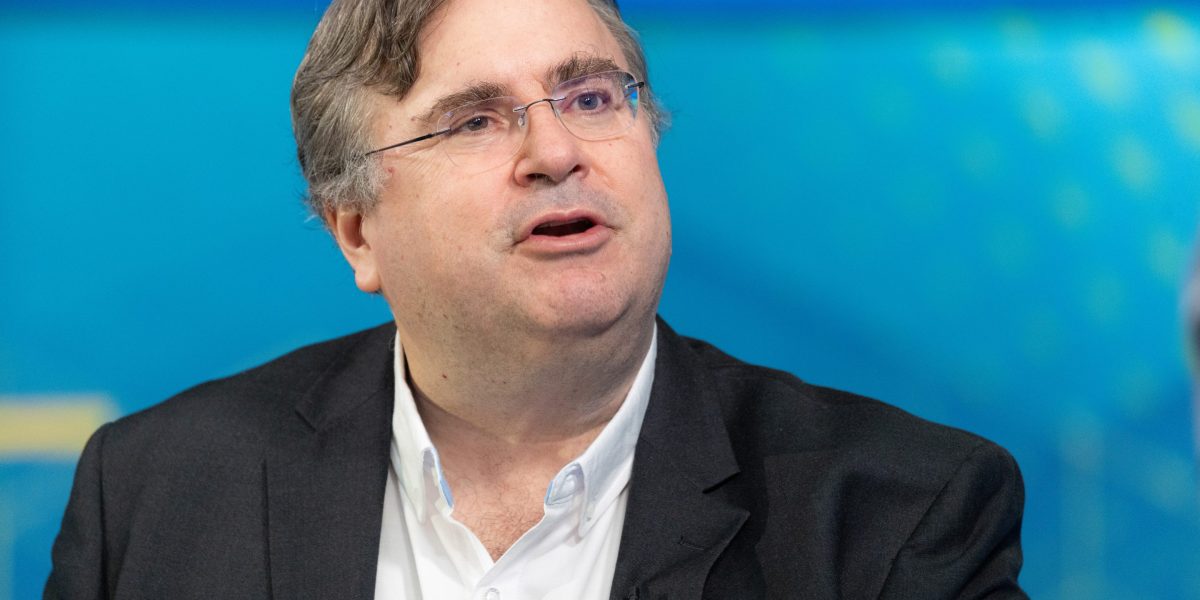
Top business leaders, like Elon Musk and Reid Hoffman, are big fans of games

Cocks isn’t alone in viewing games as more than entertainment. A growing number of business leaders argue that games can sharpen strategic thinking, risk assessment, and collaboration—skills that translate directly from the game board to the boardroom.

LinkedIn cofounder Reid Hoffman, for instance, is an avid player of Settlers of Catan, and has called the game “the best board game for entrepreneurs,” citing its emphasis on resource management, negotiation, and alliance-building.

Microsoft CEO Satya Nadella and Meta CEO Mark Zuckerberg have also spoken about the strategy lessons they’ve taken from playing Civilization, a turn-based video game franchise built around long-term planning, tradeoffs, and empire-building.

But few executives are as publicly devoted to games as Elon Musk. The world’s richest man has long logged marathon gaming sessions—even in pivotal moments in his business career. When negotiating the acquisition of Twitter in April 2022, Musk stayed up until 5 a.m. the night before playing Elden Ring. And last year, while serving as DOGE administrator, he livestreamed himself playing video games on X.

It’s an obsession biographer Walter Isaacson has argued is central to understanding Musk’s leadership style, which he described as driven by “intensity, focus, competitiveness, die-hard attitudes, and love of strategy.”

At the time, Musk said his favorite game was The Battle of Polytopia, a multiplayer strategy title from which he distilled two guiding principles: “do not fear losing” and “play life like a game.”


Source link

Continue Reading

Business

‘Humans could go the way of horses’: Goldman calculated how bad the AI ‘job apocalypse’ will be

Published

on


In 1983, the Nobel Prize-winning economist Wassily Leontief asked whether technological change could become so profound that “humans could go the way of horses” when tractors replaced them in agriculture and transport in the early part of the 20th Century.* Might not computers replace the need for humans who can think the same way the combustion engine replaced the need for literal horsepower?

This week, two analysts at Goldman Sachs tried to answer that question in a research paper cheerfully titled, “How Concerned Should We Be About a Job Apocalypse?”

Quite, but not too much, is their conclusion.

Joseph Briggs and Sarah Dong estimate, based on Department of Labor job numbers, that 25% of all work hours could be automated by AI. Thus, “We expect that the AI transition will lead to a meaningful amount of labor displacement.”

AI won’t replace jobs in a uniform way, however. “Our baseline forecast for a 15% AI-driven labor productivity uplift and the historical relationship between technologically driven productivity gains and job loss implies that 6-7% of jobs will be displaced over the adoption period,” they said.

“We estimate a peak gross unemployment rate increase of around 0.6pp (corresponding to a 1 million increase in unemployed workers.”

That sounds bad, but there is good news.

Previous eras of technological change have resulted in the creation of a mass of new jobs that no one previously was able to imagine, the Goldman team said.

“Technological change is a main driver of long-run job growth via the creation of new occupations—only 40% of workers today are employed in occupations that existed 85 years ago—suggesting that AI will create new roles even as it renders others obsolete.”

“More than 6 million workers are currently employed in computer-related occupations that did not exist 30-40 years ago, while another 8-9 million are employed in roles enabled by the gig economy, e-commerce, content creation, or video games.” 

Fundstrat head of research Tom Lee recently made a similar comparison in an appearance on the Prof G Markets podcast with Scott Galloway and Ed Elson, comparing the current AI boom to the introduction of flash-frozen foods in the 1920s. Citing his firm’s research, he claimed this reduced farm labor from 40% of the U.S. workforce to 2%, but enough new jobs were created that the shift was overall positive.

“Let’s say there was a CNBC in 1920 and these economists were saying, ‘frozen food, if it comes along and it’s going to wipe out 95% of all farmers, this is going to wipe out the U.S. economy. The U.S. economy can’t survive frozen food … Instead it freed up time, right? And it created, it allowed people to be repurposed, and it created a completely new labor force.”

*Leontief originally wrote, “The role of humans as the most important factor of production is bound to diminish in the same way that the role of horses … was first diminished and then eliminated.” This has been truncated over time and is now widely attributed to him as, “Humans could go the way of horses.”

Join us at the Fortune Workplace Innovation Summit May 19–20, 2026, in Atlanta. The next era of workplace innovation is here—and the old playbook is being rewritten. At this exclusive, high-energy event, the world’s most innovative leaders will convene to explore how AI, humanity, and strategy converge to redefine, again, the future of work. Register now.


Source link

Continue Reading

Business

Meet the Nvidia billionaire giving away his wealth—His son’s cancer battle inspired a recent $100 million gift

Published

on


Billionaire Nvidia board member Tench Coxe and his wife Simone are donating $100 million to the University of Texas Medical Center in Austin. 

The donation, one of the largest gifts in the university’s history, was driven by the couple’s personal history and values aligning with the university’s goal of improving healthcare access in Central Texas, where they live.

The medical center will include a new hospital to treat complex and serious conditions and an expansion of the UT MD Anderson Cancer Center, according to a statement from the university. It is expected to open in 2030.

“I hope in 25 years that people will say that UT has one of the best medical centers in the world, and it’s benefiting the whole community,” Coxe said in a video. 

Coxe was managing director of Sutter Hill Ventures from 1989 to 2020, and joined the Nvidia board in 1993, an early supporter of Jensen Huang. Coxe is the third largest individual shareholder of Nvidia, behind founder Huang and board member and venture capitalist Mark Stevens, and has an estimated net worth of $7.7 billion, according to Forbes

The couple relocated to Austin from Silicon Valley in 2020, and Coxe is also a part-owner of Austin FC. They are also Democratic supporters, and each donated $1 million to Beto O’Rourke’s 2022 gubernatorial campaign against Gov. Greg Abbott. 

Investing in the future of healthcare 

The couple’s personal experiences also influenced their choice to donate to the University of Texas. Their six-year-old son successfully underwent treatment for Burkitt lymphoma at the Lucile Packard Children’s Hospital at Stanford Medicine in 2003, which inspired them to pay it forward, Simone said. They also saw the need for more healthcare infrastructure in their own community. 

“We have a close friend who had to travel to Houston [from Austin] for care she should have been able to get here at home,” Coxe said. As much as 25% of people in the region leave the area to seek care for serious medical needs, according to the university. 

A key part of the Coxes’ decision to donate was speaking with the dean of UT’s Dell Medical School, Claudia Lucchinetti, and hearing her vision to change the model of healthcare by integrating university research with a modern healthcare system. 

“Having spent my career backing strong leaders, meeting Claudia made it clear: Supporting the vision for the UT medical center is exactly the opportunity Austin needed,” Coxe said. The gift is unrestricted and the university says they will prioritize hiring world-class staff, construction, technology investments, and expanding access to healthcare. 

The couple typically gives quietly or anonymously. In September 2025, Coxe gifted 1 million Nvidia shares, valued at more than $168 million, to undisclosed recipients, Bloomberg reported.  

“One of the things that happens with bigger gifts is that it de-risks it a bit for some people,” Simone said. “Our approach to philanthropy is to invest and believe, knowing that there’s a risk and not everything’s going to be perfect. We hope by making this gift, we can help encourage others to take that same view.”

This story was originally featured on Fortune.com


Source link

Continue Reading

Business

MrBeast has a $2.6 billion net worth, but even he’s in the red and having to borrow cash right now: ‘That’s how little money I have’

Published

on


Some successful entrepreneurs sitting atop billion-dollar businesses say they may look rich on paper, but take a peek into their bank accounts, and they’re actually cash poor. Social media mogul Jimmy Donaldson, known to his 460 million YouTube followers as MrBeast, claims he’s just as broke as everyone else despite running a $5 billion entertainment empire. 

“I’m borrowing money. That’s how little money I have,” Donaldson told the Wall Street Journal earlier this month. “Technically, everyone watching this video has more money than me and their bank account if you subtract the equity value of my company, which doesn’t buy me McDonald’s in the morning.”

The 27-year-old entrepreneur has said that he keeps less than $1 million for himself, despite being a billionaire and owning more than half of his $5 billion company Beast Industries. Aside from his nine-figure Amazon deal and popular YouTube channel with 107 billion lifetime views, Donaldson hit the ultra-rich club—at least on paper—from a slew of successful businesses. He’s launched ventures including multimillion-dollar chocolate brand Feastables; Lunchly, a Lunchables-esque packaged food product; MrBeast Burger, a virtual restaurant that only allows for pickup and drop-off; and production company MrBeast LLC, which helps manufacture his viral videos.

Through his assets, Donaldson is projected to be worth at least $2.6 billion—although he emphasized it’s not a fat wad of cash burning a hole in his pocket. Forbes has also estimated that his annual earnings reached $85 million between April 2024 and April 2025, a far cry from the typical American salary of $62,088 a year. However, that doesn’t mean he’s splurging on luxuries and only flying private. Donaldson claimed he’s actually in the red.

“It’s funny talking about my personal finances, because no one ever believes anything I say,” Donaldson explained. “They’re like, ‘You’re a billionaire!’ I’m like, ‘That’s net worth.’ I have negative money right now.”

“I wake up, I just work…I’m just so busy working I don’t really think about my personal bank account,” Donaldson continued. “I’m just laser-focused on making the greatest videos as possible, and building the business as big as possible.”

Why MrBeast says he’s in the red

Donaldson rakes in eight-figure earnings and runs a $5 billion business, yet still claims to be broke. So where is all of his money going? Right back into his business ventures, the YouTube star says. 

“I personally have very little money because I reinvest everything (I think this year we’ll spend around a quarter of a billion on content). Ironically I’m actually borrowing $ from my mom to pay for my upcoming wedding,” Donaldson wrote on X in response to a post heralding him as the only billionaire under 30 who didn’t inherit their wealth. 

“But sure, on paper the businesses I own are worth a lot,” he continued. 

The billionaire entrepreneurs who say they’re broke—or act like it

Other billionaire founders have echoed that they don’t feel as wealthy as their net worth suggests. Ben Francis, the founder and CEO of $1.5 billion sportswear brand Gymshark, insisted that his $1.3 billion net worth is “all on paper,” and that his wealth isn’t a “real” marker of success.

“People assume there is some bank balance with my name on it that has billions in which is just completely untrue,” Francis said on The SuperPower Podcast in 2023. “None of it is real.”

After all, it only takes one negative earnings report or fierce new industry competitor to jolt his net worth. Since Francis owns 70% of the company, his fortune is wrapped up in the success of his assets—which can fluctuate in value at any given moment. 

“It could double, it could [halve],” the Gymshark founder continued. “That’s why I think it’s important that no individual should ever pin their self-worth on things like wealth, net worth, or anything financial.”

Even the billionaires who do have cash to burn are just skirting by, out of choice. Lucy Guo, the cofounder of $29 million company Scale AI, isn’t keen to spend the $1.3 billion stake she has in the business. The youngest self-made billionaire woman in the world doesn’t like to “waste” money, opting to fly commercial, drive an old Honda Civic, wear Shein clothes, and leverage meal deals to get the best price. In fact, she believes flashing wealth and needlessly splurging on life luxuries is a sign of insecurity; Guo doesn’t feel the need to prove she’s successful. 

“Who you see typically wasting money on designer clothes, a nice car, et cetera, they’re technically in the millionaire range,” Guo told Fortune last year. “It’s like, act broke, stay rich.”


Source link

Continue Reading

Trending

Copyright © Miami Select.