Connect with us

Business

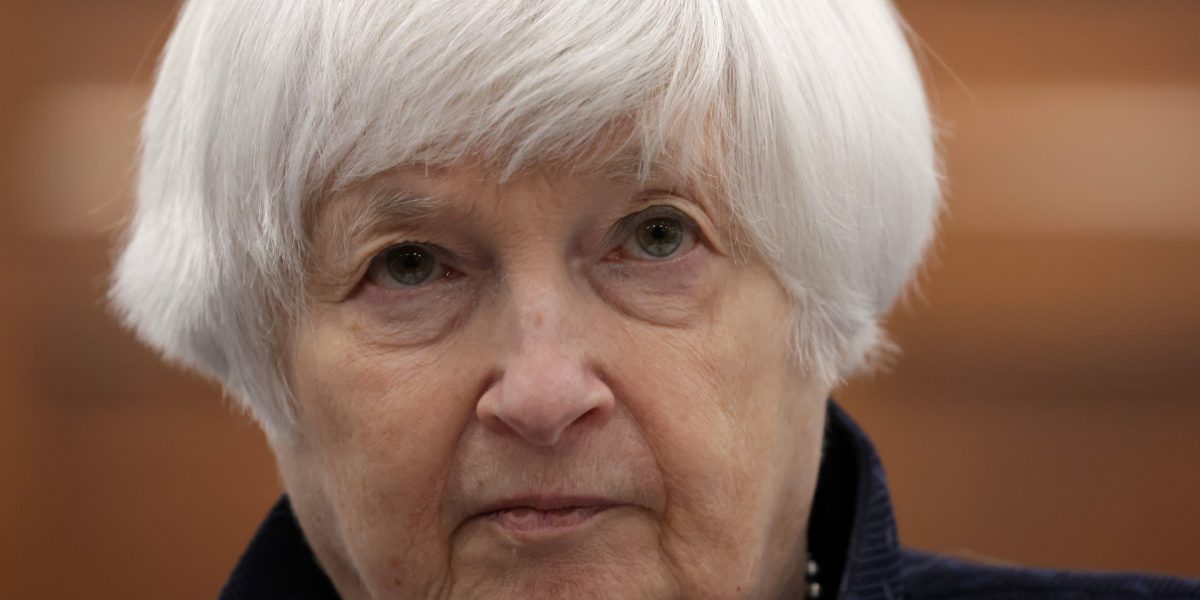
Janet Yellen warns the $38 trillion national debt is nearing a red line economists fear

Published

on


Two thousand years before the U.S. federal government’s debt crossed the $38 trillion threshold, the Roman Empire faced a similar-looking calculus: a state with increasingly expensive obligations and a very limited appetite for taxes. To pay for this discrepancy, emperors pursued a policy known as “debasement”: gradually shaving off the silver from the coins until the value of the metal became more about its symbol than the metal itself.

In practical terms, it was a way to pay bills without fully admitting the cost. The long-run risk wasn’t just hyperinflation; it was that once people stopped trusting the coin, everything else in the economy became harder to coordinate.

The modern equivalent isn’t literal coin shaving. But as 2026 starts with the U.S. staring down a 120% debt-to-GDP ratio, top economists, including former Fed chair Janet Yellen, fear a different sort of debasement will begin—something called fiscal dominance. 

Fiscal dominance is the point at which financing needs begin to constrain the central bank’s inflation fight, and the adjustment happens through the purchasing power of money rather than through taxes or spending cuts. 

Imagine the U.S. economy is a car, with the Treasury as the driver, ready to spend money at the government’s behest, and the Federal Reserve is the brake, ready to raise interest rates to slow inflation if the Treasury spends too much. The car is now towing a $38 trillion trailer. The weight is so heavy that if the Fed hits the brakes too hard, the brake pads will explode from the pressure (the government’s interest payments will become too expensive, causing a default). So, to prevent the car from crashing, the Fed is forced to let off the brake, even if the car is speeding toward the cliff of over-spending. The result: hyperinflation. 

At a panel hosted by the American Economic Association on Sunday, Yellen said she worries the U.S. might be getting to the point where the car is too heavy for the brakes to work. 

“The preconditions for fiscal dominance are clearly strengthening,” Yellen warned, noting debt is on a steep upward trajectory toward 150% of GDP over the next three decades.

While that definition centers monetary policy, other economists define fiscal dominance in different ways. Eric Leeper, a professor at the University of Virginia and former Federal Reserve economist, argues the problem is fundamentally behavioral in nature. 

The death of the ‘Hamilton Norm’

For most of American history, Leeper told Fortune, the U.S. operated under the “Hamilton Norm”—the expectation that any debt issued today would be fully financed by future tax surpluses.

That norm, Leeper said, died in 2020.

“Trump put his name on the checks that went out to people,” Leeper noted, referring to the pandemic stimulus packages that both Trump and former President Joe Biden championed, resulting in nearly $5 trillion in spending. “If those checks come with an IOU that says, ‘Oh, you’re going to have to repay this in taxes,’ do you think the president would put his name on it? He was communicating that this is not a loan to tide you over. This is a gift.”

When the public stops viewing government debt as an IOU for future taxes and starts viewing it as a “permanent gift,” Leeper said, the Federal Reserve loses its grip. If people don’t believe taxes will eventually rise to pay off the $38 trillion, they spend their “gift” today, driving up prices. In this world, inflation isn’t a bug, but a feature of how the Fed chooses to balance the crisis.

Leeper argued Yellen herself, during her tenure as Treasury Secretary, contributed to the current environment. 

“When Yellen finally utters that phrase, that we might be seeing some signs of fiscal dominance—well, she was kind of part of it,” Leeper said. “As Treasury Secretary, she called on Congress to ‘go big’ during COVID. And at the same time, she said, ‘don’t worry, the Fed has the tools to control inflation.’ That makes clear that she doesn’t really understand what fiscal dominance is. The Fed only has the tools if we’re not in a fiscal dominant world.”

He pointed to the 2008 financial crisis as a contrast, noting that within five days of passing a stimulus package, the Obama administration announced plans to halve the deficit. He argues recent administrations have moved away from this commitment, treating debt more as a permanent increase in the money supply than a loan to be repaid.

The expansionary paradox of interest rates

That complicates the Economics 101 understanding of interest rates. In a traditional economy, the Fed raises interest rates to contract spending. However, with the national debt at 120% of GDP, Leeper argues the “brake” of high interest rates has turned into an “accelerator.” 

Because the debt load is so massive, the interest payments the government must pay out have exploded to more than $1 trillion per year. These payments don’t vanish, but instead act as a direct injection of cash into the private sector.

“The private sector’s income in the form of interest payments is going up. That’s not contractionary. That’s expansionary,” Leeper said. He contrasted the current situation with the era of former Federal Reserve Chair Paul Volcker in the early 1980s. When Volcker raised rates to record highs to crush runaway inflation, the national debt was only about 25% of GDP. Because the debt was low, it took a long time for interest payments to affect the budget, giving the government time to make fiscal adjustments.

But by 2026, the sheer magnitude of the debt means the impact of rate hikes is instantaneous, and thus, counterproductive.

The market consequences of ‘deep doo-doo’

Beyond academic theory, the effects of fiscal dominance are manifesting in the bond market. Heather Long, the chief economist for the Navy Federal Credit Union, noted the market is already showing signs of distress.

“The bond market is the new king in the United States,” Long told Fortune. She said for most nations, crossing the 120% debt-to-GDP threshold is a “game-changer” that gives bond investors significant influence over the rest of the economy.

This influence is felt by households through higher borrowing costs for mortgages and car loans, which Long says are increasingly independent of the Fed’s actual rate decisions. If investors lose faith the U.S. will return to the “Hamilton Norm”—running surpluses to pay down debt—they may demand higher “term premiums,” effectively raising interest rates for everyone regardless of what the Fed wants, Long said.

Leeper added that while the U.S. hasn’t reached an Argentinian—or Roman—style hyperinflationary collapse yet, the situation is precarious. He argued that because Congress and the White House no longer even give “lip service” to the idea of future surpluses, the public is starting to link fiscal policy directly to inflation. 

“America always does the right thing after exhausting every other option,” Leeper said, quoting the adage attributed to former UK Prime Minister Winston Churchill. “Until that faith really gets shattered, we’re okay. But if that starts to get shattered, then we’re really in deep doo-doo.”


Source link

Continue Reading

Business

Anthropic launches Cowork, a file-managing AI agent that could threaten dozens of startups

Published

on


Anthropic has launched Claude Cowor, a general-purpose AI agent that can manipulate, read, and analyze files on a user’s computer, as well as create new files. The tool is currently available as a “research preview” only to Max subscribers on $100 or $200 per month plans.

The tool, which the company describes as “Claude Code for the rest of your work,” leverages the abilities of Anthropic’s popular Claude Code software development assistant but is designed for non-technical users as opposed to programmers.

Many have pointed out that Claude Code is already more of a general-use agent than a developer-specific tool. It is capable of spinning up apps that perform functions for users across other software. But non-developers have been put off by Claude Code’s name and also the fact that Claude Code needs to be used with a coding-specific interface.

Some of the use cases Anthropic showcased for Claude Cowork include reorganizing downloads, turning receipt screenshots into expense spreadsheets, and producing first drafts from notes across a user’s desktop. Anthropic has described the tool, which can work autonomously, as “less like a back-and-forth and more like leaving messages for a coworker.”

Anthropic reportedly built Cowork in approximately a week and a half, largely using Claude Code itself, according to the head of Claude Code, Boris Cherny.

“This is a general agent that looks well positioned to bring the wildly powerful capabilities of Claude Code to a wider audience,” Simon Willison, a UK-based programmer, wrote of the tool. “I would be very surprised if Gemini and OpenAI don’t follow suit with their own offerings in this category.”

Enterprise AI race

With Cowork, Anthropic is now competing more directly with tools like Microsoft’s Copilot for the enterprise productivity market. The company’s strategy of starting with a developer-focused agent and then making it accessible to everyone else could give it an edge, as Cowork will inherit the already-proven capabilities of Claude Code rather than being built as a consumer assistant from scratch. This approach could make Anthropic—which is already reportedly outpacing rival OpenAI in enterprise adoption—an increasingly attractive option for businesses looking for AI tools that can handle work autonomously.

Like any other AI agent, Claude Cowork comes with security risks, particularly around “prompt injections,” where attackers trick LLMs into changing course by inserting malicious, hidden instructions into webpages, images, links, or any content found on the open web. Anthropic addressed the issue directly in the announcement, warning users about the risks and offering advice such as limiting access to trusted sites when using the Claude in Chrome extension.

The company, however, acknowledged the tool was still vulnerable to these attacks, despite Anthropic’s defenses: “We’ve built sophisticated defenses against prompt injections, but agent safety—that is, the task of securing Claude’s real-world actions—is still an active area of development in the industry…We recommend taking precautions, particularly while you learn how it works.”

The launch has also sparked concern among startup founders about the competitive threat posed by major AI labs bundling agent capabilities into their core products. Cowork’s ability to handle file organization, document generation, and data extraction overlaps with dozens of AI startups that have raised funding to solve these specific problems.

For startups building applications on top of models from major AI companies, the concern about foundational AI labs building a similar functionality as part of their base product is a common one. In response to these concerns, many startups have argued that companies with deep domain expertise or a better user experience for specific workflows may still maintain defensible positions in the market.


Source link

Continue Reading

Business

CFOs move finance AI from pilots to deployment in 2026

Published

on


Good morning. CFO confidence is on the upswing as 2026 begins, and digital transformation in finance has overtaken enterprise risk management as the top goal for the year ahead.

That’s a key finding of Deloitte’s latest CFO Signals Spotlight report, released this morning. Half of the finance chiefs surveyed named digital transformation as their foremost priority for 2026, followed by cash management optimization and capital allocation. The findings are based on a recent Q4 survey of 200 CFOs across industries at North American companies with at least $1 billion in annual revenue.

Steve Gallucci, global and U.S. leader of Deloitte’s CFO Program, told me the shift reflects how finance leaders are moving from exploration to execution when it comes to technology—particularly AI.

“Efficiency and productivity are certainly part of the equation,” Gallucci said. “But more broadly, we’ve been on this digital evolution for some time.”

In recent years, as advanced technologies like agentic AI burst onto the scene, boards and C-suite leaders have shown increasing interest. Finance chiefs took a cautious approach to implementing these tools. Deloitte’s Finance Trends report finds that finance leaders are now influencing enterprise strategy, driving cost optimization, advancing digital transformation, and building tech-enabled teams.

Last year, many companies focused on testing, creating use cases, and developing comfort with AI, Gallucci noted. But according to the Q4 survey, 87% of CFOs said AI will be extremely or very important to how their finance departments operate in 2026.

“What we’re seeing in some of the answers to the Q4 survey questions is that continued evolution,” Gallucci said. Finance leaders are taking a more deliberate, enterprise-wide approach to transformation and AI is accelerating that commitment, he added.

The report outlines six key areas CFOs plan to prioritize this year: Leveraging digital tools to transform finance operations; going all in on AI; embedding AI agents directly into finance workflows; keeping close watch on changes in buyer behavior; tapping internal talent to manage costs; and exploring more deal-making opportunities.

CFOs also appear focused on redeploying existing finance talent to work alongside AI-driven systems. About half of respondents said their organizations plan to hire or promote internally to help keep worker costs in line for 2026.

As CFOs and finance leaders lean into digital transformation, there’s an expectation that they’re going to have to reskill their existing talent, Gallucci said.

“We’re not seeing a decline in the number of finance professionals as a result of investments in technology and AI,” he said. But as leaders look to the future—both in finance and across the broader enterprise—they are increasingly focused on boosting productivity through technology and combining those tools with the skills of their existing workforce and an agentic digital workforce, he explained.

Competition and consumer dynamics add pressure

While technology transformation tops the agenda, competitive pressure remains a driving force. About half of CFOs cited rising competition as having the biggest impact on their companies, followed closely by shifts in customer behavior and demographics.

Competitive pressures are always near the top of CFOs’ minds, Gallucci said. But what’s different now is how they’re responding—looking across industries to see how others are using AI and digital tools, and applying those lessons quickly, he said.

Gallucci also pointed to evolving consumer demand as a key factor to watch, particularly as major banks and retailers release their fourth-quarter earnings.

There’s evidence of a K-shaped economy, he added. “CFOs are paying close attention to what that means for growth, pricing, and investment strategy.”

Sheryl Estrada
sheryl.estrada@fortune.com

Leaderboard

Clare Kennedy was appointed CFO of Spencer Stuart, a global advisory firm, effective Jan. 12. Kennedy succeeds Christine Laurens as part of a planned succession and in support of Laurens’ retirement from full-time executive work. Kennedy, who is based in London, joins Spencer Stuart from Maples Group, an international advisory firm, where she served as global chief operating officer. She joined Maples Group from Freshfields, an international law firm, where she served as its global CFO. Kennedy previously spent 18 years at Linklaters, an international law firm, where she held a variety of senior finance and commercial leadership roles. She began her career at Arthur Andersen and EY as a chartered accountant, specializing in tax. 

Gillian Munson was appointed CFO of Duolingo, Inc. (NASDAQ: DUOL), a mobile learning platform, effective Feb. 23. Matt Skaruppa will step down after nearly six years with the company; he will remain CFO until Munson starts her new role, at which time he will assume an advisory role. Munson assumes the CFO role after serving on the Duolingo board of directors since 2019 as chair of the audit, risk and compliance committee. She was most recently the CFO of Vimeo and previously held CFO positions at Iora Health, Inc. and XO Group Inc.

Big Deal

A joint statement on Monday from tech giants Apple and Google announced that they have entered into a multi-year collaboration under which the next generation of Apple Foundation Models will be based on Google’s Gemini models and cloud technology. These models are said to power future Apple Intelligence features, including a more personalized Siri coming this year. 

The tech giants stated: “After careful evaluation, Apple determined that Google’s AI technology provides the most capable foundation for Apple Foundation Models and is excited about the innovative new experiences it will unlock for Apple users. Apple Intelligence will continue to run on Apple devices and Private Cloud Compute, while maintaining Apple’s industry-leading privacy standards.” 

Google and others took the early lead in the AI race, while Apple’s iPhone has lagged rivals on some AI features. Following earlier AI missteps, the Cupertino, Calif.-based company acknowledged last year that a major Siri upgrade would not arrive until sometime in 2026. 

“This is what the Street has been waiting for with the elephant in the room for Cupertino revolving around its invisible AI strategy, but we believe this is an incremental positive to both AAPL and GOOGL,” Wedbush Securities analysts wrote in a Monday note on the Apple–Google partnership. Wedbush maintains an Outperform rating on Apple and continues to target a $350 price for the stock. 

Going deeper

“Trump threatens to keep ‘too cute’ Exxon out of Venezuela after CEO provides reality check on ‘uninvestable’ industry” is a Fortune article by Jordan Blum.

Blum writes: “As other oil executives lavished President Trump with praise at the White House, Exxon Mobil CEO Darren Woods bluntly said the Venezuelan oil industry is currently ‘uninvestable,’ and that major reforms are required before even considering committing the many billions of dollars required to revitalize the country’s dilapidated crude business. Read the complete article here

Overheard

“Buying a movie studio is hardly buying secure, hard assets.”

—Jeffrey Sonnenfeld, Yale professor and founder of the Yale Chief Executive Leadership Institute, and Stephen Henriques, a senior research fellow, write in a Fortune opinion piece titled “A Cautionary Hollywood Tale: The Ellisons’ Lose-Lose Paramount Positioning” regarding the multiple bids for Warner Bros. Discovery. 


Source link

Continue Reading

Business

Wall Street expects Trump’s Fed plot to ‘backfire’ spectacularly—perhaps even shutting the door more firmly on rate cuts

Published

on


The Oval Office’s plan to force the Fed into submission is unlikely to work, Wall Street believes. In fact, they fear it may backfire so spectacularly that interest rate cuts which would have happened under Powell will be nixed as the central bank asserts its independence.

Over the weekend, Fed chairman Jerome Powell confirmed the Department of Justice had served the Federal Reserve with grand jury subpoenas relating to his Senate Banking Testimony on the renovation of Fed buildings.

It was a move that realists may have seen coming—after all, Trump has already levelled legal threats against other members of the rate-setting Federal Open Market Committee (FOMC)—but is unprecedented nonetheless. It comes after a year of lobbying by Trump, who wants the FOMC to cut the base rate to foster economic activity and reduce borrowing costs, regardless of the inflation risk.

Throughout 2025, Powell attempted to avoid the political melee, even when Trump threatened to fire him multiple times. The FOMC did deliver rate cuts, though clearly not quickly enough for Trump. The resulting escalation from the White House is further proof of political intervention into the legally independent Fed, analysts and investors agree.

However, Trump may not have banked on the fact that the FOMC (even under a new Fed chair this year) might want to make a point of that independence, and go to lengths to demonstrate it. As UBS’s Paul Donovan told clients this morning: “Any nominee from U.S. President Trump is likely to have to place additional emphasis on their independence to try and prove they are above politics. This might impact future policy decisions.”

As Bernard Yaros, lead U.S. economist for Oxford Economics, observed in a note yesterday: “The criminal investigation … could even backfire by making officials more reluctant to cut rates in the coming months and years.”

But there’s also another unexpected fallout which Trump is unlikely to enjoy: Powell may choose to stay on as a bastion of independence after a new Fed chairman is nominated. While his time as Fed chairman expires this year, his term on the Board of Governors does not expire until 2028. “If Powell was looking for a reason to stay on as a Governor … this could be one,” noted Deutsche Bank’s Jim Reid this morning. “It’s very unusual to stay on but [former Fed Chairman Marriner] Eccles did so in 1948 for 3.5 years to help protect and secure Fed independence after the Treasury were trying to fund large post war time debts.”

An unpopular plan

Investors might have hoped Trump had learned his lesson when it came to meddling with the Fed: When he threatened to fire Powell earlier this year, markets shifted uneasily, and the Republican president was forced into a swift U-turn.

According to reports, the action taken this week hasn’t been hugely popular within the White House. Axios reported today, citing two anonymous sources, that Treasury Secretary Scott Bessent told the president that the investigation “made a mess,” which could be bad for financial markets.

Even if the chips fall in favor of President Trump and he successfully ousts both Powell and Governor Lisa Cook, as well as managing to insert a dovish Fed chairman at the head of the table, there’s still an economic fallout to be dealt with. This could include a weaker dollar, a steeper yield curve, and higher long-term inflation expectations, according to Thierry Wizman, global FX and rates strategist at Macquarie Group. If Trump succeeds, “it may result in a Fed that will be more pliant with respect to those White House wishes, especially if Congress concedes its role. That means a Fed that keeps interest rates lower than they otherwise would be.”

This means that inflation, held in check by higher rates, may increase in the longer view and, as such, “nominal assets, such as fixed-coupon long-term bonds, will look less attractive as stores of real value.”

This story was originally featured on Fortune.com


Source link

Continue Reading

Trending

Copyright © Miami Select.