Connect with us

Business

‘Big Short’ investor says Venezuela’s regime change means Russia’s oil ‘just became less important’

Published

on


The Big Short investor Michael Burry says Venezuela’s recent U.S.-led regime change could weaken one of America’s biggest adversaries.

Burry, who correctly predicted the subprime mortgage crisis in 2008, said Russia may face consequences after the U.S. toppled Venezuelan President Nicolás Maduro early Saturday, the investor wrote in a post on his Substack newsletter, Cassandra Unchained. 

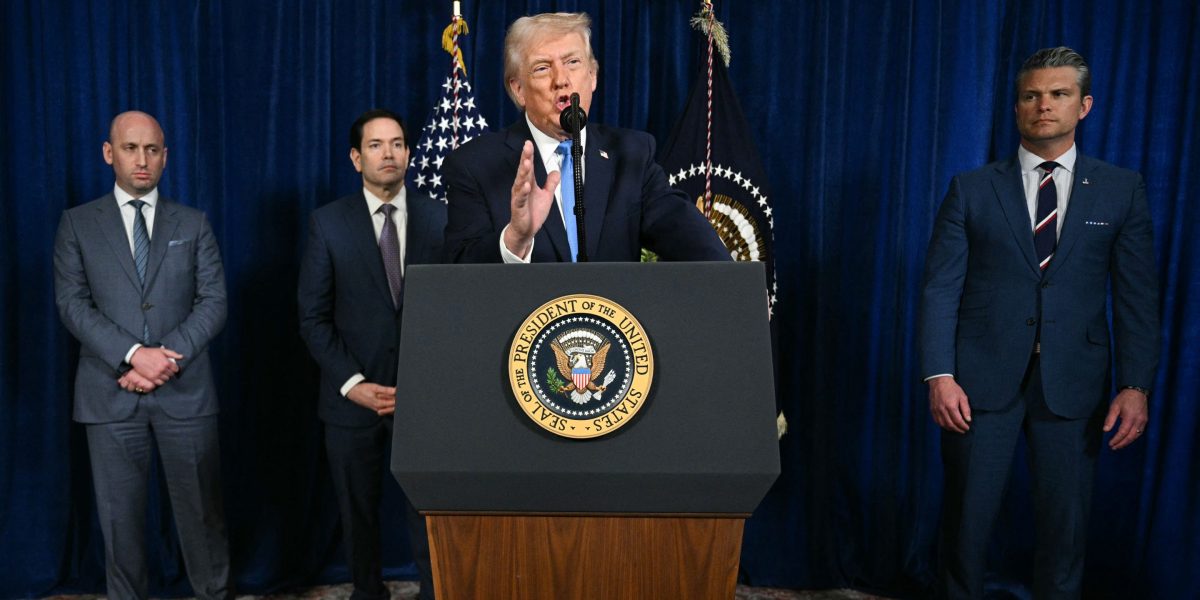
Shortly after Maduro’s capture, President Donald Trump said the U.S. would be more involved with the country’s abundant oil reserves. He put the onus on U.S. oil companies to improve Venezuela’s oil infrastructure with billions of dollars of investment and claimed the U.S. will sell the oil to other countries.

Although this may take five to seven years, Burry estimated, increasing the flow of Venezuelan oil could undercut Russia’s income and influence.

“Russia oil just became less important in the intermediate and long -term,” wrote Burry.

Venezuela contains about 19% of the world’s oil, an estimated 300 billion barrels that dwarfs the U.S.’s 61 billion barrels, according to the Energy Institute. Yet, partly because of outdated infrastructure, mismanagement, and U.S. sanctions, the country pumps only a fraction of what it has the potential to produce.

Because it has the world’s largest reserves, increasing its oil output could affect the commodity’s price globally, said economist and Boston College associate dean Aleksandar Tomic.

If oil prices drop due to increased global supply via Venezuela, Russia may be weakened because oil is its “lifeline,” he told Fortune. Despite U.S. sanctions, Russia exports oil to countries such as China and India.

If prices drop due to increased Venezuelan production, Russia may have more to lose than any other country because of its expensive war on Ukraine, he added. Its oil and gas industry makes up about 20% of the country’s GDP on average, according to the Oxford Institute for Energy Studies.

“[Oil] is what’s funding their war effort, so it’s pretty crucial to Russia,” Tomic said. “It would be a pretty significant blow to them if the price of oil was to collapse, if, say, the U.S. was to flood the market with Venezuelan oil.”

To be sure, it’s unclear who will lead Venezuela in the future and how its oil reserves will be managed. Despite Trump’s claim that the U.S. will “run” Venezuela, the president has offered scant details on how the U.S. will be involved in administering the country. Venezuelan Vice President Delcy Rodriguez was sworn in as interim president following Maduro’s capture.

It is also unknown if American oil companies would jump to reestablish operations in Venezuela, said Tomic. Both ConocoPhillips and ExxonMobil retreated from the country in the early 2000’s and have since sought to recoup losses for their expropriated assets through international arbitration. 

And increased oil production in Venezuela could lower prices, which would also hit American companies’ profits, Tomic said.

Chevron is the only American oil company operating in the country. CEO Mike Wirth last year reiterated the company’s support for rebuilding Venezuela’s economy “when circumstances change.” 

A spokesperson for ConocoPhillips said the company was monitoring the developments in Venezuela and their potential global energy implications.

“It would be premature to speculate on any future business activities or investments,” the spokesperson said in a statement to Fortune.

Exxon Mobil did not immediately respond to Fortune’s request for comment. 

Still, the potential for American companies to grab a slice of Venezuela’s large oil reserves is tempting, in part because American oil production is expected to peak in 2027 and then hold at high levels for a decade before rapidly declining, the U.S. Energy Information Administration predicted

“As American (sic) brings its Big Oil companies to Venezuela, with relatively close refinery assets, there will be a global shift in energy geopolitics,” Burry wrote.


Source link

Continue Reading

Business

As billionaires debate California’s wealth tax, a tech investor suggests other ways to raise revenue

Published

on


One of the hottest topics in the tech sector is a proposed wealth tax in California aimed at billionaires, and the debate is yielding some insights into how they live.

While Nvidia CEO Jensen Huang said he’s “perfectly fine” with it, many others aren’t, including LinkedIn cofounder and major Democratic donor Reid Hoffman, who called it “horrendous” for innovation. Meanwhile venture capitalist Peter Thiel as well as Google cofounders Larry Page and Sergey Brin have already taken steps to sever ties with the Golden State just in case it qualifies for the November ballot and passes.

The proposal calls for California residents worth more than $1 billion to pay a one-time tax equivalent to 5% of their assets. The payment can be made over five years. The union pushing the measure, the Service Employees International Union-United Healthcare Workers West, has estimated the wealth tax could raise $100 billion in revenue and help offset federal cuts to health spending.

But one tech investor offered alternatives while acknowledging a massive loophole that the rich use to get around paying income taxes.

During a recent episode of the All-In podcast, cohost David Friedberg characterized the potential ballot initiative as more of an asset seizure—one that could be renewed beyond a year and set a precedent for similar ones elsewhere.

“It’s totally reasonable to say that billionaires aren’t paying their fair share of taxes, and it’s totally reasonable to say that ultra-high net worth people aren’t paying their fair share of taxes,” he said. “They pay an income tax. But the truth is a lot of ultra wealthy people borrow money against their assets and live off of that borrowed money. So they never have to pay taxes by selling the stuff that they own.”

Friedberg described the “buy, borrow, die” strategy of avoiding income taxes by living on debt that doesn’t get paid off until after the borrower dies. Then the heirs settle any outstanding loans by selling the deceased’s assets, and the gains that piled up during their lifetime aren’t subject to taxation.

In Friedberg’s view, it’s this practice that the proposed wealth tax for California is really trying to tackle.

“There’s a simple way to address it, which is to charge them a capital gains tax if they borrow against their assets that they haven’t paid capital gains tax on,” he added. “Very simple. That can resolve this.”

Another way to approach the issue would be to raise the capital gains tax, Friedberg said, though he doesn’t personally support doing that.

Those levies apply when assets like real estate or stocks are sold, but he explained that hiking them instead of relying on a wealth tax would make it function more like an income tax.

A group of California billionaires are also arguing about the wealth tax on a Signal chat, according to the Wall Street Journal. In that running back-and-forth, other alternatives that have come up include giving the government illiquid stock as a zero- or low-interest loan for a certain number of years and taxing stock that’s already public.

Opponents of the tax have warned about the impact it could have on economic growth and startups, while supporters point to the AI boom and say California’s ultra-rich would still be among the world’s wealthiest, sources told the Journal.

The tax has also split California’s Democratic lawmakers. Gov. Gavin Newsom is against it, while U.S. Rep. Ro Khanna is for it. But even the congressman has conceded the language needs some work and doesn’t want illiquid stakes or voting shares to be taxed.

Newsom told The New York Times on Tuesday that he was relentlessly working behind the scenes against the proposal, and he would continue to oppose it, even if it reached the November ballot.

Palmer Luckey, cofounder of defense tech startup Anduril, has said the tax would force founders to sell big pieces of their companies if privately held shares, which are commonly used as compensation in startups that aren’t yet profitable, grow in value.

Meanwhile, Y Combinator CEO Garry Tan recently warned that a provision in the ballot measure would value voting shares as equivalent to ownership stakes, putting holders on the hook for a much higher tax bill.

“This means if a founder holds shares representing only 3% of economic interest but 30% of voting control (through Class B supervoting shares), the tax would presume their ownership stake is at least 30% for valuation purposes, not 3%,” he said in a post on X on Friday. “The wealth tax is poorly defined and designed to drive tech innovation out of California.”


Source link

Continue Reading

Business

Down Arrow Button Icon

Published

on


President Trump announced yesterday he would impose a new tariff of 25% on any country trading with Iran. He also predicted disaster if the U.S. Supreme Court were to rule his tariff orders are illegal. The president estimated that “many Hundreds of Billions of Dollars” or even “Trillions” were at stake if the government was forced to refund anyone who paid them.

“It would be a complete mess, and almost impossible for our Country to pay,” he said on Truth Social. “If the Supreme Court rules against the United States of America on this National Security bonanza, WE’RE SCREWED!”

The court could issue a ruling as soon as Wednesday. It had been expected to rule last week. It is not clear why the court is delaying.

But Wall Street analysts are increasingly sanguine about the ruling. As time goes by, many say, the tariff issue becomes less and less dramatic. And in the bigger macro picture, they’re less significant than predicted.

The longer the delay in the ruling the more likely it is because the court is leaning toward Trump, according to JPMorgan.

“Legal experts continue to expect the Supreme Court to rule against the use of emergency powers [under the International Emergency Economic Powers Act] to authorize tariffs, but note that each week the Supreme Court delays its decision increases the likelihood of the Trump administration prevailing,” JPMorgan analysts Amy Ho and Joyce Chang told their clients. “Historically, SCOTUS reserves its most impactful decisions for the end of its term in June, which allows for extended deliberation.” Both Supreme Court cases on the Affordable Care Act were pushed to June, they wrote.

The pair also note that in the underlying case, only $135 billion in potential tariff refunds are at stake. 

Although Trump has touted the tariffs as a method of paying off the $38 trillion national debt, the reality is that collections so far have been too small to have much of an affect, according to James Knightley, ING’s chief international economist in the U.S. “Since April, tariff revenues are up $206 billion in those eight months relative to [fiscal] 2024, but not all are the IEEPA tariffs—they are estimated to perhaps be $130 billion. Sounds a lot, but the US is a $30 trillion-plus economy,” he told Fortune in an email.

“Many companies will be wary of drawing the ire of the president by claiming a refund and the hoops to jump through to reclaim through the courts could be quite onerous and deter others. Hence the actual amount that is reclaimed may be quite a lot less than $130 billion.”

Besides, he said, even if Trump loses the Supreme Court case he will likely reimpose the tariffs via some other regulation. “Given tariffs are a signature policy and the Republican polling isn’t looking very strong right now ahead of the midterms, the Administration will move swiftly to reinstate tariffs through other legally recognized routes. The promise of a $2,000 tariff dividend needs to be paid for somehow. This is merely shuffling money around seeing as Americans paid the tariffs in the first place only to get money returned, so it is difficult to argue this will be a major stimulus for the economy,” he said.

Tariff revenue is being generated at a current rate of $30.4 billion per month, for an annualized rate of $364.5 billion, according to data from Bloomberg provided to Fortune via Pantheon Macroeconomics. However, those revenues are already in decline as companies find workarounds and as Trump himself cuts deals, compromises, or delays the imposition of harsher measures. 

Convera analyst Antonio Ruggiero is also unruffled by the upcoming ruling. If the tariffs are ruled illegal, “we expect the immediate [foreign currency exchange] reaction to be limited, as the broader consensus is that alternative mechanisms will be found to keep tariff revenues intact.”

“That said, in the medium term, we cannot exclude the possibility of mild bearish pressure on the dollar tied to expectations of further uncertainty and erratic trade manoeuvres should the administration be forced to remove such tariffs, particularly at a time when USD sentiment is increasingly fragile amid concerns over Federal Reserve independence,” he advised clients in an email seen by Fortune.

Here’s a snapshot of the markets ahead of the opening bell in New York this morning:

  • S&P 500 futures were down 0.15% this morning. The last session closed up 0.16%. 
  • STOXX Europe 600 was flat in early trading.
  • The U.K.’s FTSE 100 was up o.o5% in early trading. 
  • Japan’s Nikkei 225 was up 3.1%.
  • China’s CSI 300 was down o.6%. 
  • The South Korea KOSPI was up 1.47%. 
  • India’s NIFTY 50 was down 0.25%. 
  • Bitcoin was at $92K.


Source link

Continue Reading

Business

Two Southeast Asia 500 companies may merge—forming Malaysia’s largest construction conglomerate

Published

on


Malaysian construction giant Sunway has announced a $2.7 billion share-and-cash takeover of competitor IJM Corporation, which would bring together two of Malaysia’s largest property developers. 

The proposed merger, announced on Jan. 12 by Sunway president Anuar Taib, will form an entity with a combined market capitalization of $11.7 billion, surpassing current leader Gamuda Berhad, valued at $7.2 billion. 

If the merger goes through, it will create one of Malaysia’s largest property developers as the Southeast Asian country’s construction market heats up amid a data center and infrastructure boom. 

Both Sunway and IJM are on Fortune’s Southeast Asia 500 ranking, which lists the region’s largest companies by revenue. Sunway, at No. 190, generated $1.7 billion in revenue in 2024; IJM, at No. 228, generated $1.3 billion. A merged Sunway-IJM would have 2024 revenue totaling $3 billion, lifting it to No. 120—overtaking Gamuda. 

In a stock filing in Bursa Malaysia, the country’s stock exchange, Sunway said the merger would “position the enlarged Sunway Group to pursue mega projects such as development of large-scale data centers, industrial facilities and public infrastructure projects.”

Malaysia is currently undergoing a boom in data center construction, as regional demand for AI and cloud computing services surge. In 2024, industry consultant DC Byte found that the country was Asia-Pacific’s fastest growing market for data centers.

Under the conditional takeover bid, Sunway is proposing to acquire IJM at $0.78 a share—15% higher than its 2025 closing price of $0.68 a share. Shareholders of IJM are being offered 10% in cash and 90% in newly-issued Sunway shares.

IJM shares rose 2.9% on Tuesday; Sunway shares are up just 0.2%. Trading in both companies’ shares were suspended on Monday pending the merger announcement. Sunway’s shares are up almost 25% over the past 12 months, ahead of Malaysia’s benchmark FTSE Bursa Malaysia KLCI index.

Fortune has reached out to Sunway for further comment.

A history of developments

Sunway is a family-run conglomerate founded in 1974 by Malaysian tycoon Jeffrey Cheah, who is still its key shareholder. The firm is famous for its “build-own-operate” business model and slew of diverse properties including the Sunway Lagoon theme park, Sunway Medical Center, and two educational institutions, Sunway College and Sunway University.

IJM was established in 1983, via the merger of three Malaysian construction firms: IGB Construction, Jurutama, and Mudajaya. The firm’s assortment of businesses span construction, property and infrastructure. It built major roads and bridges in Malaysia, including the West Coast Expressway, an interstate highway running along the west coast of the country.

In a stock filing, Sunway’s Taib said the deal would create “synergistic value”, allowing both firms to improve margins through economies of scale and access a broader pool of talent and technical expertise. The enlarged Sunway Group will also have an expanded landbank of 2,300 hectares, according to the filing. 

Join us at the Fortune Workplace Innovation Summit May 19–20, 2026, in Atlanta. The next era of workplace innovation is here—and the old playbook is being rewritten. At this exclusive, high-energy event, the world’s most innovative leaders will convene to explore how AI, humanity, and strategy converge to redefine, again, the future of work. Register now.


Source link

Continue Reading

Trending

Copyright © Miami Select.