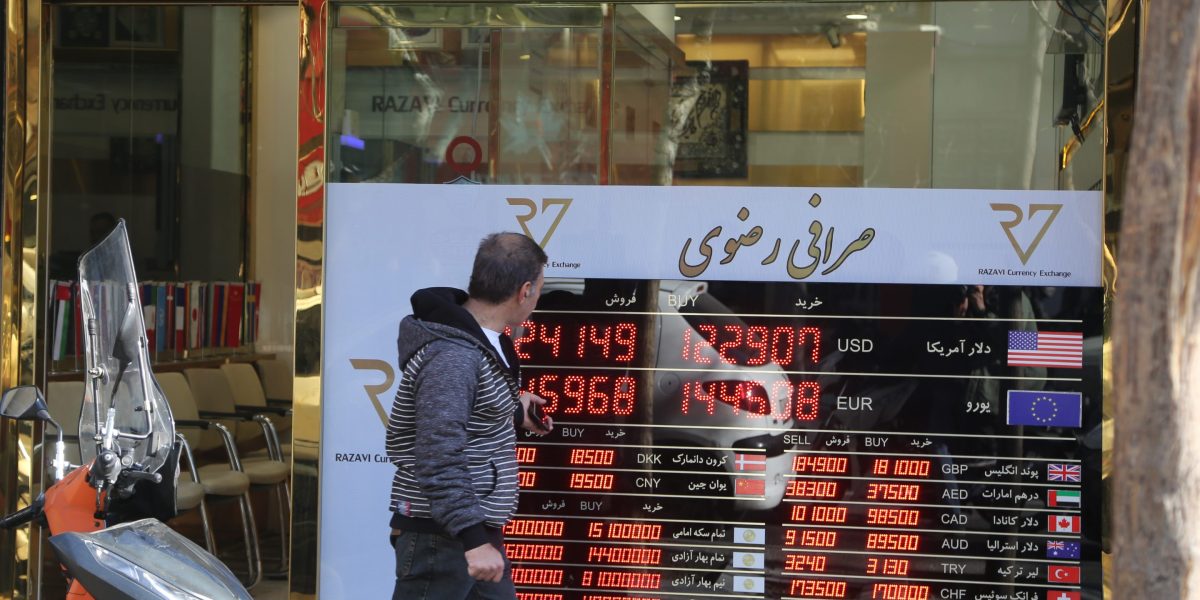
A day before the U.S. military captured Venezuelan dictator Nicolas Maduro, President Donald Trump threatened Iran’s regime as protests there continued amid deteriorating economic conditions.
Given the stunning success of the weekend raid in South America and the U.S. bombing of Iran’s nuclear facilities in June, speculation has grown that Trump may turn his sights back to the Middle East.
On Friday, he warned on social media that if Iran kills peaceful protesters, “the United States of America will come to their rescue. We are locked and loaded and ready to go.” And days before that, Trump threatened to “knock the hell out of” Iran if it tried to rebuild its nuclear program or expand its ballistic missile program.
On Saturday, Secretary of State Marco Rubio suggested the Venezuela operation was a warning to other U.S. adversaries who doubt Trump.
“When he tells you that he’s going to do something, when he tells you he’s going to address a problem, he means it,” he told reporters.
Protests among shopkeepers in Tehran began late last month after Iran’s currency plummeted further, raising costs for merchants selling imported goods. Others joined in, prompting the regime to crack down, with some deaths reported.
Iran in crisis
The unrest comes as multiple crises have whipsawed the economy. The currency has lost 60% of its value since June, when Iran and Israel fought a 12-day war that was capped by the U.S. bombing.
That has worsened soaring inflation, which hit 64% for food products in October, according to the World Bank.
At the same time, Iran has been plagued by chronic energy shortages. Despite vast oil and gas reserves, fuel and electricity must be rationed due to under-investment, outdated infrastructure, subsidies, corruption, and sanctions.
That means rolling blackouts are imposed during the summer, when the need for air conditioning stokes electricity demand. At the same time, natural gas supplies for winter heating also suffer disruptions.
The energy crunch has prompted Iran to look toward solar energy, but the weak currency also means importing the necessary technology is extra expensive.
Meanwhile, Iran is suffering its worst drought in at least 40 years. As recently as a month ago, the main reservoirs supplying Tehran were only about 11% full. The situation was so dire that Iranian President Masoud Pezeshkian even suggested people may need to evacuate the capital.
While some rain has since fallen, it hasn’t improved the overall situation much, and precipitation is just 5% of what’s considered a normal autumn. Service has reportedly been interrupted in some Tehran neighborhoods.
Water carries political risks too, as previous shortages have sparked some protests in the past, and any curbs to agricultural users could worsen food inflation even further.
Like the energy shortage, the water crisis has several factors, including decades of mismanagement and over-extraction, leaky pipes, corruption, and climate change.
With multiple calamities converging at once for Iran, while Trump’s appetite for foreign intervention is expanding beyond Venezuela, observers see heightened risks for the Islamic Republic. Maduro is also a close ally of Iran, which has condemned his capture and arrest by the U.S.
“Whether Trump becomes enamored with ‘surgical’ regime change, or gives [Israeli Prime Minister Benjamin] Netanyahu a U.S. imprimatur for similar actions, it’s hard not to see how this gives momentum for the many actors pushing for renewed war with Iran,” Jamal Abdi, president of the National Iranian American Council, told Al Jazeera.
Federal Reserve Chairman Jerome Powell called out the Trump administration for attacking the central bank’s independence, saying a criminal probe is due to the Fed’s refusal to lower rates earlier this year as President Donald Trump demanded.
He said in a statement Sunday that the Justice Department of served the Fed with grand jury subpoenas, threatening a criminal indictment over his testimony before the Senate last June related to renovations on the headquarters, which has seen cost overruns.
Powell, who is typically cautious in his public remarks, was clear that the probe was political in nature and had nothing to do with the Fed renovations or his testimony, calling them “pretexts.”
“The threat of criminal charges is a consequence of the Federal Reserve setting interest rates based on our best assessment of what will serve the public, rather than following the preferences of the President,” he wrote.
“This is about whether the Fed will be able to continue to set interest rates based on evidence and economic conditions—or whether instead monetary policy will be directed by political pressure or intimidation.”
Powell added that he has served under Republican and Democratic presidents “without political fear or favor,” while focusing on the Fed’s dual mandate of price stability and maximum employment.
“Public service sometimes requires standing firm in the face of threats,” he said. “I will continue to do the job the Senate confirmed me to do, with integrity and a commitment to serving the American people.”
Join us at the Fortune Workplace Innovation Summit May 19–20, 2026, in Atlanta. The next era of workplace innovation is here—and the old playbook is being rewritten. At this exclusive, high-energy event, the world’s most innovative leaders will convene to explore how AI, humanity, and strategy converge to redefine, again, the future of work. Register now.
Crude oil futures pointed to continued gains on Sunday as markets weighed potentially transformative events in Iran, which has been wracked by protests across the country.
U.S. oil prices rose 0.56% to $59.45 a barrel, and Brent crude climbed 0.52% to $63.67 a barrel, as reports said President Donald Trump is weighing military options in Iran to follow through on his threats to attack if the government kills protestors.
Iran, which pumps 3 million-4 million barrels per day, has seen protests spread nationwide amid an economic crisis. Human rights groups estimate hundreds have died from the government’s crackdown, as the regime’s piecemeal attempts to appease Iranians have failed.
The government cut off internet access in the country last week, slowing the flow of information on the latest developments. But various reports and expert assessments indicate the unrest is posing a major threat to Tehran’s authority.
In particular, the security apparatus that keeps the leadership in power is showing cracks, according to the Institute for the Study of War (ISW).
“There are further indications that the ongoing protests are challenging the ability and willingness of Iranian security forces to crack down on the protests,” the think tank said in a recent report. “The IRGC Intelligence Organization released a statement on January 10 that it is ‘dealing with possible acts of abandonment.’ This statement suggests that some Iranian security forces may have already defected or that the regime is very concerned about this possibility.”
It cited additional reporting that pointed to some officers anticipating the regime’s collapse, forces in one city refusing to fire on protesters, and the possibility the government will deploy the regular army.
These rank-and-file troops, known as the Artesh, are less ideological and more representative of the Iranian population than the Islamic Revolutionary Guard Corps, ISW said. That raises the risk Artesh troops, who aren’t trained to handle civil unrest, could defect and indicates internal security forces are stretched thin, it added.
A separate analysis from ISW noted that the government is treating the protests as a military issue instead of a law enforcement one. It also said Tehran “has taken the rare step of using the IRGC Ground Forces to suppress protests because it has likely determined that these protests represent a dire security threat to the regime.”
Energy markets are digesting the implications of political upheaval in Iran, a top OPEC member with the world’s third largest proven oil reserves. In fact, anti-government protests have already spread to Iran’s oil sector with workers at a large refining and petrochemical complex going on strike.
Market tracker Kpler said in post on X on Saturday that Iran’s regime faces a tipping point and is under unprecedented strain.
“Though a full collapse remains a low-probability event, the rising risk is already lifting the geopolitical premium in oil markets. Any disruption—through factional conflict, export curbs or external intervention—could prompt near-term price spikes, despite global surpluses,” it added.
“Over the medium term, regime change could unlock sanctions relief and reshape trade flows, with European, Indian and Japanese refiners poised to benefit, while Chinese independents and Middle Eastern producers face stiffer competition.”
AI lab Anthropic is making a major push into healthcare with the launch of Claude for Healthcare and an expansion of its life sciences offerings.
The announcement, timed to coincide with the start of the JPMorgan Healthcare Conference in San Francisco this week, comes just days after OpenAI unveiled ChatGPT for Health. That’s no coincidence and reflects the growing competition among leading AI labs to build specialized products for lucrative industries like healthcare, finance, and coding.
The Claude for Healthcare announcements include a partnership with HealthEx, a startup that allows patients to see all of their electronic medical records in a single place and control access to that data. The partnership includes a way for users to connect their personal medical records to Anthropic’s Claude in order to use the chatbot to answer health-related questions.
“HealthEx lets people bring their health records into a conversation with Claude and ask important questions in everyday language—What does this lab result mean? What should I bring up with my doctor? How has this number changed over time?—and get answers grounded in their own health history,” Amol Avasare, product lead at Anthropic, said.
The announcements also include a similar set of connectors for Function Health, a company that helps patients schedule lab tests and interpret the results, as well as integrations with Apple Health and Android Health Connect that will be rolling out to beta testers next week. For now, the connectors to HealthEx and Function Health are available to Claude Pro and Max subscribers in the U.S.
Health-related queries are among the leading consumer use cases of AI chatbots. But so far, Anthropic has been less focused on serving the general consumer market than its rival OpenAI, which boasts more than 800 million weekly users. Anthropic is thought to have far fewer consumer users and has instead concentrated on specialized use cases, such as software coding, that more naturally appeal to enterprise customers. It has pulled ahead of OpenAI in enterprise marketshare according to several recent surveys. It has also recently been creating more tailored versions of Claude to serve other industry or professional verticals, such as Claude for Financial Services and Claude for Life Sciences.
Anthropic has said it is interested in serving consumers as well as large organizations, and today’s announcements were aimed at both consumers and enterprise customers, such as hospitals, insurers, and pharmaceutical companies.
New offerings for healthcare providers, insurers, and pharma
The company said it was adding connectors to industry-standard databases including the Centers for Medicare & Medicaid Services Coverage Database, the International Classification of Diseases (ICD-10), the National Provider Identifier Registry, and PubMed.
These connectors are designed to help healthcare providers with tasks like speeding up prior authorization requests, supporting claims appeals, coordinating care, and triaging patient messages.
For life sciences companies, Anthropic is expanding beyond its initial focus on preclinical research to support clinical trial operations and regulatory work. New connectors include Medidata for clinical trial data and ClinicalTrials.gov. It is also launching connectors to bioRxiv and medRxiv—which are repositories for medical and biological research papers, usually before their findings have been peer reviewed; Open Targets, a database of identified drug targets; and ChEMBL, a database of bioactive compounds that could be used to make drugs.
The company is working with major healthcare and pharmaceutical companies including AstraZeneca, Sanofi, Genmab, Banner Health, Flatiron Health, and Veeva, among others. In a video clip Anthropic provided to reporters, it showed how Claude can now help a pharmaceutical company design a protocol for a Phase II clinical trial of a hypothetical drug designed to treat Parkinson’s Disease. It reduced the time it takes to draft the protocol design from many days to just about an hour.
Letting Claude use medical records to answer patient queries
Among the centerpieces of the new consumer health offerings is the partnership with HealthEx, which can help patients consolidate medical records from more than 50,000 health systems.
Fortune talked with executives from both companies exclusively about the new offering.
“Personal health records today are scattered across providers, and it can be difficult to get a complete view,” Avasare told Fortune. “HealthEx built a way to use Claude to unify those records with user consent and strong controls. Users decide what to share and can revoke access at any time, and their health data is never used for model training.”
HealthEx cofounders Priyanka Agarwal, now the company’s CEO, and Anand Raghavan, its CTO.
Photo courtesy of HealthEx
Users enable the HealthEx connector inside Claude, verify their identity, and connect their patient portal logins. HealthEx then unifies records across providers. When users ask Claude health-related questions, Claude uses Model Context Protocol (MCP)—an open standard Anthropic developed for connecting AI to external data sources—to securely retrieve relevant portions of the record for each specific question.
To enhance data privacy, Claude requests only the categories of information most likely to be relevant to a question—such as medications, allergies, recent lab reports, or doctor notes—rather than pulling an entire medical record. If relevance isn’t obvious, Claude can prompt users to broaden the scope, asking if they want to look further back in their history, Avasare said.
Priyanka Agarwal, cofounder and CEO of HealthEx, said the partnership addresses a fundamental problem in American healthcare: making it easier for consumers to access and understand their own health data.
“We’re giving every American a safe, private way for them to use their health data with AI,” Agarwal told Fortune. “We know that AI based on personal context is going to be more effective at providing support.” She said that by connecting medical records to HealthEx and HealthEx to Claude, users will get “responses [that] are grounded in your health history, not generic advice.”
According to Anthropic, the healthcare and life sciences announcements are possible because of recent improvements to Claude’s underlying capabilities. When tested on simulations of real-world medical and scientific tasks, Claude Opus 4.5, Anthropic’s latest model, substantially outperforms earlier releases. The company also said Opus 4.5 with extended thinking shows improvements in producing correct answers on honesty evaluations, reflecting progress on reducing factual hallucinations.