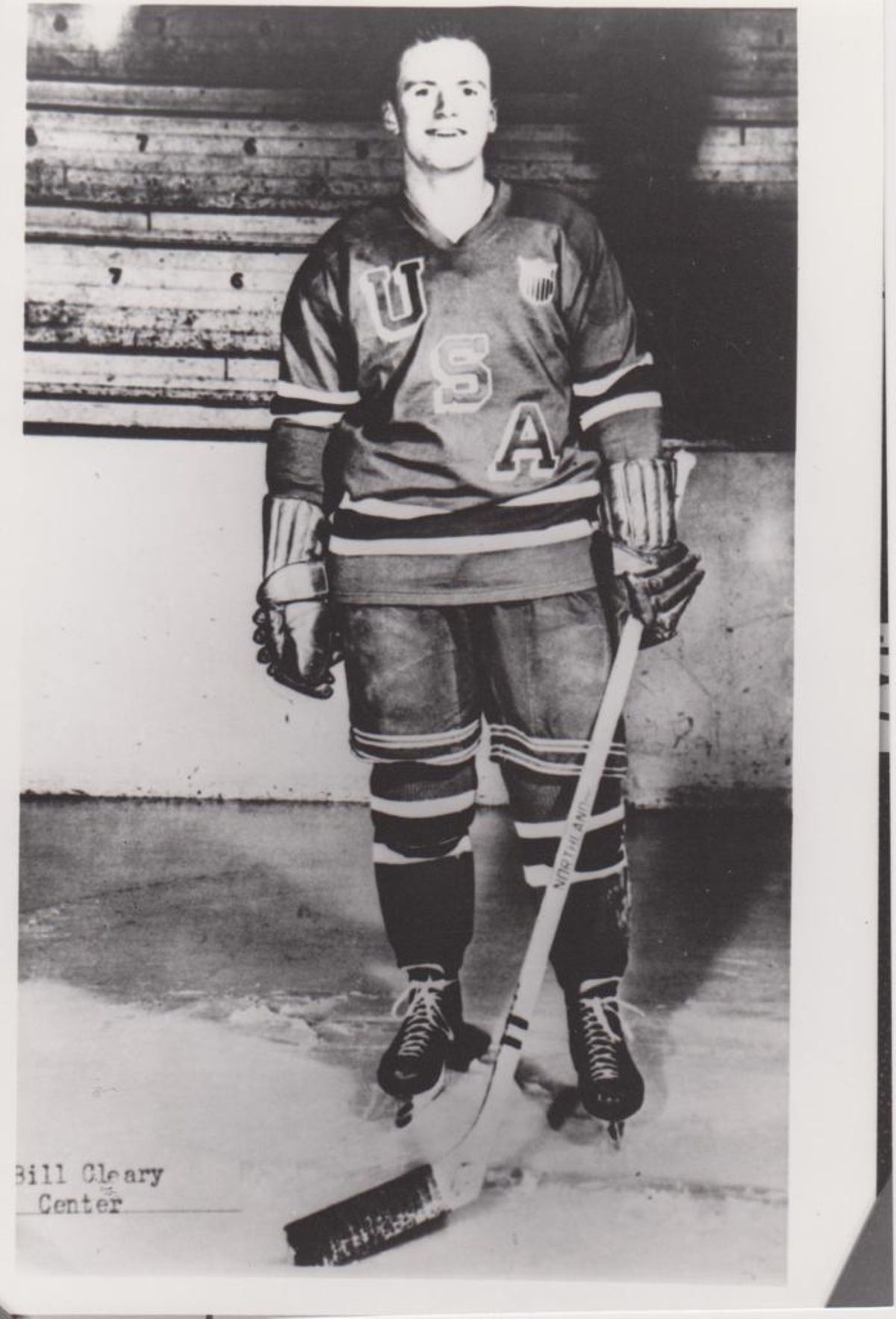
The Americans pulled off an unexpected Olympic victory
Forgotten Gold in a Different Olympic Era
This year’s Milan Winter Olympics is just another tournament for professional players. Back in 1960, no one really knew how talented American players were but there was an American team in the Olympic tournament which was held in Squaw Valley, California.
The American team has won two Olympic Gold Medals in 1960 and 1980 both on home ice so to speak. The 1980 team became legendary with books and movies chronicling their journey to the medal.
The 1960 American team won the gold but that group of players has been largely forgotten. Back in 1960, there was no White House visit and no movies. No player who would win the Olympic gold and then four straight Stanley Cups like the New York Islanders defenseman Ken Morrow. There was no Olympic catchphrase like “Do you believe in miracles? Yes!” But the 1960 team has stories, too, including one of international intrigue involving the U.S., Soviet Union and Czechoslovakia.
Early Dominance in Squaw Valley
The 1960 U.S. team easily swept through their Olympic pool, beating Czechoslovakia, Australia, Sweden, and Germany. The next big test was Canada, which was thought to be the best team in the tournament.
“I had played in ’56 and we had won a silver medal in ’56,” said Bill Cleary. “Yeah, it was a bit (of a shock) because most of the media were picking us to finish 12th and there were only eight teams in the finals, so that’s I guess what they thought of our chances.
“It wasn’t until when we played the Canadians and we beat them, 2-1, and I think after that people starting to say maybe something is going to happen here and everybody started to come in and start to get on the bandwagon and it started giving us confidence.”
An Outdoor Semifinal Against the Soviets
Outdoor hockey games are a big deal today, but back in 1960, there wasn’t too much hype surrounding the US-USSR semifinal game that was played in the open air Blyth Arena.
The Americans trailed the Soviets, 2-1, when Bill Christian scored midway through the second period to tie it. Christian scored the game-winner late in the third period and behind the goaltending of Jack McCartan, the Americans held off the Soviets and advanced to the finals.
A Visit That Changed Everything
The international intrigue came after the next morning when the Americans played Czechoslovakia. The U.S. team trailed 4-3 after two periods. When they got to the dressing room after the period, there was someone waiting for them.
Soviet captain Nikolai Sologubov had a tip that could help beat the Czechoslovakians.
“Nikolai Sologubov was a great friend of ours because we had played against each other for about four or five years before that,” Cleary said. “I can remember it was before the third period and we were down by one goal ? and this Russian came in and he couldn’t speak English, but we were great in sign language in those days and he kept muffling his mouth and we are saying. What does he want? Finally someone said I think he said oxygen because the altitude (in Squaw Valley) was a little bit higher, so I think one or two guys took it. I always kidded Jack Kirrane, who was our captain and our oldest player, that he needed it.
“But it made a great story. In fact, I can remember getting off the plane in Chicago the next night after we won it and I read this thing in the paper about Russian helps American, I didn’t even know what they were talking about.”
Cold War Undercurrents
Cleary thinks there may have been another factor in Sologubov’s mind. The Russians and Czechs hated one another on and off the ice as Czechoslovakia was forced to be a Soviet ally after World War II. That growing animosity would fester for years, and in 1968, the Soviets would invade Czechoslovakia to put down what was referred to as the “Prague Spring” which was an attempt to bring democracy to the country.
“Also, he wanted us to win because the Czechs would have finished before them so there was another ulterior motive. But that really was the Olympics was all about, we did become good friends with a lot of those Russian players.”
United States-Soviet Union relations were deteriorating since the end of World War II in 1945. In 1957, the Soviets successfully launched a space satellite, Sputnik, and during the Americans 1958 hockey tour of the Soviet Union, a model of the Sputnik was part of the centerpiece of every table where the Americans dined. The United States was having trouble launching satellites. On July 24th, 1959 Vice President Richard Nixon and Soviet Premier Nikita Khrushchev engaged in a public discussion which is commonly known as the “Kitchen Debate” where both men tried to play can you top this compare the lifestyles of capitalist United States and the communist USSR.
So Sologubov’s appearance was surprising.
“It was a bit shocking to see one of the opponents helping but whatever happened, I am glad it happened because we ended up going out and getting six goals that period and ended up winning. Nikolai was a wonderful guy I can still see him with those big gold teeth smiling. I actually think he was right outside, he was talking to our trainer. In those days, you didn’t come off the ice if you got a penalty. The guy stayed in the box for the whole two minutes and they got a penalty I can remember and I think we scored two or three goals before that guy got out.”
Parallels With the Miracle on Ice
There are some unusual commonalities that both the 1960 and 1980 U.S. teams share. They were still involved in the Cold War. The Soviets in 1979 invaded Afghanistan and that triggered a new round of tensions between Washington and Moscow. Both hockey teams had to beat the Soviets in the semifinals and both teams trailed the Soviets in the second period. Both teams had to win their final game to claim the medal and both teams trailed after two periods in the gold medal game. Neither team was highly regarded although Cleary thinks the 1960 team wasn’t as good as the 1980 team.
Cleary witnessed the 1980 US-USSR game in Lake Placid and was asked by Herb Brooks to address the team prior to the contest which provided a strange link between the 1960 and 1980 teams. Brooks was cut by coach Jack Riley to make room for Cleary.
“I think of all the people who were cheering for that team, no one was cheering harder than that 1960 team,” Cleary said. “Herbie was the last cut when we joined the team and Herbie was a dear friend and yes my brother and myself joined late.”
Overshadowed by History
The 1980 United States hockey team was celebrated and to this day is the best known hockey team in United States popular culture. “Do you believe in miracles?’ remains one of the top sports announcer related catch phrases and even though Al Michaels went on to become the announcer for Monday Night Football and now Sunday Night Football, Michaels’ top announcing moment was calling the US-USSR game in Lake Placid in February 1980.
The 1960 team is a footnote. Only two players from the U.S. team, Tommy Williams and McCartan, went onto play in the NHL. McCartan finished his career in the WHA with Minnesota and became an NHL scout. The best known Canadian player from the 1960 Olympics never played in the NHL. Harry Sinden ended up coaching the Boston Bruins and coached Team Canada in the 1972 Summit Series. Bill Cleary went onto coaching at Harvard University and helped put together college hockey’s ECAC. There were no parades for this team.
“Well we went back and it was funny when we were coming back on the plane and we were wondering if anyone would show up from the media,” Cleary said. “Actually we did have and I lived in Cambridge, Massachusetts and we had a fire engine take us through the town. Jack Kirrane did it in Brookline (Massachusetts) and Dick Rodenheiser too.
“The media coverage is so much different. Bud Palmer was doing the play by play (the game was on CBS in the United States) and that was a big crowd on television at the time. There was not (a President Dwight Eisenhower White House reception).”
A Lifetime Memory
Cleary got $15 a month as a member of the 1960 Gold Medal Olympic team. But it was an experience of a lifetime.
“We didn’t know much after the Russians at that time. I was just awed that here I was with some of the great athletes of the world. Sure we wanted to beat the Russians and we took great pride in wearing the United States uniform.”
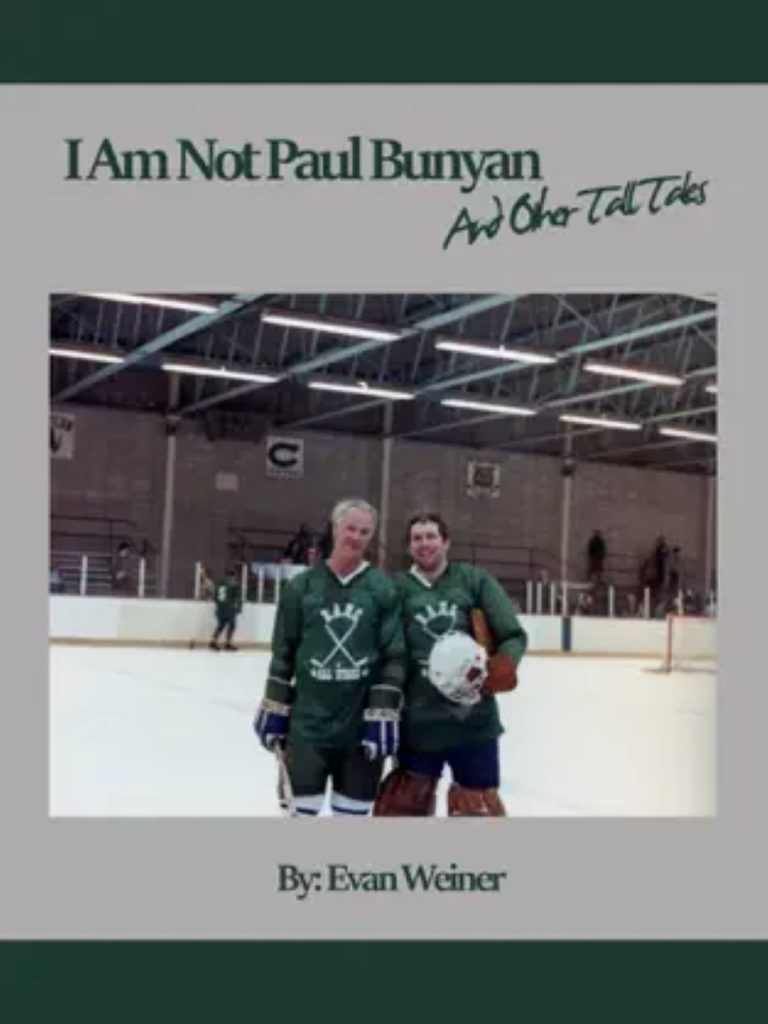
(From the book – I Am Not Paul Bunyan And Other Tall Tales)
Let ’em Run – Late P5 Preview at Gulfstream Park, Sponsored by BRISnet
Well let’s ride again here at Gulfstream Park, where it is sure to be fast and firm, and we will take a look at the runners in the late P5. Interesting to point out right off the bat, trainer Saffie Joseph Jr. has 4 horses running, but has given only one mount to his “go to” guy, Edgar Zayas Jr., and it is also his ONLY mount of the day (Race 11) hmmmm…
Gulfstream Park Race 7 – 3:20 EST | 5 ½ Furlongs | Synthetic | CLM25K
A synthetic sprint race, with a smallish field of 7, but a tough race to figure out. Going to go with one of several invaders from Woodbine, #3 Moon Landing 6-1. Jockey Tyler Gaffalione is in the saddle, and trainer Martin Drexler is overdue to hit the winners circle (5-0-2-2). A clean break would seal the deal. The #5 Catch a Tiger 8-1 could make some noise right out of the gate if runner takes to synthetic after a number of turf attempts. Jockey Micah Husbands adds to the appeal as does trainer Steve Owens record, off this kind of layoff (30%). Also has the highest last race speed rating per Brisnet, which adds to the appeal.
Race 8 – 3:50 EST | 1 1/16 Mile | Dirt | MSW 84K
This is a LOADED MSW race with only one 1st time starter. The #7 Cruisin Crossbay 10-1, did not do much 1st time out, but working out super for the return. Jockey Micah Husbands and trainer Saffie Joseph Jr. team up for a lot of wins. Trainer Joseph boasts a 35% sprint to route on dirt, for the 2nd start of a runner… gotta like that stat. Taking a look at #2 Lennie G 20-1 for trainer Dale Romans, who is heating up here at Gulfstream. An interesting stat when going from Maiden Claiming to MSW is a 26% strike rate for Romans. Not that a 100K Maiden Claiming at Churchill is your average claiming event.
Race 9 – 4:20 EST | 5 Furlongs | Turf | OC62K
Would like to see some scratches help the #8 Vindicate Cha Cha 8-1 get a little closer to the rail for the quick run into the 1st turn in this turf sprint. Jockey change to Javier Castellano is a plus. Runner can put up some serious fractions, but hoping here that some maturity in her 5 y.o. campaign allows Castellano to dole out the speed a little better. Either way, she will be prominent on the front end from the start. #4 Greenfield Cougar 4-1 is a runner who would benefit if there are crazy early splits put up. If jockey Joe Bravo gets her out of the gate cleanly, could set up for a big closing kick in the stretch.
Race 10 – 4:50 EST | 1 1/16 | Dirt | The Sunshine Classic 75K
First of two stakes races to close out Saturdays’ card, with a small field of six, headed by #6 Neoequos 3-1, who has been keeping serious company since running in the Kentucky Derby back in May. Could see a lonely lead out front for this runner, and workouts for return say that is a real possibility. The Brisnet #1 Prime Power at +7 points adds to the appeal, but what will likely be a very short price. The #5 Lightning Tones 5-2, will be coming hard down the lane, and race 3 back would fit nicely here. Change to jockey Jose Morelos is a plus in a route race.
Race 11 – 5:20 EST | 1 Mile | Turf | The Sunshine Filly and Mare Turf 75K
The ultra consistent runner #7 Ashima 3-1, is posed for a big run as defending champ. Third off a layoff, and trainer Salvatore Santoro has her ready to fire. Versatile sort, will give jockey Javier Castellano options. Trainer Santoro has some serious stats to back up top pick. So….this is Edgar Zayas only mount of the day, on a runner with the least racing experience in the field, the #5 Sapphire Girl 15-1, for trainer Saffie Joseph Jr. Last time out was 1st time on turf, and looked super breaking maiden, but stepping up here first time with winners. Got some time off after that victory, but is working out without missing a beat.
So tune in Friday at 3PM with special guest John O’Hara, Managing Partner of Four Leaf Clover Stable, LLC. Host John Kostin will have a lively Q. and A., with some new perspectives on the state of thoroughbred horseracing. Then check out Podcast on Saturday at 12:30 where we break down the Late P5 at Gulfstream Park.
So catch us on multiple streaming apps, and social channels. So bet smart, cheer hard, fast horses equal serious fun, until next time…Let’em Run.
We are set for a battle of the underdogs in Phoenix Saturday night as both Ole Miss and Miami upset their quarter-final opponents. Miami was able to take down Ohio State as a 9.5-point underdog. Ole Miss beat Georgia as a 5.5-point underdog. Both are considered unlikely to be here, yet the least likely matchup is the one we are gearing up for. While Miami was the less likely of the two, they answered a lot of questions about their identity going forward…
PHYSICALITY. Plain and simple. Miami had an argument for the best lines of scrimmage in the country entering the year. But those in-season losses to Louisville and SMU made us forget who they were. All of their wounds were self-inflicted. Penalties, ill-timed turnovers, and lots of turnovers at times all played a factor in Miami’s losses.
But they have found their identity once again in the College Football Playoffs. Their penalties are down, and they have won the turnover battle in both of their CFP matchups. Which has allowed them to flex the talent that they have on this roster.
The lines of scrimmage have gotten a lot of shine thus far. But do not let that overshadow their defensive backs and skill position players, who have won them football games with explosive plays. When I think about that Texas A&M game, I think of Malachi Toney’s touchdown and Bryce Fitzgerald’s 2 interceptions. When I think of the Ohio State game, I think of Keionte Scott’s pick-6.
They are an extremely well-rounded team whose play style has mirrored that of Saban’s early teams at Alabama. Miami has not been asking Carson Beck to do a whole lot, mainly because they haven’t needed him to. They have won games on the ground and through their defense. However, this Ole Miss team might be the offense that could derail that play style…
How Ole Miss can ruin Miami’s homecoming
Ole Miss is going to have to start by sustaining drives. This is not going to be an easy task against this Miami front 4. Ruben Bain and the boys are going to create interior pressure at a much higher rate than Georgia could. That will, in turn, allow Miami to have more effective containment of Trinidad Chambliss. Back to sustaining drives, though, Ole Miss’s longest scoring drive was in the first quarter against Georgia when they took 4:27 off the clock and kicked a field goal.
Ole Miss also needs to create turnovers and hope that Miami commits a higher number of penalties than they have in the first two games of the playoffs. This doesn’t exactly bode well for Ole Miss, seeing as how they are T-80th in the country in turnover margin and T-75th in penalties per game.
So what does go in Ole Miss’s favor? Trinidad Chambliss is miles ahead of Julian Sayin at this point in their careers. As a whole, Ole Miss’s offense is a better, more complete unit than Ohio State’s offense was this year. But all totaled they key factor in this game for Ole Miss is Kewan Lacy. He has been one of the best running backs in college football this year and will have to be on Thursday night if the Rebels are going to win. The best way to slow down a great pass rush is with a good running game. This will also lead to balance on offense and longer drives overall for the Rebels.
Ole Miss’s defense needs to have a bend but don’t break mentality. It is what won them the Sugar Bowl. Twice, Georgia was in the red zone against the Rebels and came away with three. Meanwhile, Ole Miss’s offense was perfect on its red zone possessions against Georgia. A perfect 4/4. Those trends will need to continue for the Rebels if the dream season is to live on.
Final Thoughts+ Prediction/Betting lines
As much as I would love for Ole Miss to win a National Title and really stick it to Lane Kiffin and the ginormous yapper he has on him. I do not see how they will be able to hang with the physicality of Miami for 60 minutes. I think the people of South Florida will be feeling like it’s 2001 all over again and right some wrong that occurred the last time they played in the Fiesta Bowl.
Main Street Sports stands on the edge of a shutdown that could reshape how fans watch local games across the country. Everything now hinges on a bid from London‑based DAZN, which is trying to acquire Main Street and its sixteen FanDuel‑branded regional sports networks.
A Crisis Spreading Across the Country
The crisis touches every region where the networks still operate. FanDuel RSNs carry teams across the Midwest, the South, the Mountain West, the Great Lakes, and the West Coast. Pressure grows each day as missed payments ripple through the leagues and force executives to confront the future of local sports broadcasting.
DAZN Sees a Major Opening in the U.S. Market
DAZN views the turmoil as a rare opportunity to enter the U.S. market in a major way. The streamer wants to acquire all sixteen networks and build direct relationships with MLB, the NBA, and the NHL. The move would expand DAZN far beyond combat sports and place it alongside Netflix, Apple, Amazon Prime, and YouTube as a major player in live sports.
Missed Payments Trigger Alarm Across Leagues
The trouble began when Main Street failed to make a December payment to the St. Louis Cardinals. The situation escalated on January 6, when thirteen NBA teams did not receive their scheduled rights payments. Those missed payments triggered alarm inside league offices, where executives now warn that the next few weeks will determine the fate of sixteen networks and twenty eight teams.
Shutdown Looms if No Deal Is Reached
The deadline falls between late January and early February. If DAZN and Main Street cannot reach a deal, Main Street plans to shut down after the 2026 NBA and NHL seasons. That collapse would return local rights to many teams for the first time in decades and accelerate a shift that has been building for years.
Leagues Preparing Backup Plans
If the DAZN deal collapses, the leagues have backup plans. The NBA and NHL expect to launch their own streaming services in the 2026 and 2027 seasons. Major League Baseball already controls broadcasts for the Diamondbacks, Padres, and Rockies, and expects to add the Washington Nationals, who broke away from MASN. MLB has told its remaining FanDuel teams that it can take over their broadcasts by spring training.
Experts Say Leagues May Welcome the Shift
Sports media branding expert Jeff Dennis believes the leagues may not fear that outcome.
“Every major U.S. league is working toward a more complete direct to consumer model,” Dennis said. “If teams regain their local rights, leagues like MLB, the NBA, and the NHL could finally bundle local games into their own streaming packages, something they’ve never been able to do under the regional sports network system.”
The Warning Signs Were Always There
The warning signs were visible long before Main Street Sports took control of the former Diamond Sports networks. Diamond’s bankruptcy exposed a system collapsing under the weight of cord cutting, shrinking subscriber revenue, and long term rights deals that no longer matched the economics of modern television.
When Main Street stepped in, it inherited the same broken model, the same debt pressure, and the same unsustainable contracts. In hindsight, the deal may have been doomed from the start. Main Street never had the financial cushion or structural advantages needed to fix a business that had already fallen apart, and the missed payments to the Cardinals and thirteen NBA teams only confirmed what many insiders feared: the RSN model was running out of road.
A Forty‑Year Model Nears Its End
Former Warner Communications executive Frank Carney sees the moment as the end of a long era.
“The regional sports network model we built in the nineteen eighties generated hundreds of millions of dollars and helped fuel ESPN’s national rise through the cable bundle,” Carney said. “But in 2026 that bundle no longer delivers the revenue it once did. Rights deals built on those old economics are now impossible to sustain, and that is why so many regional networks are fighting to survive.”
Some RSNs Remain Strong
Not every RSN is in danger. Team‑owned networks remain stable and insulated from the collapse.
“The team‑owned RSNs aren’t in danger. They stay strong because the teams control the product,” said sports media consultant Bill Jensen.
A Decision That Will Shape the Future
The regions at risk stretch across the country. Midwest fans could lose long standing outlets in Detroit, Milwaukee, Cleveland, Ohio, and Minneapolis. Southern markets like Miami, Atlanta, and Tampa Bay face the same uncertainty. Western markets in Los Angeles and San Antonio also hang in the balance.
These networks carry teams that anchor local identity and regional pride, and their disappearance would leave major gaps in the media landscape.
The next few weeks will determine whether DAZN rescues the networks or whether the leagues reclaim local rights. Either outcome will change how millions of fans watch their hometown teams. The regional sports model that dominated for forty years now stands at its final hour, and the industry is preparing for a future that will look very different from its past.