Connect with us

Business

After Venezuela raid, Trump says ‘We do need Greenland, absolutely’

Published

on


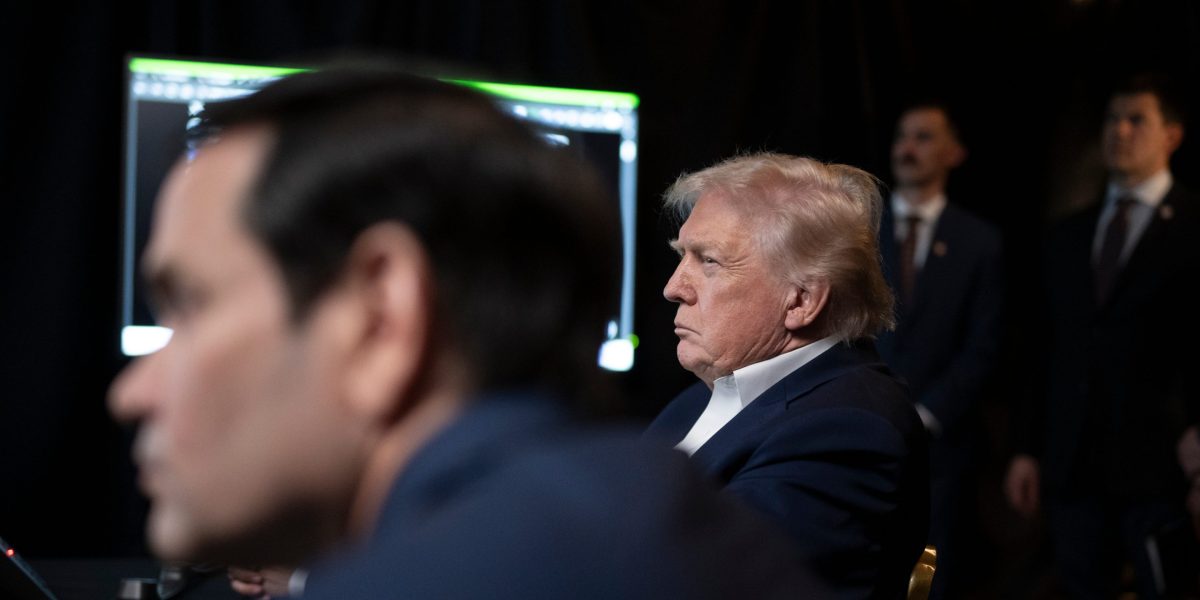
A day after the audacious U.S. military operationin Venezuela, President Donald Trump on Sunday renewed his calls for an American takeover of the Danish territory of Greenland for the sake of U.S. security interests, while his top diplomat declared the communist government in Cuba is “in a lot of trouble.”

The comments from Trump and Secretary of State Marco Rubio after the ouster of Venezuela’s Nicolás Maduro underscore that the U.S. administration is serious about taking a more expansive role in the Western Hemisphere.

With thinly veiled threats, Trump is rattling hemispheric friends and foes alike, spurring a pointed question around the globe: Who’s next?

“We do need Greenland, absolutely,” Trump said in an interview with The Atlantic in which he described the strategically located Arctic island as “surrounded by Russian and Chinese ships.”

Asked what the U.S.-military action in Venezuela could portend for Greenland, Trump replied: “They are going to have to view it themselves. I really don’t know.” The White House did not respond to a request for comment.

Trump, in his administration’s National Security Strategy published last month, laid out restoring “American preeminence in the Western Hemisphere” as a central guidepost for his second go-around in the White House.

Trump has also pointed to the 19th century Monroe Doctrine, which rejects European colonialism, as well as the Roosevelt Corollary — a justification invoked by the U.S. in supporting Panama’s secession from Colombia, which helped secure the Panama Canal Zone for the U.S. — as he’s made his case for an assertive approach to American neighbors and beyond.

Trump has even quipped that some now refer to the fifth U.S. president’s foundational document as the “Don-roe Doctrine.”

Saturday’s dead-of-night operation by U.S. forces in Caracas and Trump’s Atlantic interview heightened concerns in Denmark, which has jurisdiction over the vast mineral-rich island of Greenland.

Danish Prime Minister Mette Frederiksen in a statement following Trump’s latest comments on Greenland said he has “no right to annex” the territory. She also reminded Trump that Denmark already provides the United States, a fellow member of NATO, broad access to Greenland through existing security agreements.

“I would therefore strongly urge the U.S. to stop threatening a historically close ally and another country and people who have made it very clear that they are not for sale,” Frederiksen said.

Denmark on Sunday also signed onto a European Union statement underscoring that “the right of the Venezuelan people to determine their future must be respected” as Trump has vowed to “run” Venezuela and pressed the acting president, Delcy Rodriguez, to get in line.

Greenlanders and Danes were further rankled by a social media post following the raid by a former Trump administration official turned podcaster, Katie Miller. The post shows an illustrated map of Greenland in the colors of the Stars and Stripes accompanied by the caption: “SOON.”

“And yes, we expect full respect for the territorial integrity of the Kingdom of Denmark,” Amb. Jesper Møller Sørensen, Denmark’s chief envoy to Washington, said in a post responding to Miller, who is married to Trump’s influential deputy chief of staff Stephen Miller.

During his presidential transition and in the early months of his return to the White House, Trump repeatedly called for U.S. jurisdiction over Greenland, and has pointedly not ruled out military force to take control of the mineral-rich, strategically located Arctic island that belongs to an ally.

The issue had largely drifted out of the headlines in recent months. Then Trump put the spotlight back on Greenland less than two weeks ago when he said he would appoint Republican Gov. Jeff Landry as his special envoy to Greenland.

The Louisiana governor said in his volunteer position he would help Trump “make Greenland a part of the U.S.”

A stern warning to Cuba

Meanwhile, concern simmered in Cuba, one of Venezuela’s most important allies and trading partners, as Rubio issued a new stern warning to the Cuban government. U.S.-Cuba relations have been hostile since the 1959 Cuban revolution.

Rubio, in an appearance on NBC’s “Meet the Press,” said Cuban officials were with Maduro in Venezuela ahead of his capture.

“It was Cubans that guarded Maduro,” Rubio said. “He was not guarded by Venezuelan bodyguards. He had Cuban bodyguards.” The secretary of state added that Cuban bodyguards were also in charge of “internal intelligence” in Maduro’s government, including “who spies on who inside to make sure there are no traitors.”

Trump on Saturday told reporters that he viewed the Cuban government as “very similar” to Venezuela.

“I think Cuba is going to be something we’ll end up talking about, because Cuba is a failing nation right now, a very badly failing nation, and we want to help the people,” Trump said.

Cuban authorities called a rally in support of Venezuela’s government and railed against the U.S. military operation, writing in a statement: “All the nations of the region must remain alert, because the threat hangs over all of us.”

Rubio, a former Florida senator and son of Cuban immigrants, has long maintained Cuba is a dictatorship repressing its people.

“This is the Western Hemisphere. This is where we live — and we’re not going to allow the Western Hemisphere to be a base of operation for adversaries, competitors, and rivals of the United States,” Rubio said.

Cubans like 55-year-old biochemical laboratory worker Bárbara Rodríguez were following developments in Venezuela. She said she worried about what she described as an “aggression against a sovereign state.”

“It can happen in any country, it can happen right here. We have always been in the crosshairs,” Rodríguez said.


Source link

Continue Reading

Business

Down Arrow Button Icon

Published

on


And just like that, Sarah Jessica Parker last night took home the 2026 Carol Burnett Award, celebrating her acting accomplishments during the past five decades. The Sex and the City star began acting as a child, around age 8, and held major roles in Annie on Broadway, the sitcom Square Pegs, and the films Footloose and Firstborn

Over her storied career, she’s been surrounded by innumerable supporters, namely her husband Matthew Broderick, best known for his role as Ferris Bueller in the iconic 1980s juggernaut Ferris Bueller’s Day Off. Broderick presented Parker with the award Thursday night and said he questioned her about taking her timeless role as Carrie Bradshaw.

“Do you really want to do TV?” Broderick recalled asking Parker, who went on to win six Golden Globes and two Emmys for her role in Sex and the City. (Parker and Broderick have an estimated combined net worth of $200 million). 

And now that Parker has realized a career most actors can only dream of, she’s rethinking what work-life balance means to her.

Parker’s new definition of work-balance

In a recent CNBC interview about how she now picks projects, Parker said she is “making choices differently than [she] used to,” prioritizing roles that leave room for her life off-set. Parker, 60, has juggled decades of acting work with fashion, publishing, and wine ventures, and framed her ability to choose slower-paced or more flexible jobs as a luxury she doesn’t take for granted.​

“As a journeyman, you’re trying to find work [where] you keep learning, you get better,” Parker told CNBC. “Maybe you get to travel. Hopefully you get paid, and you get to work with really interesting people … but now … I’m much more thoughtful in smaller ways about how I’ll be spending my time.”

To be sure, Parker hesitated to comment on work-life balance at all, saying many workers hold multiple jobs without reliable childcare or health care. 

“The thing that surprises me most is all the women and men and parents who are holding down two and three jobs in our city, across our country, who don’t have the kind of support I have, who are really just managing every single day,” she said.

A support system is key to work-life balance

Rather than presenting herself as a solo superwoman, Parker credits her success to a wide safety net, including family, childcare, and other professional help. She said her schedule works because of the people who step in when she is on set, reading Booker Prize submissions, running her wine label, overseeing her production company Pretty Matches, or working with the States Project, an advocacy group focused on advancing Democratic state-level candidates and issues.

“I know how I get to [do so many things], because I have the kind of support I need,” Parker said.

Parker’s experience mirrors what other successful people say: What passes for balance at the highest levels usually depends on extensive support at home and at work, from spouses who absorb more caregiving to employees who can run the business while they’re away. Harvard Business School research on CEOs’ schedules shows leaders often clock 60-hour weeks but maintain performance by delegating heavily and protecting time for sleep, exercise, and family.​

How leaders talk about balance

While some leaders embrace the idea of work-life balance, others say it’s impossible to achieve and be successful. Amazon founder Jeff Bezos, for instance, has said he views work and life as a “circle” rather than a scale.

“I don’t love the word ‘balance’ because it implies a tradeoff,” Bezos said recently at Italian Tech Week. “I’ve often had people ask me, ‘How do you deal with work-life balance?’ And I’ll say, ‘I like work-life harmony because if you’re happy at home, you’ll be better at work. If you’re better at work, you’ll be better at home.’ These things go together. It’s not a strict tradeoff.”

Microsoft CEO Satya Nadella has also described the boundary between home and office as more about achieving “harmony,” and Nespresso’s UK CEO Anna Lundstrom aims for “work-life fluidity” because she doesn’t think separating the two is possible in an executive leadership position.

Some push this concept even further, arguing work-balance doesn’t exist when building something at scale—an idea echoed by Zoom CEO Eric Yuan. 

“I tell our team, ‘Guys, you know, there’s no way to balance. Work is life, life is work,’” Yuan said in a recent interview with the Grit podcast

Top women executives have also been blunt about the tradeoffs of work and life. Former PepsiCo CEO Indra Nooyi has long argued that “having it all” is a myth, urging employers and policymakers to build better childcare and family benefits rather than expecting individual women to simply work harder. 

“To integrate work and family is going to be a challenge,” Nooyi said at the 2019 Fortune Most Powerful Women Conference. 


Source link

Continue Reading

Business

Down Arrow Button Icon

Published

on


Without hiring from the health care and social assistance industries, the U.S. economy lost jobs in 2025—an uncomfortable reality hidden beneath modest payroll gains and an improved unemployment rate.

Nonfarm payrolls rose by 50,000 in December, while the unemployment rate edged down to 4.4%, the U.S. Bureau of Labor Statistics reported Friday. But the December gain did little to change the broader picture: employers added just 584,000 jobs in all of 2025, a sharp decline from 2 million jobs in 2024. It was the weakest year for job growth outside of a recession since the early 2000s, Heather Long, chief economist at the Navy Federal Credit Union, told Fortune. 

“This really caps off a year of anemic job gains,” Long said shortly after the report came out. “It’s fair to call this a hiring recession or a jobless boom.”

Markets initially reacted positively to the report but later gave up gains. The S&P 500 was flat and Nasdaq inched up slightly lower. Bond yields were little changed, suggesting investors saw the report as weak but not weak enough to force the Federal Reserve into near-term rate cuts.

Yet under the hood of a relatively stable unemployment rate, the composition of the job growth remains starkly narrow. Nearly all of last year’s net job creation came from health care and social assistance, sectors that rely heavily on government funding. According to Long, roughly 85% of all jobs added in 2025 were created by April, with little momentum afterward. 

In fact, health care alone accounted for about 405,000 of those gains, while social assistance added roughly 308,000. Together, those two sectors contributed more than the entire net increase of 584,000 jobs overall last year, meaning the rest of the economy shed jobs on balance, Long said.

Elsewhere, hiring was flat or negative across much of the economy. Blue collar jobs were heavily hit: manufacturing failed to rebound, and construction posted only marginal gains and mining. Meanwhile, wholesale trade, transportation and warehousing lost jobs over the year. Federal government employment also declined sharply as the White House pushed to shrink the workforce.

“There was no manufacturing revival in 2025,” Long said. “Manufacturing was already weak, and the tariffs didn’t help. After that, you started to see other sectors getting worse too.”

White-collar hiring was no stronger. Professional and business services and the information sector both posted net job losses for the year, reflecting persistent layoffs in tech and corporate roles. 

“In many ways, 2025 was both a white-collar and a blue-collar jobs recession,” Long said.

The unemployment rate, meanwhile, has remained relatively low—but that stability is increasingly misleading, economists say. The jobless rate has risen gradually from 4.0% in January to 4.4% in December, and there are now about 583,000 more unemployed people than a year ago.

In addition, long-term unemployment has climbed, and more workers are stuck in part-time jobs because they can’t find full-time work.

“It’s a slowly weakening job picture,” Long said. “Whatever metric you want to focus on, that story shows up.”

Recent revisions added to the sense of fragility. The Labor Department revised October payrolls down to a loss of 173,000 jobs and November down to a gain of 56,000, confirming that hiring late in the year was weaker than initially reported.

The “jobless boom” is also being sustained by an immigration crackdown that has lowered the labor supply. By reducing the pool of available workers, the administration has effectively reduced the breakeven bar for the labor market; because there are fewer people looking for work, the unemployment rate remains low even as the private-sector engine hits stall speed.

Analysts at Jefferies were cautious to interpret the weak December payroll figure on its own, pointing to firmer signals in the household survey, which they described as “very encouraging.” They noted that employment rose by 232,000 in December while the number of unemployed fell by 279,000.

“The decline in the unemployment rate came from more of the right reasons than we anticipated,” Jefferies economist Thomas Simons wrote, adding that broader underemployment also improved.

Simons also emphasized that December jobs data are among the noisiest of the year and should not be over-interpreted.

 “There is an enormous amount of seasonal noise this month, and even more in January,” he said, noting that upcoming annual benchmark revisions could “re-contextualize the path of job growth over the course of last year.” 

That backdrop helps explain the Fed’s policy direction. Despite inflation remaining above target, the central bank has prioritized supporting the labor market. Wage growth remains relatively strong—average hourly earnings rose 3.8% over the past year—but Long said that strength is unlikely to persist.

“That was the number that surprised me,” she said. “Wage gains are still pretty strong, but I expect them to cool. Workers can feel they’ve lost bargaining power. It’s not just job seekers—people who still have jobs are frustrated too.”

Looking ahead, Long expects the Fed to pause in January, with a possible rate cut in March if hiring continues to lag. “This jobless boom is very uneasy on Main Street,” she said. “There’s justification for more cuts if this continues.”


Source link

Continue Reading

Business

Philly burbs police stunned by arrest of apparent grave robbery carrying sack with skulls, bones, mummified remains

Published

on


Bones and skulls visible in the back seat of a car near an abandoned cemetery on Philadelphia’s outskirts led police to a basement filled with body parts, which authorities say were hoarded by a man now accused of stealing about 100 sets of human remains.

Officers say a Tuesday night arrest culminated a monthslong investigation into break-ins at Mount Moriah Cemetery, where at least 26 mausoleums and vaults had been forced open since early November.

Investigators later searched the Ephrata home and storage unit of Jonathan Christ Gerlach, 34, and reported finding more than 100 human skulls, long bones, mummified hands and feet, two decomposing torsos and other skeletal items.

“They were in various states. Some of them were hanging, as it were. Some of them were pieced together, some were just skulls on a shelf,” Delaware County District Attorney Tanner Rouse said.

Most were in the basement, authorities said, and they also recovered jewelry believed to be linked to the graves. In one case, a pacemaker was still attached.

Police say Gerlach targeted mausoleums and underground vaults at the 1855 cemetery. It’s considered the country’s largest abandoned burial ground, according to Friends of Mount Moriah Cemetery, which helps maintain the 160-acre landmark in Yeadon that’s home to an estimated 150,000 grave sites.

Police had been looking into the string of burglaries when an investigator checked Gerlach’s vehicle plates and found he had been near Yeadon repeatedly during the period when the burglaries occurred. Police say the break-ins centered on sealed vaults and mausoleums containing older burials, which had been smashed open or had stonework damaged to reach the remains inside.

He was arrested as he walked back toward his car with a crowbar, police said, and a burlap bag in which officers found the mummified remains of two small children, three skulls and other bones.

Gerlach told investigators he took about 30 sets of human remains and showed them the graves he stole from, police said.

“Given the enormity of what we are looking at and the sheer, utter lack of reasonable explanation, it’s difficult to say right now, at this juncture, exactly what took place. We’re trying to figure it out,” Rouse told reporters.

Gerlach was charged with 100 counts each of abuse of a corpse and receiving stolen property, along with multiple counts of desecrating a public monument, desecrating a venerated object, desecrating a historic burial place, burglary, trespassing and theft.

He is jailed on $1 million bond. No lawyer was listed in court records. A message seeking comment was texted to a cellphone linked to him.


Source link

Continue Reading

Trending

Copyright © Miami Select.