Connect with us

Business

Trump seeks to revive Venezuela’s oil-based economy while affordability crisis lingers in the U.S.

Published

on


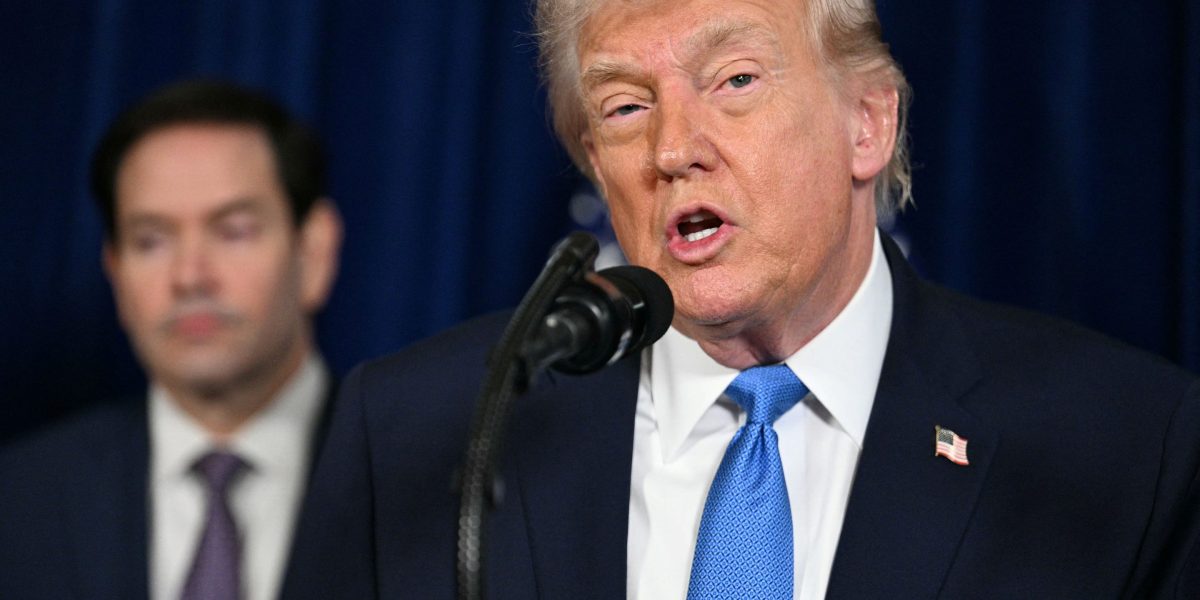
President Donald Trump has committed the U.S. to rebuilding Venezuela’s oil industry, the key driver in the country’s faltering economy, after the capture and arrest of dictator Nicolas Maduro by American forces.

During a press briefing on Saturday, Trump said “we’re going to run” Venezuela to allow for a transition to new leadership, and didn’t shy away from putting troops there, claiming that Maduro’s vice president will take orders from the U.S.

“We’re going to have this done right,” he vowed. “We’re not going to just do this with Maduro then leave like everybody else—leave and say, you know, let it go to hell. If we just left, it has zero chance of ever coming back. We’ll run it properly. We’ll run it professionally.”

Venezuela has the world’s largest proven oil reserves, but production has waned and the economy has collapsed amid American sanctions and Maduro’s mismanagement.

Trump suggested the U.S. would use Venezuela’s oil wealth to pay for the mission and compensate American companies that operated there previously but whose assets were nationalized by the socialist regime.

“We’re going to rebuild the oil infrastructure, which will cost billions of dollars,” he said. “It’ll be paid for by the oil companies directly, and they will be reimbursed for what they’re doing. But it’s going to be paid, and we’re going to get the oil flowing.”

Energy analysts have estimated it will take several years, perhaps close to a decade, to truly rebuild the Venezuelan oil sector and dramatically boost exports.

Trump appeared to acknowledge that updating the country’s oil industry will be no simple matter, saying the infrastructure is “rotted” and that extraction is dangerous.

“We’re going to be replacing it, and we’re going to take a lot of money out so that we can take care of the country,” he explained.

While he touted the returns U.S. oil companies stand to gain, Trump added that the Venezuelan people will be the biggest beneficiaries of Maduro’s ouster.

But Trump campaigned on an “America first” platform and promised to keep the U.S. out of foreign conflicts. While he has tried to bring an end to Russia’s war on Ukraine, Trump received blowback from his MAGA base after the U.S. joined Israel’s war on Iran last summer by bombing key nuclear facilities.

At the same time, voters delivered stunning defeats to Republicans in the off-year elections, saying Trump hasn’t done enough to improve the cost of living.

That prompted the Trump administration to roll back tariffs on certain grocery staples as well as suggest sending out tariff “dividend” checks and lower housing costs via 50-year mortgages. And on New Year’s Eve, he delayed tariff hikes on certain furniture for a year after signaling levies on some Italian pastas would be much lower than planned.

In explaining the U.S. military action in Venezuela, Defense Secretary Pete Hegseth said, “This is America first.”

When asked how running a country in South America is “America first,” Trump replied, “It is because we want to surround ourselves with good neighbors. We want to surround ourselves with stability, and we want to surround ourselves with energy. We have tremendous energy in that country. It’s very important that we protect it. We need that for ourselves. We need that for the world, and we want to make sure we can protect it.”

But Trump’s critics were quick to point out the disconnect between his campaign rhetoric and the latest military moves.

GOP Rep. Marjorie Taylor Greene, a once-staunch Trump ally who has since broken with the president, said on X that “Americans are consistently facing increasing cost of living, housing, healthcare” while tax dollars are spent on “foreigners both home and abroad.”

Days ahead of her exit from Congress, she said Americans are fed up with fighting wars and providing support for foreign wars but that establishment Republicans and Democrats “kept the Washington military machine funded and going.”

“This is what many in MAGA thought they voted to end,” she added. “Boy were we wrong.”

Meanwhile, Senate Minority Leader Chuck Schumer blasted Trump for attacking Venezuela without congressional authorization or a credible plan for a post-Maduro future.

“To distract from skyrocketing costs Americans face and the historic cover up of the Epstein files, Donald Trump is attempting to the throw Americans into more international chaos and uncertainty,” he added in a statement.


Source link

Continue Reading

Business

Down Arrow Button Icon

Published

on


Lawmakers sounded the alarm on the Justice Department’s criminal inquiry into Federal Reserve Chairman Jerome Powell, putting at risk President Donald Trump’s efforts to name a new central bank leader.

On Sunday, Powell revealed that the DOJ served the Fed with grand jury subpoenas, threatening a criminal indictment over his testimony before the Senate last June related to renovations on the headquarters, which has seen cost overruns.

He called the allegations a pretext and said the investigation was really aimed at the Fed’s ability to set interest rates without political pressure. Trump has attacked Powell for much of the last year over his reluctance to cut rates, though the president said he didn’t know about the DOJ probe.

But Republican Sen. Them Tillis agreed with Powell’s assessment and instead pointed the finger at the DOJ.

“If there were any remaining doubt whether advisers within the Trump Administration are actively pushing to end the independence of the Federal Reserve, there should now be none,” he wrote in a post on X. “It is now the independence and credibility of the Department of Justice that are in question.”

Tillis sits on the Senate Banking Committee, which oversees the Fed and would vote on anyone Trump tries to put on the central bank.

Powell’s term as chair expires in May, and Trump has said he already has someone in mind to replace him who will lower rates further. But the DOJ investigation into Powell could blow up that process.

“I will oppose the confirmation of any nominee for the Fed—including the upcoming Fed Chair vacancy—until this legal matter is fully resolved,” Tillis said.

While Powell’s term as chair expires in May, his term as a member of the Fed board of governors expires in 2028. When prior Fed chairs have stepped down, they typically have resigned from the board as well. Powell could choose to stay to preserve the Fed’s independence.

Sen. Elizabeth Warren, a Democrat who also sits on the Senate Banking Committee, accused Trump of trying to force Powell off the Fed board “to complete his corrupt takeover of our central bank.”

“He is abusing the law like a wannabe dictator so the Fed serves him and his billionaire friends,” she added. “The Senate must not move ANY Trump Fed nominee.”


Source link

Continue Reading

Business

Down Arrow Button Icon

Published

on


U.S. equity futures fell sharply Sunday night after Federal Reserve Chair Jerome Powell confirmed that he is under investigation related to testimony he gave last June concerning the renovation of Federal Reserve buildings. 

The New York Times report breaking news of the investigation and Powell’s subsequent disclosure rattled markets, reviving fears that years of President Donald Trump pressuring the Federal Reserve could now be realized into a direct assault on its independence.

Futures tied to the Nasdaq 100 led the decline, falling about 0.8%, as interest-rate-sensitive technology stocks bore the brunt of the selloff. S&P 500 futures were down roughly 0.5%, while Dow Jones Industrial Average futures fell about 0.4%, according to late-evening pricing.

Investors sought protection in the traditional safe-haven assets. Gold futures rose 1.7% to around $4,578 an ounce, while silver jumped more than 4%, reflecting renewed demand for protection against political and monetary instability. The U.S. dollar weakened modestly against several major currencies, including the Swiss franc and Japanese yen.

After years of largely staying silent while Trump repeatedly mocked and threatened him, Powell appeared to have reached a breaking point, issuing a rare and pointed statement. 

He wrote that while “No one—certainly not the chair of the Federal Reserve—is above the law,” the attack should be seen in the “the broader context of the administration’s threats and ongoing pressure.” 

“This new threat is not about my testimony last June or about the renovation of the Federal Reserve buildings…Those are pretexts. The threat of criminal charges is a consequence of the Federal Reserve setting interest rates based on our best assessment of what will serve the public, rather than following the preferences of the President.”

Economists warn that if the executive branch successfully co-opts the Fed, it could create a “self-fulfilling prophecy” of higher long-term inflation.

As Oxford Economics recently noted, any “cracks in the Fed’s independence” could spread rapidly through markets and ultimately raise borrowing costs for the businesses the administration seeks to protect with low interest rates. 

In a note published last July, when Trump publicly threatened to fire Powell, Deutsche Bank warned that such a move could spark severe market disruption.

“Both the currency and the bond market can collapse,” the bank wrote, citing heightened risks of inflation and financial instability. “The empirical and academic evidence on the impact of a loss of central-bank independence is fairly clear.”

Wall Street executives have echoed those concerns. Brian Moynihan, chief executive of Bank of America, said recently the erosion of Fed independence would carry serious consequences.

“The market will punish people if we don’t have an independent Fed,” Moynihan said.


Source link

Continue Reading

Business

Magnificent 7’s stock market dominance shows signs of cracking

Published

on


To beat the market in recent years, many investors applied a simple strategy: Load up on the biggest US technology stocks. 

It paid handsomely for a long time. But last year, it didn’t. For the first time since 2022, when the Federal Reserve started raising interest rates, the majority of the Magnificent 7 tech giants performed worse than the S&P 500 Index. While the Bloomberg Magnificent 7 Index rose 25% in 2025, compared with 16% for the S&P 500, that was only because of the enormous gains by Alphabet Inc. and Nvidia Corp.

Many Wall Street pros see that dynamic continuing in 2026, as profit growth slows and questions about payoffs from heavy artificial intelligence spending rise. So far they’ve been right, with the Magnificent 7 index up just 0.5% and the S&P 500 climbing 1.8% to start the year. Suddenly stock picking within the group is crucial. 

“This isn’t a one-size-fits-all market,” said Jack Janasiewicz, lead portfolio strategist at Natixis Investment Managers Solutions, which has $1.4 trillion in assets. “If you’re just buying the group, the losers could offset the winners.”

The three-year bull market has been led by the tech giants, with Nvidia, Alphabet, Microsoft Corp. and Apple Inc. alone accounting for more than a third of the S&P 500’s gains since the run began in October 2022. But enthusiasm for them is cooling as interest in the rest of the S&P 500 rises.

With Big Tech’s earnings growth slowing, investors are no longer content with promises of AI riches — they want to start seeing a return. Profits for the Magnificent 7 are expected to climb about 18% in 2026, the slowest pace since 2022 and not much better than the 13% rise projected for the other 493 companies in the S&P 500, according to data compiled by Bloomberg Intelligence.

“We’re already seeing a broadening of earnings growth and we think that’s going to continue,” said David Lefkowitz, head of US equities at UBS Global Wealth Management. “Tech is not the only game in town.”

One source of optimism is the group’s relatively subdued valuations. The Magnificent 7 index is priced at 29 times profits projected over the next 12 months, well below the 40s multiples earlier in the decade. The S&P 500 is trading at 22 times expected earnings, and the Nasdaq 100 Index is at 25 times. 

Here’s a look at expectations for the year ahead.

Nvidia

The dominant AI chipmaker is under pressure from rising competition and concerns about the sustainability of spending by its biggest customers. The stock is up 1,165% since the end of 2022, but it has lost 11% since its Oct. 29 record.

Rival Advanced Micro Devices Inc. has won data center orders from OpenAI and Oracle Corp., and Nvidia customers like Alphabet are increasingly deploying their own custom made processors. Still, its sales continue to race ahead as demand for chips outstrips supply. 

Wall Street is bullish, with 76 of the 82 analysts covering the chipmaker holding buy ratings. The average analyst price target implies a roughly 39% gain over the next 12 months, best among the group, according to data compiled by Bloomberg.

Microsoft

For Microsoft, 2025 was the second consecutive year it underperformed the S&P 500. One of the biggest AI spenders, it’s expected to invest nearly $100 billion in capital expenditures during its current fiscal year, which ends in June. That figure is projected to rise to $116 billion the following year, according to the average of analyst estimates.

The data center buildout is fueling a resurgence in revenue growth in Microsoft’s cloud-computing business, but the company hasn’t had as much success in getting customers to pay for the AI services infused into its software products. Investors want to start seeing returns on those investments, according to Brian Mulberry, client portfolio manager at Zacks Investment Management.

“What you’re seeing is some people looking for a little bit more quality management in terms of that cash flow management and a better idea on what profitability really looks like when it comes to AI,” Mulberry said.

Apple

Apple has been far less aggressive with its AI ambitions than the rest of the Magnificent 7. The stock was punished for it last year, falling almost 20% through the start of August. 

But then it caught on as an “anti-AI” play, soaring 34% through the end of the year as investors rewarded its lack of AI spending risk. At the same time, strong iPhone sales reassured investors that the company’s most important product remains in high demand. 

Accelerating growth will be the key for Apple shares this year. Its momentum has slowed recently, the stock closed higher on Friday, narrowly avoiding matching its longest losing streak since 1991. However, revenue is expected to expand 9% in fiscal 2026, which ends in September, the fastest pace since 2021. With the stock valued at 31 times estimated earnings, the second highest in the Magnificent 7 after Tesla, it will need the push to keep the rally going.

Alphabet

A year ago, OpenAI was seen as leading the AI race and investors feared Alphabet would get left behind. Today, Google’s parent is a consensus favorite, with dominant positions across the AI landscape. 

Alphabet’s latest Gemini AI model received rave reviews, easing concerns about OpenAI. And its tensor processing unit chips are considered a potential significant driver of future revenue growth, which could eat into Nvidia’s commanding share of the AI semiconductor market. 

The stock rose more than 65% last year, the best performance in the Magnificent 7. But how much more can it run? The company is approaching $4 trillion in market value, and the shares trade at around 28 times estimated earnings, well above their five-year average of 20. The average analyst price target projects just a 3.9% gain this year. 

Amazon.com

The e-commerce and cloud-computing giant was the weakest Magnificent 7 stock in 2025, its seventh straight year in that position. But Amazon has charged out of the gate in early 2026 and is leading the pack.

Much of the optimism surrounding the company is based on Amazon Web Services, which posted its fastest growth in years in the company’s most recent results. Concerns that AWS was falling behind its rivals has pressured the stock, as has the company’s aggressive AI spending, which includes efforts to improve efficiency at its warehouses, in part by using robotics. Investors expect the efficiency push to start paying off before long, which could make this the year the stock goes from laggard to leader. 

“Automation in warehouses and more efficient shipping will be huge,” said Clayton Allison, portfolio manager at Prime Capital Financial, which owns Amazon shares. “It hasn’t gotten the love yet, but it reminds me of Alphabet last year, which was sort of left behind amid all the concerns about competition from OpenAI, then really took off.”

Meta Platforms

Perhaps no stock in the group shows how investors have turned skeptical about lavish AI spending more than Meta. Chief Executive Officer Mark Zuckerberg has pushed expensive acquisitions and talent hires in pursuit of his AI ambitions, including a $14 billion investment in Scale AI in which Meta also hired the startup’s CEO Alexandr Wang to be its chief AI officer.

That strategy was fine with shareholders — until it wasn’t. The stock tumbled in late October after Meta raised its 2025 capital expenditures forecast to $72 billion and projected “notably larger”spending in 2026. When the shares hit a record in August they were up 35% for the year, but they’ve since dropped 17%. Demonstrating how that spending is boosting profits will be critical for Meta in 2026.

Tesla

Tesla’s shares were the worst performers in the Magnificent 7 through the first half of 2025, but then soared more than 40% in the second half as Chief Executive Officer Elon Musk shifted focus from slumping electric vehicle sales to self-driving cars and robotics. The rally has Tesla’s valuation at almost 200 times estimated profits, making it the second most expensive stock in the S&P 500 behind takeover target Warner Bros. Discover Inc.

After two years of stagnant revenue, Tesla is expected to start growing again in 2026. Revenue is projected to rise 12% this year and 18% next year, following an estimated 3% contraction in 2025, according to data compiled by Bloomberg.

Still, Wall Street is pessimistic about Tesla shares this year. The average analyst price target projects a 9.1% decline over the next 12 months, data compiled by Bloomberg show. 


Source link

Continue Reading

Trending

Copyright © Miami Select.