Connect with us

Politics

Marco Rubio suggests Cuba may be next after Venezuela strike
Published

on


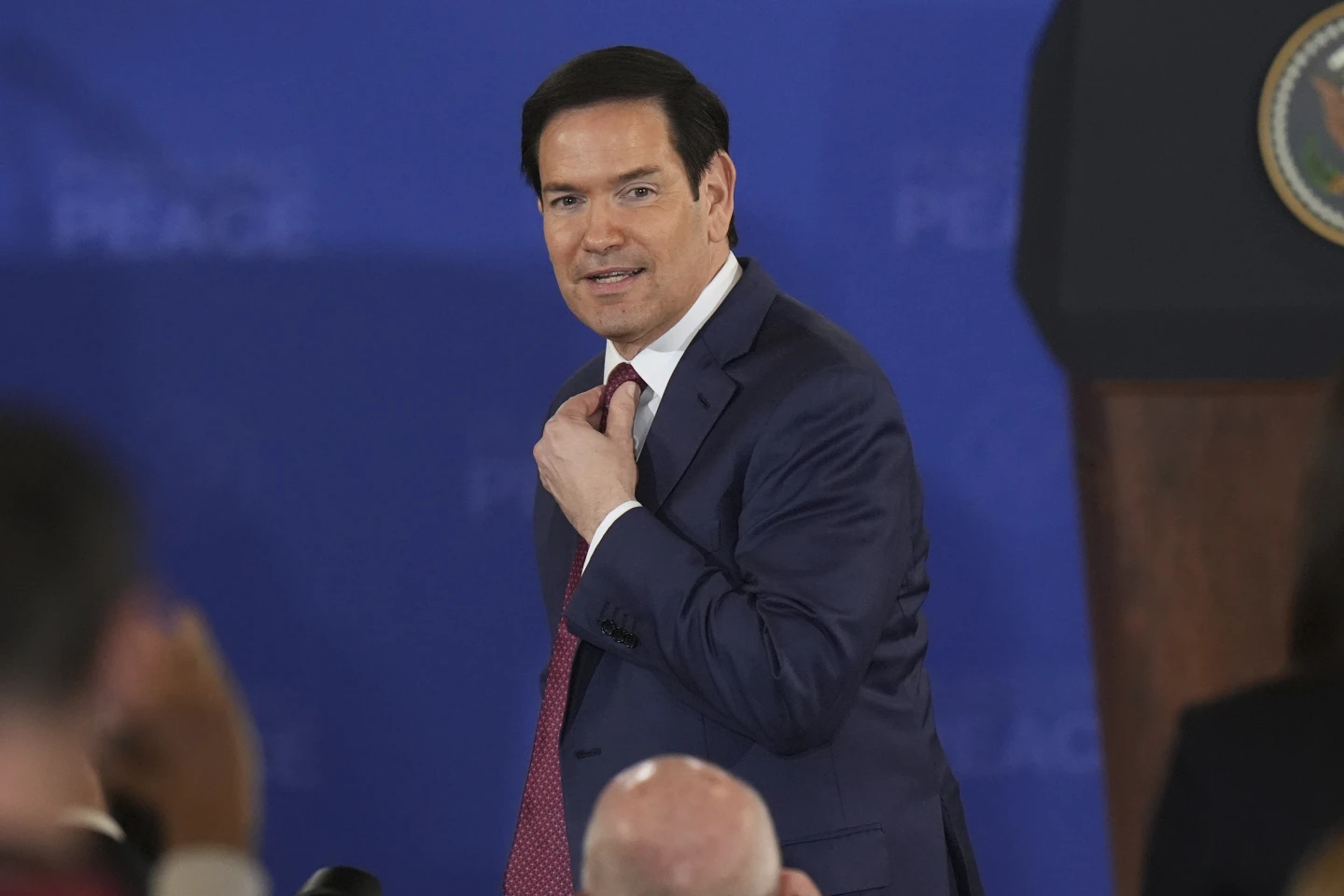
Secretary of State Marco Rubio is hinting that Cuba could be the next target of the Trump administration’s push to restore American dominance in the Western Hemisphere.

Rubio said he would be a bit concerned if he were a Cuban government official following the overnight U.S. military operation in Venezuela that captured Venezuelan President Nicolas Maduro and his wife.

“If I lived in Havana and I was in the government, I’d be concerned at least a little bit,” said Rubio, who has had a long preoccupation with both Venezuela and Cuba.

The U.S. has had a long history of military interventions in Latin America, including its tacit support for the unsuccessful 1961 Bay of Pigs invasion led by Cuban exiles aimed at toppling Fidel Castro

Cuban President Miguel Díaz-Canel condemned the attack on Venezuela as criminal and warned that Latin America is not the “backyard” where the United States does as it pleases.

“Its attack on Venezuela shatters the stability that has characterized our region for years,” the president said during a rally that drew thousands of people in Havana. “The attack in the early morning hours against a peaceful and noble people can only be described as cowardly, criminal, and treacherous.” He also demanded proof of life for Maduro.

According to the Cuban leader, the attack is not intended to end drug trafficking — for which no evidence implicating Maduro was presented — but rather to seize Venezuela’s oil and natural resources through an act of “state terrorism,” which he likened to the Israeli attack on Gaza.

The rally in Havana took place at the so-called Anti-Imperialist Tribune, located across from the U.S. Embassy.

____

Republished with permission of the Associated Press.



Source link

Continue Reading

Politics

Lawsuits by Trump allies could shape how the 2030 census is done and who will be counted

Published

on


The next U.S. census is four years away, but two lawsuits playing out this year could affect how it will be done and who will be counted.

Allies of President Donald Trump are behind the federal lawsuits challenging various aspects of the once-a-decade count by the U.S. Census Bureau, which is used to determine congressional representation and how much federal aid flows to the states.

The challenges align with parts of Trump’s agenda even as the Republican administration must defend the agency in court.

A Democratic law firm is representing efforts to intervene in both cases because of concerns over whether the U.S. Justice Department will defend the bureau vigorously. There have been no indications so far that government attorneys are doing otherwise, and department lawyers have asked that one of the cases be dismissed.

As the challenges work their way through the courts, the Census Bureau is pushing ahead with its planning for the 2030 count and intends to conduct practice runs in six locations this year.

America First Legal, co-founded by Stephen Miller, Trump’s deputy chief of staff, is leading one of the lawsuits, filed in Florida. It contests methods the bureau has used to protect participants’ privacy and to ensure that people in group-living facilities such as dorms and nursing homes will be counted.

The lawsuit’s intent is to prevent those methods from being used in the 2030 census and to have 2020 figures revised.

“This case is about stopping illegal methods that undermine equal representation and ensuring the next census complies with the Constitution,” Gene Hamilton, president of America First Legal, said in a statement.

The other lawsuit was filed in federal court in Louisiana by four Republican state attorneys general and the Federation for American Immigration Reform, which opposes illegal immigration and supports reduced legal immigration. The lawsuit seeks to exclude people who are in the United States illegally from being counted in the numbers for redrawing congressional districts.

In both cases, outside groups represented by the Democratic-aligned Elias Law Group have sought to intervene over concerns that the Justice Department would reach friendly settlements with the challengers.

In the Florida case, a judge allowed a retirees’ association and two university students to join the defense as intervenors. Justice Department lawyers have asked that the case be dismissed.

In the Louisiana lawsuit, government lawyers said three League of Women Voters chapters and Santa Clara County in California had not shown any proof that department attorneys would do anything other than robustly defend the Census Bureau. A judge has yet to rule on their request to join the case.

A spokesman for the Elias Law Group, Blake McCarren, referred in an email to its motion to dismiss the Florida case, warning of “a needlessly chaotic and disruptive effect upon the electoral process” if the conservative legal group were to prevail and all 50 states had to redraw their political districts.

The goals of the lawsuits, particularly the Louisiana case, align with core parts of Trump’s agenda, although the 2030 census will be conducted under a different president because his second term will end in January 2029.

During his first term, for the 2020 census, Trump tried to prevent those who are in the U.S. illegally from being used in the apportionment numbers, which determine how many congressional representatives and Electoral College votes each state receives. He also sought to have citizenship data collected through administrative records.

Republican redistricting expert had written that using only the citizen voting-age population, rather than the total population, for the purpose of redrawing congressional and state legislative districts could be advantageous to Republicans and non-Hispanic whites.

Both Trump orders were rescinded when Democratic President Joe Biden arrived at the White House in January 2021, before the 2020 census figures were released by the Census Bureau. The first Trump administration also attempted to add a citizenship question to the 2020 census questionnaire, a move that was blocked by the U.S. Supreme Court.


Source link

Continue Reading

Politics

Orlando wants to foreclose on historic Lake Eola area house following long neighbor fight

Published

on


On a  brick-lined street not far from the iconic Lake Eola, a fight is escalating over a historic house that’s wracked up about half a million dollars in code enforcement fines and is in danger of being foreclosed on in downtown Orlando.

A handful of Lake Eola Heights neighbors have complained  about 611 E. Concord St. regularly for years about the house parties and accused the homeowners of renting out large events instead of living there.

“The music is blaring with bass shaking my house next door. I am a professional who wakes up very early in the morning,” neighbor lawyer Brent Riddle wrote in November to the city, according to city records released following a Florida Politics records request. “There is a long history of this owner’s callous disregard for the applicable laws and zoning regulations.”

“Venue party at residential home. Loud music. Using residential home as event center. Again,” neighbor Mary Maher wrote the city in 2024.

Some reported the house had even been listed for rent by the hour on a website with ties to the adult entertainment business, the records showed.

Homeowner Holly Joffrion countered her neighbors’ and the city’s complaints aren’t true and called the code enforcement violations unfair.

“I guess you would call it like the  Karens of the HOA but it’s not a HOA. It’s the neighbors and the city of Orlando,” she said. “They’ve nit-picked every little thing that there is and there are just as many as many houses in the neighborhood that have literally the exact same make and model of these things hung on their house with no violations, with no interest.”

The city of Orlando took action and filed a complaint Nov. 20 to foreclose on the house’s code enforcement liens. The fines are accruing $75 to $500 per day so the total amount was $483,575, the city confirmed as of Dec. 18 to Florida Politics.

“The Property has become a nuisance and/or a hazardous condition, which presents a serious and continuous danger to the public and/or occupants of the Property,” the city’s complaint said in Orange County Circuit Court.

The city also argued the homeowners improperly filed a homestead exemption on the house and said they are not actually living in the Concord Street home. The city is asking the courts to rule on the issue so Orlando can move forward to foreclose and sell off the house to pay the lien.

But in an interview, Joffrion disputes the narrative raised in court records and city records about her century-old home that her family bought in 2022 for $900,000.

She argued she does in fact live in the house as she described how the couple’s nightmare began.

Holly and her husband Mikhail quickly realized their house was in bad condition from mold to water leaks to a crumbling deck after purchasing it.

Joffrion said her relationship with her neighbors has been fraught early on as the couple undertook emergency repairs and realized they were over their head with the house’s problems.

“Our neighbor is actually the former president of the historic preservation committee, so he has eyes like a hawk. He’s watching everything,” Joffrion said. “He says we’re doing unpermitted builds. … Obviously, you don’t need a permit when you’re doing emergency repairs.”

The couple initially wanted to have the house be an Airbnb but changed their mind as they began dealing with “the headache of code violations,” she said.

The couple expanded on the use of their house in a 2023 message to the city.

“It is my profession to travel globally to design & market luxury properties for AirBNB, VRBO, Marriott Vacation Club, and Hilton Grand Vacations. I own hundreds of listings across the (country) and partner with hosts in other countries to assist in growing their properties SEO. Our listings in Orlando serve as market research that help our investors understand the market potential of the area, as well as the kinds of photography & interior designs that equate to clickable listings,” the message, signed by Mikhail and Holly said. “We have 421 days of 24-hour footage showing that the property has not been used as a short-term rental, as well as the reporting from the above mentioned partners showing no bookings have been accepted or money transacted. This house is our primary residence, and a portfolio piece for my company and partners.”

Joffrion, who comes from a large family, said the Queen Anne-style house is often the site for the family’s weddings and  birthday parties.

“I’m one of seven myself. So we have 52 grandchildren  amongst me and my siblings,” Joffrion said.

When Joffrion threw her own wedding renewal, she said a neighbor who didn’t recognize her, confronted her angrily in her wedding dress.

“Excuse me. Do you know that the owners don’t even live here and it’s illegal what you’re doing?” the neighbor told her, she recounted.

Joffrion argued as she has tried to be a good neighbor and disputes her parties are too loud. She said they keep a decibel reader to make sure they are in compliant with the city’s noise ordinance.

“We encourage any of the neighbors who read (this) article to please come the next time that they hear that we’re having a party. We’ve hosted open parties and invited the neighborhood. We’ve asked them to come. They don’t come,” she said. “We’re just honestly here living our life … and we will continue to keep celebrating.”

Joffrion homeschools their children and the family planted a dream garden in the backyard to grow mint, lemons and more.

When asked if she was worried about losing her home in foreclosure, Joffrion said she believed the facts will prove her case in court.

“We have six daughters. I intend to marry each and every one of them here,” she said. “So they can look forward to at least six more weddings.”


Source link

Continue Reading

Politics

Winner and Loser of the Week in Florida politics — Week of 1.4.26

Published

on


Florida’s 2026 Legislative Session opens Tuesday under the unmistakable shadow of Gov. Ron DeSantis’ final full year in office before term limits require a change in Tallahassee.

After DeSantis first took office in 2019, he set about reshaping Florida government, particularly following the COVID pandemic. Under his tenure, Florida has consistently ranked near the top in national comparisons for higher education, business formation and tourism — metrics the administration regularly touts as evidence of economic strength and growth.

At the same time, DeSantis’ policymaking has been deeply polarizing. From education reforms focused on culture-war fights and exerting influence over public universities, to aggressive immigration enforcement initiatives and high-profile clashes with Disney, his agenda has sharpened the state’s political divide.

He also exerted arguably the most power over the Legislature as any Governor in modern Florida history. But notably, entering his final year in office, that influence has waned.

Once viewed as a GOP rising star nationwide, his standing in the broader Republican electorate diminished after a decisive 2024 Presidential Primary loss. And he hasn’t appeared to foster a successor to take over once he departs office (more on that later).

Of course, the Regular Session won’t be the only chance for DeSantis to flex his policy muscle, with multiple Special Sessions apparently on the horizon (more on that later as well). This year will feature plenty of opportunities for DeSantis to either reassert his legacy — whether it be with property taxes, redistricting or elsewhere — or be stonewalled again by GOP lawmakers showing a renewed willingness to assert their authority.

As the gavel falls Tuesday, the focus will be on policy and process. But beneath it all run decisions that will help define how Florida remembers the DeSantis era.

Now, it’s onto our weekly game of winners and losers.

Winners

Honorable mention: Miami HurricanesThe Miami Hurricanes have once again earned the chance to do something that has eluded the program for more than two decades: being crowned the top team in college football.

Nothing is a done deal yet, but Miami’s path to the championship has been especially notable. They defeated Texas A&M in Round 1 after many — especially Notre Dame fans — argued the College Football Committee never should have let Miami in the Playoff in the first place.

Their Round 2 matchup featured a face-off with last year’s champions, the Ohio State Buckeyes. Coincidentally, that’s the same team Miami played in their last championship game, when the referees robbed the Hurricanes of a second straight title on a ridiculous pass interference call on what should’ve been the game’s final play.

Consider that robbery avenged after the Hurricanes dominated a team many saw as the best in college football.

Cut to the semifinal matchup against a Cinderella team in Ole Miss in what turned out to be a classic. The site of that game? The Fiesta Bowl, the site of that aforementioned robbery. The Canes once again were victorious.

Having excised all demons, Miami will now play for the title in a de facto home game, with the championship game having been scheduled at Hard Rock Stadium, where the Hurricanes play at home during the regular season.

For a program that once defined the sport’s cutting edge, the moment carries weight well beyond a single postseason run. Miami’s path to the title game capped a season in which the Hurricanes moved from “improving” to “arrived,” navigating a playoff field designed to reward consistency, depth and resilience rather than brand name alone. In a new CFP era with expanded access and little margin for error, Miami cleared every bar put in front of it.

The playoff run has also brought plenty of financial upside through revenue, television exposure and merchandising, while reinforcing the university’s profile as a blue-blood program..

Miami has cycled through coaches and rebuilds since its last national title appearance. Advancing to the championship suggests the current approach — from roster construction to player development — is finally producing results that longtime fans have been waiting for.

Florida used to be the pinnacle of college football. Miami has a chance next week to cap off a miracle run and perhaps launch a new era of Sunshine State dominance. But for a team that wasn’t even expected to qualify for the College Football Playoff, they’re already playing with house money.

Almost (but not quite) the biggest winner: Charlie Crist. Crist didn’t announce an official comeback this week. He didn’t hold a rally or roll out a policy platform. But the numbers did plenty of talking on his behalf.

A political committee tied to Crist reported raising more than $725,000 in just seven weeks — an amount that appears to be unprecedented at this stage of a municipal contest in St. Petersburg and one that instantly elevated his potential candidacy for Mayor.

The committee’s report showed dozens of maxed-out checks and a donor list that looked far more like a statewide campaign than a municipal one. Labor groups, trial lawyers, longtime Democratic donors and Crist allies from across Florida all showed up early, and they showed up big.

In local races, money tends to trickle in slowly. Not here.

The fundraising answers lingering questions about Crist’s post-Congress political viability. After losses at the gubernatorial level and years away from local office, skeptics wondered whether donor enthusiasm would follow him home.

This report suggests the network is intact — and eager. The early surge suggests Crist can tap networks far beyond the city limits once he chooses to move forward, giving him plenty of resources to take on an incumbent Mayor.

The biggest winner: Marco Rubio. Rubio and the rest of the Donald Trump administration are celebrating what could be one of the most consequential foreign policy developments in recent U.S. history: the United States carrying out a military operation in Caracas that resulted in the capture of Venezuelan President Nicolás Maduro and his wife.

Rubio’s role in shaping the U.S. response to Maduro long predates this week’s events. The Florida Republican has spent more than a decade making Venezuela a focal point of his foreign policy agenda. As a Senator, Rubio was an early and persistent critic of the Maduro regime, accusing it of narcoterrorism, corruption and electoral fraud and pushing for escalating sanctions, asset freezes and economic pressure on Caracas.

In 2025, the U.S. government doubled the reward for information leading to Maduro’s arrest to $50 million — the largest bounty ever placed on a foreign head of state — a move aligned with Rubio’s “maximum pressure” strategy.

Now Secretary of State, Rubio has articulated a three‑phase strategy for Venezuela post-Maduro that begins with stabilization, moves through economic recovery and aims toward a political transition. Central to that plan is leveraging control over Venezuelan oil revenues — an idea Rubio emphasized in congressional briefings and press statements this week.

In the days since Maduro’s capture, interim Venezuelan authorities have begun releasing political prisoners and signaled tentative cooperation with U.S. officials on diplomatic and oil‑sector matters, a dramatic shift from years of hostility.

There has been plenty of legitimate criticism of the U.S. conducting a military strike in a sovereign capital, particularly given Trump’s years of public aversion to regime change and forever wars.

But the administration is banking on this being a success, and if it is, Rubio’s fingerprints are all over it. His sustained focus on Venezuela helped shape the strategic framing and congressional briefing process behind the scenes, and this week’s outcomes reflect a culmination of years of advocacy on the issue.

Losers

Dishonorable mention: Jay CollinsThe latest polling data of the 2026 Governor’s race is making it increasingly clear that the Lieutenant Governor’s prospects of gaining traction in the contest are sputtering.

A new Fabrizio, Lee & Associates survey lays out a GOP Primary contest where U.S. Rep. Byron Donalds holds a commanding lead among likely Republican voters — not just ahead of the pack, but far ahead in nearly every hypothetical matchup. In polling that included Collins, Donalds led him by nearly 40 points, with Donalds posting 45% support to Collins’ 6%.

Recent snapshots of the gubernatorial Primary landscape show Donalds consistently dominating the field, while contenders such as Collins, Paul Renner and others have mostly remained mired in low single digits.

For Collins, the numbers are stark: Despite a high-profile television ad buy in late 2025 and periodic commentary aimed at distinguishing himself from Donalds on issues, the polling needle hasn’t budged.

In a crowded GOP primary where Donalds has the Trump endorsement, sizable early fundraising and sustained public support, Collins faces a steep uphill climb just to break out of the single-digits. At this stage of the race, Collins’ potential run for Governor is looking less and less wise.

Almost (but not quite) the biggest loser: Miccosukee TribeCongress failed to override Trump’s veto of a bill designed to provide flood protections and land status clarification for the tribe’s Osceola Camp area in the Everglades.

The legislation at the center of the fight, the Miccosukee Reserved Area Amendments Act, was a bipartisan measure introduced by U.S. Rep. Carlos Giménez that had cleared both the House and Senate without opposition. The bill would have formally expanded the Miccosukee Reserved Area to include Osceola Camp, which has long been home to tribal members.

But late last month, Trump used his veto power — one of his first vetoes of his second term — to reject the measure, casting it as an unnecessary taxpayer burden and linking it to the Tribe’s opposition to Alligator Alcatraz in the Everglades. In his veto message, the President argued the Tribe “has actively sought to obstruct reasonable immigration policies” and that federal support for the project wasn’t warranted.

When lawmakers attempted to override that veto Thursday, they fell short of the two-thirds majority required in the House. The vote to uphold Trump’s decision fell at 236-188, with enough GOP members siding with the President to prevent the override.

The biggest loser: Post-Session vacation plans. If anyone was hoping to pencil in a quiet Spring getaway once the Legislature gavels out, this week delivered a reality check.

Florida’s Regular Session hasn’t even convened yet — it begins Tuesday and is scheduled to run until March 13 — but the calendar is already filling up beyond Sine Die. Gov. Ron DeSantis has formally called one Special Session for April to take up redistricting, and he has openly floated another focused on property tax changes.

The April Special Session is locked in. Lawmakers will be called back to Tallahassee to redraw congressional maps after an expected major decision by the U.S. Supreme Court. That alone would be enough to complicate travel plans for legislators, staffers, lobbyists and the press corps who typically treat March as the finish line. But DeSantis’ comments about a possible property tax Special Session suggest the April return trip may not be the last.

Property taxes are a politically heavy lift, one that would require significant debate, bill drafting and negotiation. If the Governor follows through, that means another round of committee-style work, floor sessions and late nights — all after lawmakers have already logged the usual grind of 60 days — or more.

Multiple Special Sessions will compress the expected downtime this year or erase it altogether. And don’t forget about the August Primary and Midterm Elections come November.

DeSantis has shown a willingness to use Special Sessions as an extension of his governing strategy, keeping lawmakers engaged — and available — to advance priorities on his timetable.

That may be useful for a Governor trying to maintain momentum and fight off lame-duck status. But for anyone hoping March would mark the end of long days, crowded calendars and burning hotel points in Tallahassee, you might want to keep the suitcase handy.


Source link

Continue Reading

Trending

Copyright © Miami Select.