Connect with us

Business

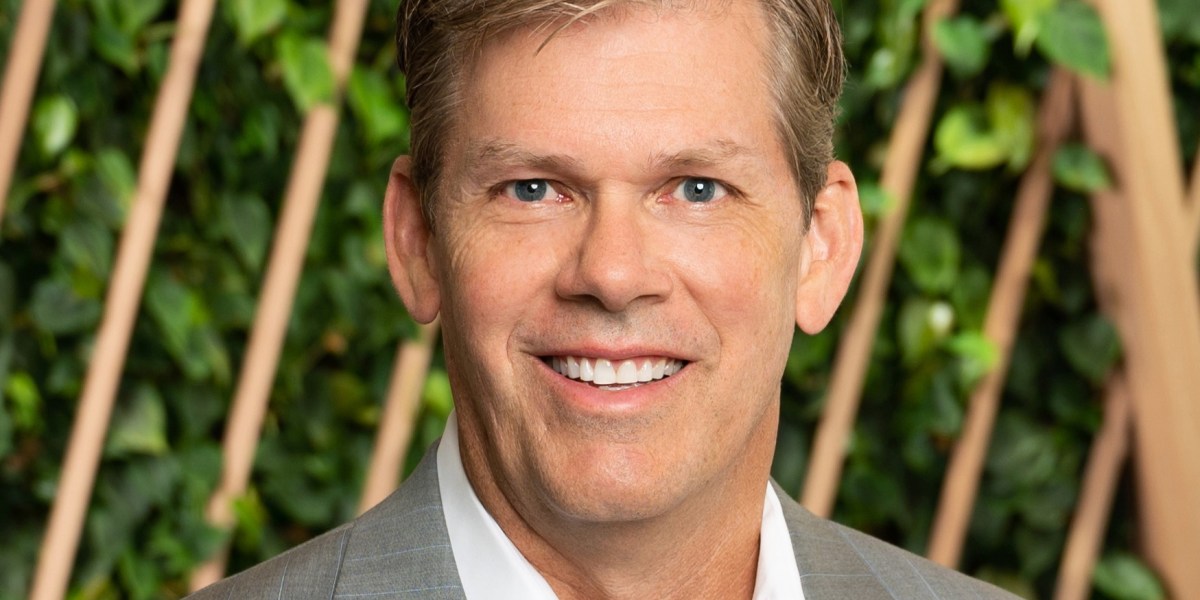
$90 billion Waste Management CEO worked trash routes at 1 a.m. with workers—here’s why

Published

on


For a night owl like Waste Management CEO Jim Fish, waking up for 1 a.m. safety briefings could make for a brutally long day. But Fish did it because his late father-in-law, a union pipefitter, told him if he showed up to those meetings—not just once, but regularly—he would learn a lot and build a rapport with line workers. 

Fish’s father-in-law hit the nail on the head.

“It was so valuable to me in terms of learning the business and learning the people,” Fish told Fortune. “Part of what I learned—I was always a finance guy—was that it’s not always just dollars and cents.”

Waste Management has named safety as a cornerstone of the company’s operations and has set a goal to reduce its total recordable injury rate (TRIR) by 3% annually with a TRIR target of 2.0 by 2030. If the company hits the target, that means workers would have suffered two recordable injuries per 100 employees per year or per 200,000 hours worked. Last year, the company reduced overall injuries by 5.8%, according to its sustainability report, and lost-time injuries by 2.4%.

“You make investments in safety or investments in people and they don’t necessarily show up on the bottom line—at least not immediately,” Fish said. “Safety tends to show up in longer terms, and if you do have a safe organization, that will eventually show up on your income statement—but it takes a while.”

Waste Management, with $22 billion in revenue in 2024, is the U.S. and Canada’s largest provider of trash and recycling transfer and disposal services. With a market cap of about $90 billion, the Houston, Tex.-based company counts more than 60,000 employees. Fish, 63, has served as president and CEO since November 2016 but has been with the company for two decades. Prior to taking the top job, Fish held roles including chief financial officer, senior vice president of the eastern group, and area VP for Pennsylvania and West Virginia. 

Up until halfway through his time as CFO, Fish would go out about every four to six weeks and haul trash with crews—generally about every time he went to a middle-of-the-night safety meeting. Eventually, the board told him they weren’t crazy about the idea of him throwing trash, but he could still ride along in the trucks with workers. Now, Fish said he visits about 20 to 30 sites a year, and takes about five to 10 trips to ride along with drivers. He tells them any subject is fair game, including sports, politics, safety, or pay, but they have to make sure to chat because Fish might fall asleep otherwise. 

“Most drivers are a little nervous when I get in the cab but after about 10 minutes they kind of loosen up and tell me what they’re thinking,” said Fish. 

That’s why, he said, those early morning meetings were so valuable, and his learnings went far beyond injury stats and safety briefings. 

He picked up on why Boston’s productivity plummeted during winter months, said Fish. He couldn’t see why there would be such a difference between winter and summer but then going out in below-zero temperatures where his hands and feet were freezing changed his mind completely, he said. It’s the kind of issue that might only show up as a data fluctuation in a corporate office but becomes clearer and more meaningful after riding through icy routes covered with snow-engulfed trash and recycling cans. 

“It makes a huge difference if there’s ice and snow on the road or if the can is iced in,” said Fish. “And that sounds kind of simple, but it wasn’t something that I really, fully even understood sitting in a corporate office until I actually went out into the field.”

Another key learning came from witnessing the diversity of Waste Management’s workforce and making small tweaks to make sure employees were clearly informed.  

While visiting a district in Rhode Island where about 95% of the drivers in the company’s residential business line were either Puerto Rican or Dominican, Fish attended a 1 a.m. briefing. The safety results in that line of business were pretty “terrible,” Fish admitted, and he wanted to understand why. He picked up on the fact that most of the workers spoke English but their first language was Spanish. The manager there didn’t speak any Spanish, so he used another driver to translate for him while he delivered safety information. 

Fish decided to look into promoting somebody from the district who wanted to be a manager—and who was bilingual. The company made the promotion to a driver.

“Magically, or probably not magically, their safety results turned around immediately,” said Fish. “There was something being lost in the translation.”

The change also addressed an inadvertent signal that was being sent to workers, which was that they might never have an opportunity to move up in the company because they were native Spanish speakers, he said. The inadvertent message was that the managers there would likely always be “a white guy like Jim,” said Fish, who has also been working regularly on his Spanish. 

Explicitly addressing that narrative improved safety results and empowered people to apply for positions they might not have thought they were qualified for previously, he said. The company also hired someone at the site to teach Spanish to other workers so they could become conversant. 

“Their safety results absolutely turned around and I don’t think that was a coincidence at all,” he said. “Nothing was lost in translation anymore and the drivers couldn’t say, ‘Well, I didn’t understand what my manager was saying’ because the manager was saying it in both English and Spanish.”

The bilingual manager Waste Management hired at the site became one of the company’s best, said Fish. He unfortunately passed away from a heart attack, said Fish, but he continued up the ladder from driver to route manager, district manager, and then senior district manager. He likely would have continued moving up if he hadn’t tragically passed away. Fish noted the manager was also singled out to go on a trip for the top 200 employees to the Ritz Carlton in Hawaii with his wife. 

Ultimately, in Fish’s view, the core of the company and where Waste Management differentiates itself from competitors, is at the critical field level—not the C-suite. Better understanding the workforce and how it can be more productive and efficient could best be gleaned by showing up to the grueling early mornings every month early in his executive career.

“I know my title is important, but I’m not more important than anybody else at this company,” said Fish. “I’m not a better employee or better father… we just have different level positions.”


Source link

Continue Reading

Business

JPMorgan, Citi extend mortgage relief for LA wildfire victims

Published

on


California Governor Gavin Newsom said a group of major banks have agreed to extend mortgage relief for Los Angeles wildfire victims, as the area struggles to rebuild one year after the devastating blazes. 

Wells Fargo & Co., JPMorgan Chase & Co., U.S. Bancorp and Citigroup Inc. will streamline requests for an additional 90-day forbearance period, allowing borrowers to apply verbally without paperwork, Newsom said on a press release Tuesday. Bank of America Corp. announced in November that it will offer qualifying borrowers up to two additional years of forbearance. 

Most lenders limit forbearance to 12 months under a California law that expanded an emergency agreement the state had reached with banks in January 2025. Wells Fargo, JPMorgan, Citi and U.S. Bancorp didn’t immediately reply tor a request for further comment.

Last year, the Intercontinental Exchange Inc. estimated that there was $11 billion in outstanding mortgage debt in the path of the fires.

Newsom, a termed out governor who’s considering a presidential run, has faced renewed criticism from the White House and other political adversaries for his handling of the catastrophic wildfires, which tore through large swaths of Southern California last year and killed at least 31 people. Newsom, in turn, has blasted the White House for failing to send California’s disaster aid request to Congress.

Read more: Malibu Homebuilding Stalls as Just Two Permits Given After Fires

On Tuesday, Newsom also announced he will work with banks, philanthropic partners and lawmakers on a new financing fund that would complement private construction loans and help close insurance shortfalls that have stalled rebuilding. He’s also expanding eligibility for its CalAssist Mortgage Relief Program, which provides grants covering up to three months of mortgage payments. The state has so far paid $5.98 million to 732 households, mostly fire survivors. 

“I’m deeply grateful to our financial partners who are stepping up to help provide financial relief to those who have lost so much,” Newsom said. “This disaster was unprecedented, and it’s created challenges unlike anything we’ve seen before.”

Join us at the Fortune Workplace Innovation Summit May 19–20, 2026, in Atlanta. The next era of workplace innovation is here—and the old playbook is being rewritten. At this exclusive, high-energy event, the world’s most innovative leaders will convene to explore how AI, humanity, and strategy converge to redefine, again, the future of work. Register now.


Source link

Continue Reading

Business

Trump: Venezuela to sell 30m-50m barrels of ‘high quality’ oil to U.S. at market price

Published

on


President Donald Trump said Tuesday on his social media site that “Interim Authorities” in Venezuela would be selling 30 million to 50 million barrels of “High Quality” oil to the U.S. at its market price.

“I have asked Energy Secretary Chris Wright to execute this plan, immediately,” Trump posted on Truth Social. “It will be taken by storage ships, and brought directly to unloading docks in the United States.”

Trump said the money would be controlled by him as president but it would be used to benefit the people of Venezuela and the United States.

Separately, the White House is organizing an Oval Office meeting Friday with oil company executives regarding Venezuela, with representatives of Exxon, Chevron and ConocoPhillips expected to attend, according to a person familiar with the matter who requested anonymity to discuss the plans.

THIS IS A BREAKING NEWS UPDATE. AP’s earlier story follows below.

CARACAS, Venezuela (AP) — At least 24 Venezuelan security officers were killed in the dead-of-night U.S. military operation to capture Nicolás Maduro and spirit him to the United States to face drug charges, officials said Tuesday.

Venezuelan officials announced the death count as the country’s acting president, Delcy Rodriguez, pushed back on President Donald Trump, who earlier this week warned she’d face an outcome worse than Maduro’s if she does not “do what’s right” and overhaul Venezuela into a country that aligns with U.S. interests. Trump has said his administration will now “run” Venezuela policy and is pressing the country’s leaders to open its vast oil reserves to American energy companies.

“Personally, to those who threaten me,” Rodriguez said in an address before government agricultural and industrial sector officials. “My destiny is not determined by them, but by God.”

Venezuela’s Attorney General Tarek William Saab said overall “dozens” of officers and civilians were killed in the weekend strike in Caracas and that prosecutors would investigate the deaths in what he described as a “war crime.” He didn’t specify if the estimate was specifically referring to Venezuelans.

In addition to the Venezuelan security officials, Cuba’s government had previously confirmed that 32 Cuban military and police officers working in Venezuela were killed in the raid. The Cuban government says the personnel killed belonged to the Revolutionary Armed Forces and the Ministry of the Interior, the country’s two main security agencies.

Seven U.S. service members were also injured in the raid, according to the Pentagon. Five have already returned to duty, while two are still recovering from their injuries. The injuries included gunshot wounds and shrapnel injuries, according to a U.S. official who was not authorized to comment on the matter publicly and spoke on the condition of anonymity.

A video tribute to the slain Venezuelan security officials posted to the military’s Instagram features faces of the fallen over black-and-white videos of soldiers, American aircraft flying over Caracas and armored vehicles destroyed by the blasts. Meanwhile, the streets of Caracas, deserted for days following Maduro’s capture, briefly filled with masses of people waving Venezuelan flags and bouncing to patriotic music at a state-organized display of support for the government.

“Their spilled blood does not cry out for vengeance, but for justice and strength,” the military wrote in an Instagram post. “It reaffirms our unwavering oath not to rest until we rescue our legitimate President, completely dismantle the terrorist groups operating from abroad, and ensure that events such as these never again sully our sovereign soil.”

Trump grumbles about how Democrats reacted to the raid

Trump on Tuesday pushed back against Democratic criticism of this weekend’s military operation, noting that his Democratic predecessor Joe Biden had also called for the arrest of the Venezuelan leader on drug trafficking charges.

Trump in remarks before a House Republican retreat in Washington grumbled that Democrats were not giving him credit for a successful military operation, even though there was bipartisan agreement that Maduro was not the rightful president of Venezuela.

In 2020, Maduro was indicted in the United States, accused in a decades-long narco-terrorism and international cocaine trafficking conspiracy. White House officials have noted that Biden’s administration in his final days in office last year raised the award for information leading to Maduro’s arrest after he assumed a third term in office despite evidence suggesting that he lost Venezuela’s most recent election. The Trump administration doubled the award to $50 million in August.

“You know, at some point, they should say, ‘You know, you did a great job. Thank you. Congratulations.’ Wouldn’t it be good?” Trump said. “I would say that if they did a good job, their philosophies are so different. But if they did a good job, I’d be happy for the country. They’ve been after this guy for years and years and years.”

Trump’s latest comments came after Secretary of State Marco Rubio and other top officials briefed leaders in Congress late Monday on the Venezuela operation amid mounting concerns that the Republican administration is embarking on a new era of U.S. expansionism without consultation with lawmakers or a clear vision for running the South American country.

Democratic leaders said the session lacked clarity about the Trump administration’s plans for Venezuela. Sen. Tammy Duckworth, D-Ill., an Iraq War veteran, said there is no dispute with Trump that Maduro was a “brutal dictator.”

“But the problem we have is the fact that yet again we have now entered into a war where there is no known off-ramp,” Duckworth said.

What US opinion polls show

Americans are split about the capture of Maduro — with many still forming opinions — according to a poll conducted by The Washington Post and SSRS using text messages over the weekend. About 4 in 10 approved of the U.S. military being sent to capture Maduro, while roughly the same share were opposed. About 2 in 10 were unsure.

Nearly half of Americans, 45%, were opposed to the U.S. taking control of Venezuela and choosing a new government for the country. About 9 in 10 Americans said the Venezuelan people should be the ones to decide the future leadership of their country.

Maduro pleaded not guilty to federal drug trafficking charges in a U.S. courtroom on Monday. U.S. forces captured Maduro and his wife early Saturday in a raid on a compound where they were surrounded by Cuban guards.

In the days since Maduro’s ouster, Trump and top administration officials have raised anxiety around the globe that the operation could mark the beginning of a more expansionist U.S. foreign policy in the Western Hemisphere. The president in recent days has renewed his calls for an American takeover of the Danish territory of Greenland for the sake of U.S. security interests and threatened military action on Colombia for facilitating the global sale of cocaine, while his top diplomat declared the communist government in Cuba is “in a lot of trouble.”

Colombia responds to Trump

Colombia’s Foreign Affairs Minister Rosa Villavicencio said Tuesday she’ll meet with the U.S. Embassy’s charge d’affaires in Bogota to present him with a formal complaint over the recent threats issued by the United States.

On Sunday, Trump said he wasn’t ruling out an attack on Colombia and described its president, who’s been an outspoken critic of the U.S. pressure campaign on Venezuela, as a “sick man who likes making cocaine and selling it to the United States.”

Villavicencio said she’s hoping to strengthen relations with the United States and improve cooperation in the fight against drug trafficking.

“It is necessary for the Trump administration to know in more detail about all that we are doing in the fight against drug trafficking,” she said.

Meanwhile, the leaders of France, Germany, Italy, Poland, Spain and the United Kingdom on Tuesday joined Danish Prime Minister Mette Frederiksen in defending Greenland’s sovereignty. The island is a self-governing territory of the kingdom of Denmark and thus part of the NATO military alliance.

“Greenland belongs to its people,” the statement said. “It is for Denmark and Greenland, and them only, to decide on matters concerning Denmark and Greenland.”

Madhani reported from Washington and Janetsky from Mexico City. AP writers Josh Boak, Konstantin Toropin, Sagar Meghani, Isabel DeBre, Linley Sanders and Manuel Rueda contributed reporting.

This story was originally featured on Fortune.com


Source link

Continue Reading

Business

Venezuela’s new president steered $500,000 to Trump’s inauguration—in 2017

Published

on


In 2017, as political outsider Donald Trump headed to Washington, Delcy Rodríguez spotted an opening.

Then Venezuela’s foreign minister, Rodríguez directed Citgo — a subsidiary of the state oil company — to make a $500,000 donation to the president’s inauguration. With the socialist administration of Nicolas Maduro struggling to feed Venezuela, Rodríguez gambled on a deal that would have opened the door to American investment. Around the same time, she saw that Trump’s ex-campaign manager was hired as a lobbyist for Citgo, courted Republicans in Congress and tried to secure a meeting with the head of Exxon.

The charm offensive flopped. Within weeks of taking office, Trump, urged by then-Sen. Marco Rubio, made restoring Venezuela’s democracy his driving focus in response to Maduro’s crackdown on opponents. But the outreach did bear fruit for Rodríguez, making her a prominent face in U.S. business and political circles and paving the way for her own rise.

“She’s an ideologue, but a practical one,” said Lee McClenny, a retired foreign service officer who was the top U.S. diplomat in Caracas during the period of Rodríguez’s outreach. “She knew that Venezuela needed to find a way to resuscitate a moribund oil economy and seemed willing to work with the Trump administration to do that.”

Nearly a decade later, as Venezuela’s interim president, Rodríguez’s message — that Venezuela is open for business — seems to have persuaded Trump. In the days since Maduro’s stunning capture Saturday, he’s alternately praised Rodríguez as a “gracious” American partner while threatening a similar fate as her former boss if she doesn’t keep the ruling party in check and provide the U.S. with “total access” to the country’s vast oil reserves. One thing neither has mentioned is elections, something the constitution mandates must take place within 30 days of the presidency being permanently vacated.

This account of Rodríguez’s political rise is drawn from interviews with 10 former U.S. and Venezuelan officials as well as businessmen from both countries who’ve had extensive dealings with Rodríguez and in some cases have known her since childhood. Most spoke on the condition of anonymity for fear of retaliation from someone who they almost universally described as bookishly smart, sometimes charming but above all a cutthroat operator who doesn’t tolerate dissent. Rodríguez didn’t respond to AP requests for an interview.

Father’s murder hardens leftist outlook

Rodríguez entered the leftist movement started by Hugo Chávez late — and on the coattails of her older brother, Jorge Rodríguez, who as head of the National Assembly swore her in as interim president Monday.

Tragedy during their childhood fed a hardened leftist outlook that would stick with the siblings throughout their lives. In 1976 — when, amid the Cold War, U.S. oil companies, American political spin doctors and Pentagon advisers exerted great influence in Venezuela — a little-known urban guerrilla group kidnapped a Midwestern businessman. Rodriguez’s father, a socialist leader, was picked up for questioning and died in custody.

McClenny remembers Rodríguez bringing up the murder in their meetings and bitterly blaming the U.S. for being left fatherless at the age of 7. The crime would radicalize another leftist of the era: Maduro.

Years later, while Jorge Rodríguez was a top electoral official under Chávez, he secured for his sister a position in the president’s office.

But she advanced slowly at first and clashed with colleagues who viewed her as a haughty know-it-all.

In 2006, on a whirlwind international tour, Chávez booted her from the presidential plane and ordered her to fly home from Moscow on her own, according to two former officials who were on the trip. Chávez was upset because the delegation’s schedule of meetings had fallen apart and that triggered a feud with Rodriguez, who was responsible for the agenda.

“It was painful to watch how Chávez talked about her,” said one of the former officials. “He would never say a bad thing about women but the whole flight home he kept saying she was conceited, arrogant, incompetent.”

Days later, she was fired and never occupied another high-profile role with Chávez.

Political revival and soaring power under Maduro

Years later, in 2013, Maduro revived Rodríguez’s career after Chávez died of cancer and he took over.

A lawyer educated in Britain and France, Rodríguez speaks English and spent large amounts of time in the United States. That gave her an edge in the internal power struggles among Chavismo — the movement started by Chávez, whose many factions include democratic socialists, military hardliners who Chávez led in a 1992 coup attempt and corrupt actors, some with ties to drug trafficking.

Her more worldly outlook, and refined tastes, also made Rodríguez a favorite of the so-called “boligarchs” — a new elite that made fortunes during Chávez’s Bolivarian revolution. One of those insiders, media tycoon Raul Gorrín, worked hand-in-glove with Rodríguez’s back-channel efforts to mend relations with the first Trump administration and helped organize a secret visit by Rep. Pete Sessions, a Texas Republican, to Caracas in April 2018 for a meeting with Maduro. A few months later, U.S. federal prosecutors unsealed the first of two money laundering indictments against Gorrin.

After Maduro promoted Rodríguez to vice president in 2018, she gained control over large swaths of Venezuela’s oil economy. To help manage the petro-state, she brought in foreign advisers with experience in global markets. Among them were two former finance ministers in Ecuador who helped run a dollarized, export-driven economy under fellow leftist Rafael Correa. Another key associate is French lawyer David Syed, who for years has been trying to renegotiate Venezuela’s foreign debt in the face of crippling U.S. sanctions that make it impossible for Wall Street investors to get repaid.

“She sacrificed her personal life for her political career,” said one former friend.

As she amassed more power, she crushed internal rivals. Among them: once powerful Oil Minister Tareck El Aissami, who was jailed in 2024 as part of an anti-corruption crackdown spearheaded by Rodríguez.

In her de-facto role as Venezuela’s chief operating officer, Rodríguez proved a more flexible, trustworthy partner than Maduro. Some have likened her to a sort of Venezuelan Deng Xiaoping — the architect of modern China.

Hans Humes, chief executive of Greylock Capital Management, said that experience will serve her well as she tries to jump-start the economy, unite Chavismo and shield Venezuela from stricter terms dictated by Trump. Imposing an opposition-led government right now, he said, could trigger bloodshed of the sort that ripped apart Iraq after U.S. forces toppled Saddam Hussein and formed a provisional government including many leaders who had been exiled for years.

“We’ve seen how expats who have been outside of the country for too long think things should be the way it was before they left,” said Humes, who has met with Maduro as well as Rodríguez on several occasions. “You need people who know how to work with how things are not how they were.”

Democracy deferred?

Where Rodríguez’s more pragmatic leadership style leaves Venezuela’s democracy is uncertain.

Trump, in remarks after Maduro’s capture, said Nobel Peace Prize winner Maria Corina Machado lacks the “respect” to govern Venezuela despite her handpicked candidate winning what the U.S. and other governments consider a landslide victory in 2024 presidential elections stolen by Maduro.

Elliott Abrams, who served as special envoy to Venezuela during the first Trump administration, said it is impossible for the president to fulfill his goal of banishing criminal gangs, drug traffickers and Middle Eastern terrorists from the Western Hemisphere with the various factions of Chavismo sharing power.

“Nothing that Trump has said suggests his administration is contemplating a quick transition away from Delcy. No one is talking about elections,” said Abrams. “If they think Delcy is running things, they are completely wrong.”


Source link

Continue Reading

Trending

Copyright © Miami Select.