Connect with us

Sports

College sports remain entertainment not what drives enrollment

Published

on


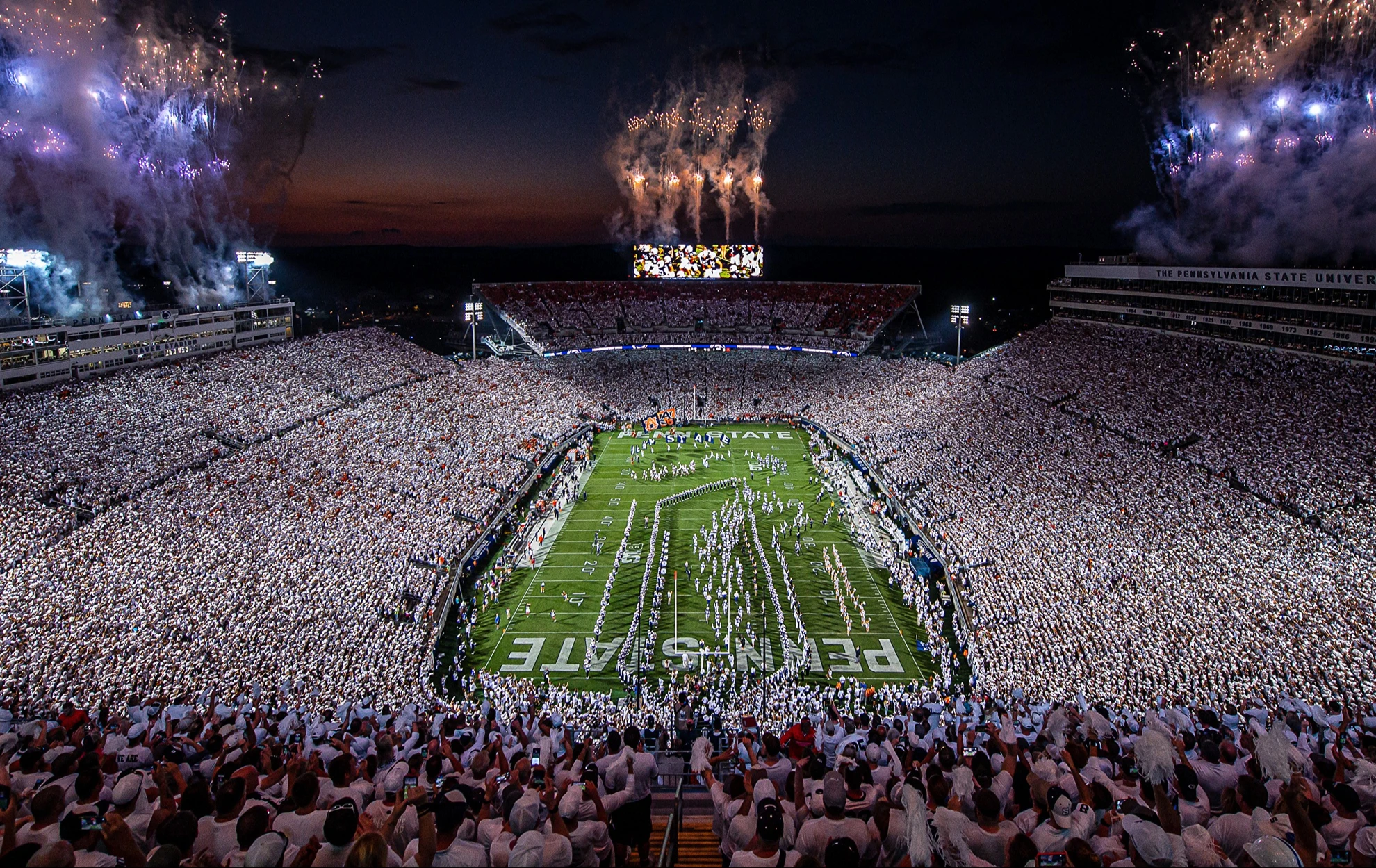
college football championship weekend The 2025 college football season kicks off with one of the most electrifying Week 1 slates in recent memory. With playoff contenders

I’ve been a college sports fan for more than sixty years, and I’ve spent a large part of my professional career covering football, basketball, and Olympic sports. But one myth that athletic departments from coast to coast have pushed for decades is the idea that athletics are what attract students to a university. And now, with TV deals bigger than ever, that myth has only grown louder — as if academics somehow take a back seat to king football.

Despite raking in tens of millions from TV contracts, ticket sales, sponsorships, and donations, the uncomfortable truth is that roughly 75–80% of Power Four athletic departments still operate in the red. The money may look enormous on paper, but expenses outpace revenues at most ACC and Big 12 institutions, and even several SEC and Big Ten schools outside the elite tier. Private schools don’t release full numbers, but the trend lines point the same way. The NCAA’s 2023–24 financial summary confirms it: median expenses exceed median revenues across the subdivision.

And when these deficits hit, they’re covered not by student fees or institutional subsidies — which remain minimal at the Power Four level — but by athletic department reserves, donor infusions, and internal budget maneuvers. In other words, even in the era of billion‑dollar media deals, most big‑conference athletic departments are still losing money. The NCAA’s own financial reporting backs this up, showing that a significant share of its member schools continues to operate in the red despite unprecedented revenue growth.

The Unsustainable Arms Race

The bigger issue is whether this model is even sustainable. The Power Four have spent a decade locked in an arms race of coaching salaries, facilities, support staffs, and now NIL infrastructure — all escalating faster than revenues can keep up. Media deals may be massive, but they’re already spoken for the moment they arrive, swallowed by guaranteed contracts and ever‑rising travel and operating costs.

Athletic departments can paper over the gaps with reserves and donor money for a while, but those are finite cushions, not long‑term solutions. At some point, the math stops bending. The system depends on perpetual growth, yet the expenses are growing faster than the revenue streams that supposedly justify them. That’s the real warning sign: even the richest leagues in college sports are burning cash to stay competitive.

What Happens When the Arms Race Breaks the System

The real question is what happens if the arms race keeps accelerating — and the early signs aren’t subtle. As coaching salaries climb past NFL levels, NIL collectives balloon, and facilities projects push into nine‑figure territory, even the wealthiest programs are approaching a breaking point.

At some stage, conferences will either need new revenue streams or they’ll be forced into hard choices: cutting sports, restructuring budgets, or finally confronting whether the current model is built to survive. The next wave of realignment, private‑equity flirtations, and athlete‑employment lawsuits will only intensify the pressure. If expenses keep outpacing revenues, the system won’t collapse overnight — but it will bend, and eventually something gives. The question isn’t if the model changes, but who gets reshaped by it first.

The Myth of the Front Porch: Why Academics, Not Athletics, Attract Students

For decades, athletic departments have sold the idea that football is the “front porch” of the university — the shiny entryway that draws students in. But the data tells a very different story.

Students don’t choose universities because the football team wins on Saturday. They choose them because of:

  • Academic reputation
  • Research strength
  • Professional programs
  • Career placement
  • Faculty excellence
  • Campus resources and student life

These are the engines that drive enrollment, tuition revenue, and long‑term institutional stability.

Meanwhile, the academic side of the university generates billions through:

  • Tuition and fees
  • Federal and state research grants
  • Philanthropy tied to academic success
  • Medical centers and research hospitals
  • Graduate and professional programs
  • Corporate partnerships and innovation labs

These revenue streams dwarf anything athletics can produce — even in the Big Ten and SEC.

Why Academics Outperform Athletics Every Time

Look at the numbers:

  • A major research university can generate hundreds of millions to billions annually in research funding alone.
  • Enrollment revenue — tuition, housing, fees — is the single largest financial engine of every Power Four institution.
  • Academic reputation drives applications, not football rankings.
  • Donors who give to athletics often made their wealth through the education the university provided — not through sports.

Football may be the front porch, but the porch doesn’t hold up the house. The classrooms, labs, libraries, and degree programs do.

The Real Story Universities Don’t Want to Tell

The myth that athletics “pay for themselves” or “fund the university” has always been convenient — and always false. The truth is simpler and more powerful:

Academics attract students. Academics generate revenue. Academics sustain universities.

Athletics provide entertainment, community, and tradition — all valuable. But they are not the financial foundation of modern higher education.

The sooner universities acknowledge that reality, the sooner they can build a model that is financially sustainable, academically focused, and honest about what truly drives their success.



Source link

Continue Reading

Sports

Buccaneers season comes down to one game today

Published

on


bucs

The Tampa Bay Buccaneers enter Saturday’s Week 18 finale with a season defined by extremes. What began as a promising campaign — a fast start, a confident offense, and a defense that looked playoff‑ready — has unraveled into a stunning collapse. Tampa Bay has dropped four straight games, falling to 7–9, and missing multiple chances to wrap up what would have been their fifth straight NFC South title and a sixth consecutive postseason berth. As CBS Sports notes, the Bucs have repeatedly outgained opponents during this skid but have been undone by turnovers and late‑game breakdowns. Now, instead of coasting into January, Tampa Bay faces a must‑win scenario with everything on the line.

How Both Teams Reached This Winner‑Take‑All Finale

The Carolina Panthers arrive at 8–8, a team that has lived on the edge all season. Every one of their eight wins has come as an underdog, as USA Today highlighted, and their Week 17 loss to Seattle prevented them from clinching early. Tampa Bay, meanwhile, squandered its own opportunities, including a Week 17 defeat in Miami and a narrow loss to Carolina two weeks agoCBS Sports. NFL.com emphasizes that both teams limp into this matchup, but the stakes erase all previous struggles. The math is simple: Carolina wins the division with a victory; Tampa Bay must win and get help.

The Falcons Factor: Why Sunday Still Matters

Even if Tampa Bay wins on Saturday, the NFC South race isn’t over. As Panthers Wire reported, an Atlanta Falcons win on Sunday would create a three‑way tie at 8–9 — and in that scenario, Carolina wins the division thanks to head‑to‑head tiebreakers. That means the Buccaneers not only need to beat the Panthers, they must also scoreboard‑watch as the Falcons host the Saints. It’s a rare Week 18 twist: Tampa Bay could win and still go home.

Todd Bowles’ Future Hangs in the Balance

The stakes extend far beyond playoff positioning. Todd Bowles enters this game with his job very much in jeopardy. After a 1–7 stretch over the last eight weeks, pressure has mounted from fans and analysts across ESPN, Yahoo Sports, and local outlets. A loss — especially one that ends the season — could push Tampa Bay toward a coaching change. For Bowles, for Baker Mayfield, for the entire franchise, everything rides on Saturday.

Broadcast Information

Network: ESPN / ABC

Kickoff: Saturday, Jan. 3, 2026 — 4:30 p.m. ET

Location: Raymond James Stadium, Tampa, Florida

Radio Nationally: Westwood One

Much To Be Decided For Both Teams

In the end, everything about Saturday feels bigger than a single game. It’s a franchise at a crossroads, a coach fighting to keep his future, and a roster desperate to prove its early‑season promise wasn’t a mirage. Carolina has already shown it can punch above its weight, and Tampa Bay has shown it can collapse under pressure — which makes this winner‑take‑all showdown the purest form of NFL theater.

For the Buccaneers, a victory means survival, redemption, and one more week to chase the standard they’ve built over half a decade. A loss, though, could trigger sweeping change, starting with Todd Bowles. The stakes could not be higher, and when the final whistle blows at Raymond James Stadium, the 2025 Buccaneers will either extend their dynasty or watch it crumble in real time.


Source link

Continue Reading

Sports

Steelers and Ravens play with big issues for the loser

Published

on


Aaron Rodgers is with the Steelers

Few matchups in the NFL carry the weight of Steelers‑Ravens, but the 2025 season finale adds a layer of drama rarely seen in this rivalry. According to ESPN insider Adam Schefter, the outcome of this game could influence the future of the losing coach, whether it’s Pittsburgh’s Mike Tomlin or Baltimore’s John Harbaugh.

Both teams enter Week 18 fighting for their postseason lives. The winner stays alive in the AFC playoff race. The loser faces an offseason of uncertainty — and possibly a coaching change.

Pittsburgh Steelers: Pressure Mounts on Mike Tomlin

The Steelers enter the finale under intense scrutiny. BVM Sports reports that Tomlin’s job security has become a major storyline after a late‑season slide and a damaging loss to Cleveland. Some insiders even suggest Tomlin could consider stepping away for a television role if the Steelers miss the playoffs.

Beat writer Ray Fittipaldo told BVM Sports that “almost anything can happen” if Pittsburgh suffers another blowout loss to Baltimore. The Steelers’ offense has been inconsistent, and their defense — once the team’s backbone — has struggled in key moments.

Still, Pittsburgh has responded well in past must‑win situations, and Tomlin’s teams rarely fold in rivalry games.

Two Former MVP’s Face-off

In a primetime showdown worthy of the season’s final Sunday night stage, Aaron Rodgers and Lamar Jackson collide in a Week 18 battle of former MVPs with the AFC North on the line. Rodgers, the veteran maestro still capable of dissecting defenses with precision, leads a resurgent offense into Baltimore, where Jackson’s electric dual‑threat brilliance has powered the Ravens through another playoff push.

It’s a rare meeting between two of the most dynamic quarterbacks of their era—one defined by surgical passing, the other by unmatched explosiveness—and the stakes couldn’t be higher. With the division crown hanging in the balance, Rodgers and Jackson step into the spotlight knowing that one will leave with a championship banner and the other with a long offseason of what‑ifs.

Baltimore Ravens: Harbaugh Faces Questions of His Own

On the other sideline, John Harbaugh is also under the microscope. Steelers Depot reports that Harbaugh has faced repeated questions about his future as Baltimore hovers around .500 and deals with injuries to Lamar Jackson.

Harbaugh acknowledged the speculation, saying coaching is “a day‑to‑day job,” but the pressure is real. SI.com confirms Schefter’s belief that the outcome of this game could influence Harbaugh’s future as well.

Baltimore’s defense remains dangerous, but offensive inconsistency has plagued them all season.

Broadcast Information

Network: NBC/Peacock

Kickoff: 8 p.m. ET

Location: Pittsburgh

What’s at Stake

This isn’t just a playoff elimination game. It’s a potential turning point for two of the NFL’s longest‑tenured coaches.

A win means survival. A loss could mean the end of an era.


Source link

Continue Reading

Sports

The 111th Rose Bowl – Oregon faces Alabama

Published

on


Rose Bowl

The 2026 Rose Bowl Game presented by Prudential brings together two of the season’s most compelling stories: 11–3 Alabama and 13–0 Indiana. As part of the expanded College Football Playoff, the Rose Bowl now hosts a quarterfinal matchup — but the pageantry, tradition, and New Year’s Day spotlight remain unchanged.

Sporting News confirms that Indiana enters as the No. 1 seed, the first top‑seeded Big Ten team to appear in Pasadena under the new CFP structureSporting News. Alabama arrives battle‑tested after a dramatic comeback win over Oklahoma in the first round, a performance highlighted in multiple previews from The Game Haus and NewsBreakThe Game Haus+1.

Kickoff is set for 4 p.m. ET on January 1, 2026, live from the iconic Rose Bowl Stadium in Pasadena, CaliforniaNewsBreak.

Alabama: Surging Late, Dangerous as Ever

Alabama’s 2025 campaign was uneven early, but the Crimson Tide surged down the stretch, winning 10 games and reaching the SEC Championship. Their résumé includes victories over bowl‑eligible teams such as Georgia, Missouri, Tennessee, Vanderbilt, and LSUThe Game Haus+1.

Quarterback Ty Simpson has been the breakout star of the postseason, delivering a poised, high‑efficiency performance in the comeback win over Oklahoma. Alabama averages 31.4 points per game, leaning on a top‑25 passing attack and a defense that stiffens in the red zone.

Analysts across The Game Haus and NewsBreak note that Alabama’s experience in big moments makes them a dangerous lower seed in the new CFP eraThe Game Haus+1.

Indiana: The Unbeaten No. 1 Seed With Everything to Prove

Indiana is the story of the 2025 season — undefeated, disciplined, and balanced on both sides of the ball. Sporting News reports that the Hoosiers earned the top seed behind a dominant Big Ten title run and one of the nation’s most efficient defensesSporting News.

Their offense, led by a veteran quarterback and a deep running back rotation, has been remarkably consistent. Indiana’s ability to control tempo and win the turnover battle has been central to their rise from dark horse to national contender.

This is the Hoosiers’ first appearance in a CFP quarterfinal, adding even more weight to the moment.

Broadcast Information

Network: ESPN

Kickoff: 4 p.m. ET

Location: Rose Bowl Stadium, Pasadena, California

Additional Coverage: The Game Haus, NewsBreak, and Sporting News will provide extended digital analysis before and after the game.

What’s on the Line

The winner advances to the CFP semifinals and moves one step closer to the 2026 National Championship. For Alabama, it’s a chance to reclaim playoff dominance. For Indiana, it’s the opportunity to complete one of the most remarkable seasons in modern college football history.


Source link

Continue Reading

Trending

Copyright © Miami Select.