Connect with us

Politics

December interest rate cut was a close call for some Fed officials, minutes show
Published

on


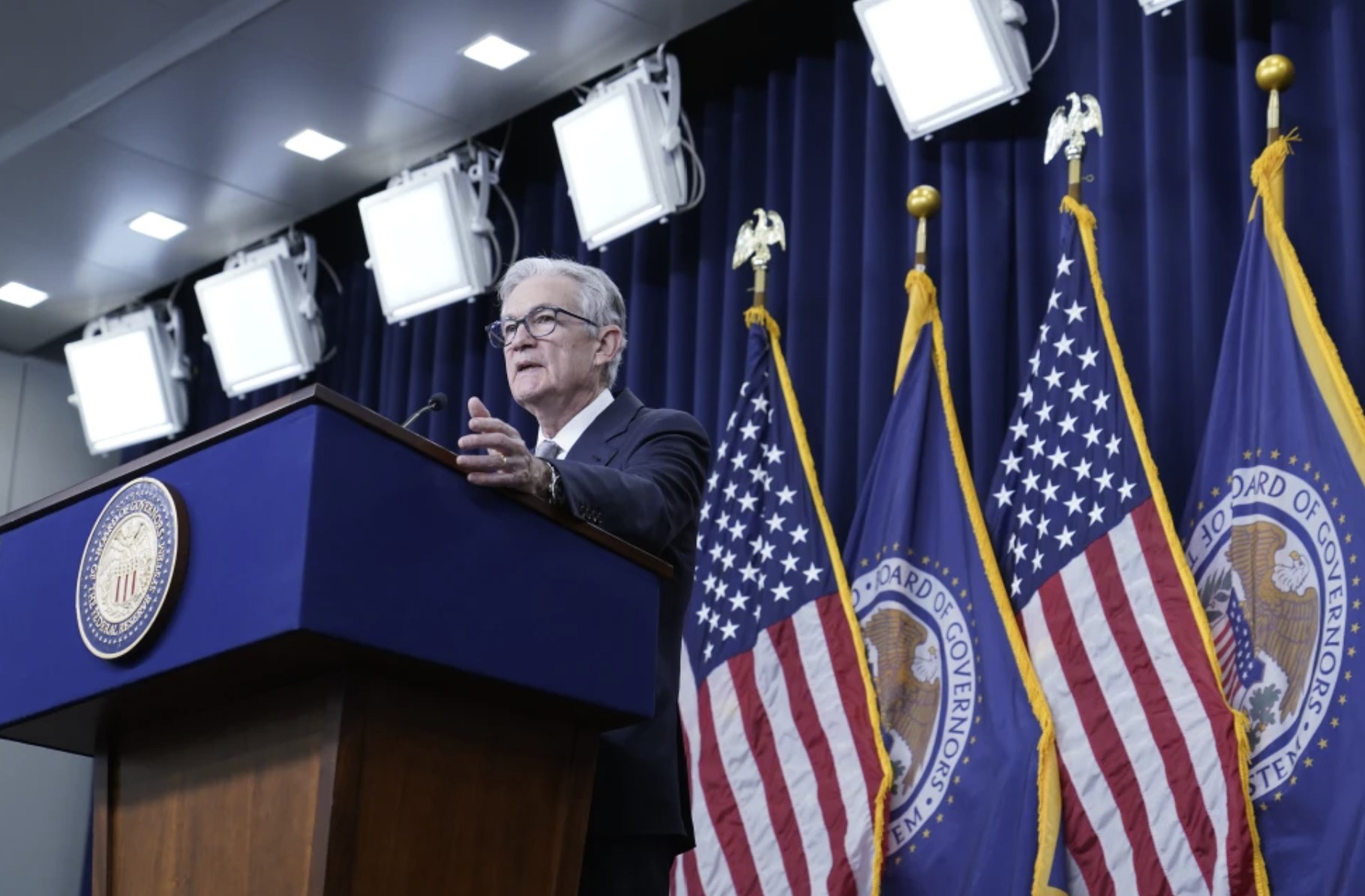
Some Federal Reserve officials who supported cutting a key interest rate earlier this month could have instead backed keeping the rate unchanged, minutes released Tuesday show, underscoring the divisions and uncertainty permeating the central bank.

At their December 9-10 meeting Fed officials agreed to cut their key interest rate by a quarter point for the third time this year, to about 3.6%, the lowest in nearly three years. Yet the move was approved by a 9-3 vote, an unusual level of dissent for a committee that typically works by consensus. Two Fed officials supported keeping the rate unchanged, while one wanted a larger, half-point reduction.

The minutes underscored the deep split on the 19-member policymaking committee over what constitutes the biggest threat to the economy: weak hiring or stubbornly-elevated inflation. If a sluggish job market is the biggest threat, then the Fed would typically cut rates more. But if still-high inflation is the bigger problem, then the Fed would keep rates elevated, or even raise them. Just 12 of the 19 members vote on rate decisions, though all participate in discussions.

The minutes showed that even some Fed officials who supported the rate cut did so with reservations. Some Fed officials wanted to wait for more economic data before making any further moves, the minutes said. Key economic data on jobs, inflation, and growth were delayed by the six-week government shutdown, leaving Fed officials with only outdated information at their meeting earlier this month.

The minutes don’t identify specific officials. But how they vote is public, and two policymakers dissented in favor of keeping rates unchanged: Jeffrey Schmid, the President of the Federal Reserve Bank of Kansas City, and Austan Goolsbee, President of the Chicago Fed.

The third dissent was from Fed Governor Stephen Miran, who was appointed by President Donald Trump in September and favored a half-point cut.

When the Fed reduces its key rate, over time it can lower borrowing costs for homes, cars, and credit cards, though market forces also affect those rates.

At its December meeting, the Fed also released quarterly economic projections, which also showed the extent of the divisions on the Fed committee. Seven officials projected no cuts in 2026, while eight forecast two or more reductions. Four supported just one cut.

A weaker job market would likely spur the Fed to reduce borrowing costs more quickly. Two weeks ago, the government reported that employers had cut about 40,000 jobs in October and November, while the unemployment rate rose to 4.6%, a four-year high.

Inflation, meanwhile, remains above the Fed’s 2% target, complicating the central bank’s next moves. In November, annual inflation cooled to 2.7%, down from 3% in September, but last month’s data were likely distorted by the shutdown, economists said, which forced the government to estimate many price changes rather than measuring them directly.

Fed Chair Jerome Powell said after the Dec. 10 meeting that the central bank cut rates out of concern that the job market is even weaker than it appears. While government data shows that the economy added just 40,000 jobs a month from April through September, Powell said that figure could be revised lower by as much as 60,000, which would mean employers actually shed an average of 20,000 jobs a month during that period.

“It’s a labor market that seems to have significant downside risks,” Powell told reporters. “People care about that. That’s their jobs.”

___

Republished with permission of The Associated Press.


Source link

Continue Reading

Politics

Gov. DeSantis appoints Urban Meyer onto New College’s trustees

Published

on


Gov. Ron DeSantis wants Urban Meyer to be a trustee at New College of Florida.

DeSantis said Tuesday evening he is appointing the former Ohio State University and University of Florida coach onto the Sarasota school’s board pending Senate approval.

“Urban Meyer brings a strategic mindset and national stature that will serve New College immeasurably,” said New College President Richard Corcoran in a statement. “His lifetime of leadership, building teams, mentoring young people, teaching excellence, and developing culture aligns perfectly with our academic mission.”

Meyer would replace Trustee Christopher Rufo who did not want another term. DeSantis is also reappointing New College Trustees Mark Bauerlein and Debra Jenks to the board.

Meyer is currently a college football analyst for FOX Sports after he was fired from head coach of the Jacksonville Jaguars after a losing season in 2021.

“In Meyer’s only season with the Jaguars, the team went 2-11, its 10th season with double-digit losses in the past 11 years, but issues off the field are what doomed him,” an ESPN story said at the time. “From hiring a strength and conditioning coordinator who had been accused of making racist remarks and bullying Black players, to a video of Meyer with a woman who was not his wife at a bar, to tensions between Meyer and his staff and players, there was dysfunction almost from the moment Meyer was hired.”

But Meyer also was a winner in his career that spanned at Bowling Green, Utah, Florida, and Ohio State. Three times, Meyer won the National Championship — twice with the Gators in 2006 and 2008 and once with the Buckeyes in 2014.

“Winning 85 percent of his games and claiming three national titles, Urban Meyer guided four different FBS programs and became one of the most successful and transformative coaches in college football history,” according to his spot in the National Football Foundation’s Hall of Fame.

Meyer’s appointment is at New College, a once-progressive Sarasota liberal arts college that conservatives took over and brought in DeSantis allies to lead. Corcoran is a former House Speaker.

Critics slam New College for its wasteful spending, such as Corcoran’s compensation package, which exceeds $1 million.

Meanwhile, conservatives argue their overhaul of New College is working and is much needed change to combat the “woke” higher education system.

“This fall, New College of Florida reached record enrollment of more than 900 students — equaling the largest enrollment in our history,” David Rancourt , New College’s Vice Provost and VP of Admissions, wrote in a Florida Politics guest column this Fall.


Source link

Continue Reading

Politics

Last Call for 12.30.25 – A prime-time read of what’s going down in Florida

Published

on


Last Call – A prime-time read of what’s going down in Florida politics.

First Shot

Florida Politics rolled out its 2025 Politician of the Year package this week, spotlighting three figures who helped shape — and in some cases upend — the state’s political landscape over the past year.

Honorable Mention goes to U.S. Sen. Rick Scott, who enters 2026 wielding more influence in Washington and Tallahassee than at any point in his political career.

Fresh off his strongest electoral showing yet, the Naples Republican embedded himself with both Senate leadership and the conservative grassroots, becoming a key bridge between the House Freedom Caucus and the upper chamber.

Back home, Scott also played an unusually active role in Florida politics, endorsing Byron Donalds for Governor and weighing in on oversight fights involving Gov. Ron DeSantis — all while laying groundwork for a renewed push to remake the nation’s health care system.

The Runner-Up nod belongs to U.S. Rep.Donalds, whose march toward the Governor’s mansion looks increasingly inevitable. 

Armed with President Donald Trump’s endorsement, massive fundraising and commanding poll leads, the Naples Republican closes out 2025 as the dominant figure in Florida’s next statewide race.

While rivals have surfaced on both sides of the aisle, Donalds’ combination of MAGA credibility, establishment support and cable-ready presence has left the field scrambling — positioning him to potentially become Florida’s first Black Governor.

Claiming the top honor, Florida Politics names House Speaker Daniel Perez its 2025 Politician of the Year.

Though he was little-known outside political circles at the start of the year, the House Speaker fundamentally altered the balance of power in Tallahassee, ending years of near-total legislative deference to the Governor’s Office.

From budget veto overrides and aggressive oversight to redistricting and immigration showdowns, Perez reasserted the Legislature as a coequal branch — empowering rank-and-file lawmakers and reshaping the institution even as tensions with Gov. DeSantis and the Senate escalated. With nothing left to lose heading into 2026, Perez closes the year as the most consequential force in Florida government.

Evening Reads

—”Here are the Top 10 federal stories impacting Florida in 2025” via Jacob Ogles of Florida Politics

—”Here are the Top 10 political stories from South Florida in 2025” via Jesse Scheckner of Florida Politics

—“Here are the Top 10 political stories from Central Florida in 2025” via Gabrielle Russon of Florida Politics

—”Here are the Top 10 political stories from Tampa Bay in 2025” via Janelle Irwin Taylor of Florida Politics

—”Here are the Top 10 political stories from Southwest Florida in 2025” via Jesse Mendoza of Florida Politics

—”Here are the Top 10 political stories from Jacksonville in 2025” via A.G. Gancarski of Florida Politics

—”Here is the top political story from Citrus County in 2025” via Mike Wright of Florida Politics

Quote of the Day

“I’m not a big proponent of telling people what they can and can’t do on their land. … But you’re going to have to be regulated like heck to make sure that nothing on that property is going to adversely affect the residents of a community.”

— House Speaker-designate Sam Garrison, on AI ‘tension’ heading into the 2026 Legislative Session.

Put it on the Tab

Look to your left, then look to your right. If you see one of these people at your happy hour haunt, flag down the bartender and put one of these on your tab. Recipes included, just in case the Cocktail Codex fell into the well.

There’s no need for Daniel Perez to wait until midnight tomorrow to pop the cork — Florida Politics’ Politician of the Year can have his champagne tonight.

Sen. Joe Gruters gets a set of mini cocktails for aiming a shrink ray at Citizens Property Insurance’s policy rolls. 

Send Rep. Wyman Duggan a Teacher’s Pet for filing a bill to give the Duval School Board more legal autonomy.

Breakthrough Insights

Tune In

Seminoles open conference play at Tar Heels

Florida State opens Atlantic Coast Conference play as it visits North Carolina tonight (7 p.m. ET, ESPN2). 

The Seminoles (7-6) were picked to finish 15th in the 18-team ACC. During the non-conference schedule, the Seminoles lost games to major conference schools, including Florida, Texas A&M, Georgia, and Houston. Florida State’s scheduled conference-opening slate includes the Tar Heels and the Duke Blue Devils.

Under New head coach Luke Louks, FSU has shifted to a three-point-focused offense. The Seminoles rank 11th in the nation in three-pointers made per game. The Knowles have featured a balanced offense with guard Robert McCray leading the team in scoring at 13.5 points per game.

North Carolina (12-1) enters the game ranked 12th nationally. The Tar Heels’ only loss came against Michigan State in November. Forward Caleb Wilson leads the Tar Heels in scoring at 19.6 points per game.

___

Last Call is published by Peter Schorsch, assembled and edited by Phil Ammann and Drew Wilson, with contributions from the staff of Florida Politics.


Source link

Continue Reading

Politics

Joe Gruters pitches cryptocurrency reserve as long-term state investment strategy

Published

on


Sarasota Republican Sen. Joe Gruters has filed legislation that would authorize the state to create and manage a cryptocurrency reserve, positioning Florida to invest directly in digital assets as part of its long-term financial strategy.

The proposal is split across two bills (SB 1038, SB 1040). Together, the bills would establish the Florida Strategic Cryptocurrency Reserve within the Office of the Chief Financial Officer and create a dedicated trust fund to hold and manage those assets.

SB 1040 would create the Florida Cryptocurrency Reserve trust fund and outlines its funding sources and purpose. The reserve would receive money through legislative appropriations, revenues dedicated by law and cryptocurrency acquired through purchases, blockchain forks or airdrops. Investment earnings on non-cryptocurrency holdings could also be deposited into the fund. 

The reserve is meant to diversify the state’s investment portfolio and “position the state to participate in and adapt to the emerging digital economy.”

SB 1038 authorizes the Chief Financial Officer, currently Blaise Ingoglia, to manage the reserve and sets guardrails on how cryptocurrency investments could be made. The CFO would only be able to buy cryptocurrency if the asset has maintained an average market capitalization of at least $500 billion over the prior two years.

The bill would also allow the CFO to contract with qualified third-party custodians, liquidity providers and auditors and to make investments in the reserve’s best interest.

The legislation would establish a five-member Florida Strategic Cryptocurrency Reserve Advisory Committee, chaired by the CFO. Other committee members would be appointed and dismissed by the CFO, and would serve without compensation but could be reimbursed for per diem and travel expenses.

The bill requires the CFO to submit biennial reports to legislative leaders detailing the estimated value of cryptocurrency held and actions taken to manage the reserve.

The reserve would be subject to Florida’s sunset review process and is scheduled to terminate July 1, 2030 unless reauthorized or ended sooner. Upon termination, remaining assets would be liquidated and transferred to the General Revenue Fund.

Both bills, filed Tuesday, are contingent on each other becoming law. If approved, the measures would take effect July 1.


Source link

Continue Reading

Trending

Copyright © Miami Select.