Connect with us

Politics

Broward Schools COO turns in resignation letter amid uproar over District management

Published

on


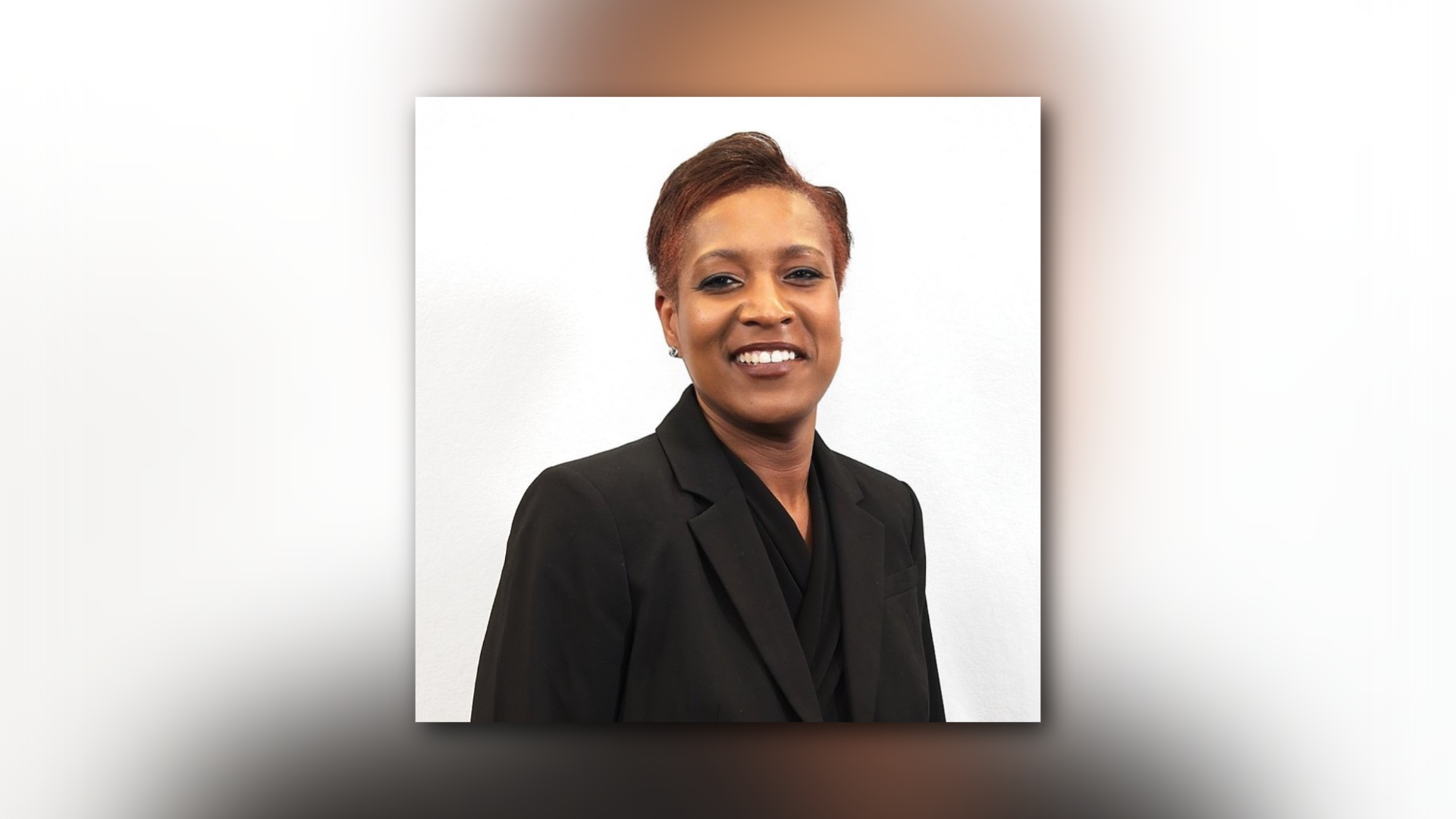
One day after a School Board member called for her to step down amid mounting District turmoil, Broward Public Schools Chief Operations Officer Wanda Paul has tendered her resignation.

She’s officially leaving June 5. But she plans for her last day in office to be on April 3 “to allow for an orderly transition and continuity of operations.”

“I believe it is time for me to transition to the next chapter of my life,” Paul said in a short letter to Superintendent Howard Hepburn that included a list of projects she said were completed under her leadership.

Since Paul came on as Broward COO in early 2024, she said, the District completed 199 projects, “strengthened processes and advanced key initiatives that support safe, efficient, and high-quality learning environments.”

“While there is no doubt that important work remains, I am confident the District is on a stronger path because of the dedication and professionalism of this team,” she said.

Events that led to Paul’s pending departure suggest otherwise. In recent weeks, audits and media reports have detailed breakdowns in how staff under Paul mishandled a major construction oversight procurement tied to the District’s $125 million capital program. An audit found procedures were bypassed, required evaluations were skipped and the School Board was not properly informed, leading to a rushed and legally questionable process now facing collapse.

The controversy followed an earlier firestorm over a since-terminated $2.6 million office lease that drew a lawsuit from the District’s former landlord.

Hepburn, who took office last year amid lingering fallout from past Broward Schools debacles, has acknowledged the District’s struggles but largely urged patience as reviews continue.

Enrollment has dropped by roughly 10,000 students in the past year, contributing to an $85 million budget shortfall. District leaders are also weighing 34 school closures, staff reductions and program cuts.

Citing those quandaries, the lease issue and the construction procurement fiasco — described by Board members Jeff Holness and Allen Zeman, respectively, as an “existential threat” and “five-alarm fire” — Board member Adam Cervera publicly demanded that Paul step down on Sunday.

“This is not about politics or blame,” said Cervera, whom Gov. Ron DeSantis appointed to the Board in April. “It is about restoring trust.”

Paul acquiesced Monday, promising to support “a smooth transition in any way that is helpful.”

A University of St. Thomas graduate with a master’s degree in business administration, Paul took over in May 2024 as Broward Public Schools COO, a post in which she earns an annual salary of about $221,500.

She came to the job following COO positions from May 2017 to January 2024 at the Palm Beach County School District and the Houston Independent School District Foundation. She resigned from the latter job after the Texas Education Agency took over the District due to what the Texas Tribune described as “years of poor academic outcomes at a single campus and allegations of leadership misconduct” that led to “extraordinary staff turnover and plummeting enrollment.”

According to the Houston Chronicle, which first reported on the takeover, Paul announced on LinkedIn that after her resignation from the Houston Independent School District Foundation became effective, she planned to work as an education consultant at Paul Consulting Group LLC.

Paul registered an identically named company with the Florida Division of Corporations in March 2021. It was administratively dissolved in September 2022. Whether she resurrects it remains to be seen.

Florida Politics contacted Paul for comment but received no response.


Source link

Continue Reading

Politics

SNAP bans on soda, candy and other foods take effect in 5 states Jan. 1

Published

on


Starting Thursday, Americans in five states who get government help paying for groceries will see new restrictions on soda, candy and other foods they can buy with those benefits.

Indiana, Iowa, Nebraska, Utah and West Virginia are the first of at least 18 states to enact waivers prohibiting the purchase of certain foods through the Supplemental Nutrition Assistance Program, or SNAP.

It’s part of a push by Health Secretary Robert F. Kennedy Jr. and Agriculture Secretary Brooke Rollins to urge states to strip foods regarded as unhealthy from the $100 billion federal program — long known as food stamps — that serves 42 million Americans.

“We cannot continue a system that forces taxpayers to fund programs that make people sick and then pay a second time to treat the illnesses those very programs help create,” Kennedy said in a statement in December.

The efforts are aimed at reducing chronic diseases such as obesity and diabetes associated with sweetened drinks and other treats, a key goal of Kennedy’s Make America Healthy Again effort.

But retail industry and health policy experts said state SNAP programs, already under pressure from steep budget cuts, are unprepared for the complex changes, with no complete lists of the foods affected and technical point-of-sale challenges that vary by state and store. And research remains mixed about whether restricting SNAP purchases improves diet quality and health.

The National Retail Federation, a trade association, predicted longer checkout lines and more customer complaints as SNAP recipients learn which foods are affected by the new waivers.

“It’s a disaster waiting to happen of people trying to buy food and being rejected,” said Kate Bauer, a nutrition science expert at the University of Michigan.

A report by the National Grocers Association and other industry trade groups estimated that implementing SNAP restrictions would cost U.S. retailers $1.6 billion initially and $759 million each year going forward.

“Punishing SNAP recipients means we all get to pay more at the grocery store,” said Gina Plata-Nino, SNAP Director for the anti-hunger advocacy group Food Research & Action Center.

The waivers are a departure from decades of federal policy first enacted in 1964 and later authorized by the Food and Nutrition Act of 2008, which said SNAP benefits can be used for “any food or food product intended for human consumption,” except alcohol and ready-to-eat hot foods. The law also says SNAP can’t pay for tobacco.

In the past, lawmakers have proposed stopping SNAP from paying for expensive meats like steak or so-called junk foods, such as chips and ice cream.

But previous waiver requests were denied based on USDA research concluding that restrictions would be costly and complicated to implement, and that they might not change recipients’ buying habits or reduce health problems such as obesity.

Under the second Trump administration, however, states have been encouraged and even incentivized to seek waivers – and they responded.

“This isn’t the usual top-down, one-size-fits-all public health agenda,” Indiana Gov. Mike Braun said when he announced his state’s request last spring. “We’re focused on root causes, transparent information and real results.”

The five state waivers that take effect Jan. 1 affect about 1.4 million people. Utah and West Virginia will ban the use of SNAP to buy soda and soft drinks, while Nebraska will prohibit soda and energy drinks. Indiana will target soft drinks and candy. In Iowa, which has the most restrictive rules to date, the SNAP limits affect taxable foods, including soda and candy, but also certain prepared foods.

“The items list does not provide enough specific information to prepare a SNAP participant to go to the grocery store,” Plata-Nino wrote in a blog post. “Many additional items — including certain prepared foods — will also be disallowed, even though they are not clearly identified in the notice to households.”

Marc Craig, 47, of Des Moines, said he has been living in his car since October. He said the new waivers will make it more difficult to determine how to use the $298 in SNAP benefits he receives each month, while also increasing the stigma he feels at the cash register.

“They treat people that get food stamps like we’re not people,” Craig said.

SNAP waivers enacted now and in the coming months will run for two years, with the option to extend them for an additional three, according to the Agriculture Department. Each state is required to assess the impact of the changes.

Health experts worry that the waivers ignore larger factors affecting the health of SNAP recipients, said Anand Parekh, Chief Policy Officer at the University of Michigan School of Public Health.

“This doesn’t solve the two fundamental problems, which is healthy food in this country is not affordable and unhealthy food is cheap and ubiquitous,” he said.

___

Republished with permission of The Associated Press.


Source link

Continue Reading

Politics

Joe Gruters bill aims to shrink Citizens insurance, steering policies to private market

Published

on


Policyholders who receive offers from surplus lines insurers could remain with Citizens, but only if they agree to pay the higher premium.

Sarasota Republican Sen. Joe Gruters has filed legislation that would make it harder for some property owners to stay on the state-sponsored Citizens Property Insurance Corp. when private insurers are willing to offer coverage, even if that coverage costs more.

State leaders have spent years trying to shrink Citizens, Florida’s insurer of last resort, arguing that its rapid growth exposes taxpayers to financial risk after major storms. Gruters’ bill (SB 1028) would steer policyholders into the private market.

The measure would direct Citizens to establish a personal lines clearinghouse and a new commercial lines clearinghouse by Jan. 1, 2027. The clearinghouses would steer eligible policyholders out of Citizens and into the private insurance market when comparable coverage is available.

The bill would require Citizens to charge certain commercial policyholders the higher of two amounts: its own calculated premium or a competing offer made through the state’s surplus lines clearinghouse. That requirement would also apply to renewals unless a new offer is made, in which case the premium would again be set at the higher amount.

The bill, filed Tuesday, would also require Citizens to set up a process by 2028 to move applicants and existing policyholders who no longer qualify for coverage toward private insurers.

SB 1028 revises eligibility standards for personal and commercial coverage, making applicants ineligible for Citizens if they receive a comparable offer through the clearinghouse at or below statutory price thresholds. If the clearinghouse offer exceeds those thresholds, policyholders could choose to remain with Citizens or accept private coverage.

The bill would also create a narrower rule for some commercial policies. Policyholders who receive offers from surplus lines insurers could remain with Citizens, but only if they agree to pay the higher premium when the private coverage is within 20% of Citizens’ rate.

If approved, the bill would take effect immediately upon becoming law.


Source link

Continue Reading

Politics

Wyman Duggan files bill to give Duval School Board more legal autonomy

Published

on


The city of Jacksonville’s lawyer would maintain significant control if this bill becomes law.

The Duval County School Board could be positioned to have its own General Counsel next year, breaking with almost six decades of precedent in Jacksonville’s consolidated government.

Legislation from House Speaker Pro Tempore Wyman Duggan (HB 4049) seeks a General Counsel independent of the one atop local government, although the Board lawyer ultimately would be “subject to the opinion” of the city’s General Counsel, and would otherwise be subordinate in litigation and contract preparation, in a condition to which the Board agreed.

The local bill met resistance from the Jacksonville City Council when presented for its approval. Some Council members said it threatened the consolidated government model ahead of voting against recommending the charter change to the delegation.

The controversy that a majority of the City Council couldn’t abide stemmed from whether the School Board could subvert the independent authority of the city’s General Counsel.

Explaining the proposal earlier this year, Chair Charlotte Joyce noted that the School Board was concerned about the candidates who applied earlier this year for an opening not being certified in education law, and said other Districts pick their own lawyers, who are eligible for the Florida Retirement System.


Source link

Continue Reading

Trending

Copyright © Miami Select.