Connect with us

Sports

Georgia State University Is Building  A Small Baseball Stadium In Atlanta
Published

on


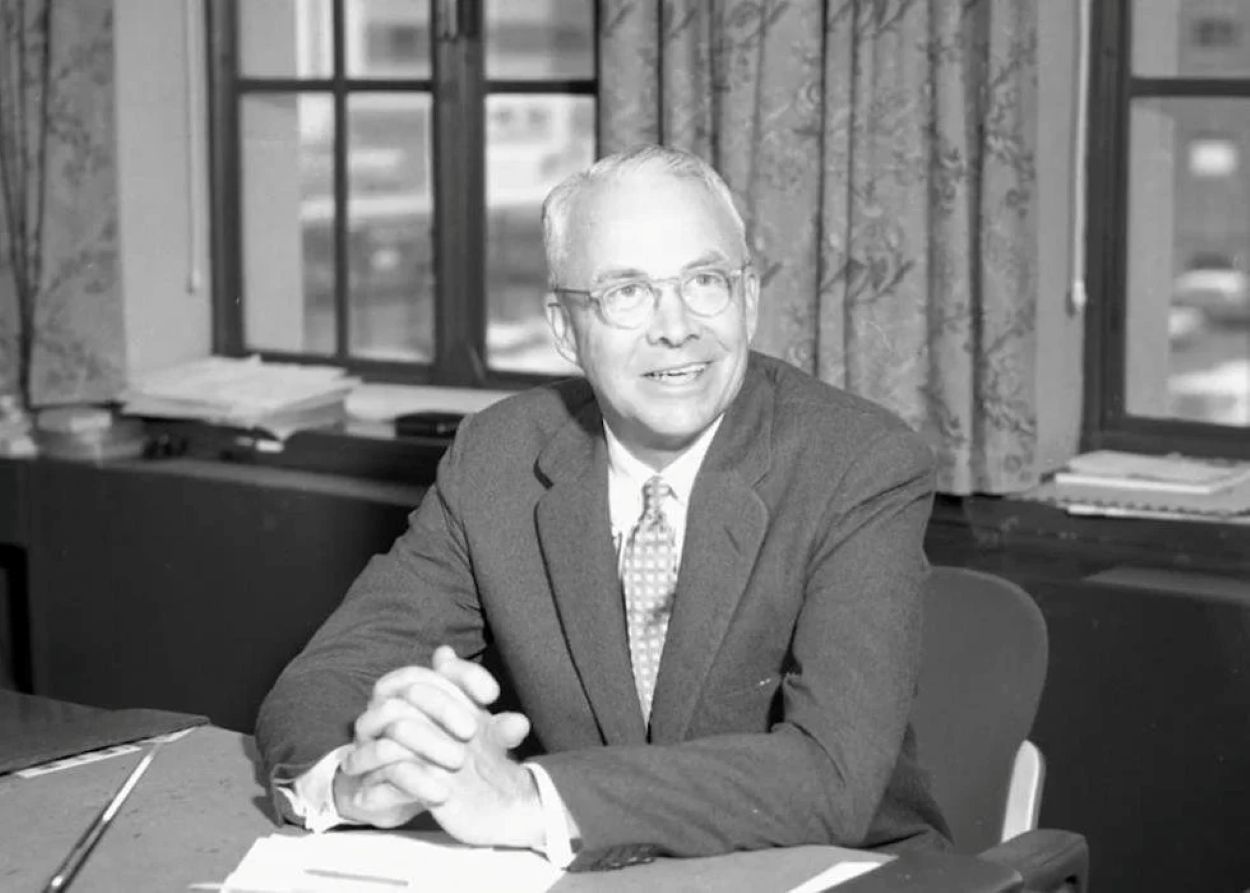
In 1961, ATlanta Mayor Ivan Allen, Jr. began pushing for Atlamta to build a Major League Baseball stadium

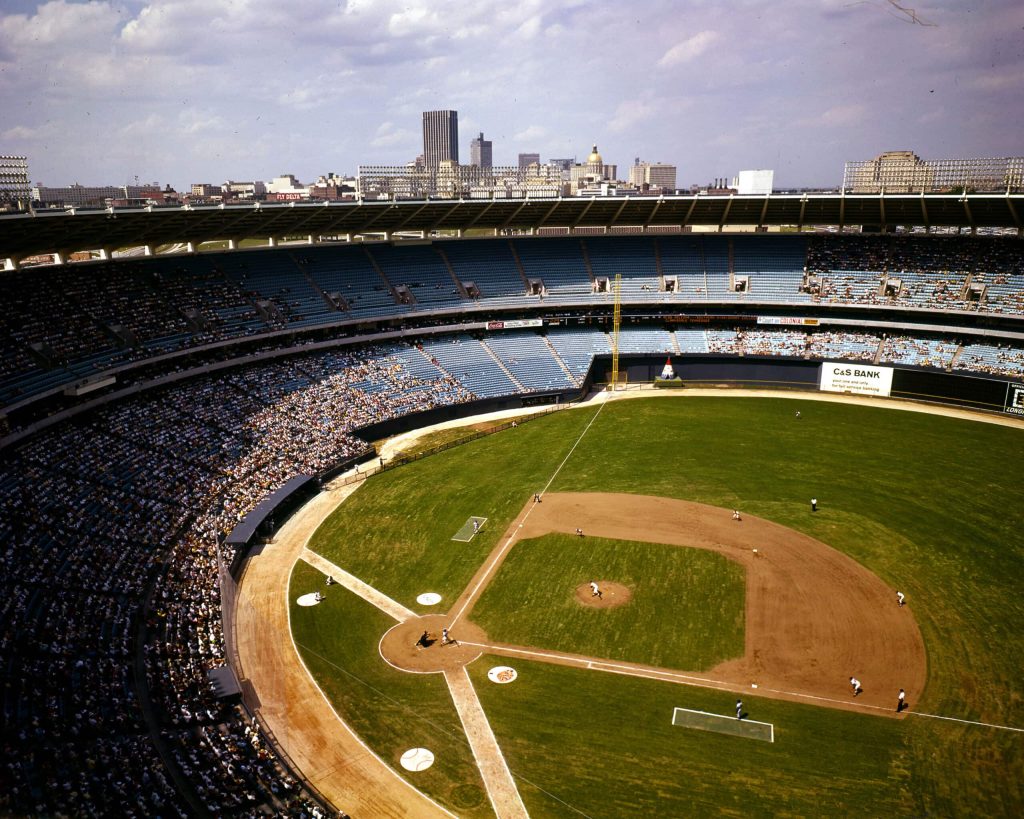
The stadium will be located at the old Atlanta Fulton County Stadium site

Stadiums as Pitstops, Not Destinations

Stadiums and arenas rarely serve as permanent homes. They function as pitstops in the larger race to stay relevant in major professional sports. Atlanta learned that lesson early and has lived it repeatedly for nearly seven decades.

The story begins in 1957, when the Eisenhower Administration expanded Atlanta’s airport and positioned the city as a national transit hub. Local elected officials and business leaders saw opportunity. If Atlanta could become a transportation crossroads, it could also become a major league city. The strategy was straightforward. Build a stadium first. Then chase a professional franchise to fill it.

At the time, baseball still ruled American sports. The National Football League existed, but college football dominated much of the South. Atlanta’s leaders understood the hierarchy. Landing a Major League Baseball team would place the city on the national sports map. Football could follow later and share the same facility if necessary.

Ivan Allen Jr. and the Big League Vision

During his 1961 campaign for mayor, Ivan Allen Jr. made a bold promise. He pledged to build a modern sports facility capable of attracting a Major League Baseball franchise. It was a political risk, but it matched the city’s ambitions.

Allen secured funding and broke ground in 1964. With a stadium rising, he turned to expansion and relocation talks. His first target was Kansas City A’s owner Charlie Finley. Allen negotiated a deal to bring the A’s to Atlanta, but American League owners rejected the move.

The setback did not end the pursuit. Soon after, ownership of the Milwaukee Braves accepted Atlanta’s offer. The Braves relocated in 1966 and became the city’s first major league tenant. Atlanta finally arrived.

Allen also worked both sides of professional football. He engaged the American Football League and the National Football League. That effort paid off when Atlanta received an NFL expansion franchise, also beginning play in 1966.

A New Stadium Grows Old Quickly

Success came fast, but so did dissatisfaction. The stadium that symbolized Atlanta’s arrival aged rapidly in the eyes of team owners.

By 1992, the football franchise moved into a new, football-only stadium downtown. Baseball followed a different path. The Braves left the original stadium and moved into the facility built for the 1996 Summer Olympics. One year later, that Olympic venue became their new home.

That move did not last either. In 2017, the Braves relocated again, this time to a suburban stadium designed to maximize revenue and development opportunities. Each move reflected the same pattern. Teams chase newer buildings. Cities chase teams.

What Remains After the Teams Leave

The original stadium did not survive. Crews demolished it and converted the site into a parking lot. The Olympic stadium endured, but not in its original form. It was downsized and repurposed for Georgia State University football.

Now the university plans to add a small baseball field at the site of the original stadium. What once symbolized Atlanta’s major league dreams now serves student-athletes and campus life.

The cycle continues. New buildings replace old ones. Purpose shifts. Memory fades.

The Cost of Staying “Major League”

Atlanta taxpayers have funded the construction of two baseball stadiums, two football stadiums, and two arenas. Each project aimed to keep the city in the major league conversation.

The pursuit has worked, depending on perspective. Atlanta hosts franchises. It stages global events. It remains relevant. The price has been constant reinvestment and repeated reinvention.

Stadiums come and go. Teams move on. Cities keep paying. In Atlanta, the buildings tell the story. They were never meant to last forever. They were meant to keep the city in the game.

Evan Weiner’s books are available at iTunes – https://books.apple.com/us/author/evan-weiner/id595575191

Evan can be reached at evan_weiner@hotmail.com


Source link

Continue Reading

Sports

AFCON: Captain Osimhen & Onyedika lead player ratings in Nigeria win over Uganda

Published

on


Nigeria advanced into the knockout phase of the 2025 Africa Cup of Nations (AFCON) in style with a comfortable 3-1 win over 10-man Uganda in Fes.

A brace from Raphael Onyedika and Paul Onuachu’s lone strike made the Super Eagles the first team in the tournament to grab the maximum nine points from three games in the group stage.

Nigeria coach Eric Chelle made seven changes to his starting XI that started in their 3-2 defeat of Tunisia on Saturday but how did each player fare on a scale of 1-10 at the Fez Stadium.

Sports Talk’s Player Ratings: Nigeria vs Uganda.

Goalkeeper

Francis Uzoho – 6

Uzoho was not really tested in the entire 90 minutes, however, he could not manage to keep a clean sheet, just like Stanley Nwabali who conceded in the last two matches.

Defenders

Ryan Alebiosu – 7

The Blackburn Rovers right-back gave a good account of himself on his first international appearance for the Super Eagles. His pace was an added advantage for Eric Chelle’s team but he was a bit slack in physicality when the Ugandans charge forward.

Igoh Ogbu – 8

It was Ogbu’s first defensive partnership with Calvin Bassey and he showed no signs of weakness. The defensive partnership made life difficult for Uganda to break through from the start of the game.

Calvin Bassey – 7

He was unlucky to have received a yellow card in the opening minutes of the game but the Fulham centre-back showed professionalism and his experience was key in shutting out Uganda’s no. 9 Uche Ikpeazu who did not manage any shot.

Bruno Onyemaechi – 7

Onyemaechi showed his versatility once again. He played as a left-back on Tuesday, even though he featured in the opposite position in Nigeria’s last two games. His timely supply to Moses Simon made the skilful a real threat on the wing.

Midfielders

Samuel Chukwueze – 8

Chukwueze grew into the game in the second-half and his impact were evident with the two assists for Onyedika’s goals. He also made some pinpoint passes to Osimhen but the Galatasaray star was caught offside on several occasions.

Fisayo Dele-Bashiru – 8

A real pivot in the heart of Nigeria’s midfield and he was able to dictate play whenever they are in possession. He capped his fine midfield display with an assist for Onuachu’s opening goal.

Raphael Onyedika – 10

The Club Brugge midfielder was timely with his movement both in defence and attack. His attacking runs and composure resulted in the two goals scored within five minutes. His recovery and charging also won Nigeria the midfield battle against Uganda.

Truly an undisputed man-of-the-match performance.

Moses Simon – 7

The Paris FC winger provided an alternative for the Super Eagles to infilterate Uganda on the flank. His ability to hold on to the ball and dribbles were crucial in Nigeria’s game management technique after going three goals up.

Forwards

Paul Onuachu – 7

Shaked off a big miss with an instant response that resulted in Nigeria’s opening goal. There was a fine connection between him and Osimhen which gave Nigeria options in the final third.

Victor Osimhen – 9

Although he did not find the back of the net, Osimhen led Nigeria to a comfortable win with his leadership as stand-in captain, in the absence of Wilfred Ndidi.

He was not just hungry for goals, he was hungry to win every ball when the team was out of possession.

Substitute

Chidozie Awaziem – 4

Awaziem replaced Calvin Bassey just before the start of the second-half but he was caught sleeping which led to Uganda’s goal through Rogers Mato.


Source link

Continue Reading

Sports

AFCON: Injured Gabon star Aubameyang returns to Marseille

Published

on


Pierre-Emerick Aubameyang will miss Gabon’s final group game against Cote d’Ivoire at the 2025 Africa Cup of Nations (AFCON) due to a thigh injury.

The Gabon Football Federation confirmed on Tuesday that the 36-year-old striker is suffering from a thigh injury and they reached an agreement with his French Ligue 1 club Marseille for his immediate return for further treatment.

Aubameyang made two appearances in the tournament and he has a goal to his name after converting from the spot in their 3-2 loss to Mozambique.

Wednesday’s match against Cote d’Ivoire is an inconsequential game for Gabon as they currently sit at the bottom of Group F with no points after two matches.

“Following the established medical protocol between Marseille and Gabon medical staff regarding Pierre-Emerick Aubameyang, clinical examinations were conducted daily,” read the statement from the Gabon Football Federation.

“The most recent examination confirmed the discomfort he experienced in his left thigh the day after the Gabon-Mozambique match. Given the disappointing results, which cut short Gabon’s participation, the medical staff, in consultation with his club, agreed to protect the player’s physical well-being by exempting him from the final, inconsequential match.”

Since he made his international debut for the Panthers in 2009, Aubameyang has made 82 appearances for Gabon, scoring 39 goals.

At 36 years, it remains unclear if the 2015 African Footballer of the Year will draw the curtain on his international career anytime soon.

Aubameyang returned to Marseille in August after a successful brief spell in Saudi Arabia with Al-Qadisiyah and his injury comes a worry for Roberto De Zerbi who is still without injured Algeria star Amine Gouiri since October.

This season, Aubameyang has contributred eight goals and nine assists in 19 games for Marseille across all competitions.


Source link

Continue Reading

Sports

Goodbye 2025, but not after scandals threatened leagues integrity

Published

on


Emmanuel Clase

2025 Will Not Be Forgotten

They tell us to move on. 2025 is over. Close the book and turn the page. History, however, rarely listens to that advice.

When historians look back decades from now, 2025 will stand out for one uncomfortable reason. Gambling scandals cut across professional and collegiate sports. Major League Baseball, the NCAA, and the NBA all faced serious questions about integrity. The year exposed how deeply betting had embedded itself into sports. It also showed how little resistance existed from those who profit the most.

The games continued. The partnerships continued. The arrests did too.

Major League Baseball Faces a Direct Hit

MLB took one of the hardest blows. Cleveland Guardians pitchers Emmanuel Clase and Luis Ortiz became central figures in a federal investigation that shook the league.

In July, MLB placed both pitchers on paid administrative leave while investigators examined suspicious betting activity. In November, federal authorities arrested both players. Prosecutors allege the two began conspiring with sports bettors as early as 2023. According to the indictments, the pitchers shared advance information about specific pitches they planned to throw during games.

Bettors allegedly used that information to place prop bets totaling hundreds of thousands of dollars. The trial is scheduled for May 4, 2026. The case marked one of the most serious gambling-related scandals MLB has faced in decades.

NBA Scandals Extend Beyond the Court

The NBA did not escape the storm. Miami Heat guard Terry Rozier was placed on indefinite leave after federal authorities launched an investigation into an illegal sports betting operation.

In October, agents arrested Rozier on charges that include conspiracy to commit wire fraud and money laundering. Prosecutors allege he played a role in a betting scheme tied to manipulated outcomes.

That same month delivered another shock. FBI agents arrested Portland Trail Blazers head coach Chauncey Billups in connection with a separate illegal gambling investigation. The NBA placed Billups on indefinite leave as the case proceeds. A sitting head coach facing federal charges sent tremors through the league.

College Basketball Pays the Price

At the collegiate level, the consequences were swift and severe. In November, the NCAA suspended multiple players for gambling violations. Six men’s basketball players received permanent bans from competition.

Unlike professional leagues, college athletes do not have unions or guaranteed contracts. Their careers ended instantly. The message was clear. The rules exist. The penalties remain harsh.

Gambling Grows While Oversight Lags

Despite all of this, the business of sports betting never slowed. Team owners maintained partnerships with gambling companies. Sports cable networks continued promoting betting lines and prop wagers during broadcasts.

The contradiction became impossible to ignore. Gambling was labeled a growing problem. At the same time, it remained a primary revenue stream.

2025 exposed the fault line. Integrity matters, but profits matter more. That is the legacy historians will not forget.

Evan Weiner’s books are available at iTunes – https://books.apple.com/us/author/evan-weiner/id595575191

Evan can be reached at evan_weiner@hotmail.com

luis ortiz


Source link

Continue Reading

Trending

Copyright © Miami Select.