Connect with us

Business

How Warren Buffett’s Geico fell behind Progressive in the auto-insurance race

Published

on


Warren Buffett’s failure to capitalize on the economy’s digital shift over the last two decades has hurt his otherwise enviable track record as an investor. His blind spot regarding tech didn’t stop at the stock market: It bled into how he ran Berkshire Hathaway’s operating companies as well. Across many of his wholly owned businesses, Buffett neglected technological upgrades, and Berkshire’s business value has suffered as a result.

It’s important to understand this because the majority of Berkshire Hathaway’s assets are invested not in publicly traded securities, but in operating subsidiaries like Burlington Northern Santa Fe Railroad, Berkshire Hathaway Energy, and Geico. While it’s true that Buffett invested aggressively in wind energy, that was largely because of government tax incentives. In the main, he preferred to milk his operating subsidiaries for cash rather than reinvest in them for the digital age. Exhibit A is Geico, which thanks to a lack of IT investment has fallen behind Progressive as the nation’s leading for-profit auto insurer.

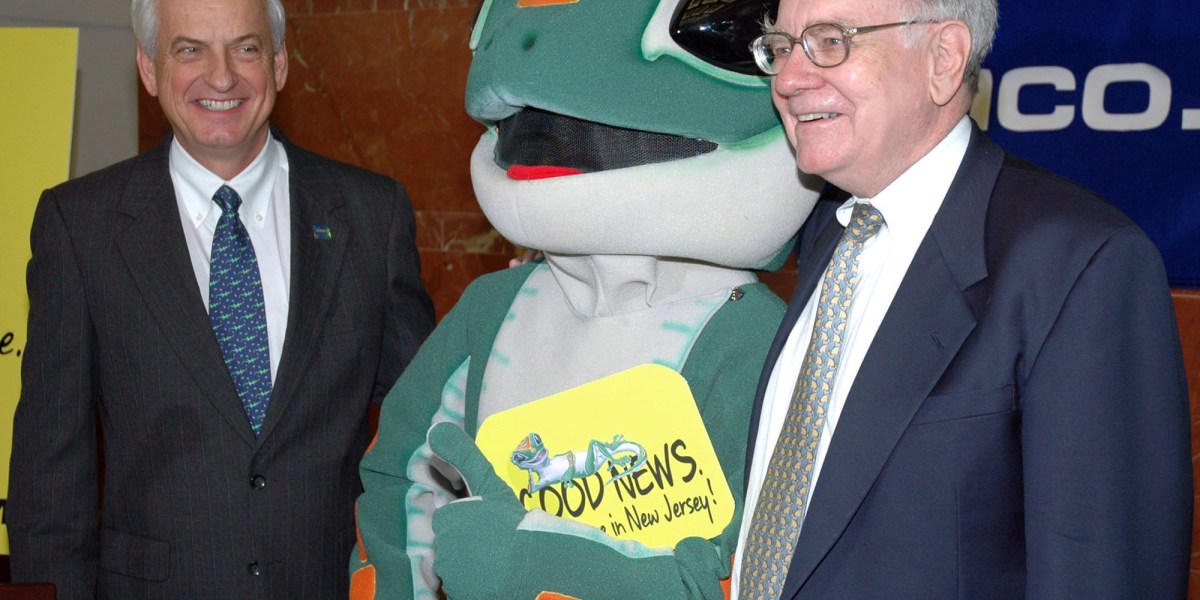
Buffett has called Geico his favorite child, and for good reason. Since it began in the 1930s, the auto insurer has used a direct-sales model to keep operating costs the lowest in the industry. In a commodity business like insurance, that’s a major competitive advantage. In the 1990s, after he bought all of Geico, Buffett found a second moat when he began to brand Geico as a trusted, even beloved American company. The gecko, the caveman, the camel who celebrated hump day—all these were marketing masterstrokes, ones directly derived from Buffett’s deep understanding of the mass brand-mass media industrial complex. The mascots also highlight how, while Buffett was comfortable investing in marketing, he was deeply uncomfortable with, and therefore didn’t understand, investing in tech.

When Buffett took control of Geico in 1996, he octupled its marketing budget. This wiped out almost all of Geico’s profits from a GAAP accounting standpoint, but Buffett was confident that increasing advertising outlays today would lead to more profitable customers tomorrow. And so it was: Under Buffett’s leadership, Geico’s market share grew from under 3% in 1996 to 12% in 2020, and it went from the No. 7 auto insurer to the #2 auto insurer, behind only State Farm.

So far, so good—but while Geico was investing in marketing, its rival Progressive was investing in technology. Founded only a year after Geico, Progressive began to upgrade its IT systems as early as the late 1970s. In the 1980s, it bought its agents computers and sent them floppy discs so they could better match price with risk. In 1996, Progressive became the first auto insurer to allow consumers to buy insurance online, and it continually streamlined its backend systems so that it could accurately quote new business. Today, Progressive brags that it has tens of billions of price points and that its tech stack allows the company to adjust its rates much faster than its competition—nearly once every business day. “We are a tech company that happens to sell insurance,” is one of Progressive’s internal mantras.

Driving the company’s tech investment was an insight that was perhaps even more astute than Buffett’s marketing insight. Thanks to its no-agent, no-commission model, Geico enjoyed a six-percentage-point cost advantage vs. Progressive in its operating costs. Because half of its business is through insurance agents, Progressive is unlikely ever to catch up here. But Progressive CEO Peter Lewis, who led the company from 1965 to 2000, understood that an auto insurer’s biggest cost center is the claims it must pay policyholders—four to five times bigger, in fact, than its administrative and advertising costs. If Progressive could manage these “loss costs” better than the competition, Lewis reasoned, then it could become the de facto low-cost auto insurer. 

The key to managing loss costs was technology in all its glorious variety. Back-end systems at headquarters that could parse price and risk for each driver were important, but so were front line innovations like Snapshot, a shoebox-sized device that in the 1990s Progressive began installing into the cars of willing customers. Snapshot, now an app on your mobile phone, tracks a customer’s driving behavior; more than one in three Progressive customers buying insurance directly from the company opts in for “usage-based” premiums. Thanks to Snapshot and other innovations, Progressive simply knows more about its drivers than any other insurer, and this creates a virtuous circle in which the company knows which to reward with discounts, which to punish with surcharges, and which to purge altogether. 

Thus, while Progressive’s operating costs have historically been six points worse than Geico, its loss costs have been 11 points better, which means that Geico’s low-cost moat has been breached by tech. In contrast to Progressive’s streamlined system, Geico has more than 600 legacy IT systems. It didn’t start working on a Snapshot-like product until 2019, twenty years after Progressive began. 

Buffett liked to say that when the tide goes out, you see who’s swimming naked, and COVID was the perfect storm to reveal how little Geico had paid attention to its digital wardrobe. During COVID, people suddenly stopped driving, and then, when the pandemic ended, they drove more than ever and more recklessly than ever. At the same time, the worst inflation in forty years hit all sectors of the economy, including auto-repair shops. Such rapidly changing conditions favored insurers with robust tracking tools, like Progressive, and punished insurers without them, like Geico. Since 2020, Progressive has almost doubled its personal auto policy count—but Geico has lost nearly 15% of its personal insurance base. Progressive, not Geico, is now the nation’s number two auto insurer.

It turns out that while the branding of the gecko was important, it wasn’t nearly as powerful as employing sophisticated digital tools. Geico is a good example of what happens when a company, even a powerful one, fails to reinvest in its future. Rather than a virtuous cycle—tech investment leading to better pricing and better products, which drives more profits, which can then be reinvested to drive the cycle on—Geico seems caught in the same vicious cycle that afflicts General Motors, Macy’s and other legacy companies. 


Source link

Continue Reading

Business

American Airlines pilot’s pay stub shows ‘elite money,’ with $458,000 in year-to-date compensation

Published

on


An American Airlines pilot’s pay stub has ignited a fresh flashpoint in the debate over U.S. wages, after a screenshot showing nearly $458,000 in year‑to‑date compensation ricocheted across social media and left many users stunned.

What the viral post showed

A Miami‑based Boeing 737 captain’s pay statement, originally shared on Reddit and then amplified on X by the popular Breaking Aviation News & Videos account, lists year‑to‑date earnings of about $458,000 as of mid‑December. The pay line that grabbed the most attention: an hourly rate just above $360 per flight hour, a figure near the top of American’s narrow‑body captain scale under its latest contract.

For many workers making a fraction of that amount, the idea that a single pilot could earn close to half a million dollars in one year felt like “elite money.” Commenters contrasted the figure with their own salaries, with one viral reaction being “Dude makes what I make in a month in a day.”

As some commenters debated a career change, one Reddit user offered a dose of reality.

“Starting from absolute zero, plan on ~$150k investment into your certifications and 10 years of low-paying entry-level jobs before you break even on that investment. Then another 5-10 years before you’re making this kind of money.”

The case for high pilot pay

Aviation professionals and many passengers pushed back on the outrage, arguing that the number reflects both seniority and the high stakes of the job rather than an easy windfall. They pointed to years of training, six‑figure flight‑school debt, and a responsibility set that includes managing a complex machine and hundreds of lives, along with demanding schedules that can keep pilots away from home for much of the year.

How pilot pay actually works

The headline hourly rate only applies to flight time, not the full duty day, and U.S. regulations cap pilots at 1,000 flight hours in any rolling 365‑day period, limiting how much they can legally fly. Within that framework, a captain at a legacy carrier can still build a mid‑six‑figure income by stacking premium trips, bidding favorable schedules with seniority, and, in some cases, flying right up against contractual and regulatory limits.

A window into broader labor tensions

The reaction to the American Airlines captain’s paycheck arrives amid a post‑pandemic pilot shortage, a wave of record‑setting pilot contracts, and a wider labor market where many workers say their pay has not kept pace with inflation. Online, the viral stub quickly transcended aviation, feeding into a broader debate over which jobs are “worth” six‑figure paydays—and renewing questions about how U.S. compensation is distributed between high‑skill, heavily unionized roles and everyone else.

​Employers’ growing focus on skills over traditional credentials dovetails with how airlines build their pilot pipeline, even as pilots still face some of the most rigid training and licensing requirements in the labor market.

Skills vs. degrees in commercial aviation

​Employers’ growing focus on skills over traditional credentials dovetails with how airlines build their pilot pipeline, even as pilots still face some of the most rigid training and licensing requirements in the labor market.

Recent Fortune reporting has highlighted that employers increasingly treat degrees as just one signal in a broader “portfolio of evidence” that includes certifications, microcredentials, and work samples. In one survey cited by Fortune, 86% of employers said nondegree certificates show real job readiness, while nearly 70% still see degrees as important—suggesting the hottest candidates bring both formal education and verifiable, job‑ready skills.

Commercial aviation sits somewhat apart from the typical corporate skills‑vs‑degrees debate because airline pilots must meet strict regulatory and licensing thresholds, starting with an Airline Transport Pilot (ATP) certificate that demands extensive flight hours and check‑rides. But airlines have been moving on the margins toward a more skills‑centric model: major U.S. carriers including Delta have dropped four‑year degree requirements for pilots, expanded in‑house academies, and leaned harder on simulator assessments, line checks, and recurrent training as proof of competencies rather than relying on a diploma as a proxy for capability.

American Airlines has not commented on the viral conversation.

For this story, Fortune journalists used generative AI as a research tool. An editor verified the accuracy of the information before publishing. 


Source link

Continue Reading

Business

This 22-year-old college dropout makes $700,000 a year from “AI slop” people sleep through

Published

on


The modern internet is less interested in demanding attention than in simply occupying it. 

Adavia Davis understands that better than perhaps anyone else. Since dropping out of Mississippi State University in 2020, the 22-year-old has built a thriving content-creation business out of what has come to be called “slop”— that high-volume, AI-generated background noise that thrives in the gaps of our focus. Davis’ most successful videos aren’t meant to be watched, shared, or even remembered. Often, Davis told Fortune, his viewers are asleep.

Davis has assembled a sprawling network of YouTube channels that operates as a near-autonomous revenue engine, requiring only about two hours of his oversight a day. He currently runs five active channels, but his broader portfolio includes multiple Minecraft channels aimed at children as well as channels devoted to funny-animal compilations, prank videos, anime edits, Bollywood clips, and celebrity gossip. Most lucrative is a “Boring History” channel built around six-hour “history to sleep to” documentaries, narrated by what sounds like a languid David Attenborough.

The channels belong to a genre that has come to dominate YouTube, known as “faceless” content–-videos designed to be scalable, easily replicated. Nearly all of Davis’ videos are generated with artificial intelligence, anchored by TubeGen, a proprietary software pipeline built by his partner, fellow 22-year-old Eddie Eizner, that automates nearly every step of production. Scripts and visuals are generated with Claude, the silky British narration from ElevenLabs, then assembled into long-form videos. The results can run as long as six hours, costing as little as $60 to produce from start to finish. 

Davis told Fortune that his network of videos generates roughly $40,000 to $60,000 a month in revenue. His operating costs—primarily small salaried teams overseeing the different niches—run at about $6,500 per month, he added. The margins are 85%-89%, extraordinary by tech standards. 

Fortune reviewed screenshots from Davis’ social media analytics dashboards, as well as recent AdSense payout records, which show tens to hundreds of thousands of dollars in monthly earnings from individual channels, equating to annual gross revenue of roughly $700,000. He talked to Fortune more about what is turning into his career, how it got started, and why college wasn’t part of the equation for him.

How Davis hacks the attention economy

Growing up on YouTube, Davis was a product of the platform’s golden era. When he was 10 years old in 2014, he said, he would spend six hours a day scripting and editing Minecraft and Fortnite playthroughs. He said he mourns the passing of this era, a time when creators were driven by “a love of the game, not necessarily to sell something.” 

But by 2022, the launch of ChatGPT shifted the internet’s market logic. Davis said he saw the writing on the wall early: the era of the personal brand was being eclipsed by the large-scale-content farm. But he was also, frankly, surprised by what turned from a hobby to a side hustle to something resembling a business. “I didn’t start [making content on] YouTube to make AI videos,” he said, adding that it was just for fun at first, but money started coming in from his various channels. “Then, if all my competitors are uploading more than me, and I’m waiting on my scriptwriter to get done, then I’m just falling behind.”

Davis was a 19-year-old college student when he felt the internet world shifting under his feet. He sold his first YouTube channel to a brand, which converted the account into a marketing feed for its product (Davis said he routinely accepts this kind of deal, even if it rarely pays off for the buyer: “they don’t know what they’re doing”). To celebrate, he spent what he describes as the last of his savings on a Tesla Model 3, at the time retailing at $55,000, not leaving any funds for tuition. Davis had enrolled in school largely for the experience, he said, but quickly realized he couldn’t juggle classes and content creation without killing both. “If I stayed in school, I was going to be broke and distracted,” he said. “That was just a setback for no reason.”

Davis turned fully to making YouTube channels with the new AI tools at his disposal, with the internet that he grew up with now gone forever, in his opinion. “The ethics have gotten really, really bad from these higher-up companies that have their number one goal as attention,” Davis said. “Because attention is the number one currency. Whoever has the most influence controls the most.” He described the system that he’s monetized as very “psychological,” even destructive—“trying to destroy minds to make them easier to sell to.”

Davis explained his understanding of the business model as YouTube needing to cater to advertisers, “the puppet masters” of the platform, in order to stay alive. The only way to survive in this system, he argued, is to understand it, or even teach it. (In fact, Davis said that he offers an online course for people looking to supplement their income, including his belief that “social media is a social science.”)

Recent data suggests that so-called “AI slop” has rapidly expanded across YouTube. Researchers at the video-editing company Kapwing found that more than 20% of the videos shown to new users fall into that category. The study further found that channels posting nothing but that AI low-quality content have collectively amassed over 63 billion views, 221 million subscribers, and an estimated $117 million a year in advertising revenue. YouTube, meanwhile, has emerged as a major player in both TV and streaming, with the 2020s marking a turning point in the popularity of podcasts with video, and YouTube’s more traditional TV offerings such as NFL (or, next year, the Oscars) combining with its dominance in user-generated content (UGC) to make it an engagement giant. Melissa Otto, head of research at S&P Global Visible Alpha, previously told Fortune that YouTube’s dominance in UGC is the real reason Netflix is spending so heavily to try to acquire Warner Bros. Disney’s subsequent $1 billion licensing deal with OpenAI fits into a similar category, per Nicholas Grous, director of research for consumer internet and fintech at Ark Invest.

Against this backdrop, Davis remains a comparatively small fish: he has built and sold faceless AI-driven channels ranging from roughly 400,000 subscribers to just over one million. Yet, he said his network of videos now averages about two million views per day. “When you understand psychology, everything else just falls into place,” he said.

Over the past several years running channels on YouTube as well as shows on TikTok, Instagram, and Snapchat, Davis said that he’s learned to optimize for social media’s most unforgiving metric: watch time. Some tactics are straightforward. Davis obsessively engineers the opening seconds, or the “hook,” of a video—the bright contrast of colors on screen, the first facial expression or vocal inflection you hear—because that initial moment determines whether a viewer stays or clicks away.

Others are more mischievous. In compilation videos, Davis sometimes turns to shock tactics such as a sudden flash of a spiders on screen for a split second at the beginning, just long enough to make viewers rewind and check whether they actually saw what they think they saw. In short-form clips, he has intentionally misspelled words on screen to bait viewers to pause, comment and correct him, stretching watch time in the process.

“I do everything in my power to trick watch time,” he said. “Because that’s the metric that’s going to pay you at the end of the day.”

The 2027 deadline

So far, Davis has had something of a first-mover advantage, given how early he was to spot the arbitrage opportunity and also his long-developed intuition for the sort of video that performs well.

But now, with AI advancing beyond scripts into video production and further collapsing barriers to entry, competition has grown fiercer. He said the biggest career mistake he ever made was posting a promotional video for TubeGen showing how he made his long-form Boring History sleep videos using AI. Within days, Davis said that he saw scores of copycats posting similar videos, crowding out the niche that he had built and monopolized, until then.

But more threatening than the individual imitators, he said, are the companies with capital. Davis describes himself as “kind of a doomer” about the future of the space, estimating that individual creators have until around 2027 to meaningfully profit from AI-generated long-form YouTube content.

After that, he predicted the “sharks” will arrive: large media companies with the capital to industrialize any format the moment it proves lucrative. “At that point,” he said, “you’re just competing against the big fish.”

​​Davis pointed to a World War II history channel that he admired, full of thoughtfully produced videos that seemed to come from a student, posting every other day. Once an unnamed media company noticed the niche, it began uploading three times a day. Those sorts of videos cost roughly $110 to produce, he estimated, whereas posting at the media company’s speed would cost over $300. “You can’t compete unless you have the budget,” he said. 

Still, he said he was optimistic that he’ll find a way to “seep through the cracks,” as he has for three years now. Rather than inventing new genres, Davis said he looks for small edges inside formats that already work. Most recently, he has been experimenting with a twist on a familiar setup: pairing narrated Reddit posts with looping Minecraft footage—but instead of a classic Reddit story, swapping in narrated horror stories for the “psychopaths,” as he put it, who like to fall asleep to them.

“The proof of concept is there,” Davis said.

But Davis hopes that one day, soon, none of his content will be much in demand at all. As AI content floods the internet and trust erodes, he believes authenticity itself will become scarce,and therefore valuable. He already sees a growing audience for creators who reject heavy editing and algorithmic tricks.

“It’ll get worse before it gets better,” he said, but eventually, “True longevity,” he said, “is going to come within brands and real influencers with real faces.”


Source link

Continue Reading

Business

Mark Zuckerberg’s Meta is dropping over $2 billion for an AI startup—a rare example of a U.S. tech giant buying a platform founded in China

Published

on


Mark Zuckerberg’s Meta says it has agreed to acquire Manus, a fast-growing AI startup with Chinese roots now based in Singapore, in a deal valued at more than $2 billion, according to multiple reports. The latest move underscores two big trends: the massive scale of AI spending among Silicon Valley companies, and the geopolitical sensitivities around companies and startups founded in China.​

Manus, in case you’re unfamiliar, builds so‑called AI “agents” that can carry out complex digital tasks for consumers and businesses. The idea here is that Manus will essentially fold its technology into Meta’s products, including the Meta AI assistant that runs across Facebook, Instagram, and WhatsApp. The deal marks one of the first major instances of a key player in U.S. tech buying a startup founded in China, making it somewhat of a litmus test for cross-border deals of this kind—especially in the AI space.​

Manus launched just three years ago, in 2022. It started as a project from Butterfly Effect, a.k.a. Monica.im, a startup that was based in Beijing before it moved its headquarters to Singapore earlier this year as it looks to expand globally. Manus’ AI agent, notably, can screen résumés, plan trips, analyze stock portfolios, and handle other multi‑step jobs with minimal human input, positioning it as a kind of virtual colleague rather than a simple chatbot.

Manus has seen explosive growth in its brief life so far. Just a little over a week ago, Manus released a blog post claiming it had reached $100 million in annualized recurring revenue and achieved a $125 million run rate, thanks largely to subscriptions and power users. The company also says Microsoft tested Manus on Windows 11 PCs this year to help users build websites and other content from their local files.

​The big picture for Meta

For Meta, the Manus deal is the latest in a series of multibillion‑dollar bets aimed at turning heavy infrastructure spending on AI chips and data centers into commercially viable products. Founder and CEO Mark Zuckerberg has called AI the company’s top priority: Meta continues to invest heavily in its Llama family of open‑source language models, and made a large strategic investment in Scale AI earlier this year, even bringing on the startup’s 28-year-old billionaire founder Alexandr Wang to lead Meta’s broader AI efforts.​

The acquisition also untangles Manus’s ownership ties to China. While the startup has received backing from Chinese investors from the likes of Tencent, ZhenFund, and HSG (formerly Sequoia China), a Meta spokesperson told Nikkei Asia “there will be no continuing Chinese ownership interests in Manus AI following the transaction, and Manus AI will discontinue its services and operations in China.” A Meta spokesperson did not immediately respond to Fortune’s request for comment.​

Of course, this move to disentangle Manus from China should help Meta avoid the eye and ire of U.S. politicians and regulators. John Cornyn, the 73-year-old Republican senator from Texas, slammed U.S. VC firm Benchmark Capital back in May for joining a $75 million funding round for Manus, asking and answering a hypothetical question on X, “Who thinks it is a good idea for American investors to subsidize our biggest adversary in AI, only to have the CCP use that technology to challenge us economically and militarily? Not me.”

Manus’s founder and CEO, Xiao Hong, framed the sale as a way to scale the technology globally. “The era of AI that not only talks but also acts, creates, and delivers is just beginning,” he said on social media, according to Al Jazeera. “Now, we have the opportunity to build it at a scale we could never have envisioned.”

Meta has said it will keep the Manus service running while integrating the team of roughly 100 employees into its broader AI organization.

This story was originally featured on Fortune.com


Source link

Continue Reading

Trending

Copyright © Miami Select.